




How Do Road Closures Impact Unsafe Driving Events?
A new study by Geotab shows that during a specific road closure in London, dangerous driving incidents spiked by 231%.

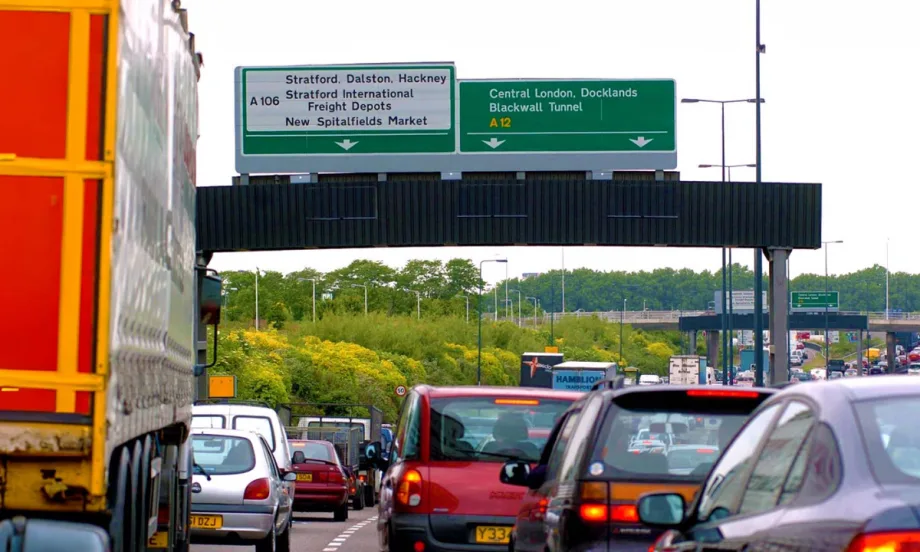
There are concerns that new toll charges for using both Blackwall and Silvertown Tunnels will increase traffic on alternative routes, intensifying congestion and safety concerns in those areas.
Photo: Geotab
Closing major thoroughfares can have a ripple effect on not only traffic flow, but also safety and fuel usage.
A new Geotab analysis reveals London Blackwall Tunnel closures are linked to increased congestion and a threefold rise in dangerous driving.
Dangerous Driving Incidents, Miles Driven, and Travel Times Surge
Geotab's study included telematics data from more than 16,000 commercial vehicles in 2024. Key findings from the analysis include:
Dangerous driving incidents surged by 231% on Tower Bridge during tunnel closures, with trucks — or lorries — seeing a 341% increase in harsh braking events.
Over 5,500 commercial journeys were rerouted, resulting in an additional 91,000 miles driven on alternative central London routes in 2024.
Average travel times increased by 43%, highlighting worsening congestion and elevated fuel consumption.
Over 5,500 journeys were rerouted on alternative roads through central London — including Tower Bridge — to avoid the Blackwall Tunnel closure, collectively covering 91,000 miles over 12 months.
"Our data shows that the Blackwall Tunnel closures have had a negative impact on traffic flow and safety in other areas,” said Aaron Jarvis, Associate Vice President of Sales and Business Development, EMEA at Geotab.
The data highlights congestion and safety concerns that won’t necessarily end when construction of the Silvertown Tunnel is complete.
The Blackwall Tunnel is undergoing closures to support the construction of the Silvertown Tunnel, aimed at reducing journey times and to help manage air pollution in south-east London.
How New Tolls Can Impact Safety and Congestion
However, there are concerns that new toll charges for using both Blackwall and Silvertown Tunnels will increase traffic on alternative routes, intensifying congestion and safety concerns in those areas.
The average daily vehicle count on Tower Bridge increased by 18%, which caused a a surge in dangerous driving incidents due to higher congestion levels. This could also impact pedestrian safety for people walking on the bridge.
“We cannot say now whether the introduction of a toll to the Blackwall Tunnel for the first time since it opened in 1890 will continue the displacement of road traffic to these other areas, but we do know that commercial vehicles spending more time on the road going shorter distances is not good for local communities, the economy, air pollution, or driver well-being," Jarvis added.
Geotab’s recent mental health survey highlighted the impact of driver stress with 90% of lorry and van drivers saying work-related stress negatively impacts their driving.
For many, congestion heightens concerns about job performance, safety, and overall well-being.
“These disruptions add significant challenges for commercial drivers who are under constant pressure to meet delivery schedules," Jarvis explained. "The additional time spent in congestion not only increases operational costs but also contributes to increased driver stress, as they navigate unpredictable travel conditions."
Commercial fleet managers are forced to adjust driver schedules to accommodate for greater traffic volumes.
More Safety

Fleet Manager’s Ultimate Playbook: Navigating the New Standard in OEM Connectivity
Rising operating costs, driver safety concerns, and unplanned downtime are putting unprecedented pressure on modern fleets. Discover how fleet managers use embedded OEM connectivity and real-time vehicle data to cut TCO, prevent downtime, and protect drivers without aftermarket telematics hardware.
Read More →
From Driver Well-Being to EV Charging | AF News Recap
Mental health belongs in the fleet safety conversation. This week, we’re looking at five ways fleets can support employee well-being before a crisis, plus Holman’s expansion in Mexico, new one-day Fleet Forward passes, and why EV charging demand is outpacing infrastructure growth.
Read More →
Nexar-Nauto Merger Aims to Give Fleets Better Safety Intelligence Through Larger Driving Dataset
Stefan Heck tells Automotive Fleet that combining more than 10 billion miles of driving history with Nexar's AI models will give fleets deeper insights into driver risk and roadway conditions than either company could provide independently.
Read More →
Don't Wait for a Crisis: 5 Ways to Build Mental Health Into Your Fleet Safety Program
For Suicide Prevention Month, fleet and safety leaders have an opportunity to put mental health where it belongs: at the center of workplace safety.
Read More →
How Camera Data Can Strengthen a Fleet’s Insurance Renewal
Insights from a commercial insurance carrier and a broker show how fleets can turn video telematic data, driver coaching, and improved claims results into a stronger case at insurance renewal.
Read More →
The Safest Fleets Aren’t the Ones with the Most Technology
You’ve made the telematics investment. Here’s how to capture the other half of its value and build the safest fleet on the road.
Read More →
Hidden in Plain Sight: Fleet Compliance Risks
Fleet compliance isn't just about having policies — it's about consistently enforcing them. This practical guide reveals six hidden compliance risks common in public sector and shared fleet operations and outlines proven strategies to improve visibility, accountability, and audit readiness
Read More →
NETS Sets 2026 Fleet Safety Benchmark Conference for Indianapolis
The Sept. 15–17 program will feature fleet benchmarking data, case studies, emerging technologies, and implementation strategies while running alongside the NSC Safety Congress & Expo.
Read More →
Off-the-Job Crashes Account for 43% of Employers’ $61.7 Billion Crash Burden
NETS quantifies costs dispersed across fleet, risk, HR, and other departments while providing new per-crash benchmarks for employers.
Read More →
Ram Recalls More Than 1.27 Million 1500 Pickups for Seat Belt Anchor Issue
The recall affects certain 2019-2026 Ram 1500 pickups that may have improperly attached second-row seat belt buckle anchors.
Read More →