





Want More? How Congestion Pricing can Help Provide Relief, Restore Mobility
Congestion Pricing: Will it Stand?
See how industry leaders are responding to the new program, geared toward cutting down on emissions and traffic in Manhattan.
January 9, 2025
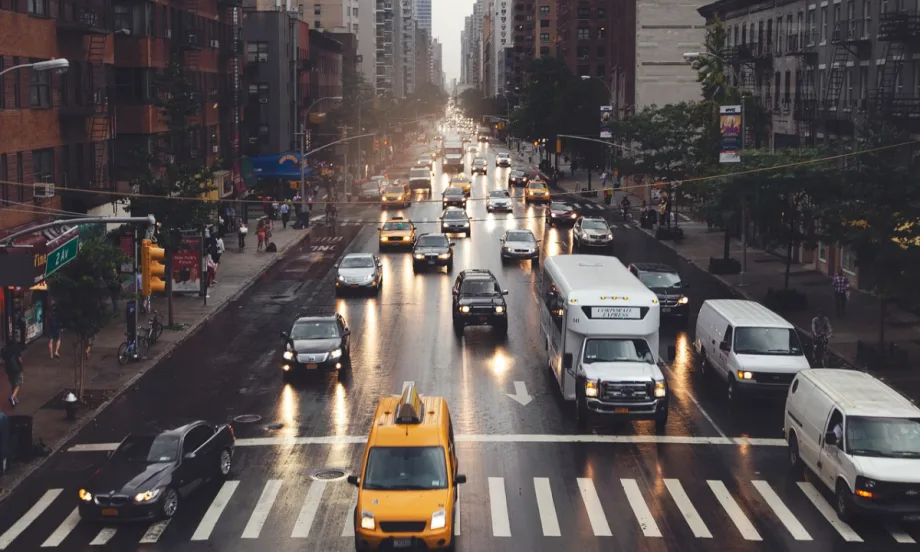
Advocates believe the charge will ease traffic problems, improve air quality, and help raise $15 billion for upgrades to New York's transit system.
Photo: Trang Nguyen from Pixabay
4 min to read
Congestion pricing, which New York state leaders hope will bring relief to one of the busiest parts of the city, has begun.
The measure charges many drivers $9 to enter Manhattan during peak hours. The charge is the first of its kind in America, but has been used in major cities across the globe for years.
Businesses are now forced to foot the bill for fleet drivers heading into the city. The price varies depending on vehicle type.
The charge, which began Jan. 5, affects vehicles entering Manhattan between 60th Street and the Battery. This covers busy areas including the theater district, Times Square, Hell's Kitchen, Chelsea and SoHo.
It was started on a Sunday in order to allow the Metropolitan Transportation Authority enough time to fix any kinks, during a day when traffic is quieter than usual.
Breaking Down the Basics
Advocates believe the charge will ease traffic problems, improve air quality, and help raise $15 billion for upgrades to New York's transit system, NPR reported.
Critics, including incoming President Donald Trump, have voiced opposition to the initiative.
New York Gov. Kathy Hochul paused the plan in mid-2024, saying the original price of $15 a day was too much. The program was later reintroduced at a reduced rate. If it continues, peak rates will rise to $12 by 2028, and to $15 by 2031.
Most drivers will be charged a once-per-day-toll. The system will charge most drivers $9 during peak hours between 5 A.M. and 9 P.M. on weekdays and from 9 A.M. to 9 P.M. on weekends.
The toll costs $2.25 overnight. Drivers who take the Holland or Lincoln tunnels will get a $3 rebate, but only during peak hours.
On top of the fee, drivers are already charged to cross many bridges and tunnels to enter Manhattan. However, there will be a credit of up to $3 for those who have already paid to enter the city via certain tunnels during peak hours, NPR reported.
Drivers can use their E-Z Pass to pay the toll. If they opt to pay by mail, they will be charged $13.50, instead of $9.
Truck drivers will be stuck paying the highest fee, a whopping $21.60. Check out Heavy Duty Trucking to see the impact the program could have on that industry.
How the Industry is Responding
The idea has been debated for decades. At least 10 lawsuits have been filed over congestion pricing. That includes a last-ditch effort from the state of New Jersey to have a judge put up a temporary roadblock against it.
Matthew Daus, founder and chair of the Transportation Practice Group, told Automotive Fleet that the program is likely to see heavy pushback.
"There is likely to be continued opposition and complaints for weeks if not months, but it may be on life support until President-elect Trump attempts to fulfill his promise to euthanize the program. More lawsuits are likely to come, and if the president does not do so by executive action, the Republican Congress, led by a bi-partisan coalition in the House, is highly likely to end the program for good before the end of 2025 by legislative act," Daus said.
Fernhay Solutions Chief Operating Officer Peter Schenkman said he believes the program will help slow traffic rates down.
"It's a big step toward cutting down traffic and emissions in the heart of the city. We've seen how similar schemes have worked in places like London, and we're hopeful this will make a real difference here too," Schenkman said. "From what we've learned, making congestion pricing work well takes some tweaking. It's not just a set-it-and-forget-it kind of thing. We'll need to keep adjusting it to match changing traffic patterns, vehicle types, make sure it's fair for everyone, and really improve air quality and city life."
Schenkman pointed to London's adoption of congestion pricing, noting a reduction in congestion and emissions
"But to keep things moving in the right direction, they had to keep improving the system—like expanding the charging zone and tweaking exemptions. This shows that congestion pricing is more of a flexible tool than a one-time fix," he added.
New York City Comptroller Brad Lander said the next step will be in making improvements to city transit to offer better solutions for city travelers.
"What’s essential now is that the MTA, the governor, and the mayor deliver on the promises. The only way to bring doubters on board is to show real, concrete improvements, and to do it quickly and transparently," Lander said in a statement.
He went on to say that he believes this program can set an example for other cities to have similar ones.
More Operations

How Fleets Can Recruit and Train Veterans for Technician Roles
Here's how the technician shortage has affected uptime for fleets, and what to do about it.
Read More →
Avis Budget Group Deploys Neology Toll Management Technology Across Major Brands
Neology’s neoFleet platform will manage toll transactions and toll-authority operations for vehicles across Avis, Budget, Payless, Budget Truck and Zipcar.
Read More →
Fleet Personal-Use Charges Edge Higher in 2026
Nearly eight in 10 surveyed fleets allow personal use of company vehicles, while just over half of respondents report charging employees for the privilege.
Read More →
The Future of Fleet + What’s Changing Right Now | AF News Recap
Could developments overseas offer a preview of what’s coming for U.S. fleets? This week, we’re looking at the future of AI, autonomy, and electrification, plus Ford Pro’s new certified pre-owned program, smarter vehicle offboarding, and a new way for fleets to manage toll expenses.
Read More →
How to Handle Vehicle Offboarding
What do fleet managers need to do when a driver leaves?
Read More →
Sponsored•October 1, 2026
Fleet Manager’s Ultimate Playbook: Navigating the New Standard in OEM Connectivity
Rising operating costs, driver safety concerns, and unplanned downtime are putting unprecedented pressure on modern fleets. Discover how fleet managers use embedded OEM connectivity and real-time vehicle data to cut TCO, prevent downtime, and protect drivers without aftermarket telematics hardware.
Read More →
U.S. Bank Adds Verra Mobility Toll Management to Voyager Fleet Platform
The integration allows U.S. Bank Voyager fleet customers to manage toll payments and violations alongside fuel, EV charging and maintenance expenses.
Read More →
ADAS Prevents Crashes. But Repairs Cost More | AF News Recap
ADAS-equipped vehicles may crash less often, but they can cost more when they do. This week, we’re breaking down what that tradeoff means for fleets, plus Subaru’s first Forester Wilderness Hybrid, Nissan’s new e-POWER Rogue, and why Calstart has become Catalyst Mobility.
Read More →
Moventum Fleet Management Names Mark Iorillo Head of Sales
Iorillo brings nearly 20 years of fleet management and sales experience to the role, including previous positions at Element Fleet Management, CEI, Donlen and Ryder.
Read More →
Fleet Has a Talent Pipeline Problem. What Comes Next? | AF News Recap
Where will fleet’s next generation of leaders come from? This week, we’re looking at the industry’s talent pipeline, what certification can add to a fleet career, how to build an award-worthy track record, and the return of Automotive Fleet’s Personal Use Survey.
Read More →