




What Back-to-Office Mandates Mean for Fleets
With back-to-office traffic rising, fleet managers can boost safety and efficiency through strategic planning, real-time data, and driver coaching.
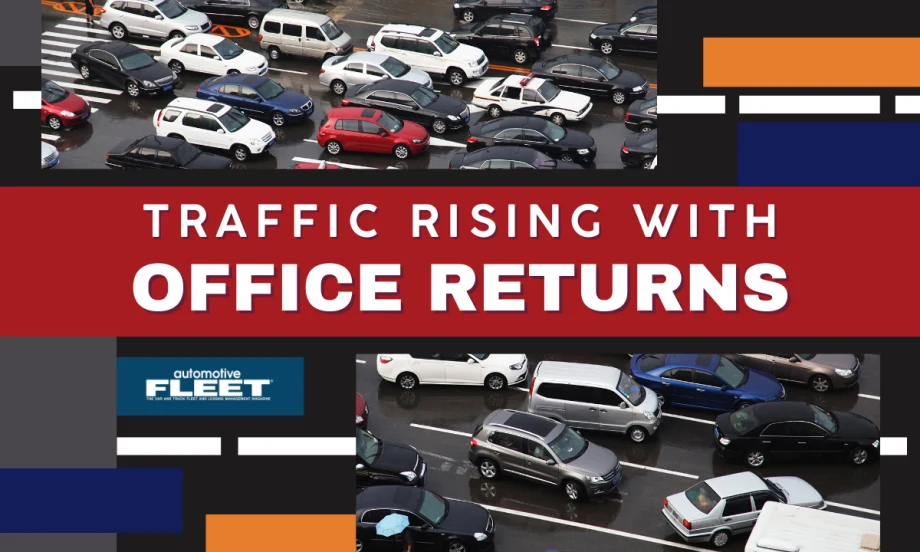
With more people on the roads comes an increased risk of accidents, especially for fleet, truck, and field service drivers.
Photo: Automotive Fleet
Nine out of 10 companies will have back-to-office policies by the end of 2024 (Human Resource Director). Amazon also recently announced that all employees must work from its offices five days a week starting in January 2025.
More people coming into offices, even if it’s just a few days a week, equates to more cars on the road. According to a recent Traffic Volume Trends report from the U.S. Department of Transportation, travel on all roads and streets changed by +1.2% for July 2024 compared with July 2023, which will likely dramatically increase in 2025.
With more people on the roads comes an increased risk of accidents, especially for fleet, truck, and field service drivers.
According to Lytx’s 2024 State of the Data report — which tracked 40 billion miles of new driving data from 2023 and identified heightened levels of risk on the roads — afternoon commute hours were three times riskier than morning commute times. The report also shows that the safest time to drive was during the morning hours from 5-8 a.m., and notes that airports and convention centers are hot spots for accidents, meriting more caution in these areas.
With this data in mind, how can fleet owners and managers navigate busier roadways and best support their drivers as 2025 nears? How can drivers be better prepared to navigate routes and deliveries with more cars on the road?
The answer is more strategic planning and technology. Below are some tips that fleet operators can apply now to prepare for the new year with more drivers on the roads.
Pre-Trip Planning is Key
Knowing that afternoon commute times are riskier than morning commute times, fleet managers should help drivers plan routes that maximize the morning hours in riskier areas.
Fleet managers need to pinpoint areas where traffic is notoriously bad or intersections that pose a high risk so they can plan for the influx in traffic next year once people are back into their commuting routines.
Beyond the Map: Leveraging Fleet Management Tools
It’s vital to arm today’s fleet drivers and field services drivers with the latest GPS tools to obtain real-time updates to avoid congested routes and road hazards that will delay their deliveries.
The newest fleet tracking software enables managers to optimize drivers’ routes and schedules based on traffic data, vehicle location, weather conditions, etc. These tools greatly enhance fleets’ overall efficiency and eliminate the guesswork of what roadways will be more congested with back-to-office mandates.
Since peak commuting times can’t typically be avoided, fleet dash cams combined with machine vision and artificial intelligence (AI) can help drivers identify and manage risks on busier roads.
For example, when entering areas known to be busier and more accident-prone, such as airports, in-cab platforms provide drivers with real-time alerts and re-routing options that can keep their fleet vehicles and other cars on the road safe.
Preparing Fleet Drivers for Traffic Challenges
With more traffic and cars on the roads and without a plan, fleet drivers will likely encounter unexpected “roadblocks” that can cause stress and fatigue.
However, when drivers have a solid strategy, they are more likely to stay calm and focused in congested areas, knowing they have accounted for traffic and possible delays along their route.
Staying cool and calm in traffic is a mental game, so giving drivers the right tools to prepare and plan for more road traffic is critical. For example, fleets should start building awareness campaigns about the expected rise in traffic toward the end of the year to help drivers mentally prepare.
It’s also important for coaches to reinforce defensive driving skills, as they will be a key differentiator for drivers battling traffic and more cars on the road.
Proactive Driver Coaching for a Safer Commute
Now is the time for fleet managers to get ahead of back-to-office rush hours. Implementing driver coaching programs now will help fleets prepare their drivers for the changes in traffic patterns in the new year and provide them with tools and tips to get through stressful situations.
Identifying common distracted driving culprits and putting coaching sessions behind them can help drivers avoid them altogether. Data from pre-pandemic commute times can help managers predict where roads will be more congested, which can be used in coaching exercises.
As more companies announce their return-to-office policies and traffic on the roads increases, fleet operators and drivers must prioritize strategic planning and utilize modern technology.
By recognizing higher-risk times and leveraging tools like GPS, AI, and real-time traffic and weather data, fleets can navigate more safely and efficiently, minimizing delays and accidents. Preparing for the influx of commuters will protect drivers and cargo and improve overall operational efficiency, helping businesses meet the demands of 2025 and beyond with confidence.
More Safety

What’s Next for Fleet? Safety, AI & Industry Recognition | AF News Recap
Could your company's culture be encouraging distracted driving? This week, we're exploring how workplace expectations affect driver safety, what AI, EVs, and autonomous vehicles could mean for the future of fleet management, and how fleet professionals can strengthen their award nominations.
Read More →
Does Your Fleet's Culture Encourage Distracted Driving?
What happens when the people responsible for enforcing safety rules are the ones setting the wrong example? The answer may reveal why some of the biggest risks to fleet drivers have little to do with what's written in the employee handbook.
Read More →
Fleet Manager’s Ultimate Playbook: Navigating the New Standard in OEM Connectivity
Rising operating costs, driver safety concerns, and unplanned downtime are putting unprecedented pressure on modern fleets. Discover how fleet managers use embedded OEM connectivity and real-time vehicle data to cut TCO, prevent downtime, and protect drivers without aftermarket telematics hardware.
Read More →
From Driver Well-Being to EV Charging | AF News Recap
Mental health belongs in the fleet safety conversation. This week, we’re looking at five ways fleets can support employee well-being before a crisis, plus Holman’s expansion in Mexico, new one-day Fleet Forward passes, and why EV charging demand is outpacing infrastructure growth.
Read More →
Nexar-Nauto Merger Aims to Give Fleets Better Safety Intelligence Through Larger Driving Dataset
Stefan Heck tells Automotive Fleet that combining more than 10 billion miles of driving history with Nexar's AI models will give fleets deeper insights into driver risk and roadway conditions than either company could provide independently.
Read More →
Don't Wait for a Crisis: 5 Ways to Build Mental Health Into Your Fleet Safety Program
For Suicide Prevention Month, fleet and safety leaders have an opportunity to put mental health where it belongs: at the center of workplace safety.
Read More →
How Camera Data Can Strengthen a Fleet’s Insurance Renewal
Insights from a commercial insurance carrier and a broker show how fleets can turn video telematic data, driver coaching, and improved claims results into a stronger case at insurance renewal.
Read More →
The Safest Fleets Aren’t the Ones with the Most Technology
You’ve made the telematics investment. Here’s how to capture the other half of its value and build the safest fleet on the road.
Read More →
Hidden in Plain Sight: Fleet Compliance Risks
Fleet compliance isn't just about having policies — it's about consistently enforcing them. This practical guide reveals six hidden compliance risks common in public sector and shared fleet operations and outlines proven strategies to improve visibility, accountability, and audit readiness
Read More →
NETS Sets 2026 Fleet Safety Benchmark Conference for Indianapolis
The Sept. 15–17 program will feature fleet benchmarking data, case studies, emerging technologies, and implementation strategies while running alongside the NSC Safety Congress & Expo.
Read More →