




February 2025 Fuel Price Update: Average Prices Dip After West Coast Surge
How do gas prices in the U.S. compare to previous weeks? The average price of gas per gallon sees decreases in most regions. See what's contributing to the changes.

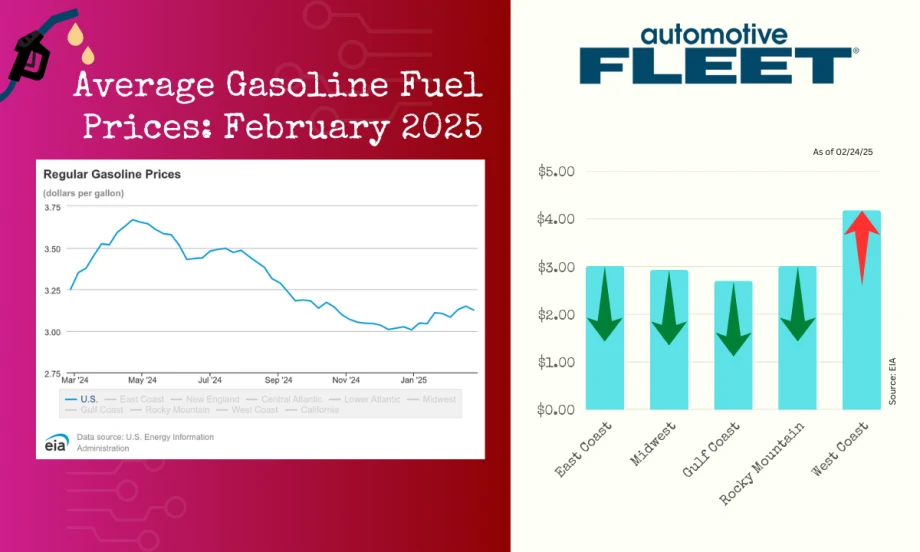
The Midwest saw the greatest decline over the last week, decreasing about 5 cents.
Photo: EIA/Automotive Fleet
Gasoline prices finally see a dip after a few weeks of increases, declining about 2 cents compared to a week ago due to surges on the West Coast calming. The national average cost of gas currently stands at $3.12, according to U.S. Energy Information Administration (EIA) data. Prices year-over-year are down by 12 cents.
“While some areas are seeing increases, others are experiencing stability or even slight declines, as the bulk of the seasonal transition has yet to significantly impact gasoline prices,” GasBuddy Head of Petroleum Analysis Patrick De Haan said.
Motorists and commercial fleets should take advantage of the slight decline while it lasts as we inch closer to the typical March madness. “While I don’t see an abrupt spike in the national average just yet, we’re likely to see upward movement in the weeks ahead,” De Haan said.
See how diesel prices are changing per region on Work Truck.
U.S. Regional Gasoline Prices as of Feb. 24, 2025
Fuel prices see slight decreases across the nation. Here’s a look at prices by region according to EIA data, as of Feb. 24:
East Coast: $3.01
Midwest: $2.93
Gulf Coast: $2.70
Rocky Mountain: $3.01
West Coast: $4.18
Almost all regions experienced a decline this week, except for the West Coast, which remained at $4.18 per gallon. The Midwest experienced the most significant dip, decreasing about 5 cents.
Here’s a look at the top 10 cheapest states to buy gas, according to AAA data:
Rank | State | Regular |
|---|---|---|
1 | Mississippi | $2.67 |
2 | Texas | $2.71 |
3 | Kentucky | $2.75 |
4 | Louisiana | $2.75 |
5 | Oklahoma | $2.76 |
6 | Alabama | $2.78 |
7 | Tennessee | $2.79 |
8 | Arkansas | $2.79 |
9 | North Carolina | $2.82 |
10 | South Carolina | $2.82 |
Kansas has been bumped off the list to make room for North Carolina, with the average price for a gallon of gas sitting at $2.82. Mississippi and Texas continue holding the top two spots for the cheapest states to buy gas.
Currently, 23 states have a $2.99 or lower average for a gallon of gas, an increase of 3 states compared to last week.
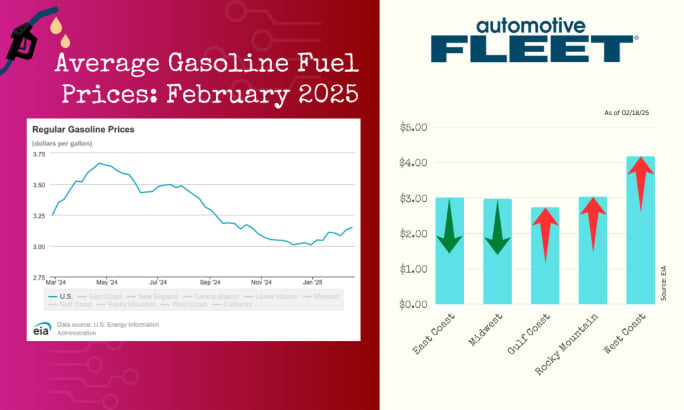
The West Coast region saw the greatest incline over the last week, increasing 15 cents.
Photo: EIA/Automotive Fleet
Gasoline prices continue to inch upward for the second week while prices surge on the West Coast. The national average cost of gas currently stands at $3.14, according to U.S. Energy Information Administration (EIA) data. Prices year-over-year are down by 12 cents.
“The national average has inched higher, driven primarily by sharp gas price increases on the West Coast, where refinery maintenance and outages have created a ripple effect in neighboring states, pushing prices higher in many communities,” GasBuddy Head of Petroleum Analysis Patrick De Haan said.
While most of the country has experienced a relatively quiet week for gas prices, the West Coast has seen rapid increases — a trend that should slow in the coming days.
“Although the surge remains isolated to the West for now, refinery maintenance will soon begin in other regions, and with the transition to summer gasoline blends underway, prices in most areas are likely to start rising in the weeks ahead,” De Haan continued.
See how diesel prices are changing per region on Work Truck.
U.S. Regional Gasoline Prices as of Feb. 18, 2025
Fuel prices see slight increases across the nation. Here’s a look at prices by region according to EIA data, as of Feb. 18:
East Coast: $3.02
Midwest: $2.98
Gulf Coast: $2.74
Rocky Mountain: $3.04
West Coast: $4.18
The West Coast saw the most significant rise in gas prices, increasing 15 cents per gallon. The East Coast region decreased by about 3 cents and saw the only significant decline.
Here’s a look at the top 10 cheapest states to buy gas, according to AAA data:
Rank | State | Regular |
|---|---|---|
1 | Mississippi | $2.67 |
2 | Texas | $2.73 |
3 | Louisiana | $2.75 |
4 | Oklahoma | $2.76 |
5 | Tennessee | $2.78 |
6 | Alabama | $2.80 |
7 | Kentucky | $2.81 |
8 | Arkansas | $2.83 |
9 | Kansas | $2.83 |
10 | South Carolina | $2.84 |
Overall movement has bumped Missouri off the list, allowing room for South Carolina to return. Mississippi and Texas continue holding the top two spots for the cheapest states to buy gas.
Currently, 20 states have a $2.99 or lower average for a gallon of gas, a significant difference from the 27 states listed at the beginning of 2025.
U.S. Regional Gasoline Prices as of Feb. 10, 2025
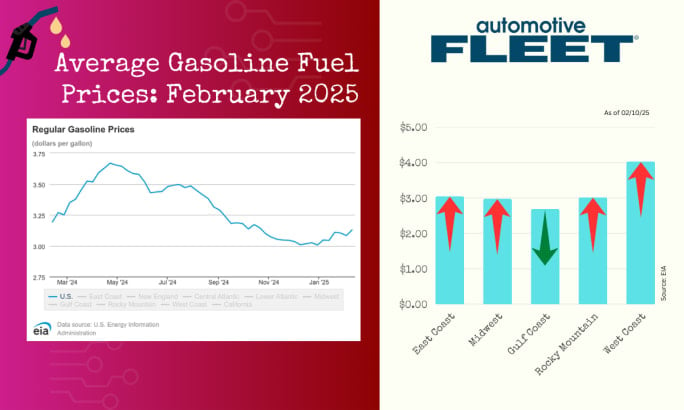
The West Coast region saw the greatest incline over the last week, increasing almost 11 cents.
Photo: EIA/Automotive Fleet
Gas prices have increased for the second week of February following a slight decline. The national average cost of gas currently stands at $3.12, according to U.S. Energy Information Administration (EIA) data. Prices year-over-year are down by 6 cents.
"While some states have seen gas prices inching up, much of the country continues to see mostly stable prices. States that experience price cycling have seen increases, while many others have only experienced minor fluctuations,” De Haan said.
With tariffs on Mexico and Canada on a 30-day pause, trade policy has yet to impact fuel prices directly. The direction of gas prices remains typical for this time of year as seasonal trends continue to drive normal fluctuations.
"However, refinery issues are creating localized disruptions, particularly on the West Coast, where a refinery fire and the transition to summer gasoline are pushing prices higher,” De Haan continued.
See how diesel prices are changing per region on Work Truck.
Fuel prices see slight increases across the nation. Here’s a look at prices by region according to EIA data, as of Feb. 10:
East Coast: $3.05
Midwest: $2.98
Gulf Coast: $2.69
Rocky Mountain: $3.02
West Coast: $4.03
The West Coast saw the most significant rise in gas prices, increasing almost 11 cents to over $4 per gallon. The Gulf Coast region decreased by 1 cent and saw the only decline.
Here’s a look at the top 10 cheapest states to buy gas, according to AAA data:
Rank | State | Regular |
|---|---|---|
1 | Mississippi | $2.67 |
2 | Texas | $2.72 |
3 | Oklahoma | $2.74 |
4 | Louisiana | $2.76 |
5 | Arkansas | $2.79 |
6 | Kentucky | $2.80 |
7 | Tennessee | $2.80 |
8 | Alabama | $2.80 |
9 | Kansas | $2.83 |
10 | Missouri | $2.84 |
Texas bumps Oklahoma further down the list this week, as the latter, alongside Mississippi, has consistently held the top two spots for several weeks.
Currently, 22 states have a $2.99 or lower average for a gallon of gas, a decrease from the beginning of the month’s totals.
U.S. Regional Gasoline Prices as of Feb. 3, 2025
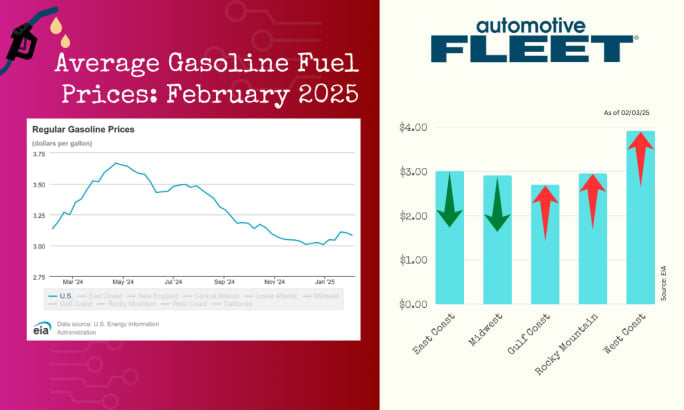
The East Coast region saw the greatest decline over the last week, decreasing almost 6 cents.
Photo: EIA/Automotive Fleet
National gasoline prices are seeing a decline in the first week of February, but region-specific changes offer a mixed bag of predictions. The national average cost of gas currently stands at $3.08, according to U.S. Energy Information Administration (EIA) data.
Although prices year-over-year are down by 5 cents, they were up by 8 cents just last week.
“The national average has seen little meaningful change over the past week, as oil markets continue to face selling pressure,” GasBuddy Head of Petroleum Analysis Patrick De Haan said. Tariffs imposed by President Trump on Canada and Mexico, with reports noting a pause for the two countries but not on China, could cause gas prices to inch up in certain regions.
“While, on paper, tariffs on Canadian energy could have a significant impact on fuel prices, a prolonged trade war could weaken global economies, reducing demand and partially offsetting the effects of tariffs,” De Haan said.
A slow but modest impact on fuel prices is expected in markets that rely heavily on Canadian crude oil or refined product imports, such as the Midwest, Rocky Mountains, and the Northeast.
See how diesel prices are changing per region on Work Truck.
Fuel prices see mixed changes across the nation. Here’s a look at prices by region according to EIA data, as of Feb. 3:
East Coast: $3.01
Midwest: $2.91
Gulf Coast: $2.70
Rocky Mountain: $2.96
West Coast: $3.92
The East Coast saw the most significant decrease in gas prices, declining almost 6 cents, while the Rocky Mountain and West Coast regions saw the greatest increase of 4 cents.
Here’s a look at the top 10 cheapest states to buy gas, according to AAA data:
Rank | State | Regular |
|---|---|---|
1 | Mississippi | $2.68 |
2 | Oklahoma | $2.70 |
3 | Texas | $2.73 |
4 | Arkansas | $2.74 |
5 | Kentucky | $2.76 |
6 | Louisiana | $2.78 |
7 | Tennessee | $2.80 |
8 | Alabama | $2.81 |
9 | Kansas | $2.82 |
10 | Ohio | $2.83 |
South Carolina was bumped off the list to make room for Ohio ($2.83) in the number 10 spot. Mississippi and Oklahoma remain the top two states with the cheapest price for a gallon of gas. Currently, 25 states have a $2.99 or lower average for a gallon of gas.
More Fuel
Fuel Prices Surge in September | September Fuel Update
September brought major fuel price swings, including diesel crossing $6 a gallon. Here’s how gas and diesel prices changed throughout the month, and where they stood heading into October.
Read More →
Turning Fleet Payment Data into Executive Insights
Ramel Lindsay of U.S. Bank Voyager discusses how fleets can transform payment and transaction data into actionable intelligence to reduce costs, improve oversight, and support executive decision-making.
Read More →
Why the IRS Raised Its Mileage Rate in the Middle of 2026
Fuel-price volatility drove the rare increase to 76 cents per mile, the fifth midyear adjustment since 2000.
Read More →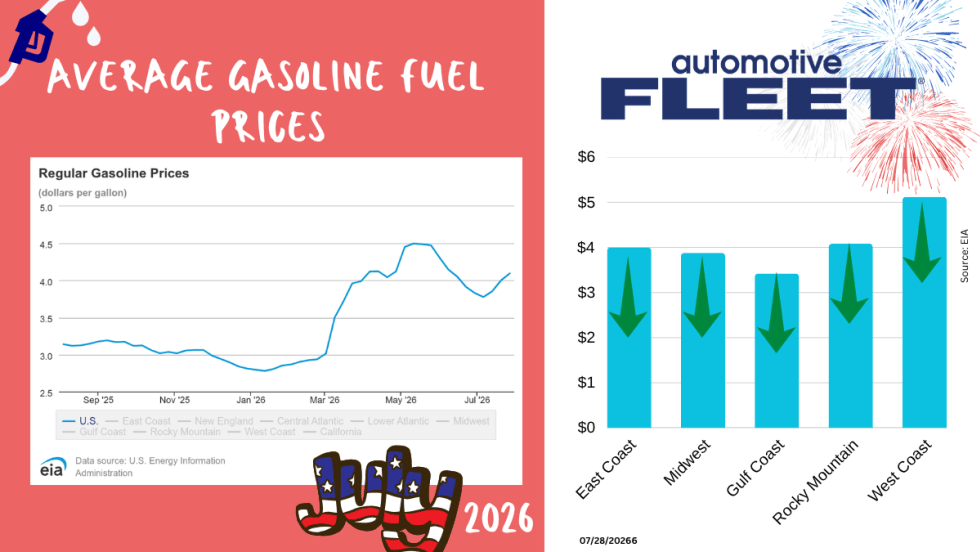
July Fuel Update: Prices Keep Rising in Light of More Conflict
Gas prices continue to rise as more and more conflicts do, too.
Read More →
Bob Adamsky on Fuel Volatility: "Don't Panic, Have a Plan."
When it comes to up and down fuel prices, Adamsky has a message for fleets: “Don’t panic.”
Read More →
How Fleets Can Gain Control of Non-Fuel Spend
Fuel often gets the spotlight, but non-fuel expenses can have a major impact on fleet costs. Ramel Lindsay of U.S. Bank Voyager discusses how fleets can gain better visibility and control over these often-overlooked expenditures.
Read More →
Fuel is Just the Start: How Middle East Tensions are Driving Up Fleet Maintenance Costs
The Middle East conflict is doing more than pushing up fuel prices. It’s also raising the cost of key maintenance products your fleet depends on, from motor oil to tires to windshield wipers. Here’s what you need to know about this budget-busting situation.
Read More →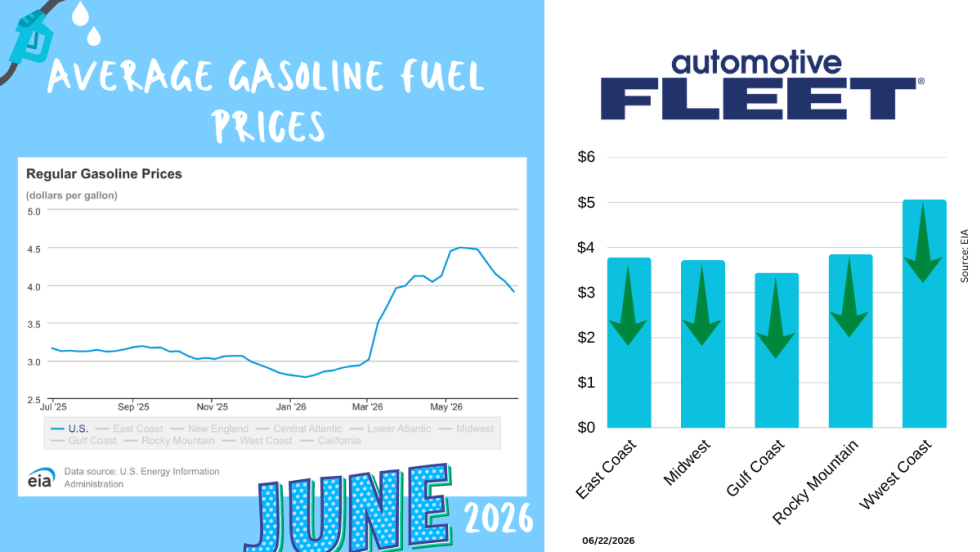
June Fuel Update: Prices Fall Below $4
Drivers are finally getting some relief at the pump. The national average gas price has dropped below $4 a gallon for the first time in months, with prices falling in 47 states as oil markets react to developments in U.S.-Iran negotiations.
Read More →
Study: How 2026's Gas Price Hikes Affect Different Vehicle Types
New data from iSeeCars reveals how rising fuel costs have affected different vehicle segments as gasoline prices climbed nearly 46% over the past four months.
Read More →
May Fuel Update: All Regions Experience Declines
Gas prices are finally easing in much of the country, but experts warn global tensions could quickly reverse the trend as the national average remains well above last month’s levels.
Read More →