




Access to Fuel Improving But Still an Issue in Northeast
TORRANCE, CA - The U.S. Department of Energy and AAA are reporting that more fueling stations are operational in New York and New Jersey, and that the fuel distribution infrastructure in the northeast is slowly recovering.
TORRANCE, CA – Following super storm Sandy, fuel shortages have affected many communities in New York, New Jersey, and elsewhere, due to a mix of distribution challenges and widespread power outages. As of Nov. 5, the U.S. Department of Energy (DOE) had estimated that 24% of gas stations in the New York metropolitan area did not have gasoline available for sale. The DOE reported this is a drop from the 27% that it estimated did not have gasoline on Nov. 4.
AAA provided an update to its Friday, Nov. 2, estimate of the number of fuel stations currently with power and selling fuel, stating that as of Nov. 5, in New Jersey, 55 to 60% of stations are operating, that 60 to 65% are up and running in New York, and that on Long Island, 50 to 55% are selling fuel.
In addition, fuel prices have gone up in the northeast, according to AAA. Since Oct. 29, prices went up 3 cents in New York and close to 7 cents in New Jersey. As of Nov. 6, prices were at $3.974 for a gallon of regular retail gasoline in New York, and $3.634 in New Jersey. A gallon of diesel was going for $4.354 in New York and $3.961 in New Jersey.
With the fuel distribution system significantly disrupted across the northeast, it could take time for refineries, petroleum distribution terminals, and related infrastructure to be fully operational. On Nov. 6, the DOE provided an update on the number of refineries and terminals currently operating. DOE stated that three out of six refineries in the area are fully operational, that out of 57 terminals in Sandy’s path, 48 are fully operational, and that the Colonial Pipeline reported that power to its Linden, N.J. facility has been restored and that all of its delivery lines are operational.
The DOE stated that Phillips 66 is estimating it could take two to three weeks before its Bayway refinery in Linden can resume operations. The company needs to replace electrical equipment damaged by saltwater, according to the DOE.
WEX Inc. (formerly Wright Express) posted an update on Friday, Nov. 2, that stated the company had identified 1,000 zip codes classified by FEMA as the primary storm-impacted areas. WEX said it would be monitoring those areas to assist with any hardships. The company also stated it would be suppressing late fees for upcoming billing cycles, and will have triage in place to refund late fees that may have been assessed for customers in storm-impacted areas. The company has a fuel site locator here.
On November 4, New Jersey's Governor Chris Christie provided an update to the media on the status of the fuel supply issues in the state. Christie had already issued orders to ration fuel on Saturday, Nov. 3, for counties with limited access to fuel, including Bergen, Essex, Hudson, Hunterdon, Middlesex, Morris, Monmouth, Passaic, Somerset, Sussex, Union, and Warren. The rationing requires fuel retailers to only sell fuel to vehicle owners where the last number on a given license plate was an even number on even numbered days of the month and to owners of vehicles with odd numbers on odd-numbered days of the month.
"When power went out to the refineries, and when power went out to the pipelines, they couldn't move the gas," New Jersey's Governor Chris Christie said in a media briefing. "Now all the power is on for the pipelines and refineries. The president ordered that 22 million gallons of gasoline (Ed. Note: the president ordered 12 million gallons of gasoline and 10 million gallons of diesel fuel) be move here and New York, split between the two of us. This morning, in Bergen County, Essex County, Passaic County, Monmouth County, all across those counties, there are national guard tankers moving to gas stations that have power but no fuel. I'll be giving updates later today on stations on the specific gas stations have been fueled so that you can go to those that have fuel and they'll have shorter lines and that will help move things along."
The federal and state governments were also working to address the fuel shortage in storm-hit areas. On Friday, the Federal Emergency Management Agency (FEMA, you can visit the agency's blog here) announced it plans to buy up to 12 million gallons of gasoline and up to 10 million gallons of diesel to distribute in areas impacted by Sandy. FEMA plans to transport the fuel via tanker trucks throughout New York, New Jersey, and other storm-hit communities.
To help alleviate some of the distribution challenges in the state of New York, the state’s Governor Andrew Cuomo signed an executive order that temporarily allows fuel distributors and transporters to bring gasoline, diesel, and kerosene into the state without having to meet usual registration requirements (transporters and distributors must be registered with the New York State Department of Taxation and Finance under normal circumstances).
In another effort to help improve fuel availability, the U.S. Secretary of Homeland Security Janet Napolitano issued a temporary waiver of the Jones Act through Nov. 13. This waiver allows foreign oil tankers coming from the Gulf of Mexico to enter ports in the northeast and provide fuel.
By Greg Basich
Editor's Note: This story is an update to a story we posted on Friday and have been updating since then, which you can view here.
More Fuel
Fuel Prices Surge in September | September Fuel Update
September brought major fuel price swings, including diesel crossing $6 a gallon. Here’s how gas and diesel prices changed throughout the month, and where they stood heading into October.
Read More →
Turning Fleet Payment Data into Executive Insights
Ramel Lindsay of U.S. Bank Voyager discusses how fleets can transform payment and transaction data into actionable intelligence to reduce costs, improve oversight, and support executive decision-making.
Read More →
Why the IRS Raised Its Mileage Rate in the Middle of 2026
Fuel-price volatility drove the rare increase to 76 cents per mile, the fifth midyear adjustment since 2000.
Read More →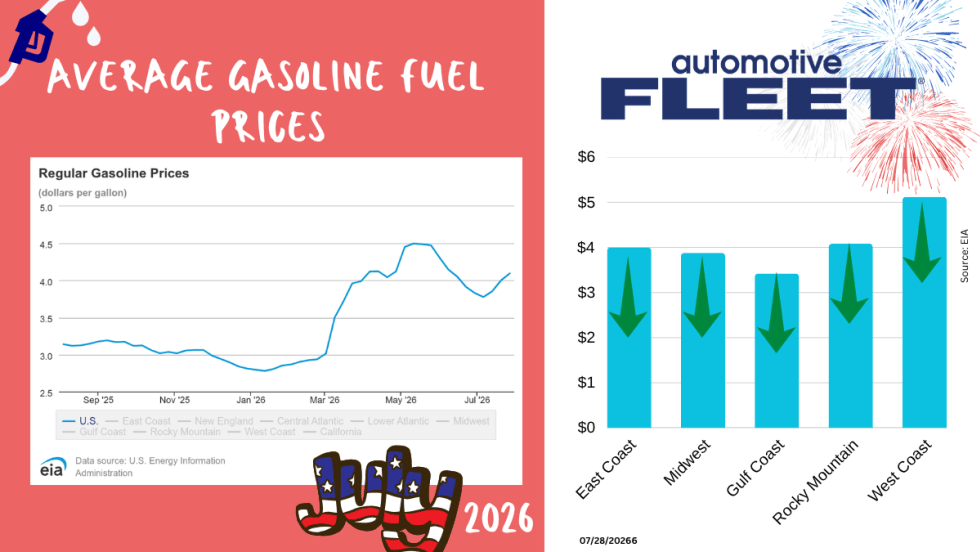
July Fuel Update: Prices Keep Rising in Light of More Conflict
Gas prices continue to rise as more and more conflicts do, too.
Read More →
Bob Adamsky on Fuel Volatility: "Don't Panic, Have a Plan."
When it comes to up and down fuel prices, Adamsky has a message for fleets: “Don’t panic.”
Read More →
How Fleets Can Gain Control of Non-Fuel Spend
Fuel often gets the spotlight, but non-fuel expenses can have a major impact on fleet costs. Ramel Lindsay of U.S. Bank Voyager discusses how fleets can gain better visibility and control over these often-overlooked expenditures.
Read More →
Fuel is Just the Start: How Middle East Tensions are Driving Up Fleet Maintenance Costs
The Middle East conflict is doing more than pushing up fuel prices. It’s also raising the cost of key maintenance products your fleet depends on, from motor oil to tires to windshield wipers. Here’s what you need to know about this budget-busting situation.
Read More →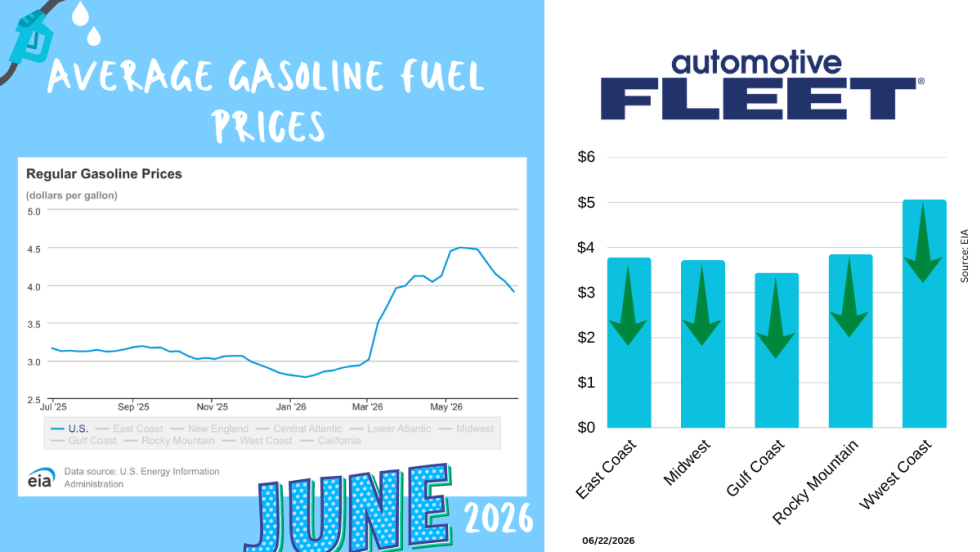
June Fuel Update: Prices Fall Below $4
Drivers are finally getting some relief at the pump. The national average gas price has dropped below $4 a gallon for the first time in months, with prices falling in 47 states as oil markets react to developments in U.S.-Iran negotiations.
Read More →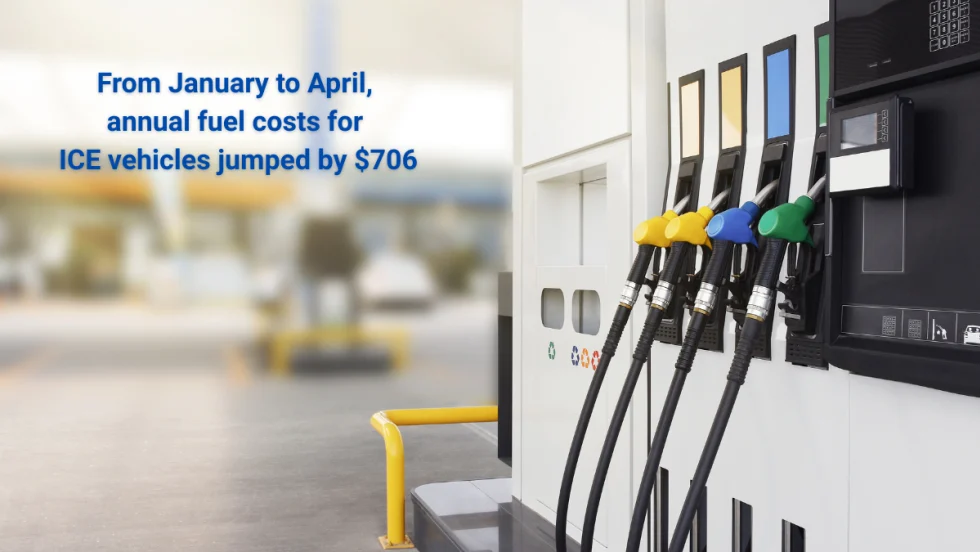
Study: How 2026's Gas Price Hikes Affect Different Vehicle Types
New data from iSeeCars reveals how rising fuel costs have affected different vehicle segments as gasoline prices climbed nearly 46% over the past four months.
Read More →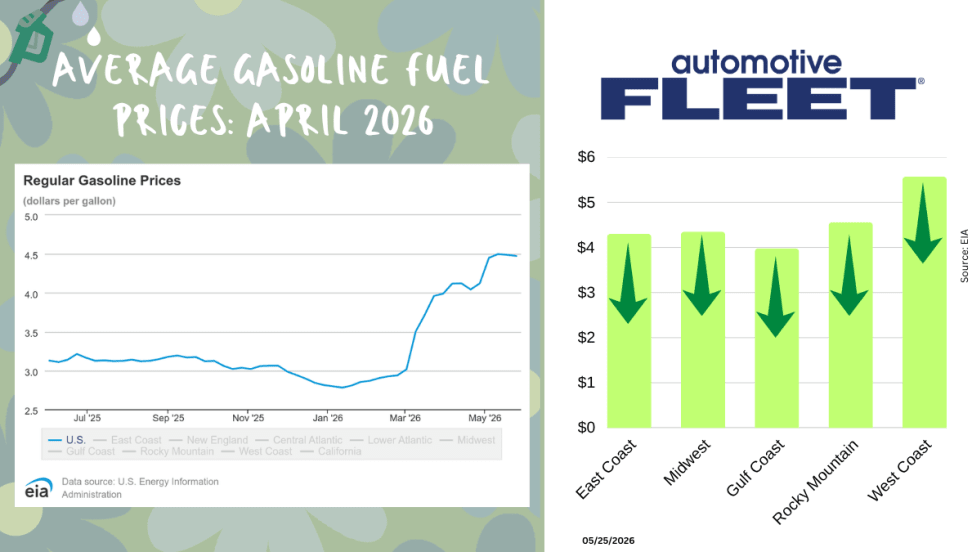
May Fuel Update: All Regions Experience Declines
Gas prices are finally easing in much of the country, but experts warn global tensions could quickly reverse the trend as the national average remains well above last month’s levels.
Read More →