




Access to Fuel Still an Issue in Northeast Due to Power Outages and Supply Disruptions
TORRANCE, CA - AAA estimates that as of Friday at 3:00 p.m. in New York City, only 40 to 45% of gas stations are operating and selling gasoline; in New Jersey the organization stated that 45-50% of stations are operational; and in Long Island, only 35 to 40% are selling fuel.
TORRANCE, CA – Following super storm Sandy, fuel shortages have affected many communities in New York, New Jersey, and elsewhere, due to a mix of distribution challenges and widespread power outages. AAA estimates that as of Friday at 3:00 p.m. in New York City, only 40 to 45% of gas stations are operating and selling gasoline; in New Jersey the organization stated that 45-50% of stations are operational; and in Long Island, only 35 to 40% are selling fuel.
Fuel prices in the region were on the rise as of Friday, Nov. 2. According to GasBuddy.com, the average retail price for a gallon of regular unleaded gasoline in New York State was $3.918 and $3.558 in New Jersey and rising.
WEX Inc. (formerly Wright Express) posted an update on Friday, Nov. 2, that stated the company had identified 1,000 zip codes classified by FEMA as the primary storm-impacted areas. WEX said it would be monitoring those areas to assist with any hardships. The company also stated it would be suppressing late fees for upcoming billing cycles, and will have triage in place to refund late fees that may have been assessed for customers in storm-impacted areas. The company has a fuel site locator here.
Utility PSE&G posted an update on its website on Nov. 5, stating that it had restored power to all refineries, and 78% of the gas stations in its service territory have power. The utility stated on Nov. 2 that it’s working with the New Jersey Gasoline Service Association to locate and help gas stations that have fuel to sell but don’t have electricity and therefore can’t pump any gas. On Nov. 5, PSE&G stated its best estimate for restoring power for all of its customers would be Nov. 9.
On November 4, New Jersey's Governor Chris Christie provided an update to the media on the status of the fuel supply issues in the state. Christie had already issued orders to ration fuel on Saturday, Nov. 3, for counties with limited access to fuel, including Bergen, Essex, Hudson, Hunterdon, Middlesex, Morris, Monmouth, Passaic, Somerset, Sussex, Union, and Warren. The rationing required fuel retailers to only sell fuel to vehicles where the last number on the license plate was an even number on even numbered days of the month and to vehicles with odd numbers on odd days of the month (Nov. 5 is an "odd" license plate day, for example).
"When power went out to the refineries, and when power went out to the pipelines, they couldn't move the gas," New Jersey's Governor Chris Christie said in a media briefing. "Now all the power is on for the pipelines and refineries. The president ordered that 22 million gallons of gasoline (Ed. Note: the president ordered 12 million gallons of gasoline and 10 million gallons of diesel fuel) be move here and New York, split between the two of us. This morning, in Bergen County, Essex County, Passaic County, Monmouth County, all across those counties, there are national guard tankers moving to gas stations that have power but no fuel. I'll be giving updates later today on stations on the specific gas stations have been fueled so that you can go to those that have fuel and they'll have shorter lines and that will help move things along."
Christie added that on Sunday he had received an update from BP that said the company had opened 100 more stations and that they have fuel in their stations' tanks.
Philadelphia-based fuel retailer Sunoco posted an update on its website, stating that following the storm, more than 500 of its sites were out of service, major terminals had been flooded, pipelines were closed, and part of its fuel delivery fleet had been damaged. As of Friday afternoon, the company said 350 of its stations were up and running, including those in New Jersey Turnpike, the Garden State Expressway, and in Palisades Parkway.
The storm also significantly disrupted the fuel distribution network across New York and New Jersey.
Sunoco stated it had repaired its truck fleet and partnered with common carriers to expand its delivery capacity in the affected areas. It also reopened its terminal in Piscataway, N.J.
Motiva Enterprises, which operates gas stations, three refineries, and a number of fuel storage terminals, reported that four of the company’s diesel oil storage tanks at its Sewaren terminal were damaged. As of Nov. 1, the company was conducting safety inspections to determine when it could resume operations.
Kinder Morgan, a pipeline transportation and energy storage company that operates in the northeast had shut down its New York Harbor terminals in advance of the hurricane. The company announced on Nov. 1 that it would reopen its inbound and outbound petroleum product shipments at its Carteret, N.J., Perth Amboy, N.J., and Staten Island, N.Y., terminals within 24 to 48 hours. Kinder Morgan added that its mid-Atlantic terminals were operational at the time it made the announcement.
As of Oct. 31, fuel storage and distribution company NuStar Energy hadn’t announced whether its Linden, N.J. terminal was back online, but its terminals in Virginia, Maryland, and Paulsboro, N.J. were back in operation.
Refinery operator Phillips66 announced it had restored power at its Bayway Refinery in Linden, N.J., which produces 238,000 barrels per day.
In terms of pipelines, fuel retailer Sunoco stated that the Buckeye Pipeline and Colonial Pipeline, which deliver fuel throughout New York and New Jersey, are up and running again.
The federal and state governments were also working to address the fuel shortage in storm-hit areas. On Friday, the Federal Emergency Management Agency (FEMA) announced it plans to buy up to 12 million gallons of gasoline and up to 10 million gallons of diesel to distribute in areas impacted by Sandy. FEMA plans to transport the fuel via tanker trucks throughout New York, New Jersey, and other storm-hit communities.
To help alleviate some of the distribution challenges in the state of New York, the state’s Governor Andrew Cuomo signed an executive order that temporarily allows fuel distributors and transporters to bring gasoline, diesel, and kerosene into the state without having to meet usual registration requirements (transporters and distributors must be registered with the New York State Department of Taxation and Finance under normal circumstances).
In another effort to help improve fuel availability, the U.S. Secretary of Homeland Security Janet Napolitano issued a temporary waiver of the Jones Act through Nov. 13. This waiver allows oil tankers coming from the Gulf of Mexico to enter ports in the northeast and provide fuel.
For driver and fleet managers looking for information about gas stations that are currently open and selling fuel, AAA created a webpage that has links to PDFs that list the locations of open stations, which you can visit here.
By Greg Basich
Updated 11/5/2012 with information from N.J. governor media briefing. Information from WEX Inc. and PSE&G added at 10:38 a.m.
More Fuel
Fuel Prices Surge in September | September Fuel Update
September brought major fuel price swings, including diesel crossing $6 a gallon. Here’s how gas and diesel prices changed throughout the month, and where they stood heading into October.
Read More →
Turning Fleet Payment Data into Executive Insights
Ramel Lindsay of U.S. Bank Voyager discusses how fleets can transform payment and transaction data into actionable intelligence to reduce costs, improve oversight, and support executive decision-making.
Read More →
Why the IRS Raised Its Mileage Rate in the Middle of 2026
Fuel-price volatility drove the rare increase to 76 cents per mile, the fifth midyear adjustment since 2000.
Read More →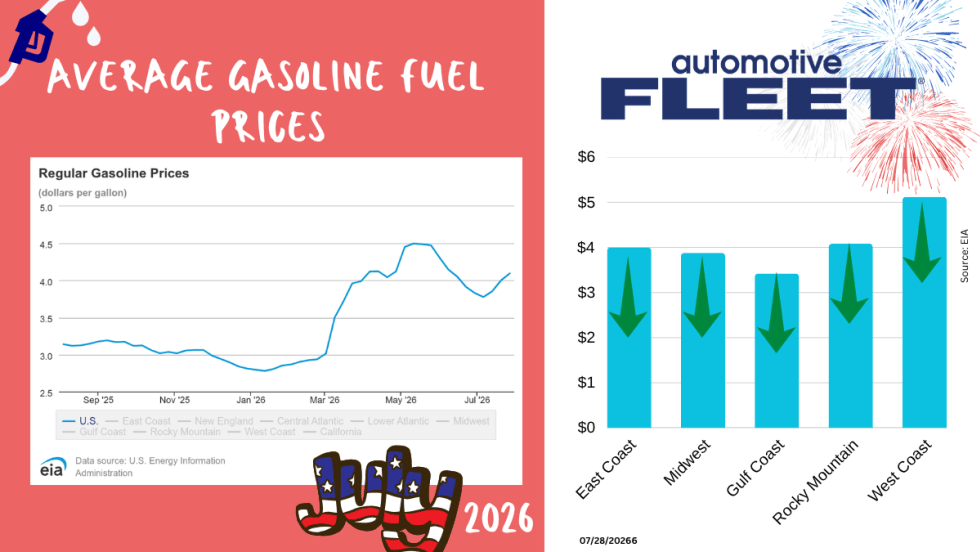
July Fuel Update: Prices Keep Rising in Light of More Conflict
Gas prices continue to rise as more and more conflicts do, too.
Read More →
Bob Adamsky on Fuel Volatility: "Don't Panic, Have a Plan."
When it comes to up and down fuel prices, Adamsky has a message for fleets: “Don’t panic.”
Read More →
How Fleets Can Gain Control of Non-Fuel Spend
Fuel often gets the spotlight, but non-fuel expenses can have a major impact on fleet costs. Ramel Lindsay of U.S. Bank Voyager discusses how fleets can gain better visibility and control over these often-overlooked expenditures.
Read More →
Fuel is Just the Start: How Middle East Tensions are Driving Up Fleet Maintenance Costs
The Middle East conflict is doing more than pushing up fuel prices. It’s also raising the cost of key maintenance products your fleet depends on, from motor oil to tires to windshield wipers. Here’s what you need to know about this budget-busting situation.
Read More →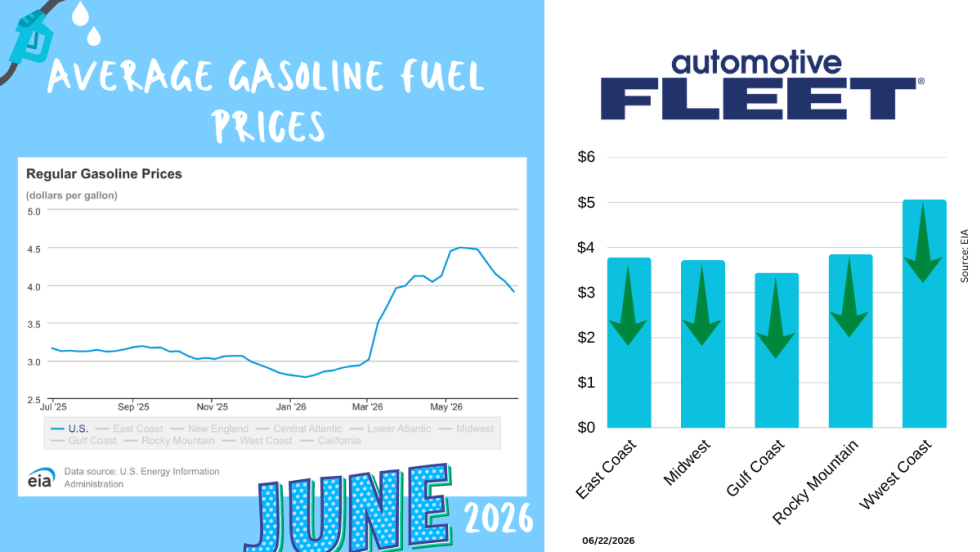
June Fuel Update: Prices Fall Below $4
Drivers are finally getting some relief at the pump. The national average gas price has dropped below $4 a gallon for the first time in months, with prices falling in 47 states as oil markets react to developments in U.S.-Iran negotiations.
Read More →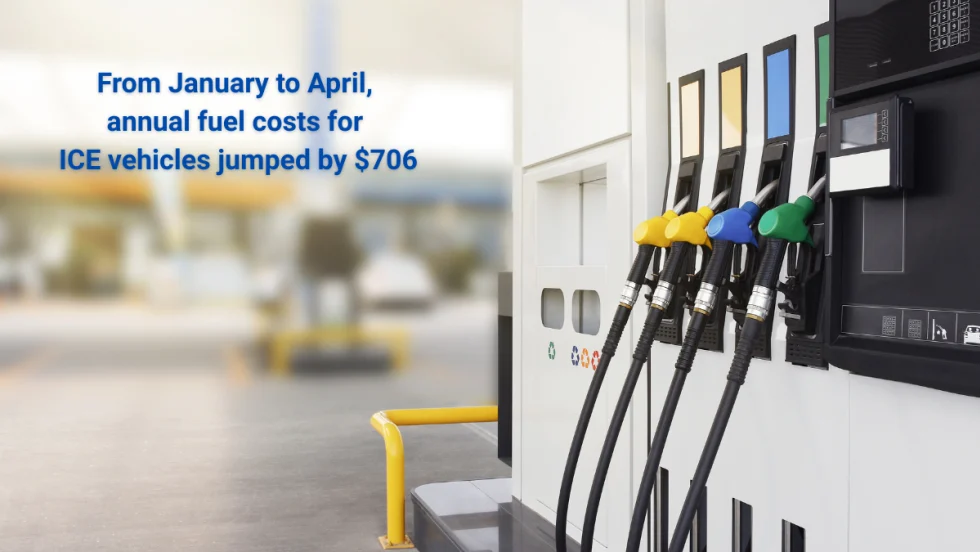
Study: How 2026's Gas Price Hikes Affect Different Vehicle Types
New data from iSeeCars reveals how rising fuel costs have affected different vehicle segments as gasoline prices climbed nearly 46% over the past four months.
Read More →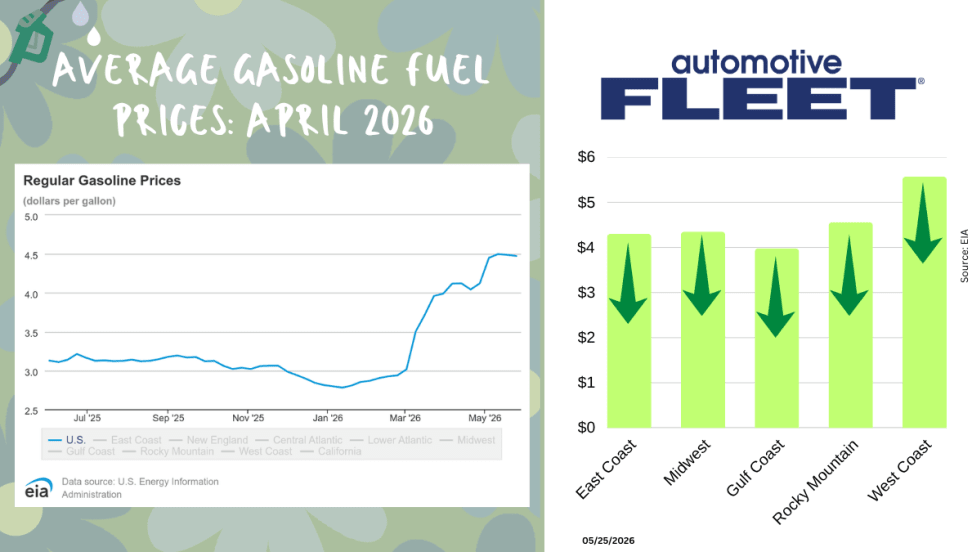
May Fuel Update: All Regions Experience Declines
Gas prices are finally easing in much of the country, but experts warn global tensions could quickly reverse the trend as the national average remains well above last month’s levels.
Read More →