




Who Is Poised to Win the Connected Services Market for Fleets?
A battle is brewing between the traditional telematics providers, third-party connected car platforms, and the automakers themselves, which are returning with new digital applications.


Which service has the Easy Button for fleets — or will each type of service carve out their space in the market based on what they do best?
Photo via Craig Dugas/Flickr
“Connected services” is becoming the next buzz phrase for fleets. Where do connected services come from? Traditionally, they come from the established yet still growing market of fleet telematics.
More recently, third-party connected car platforms have emerged. These platforms don’t use installed modems, instead they pull data directly from the OEMs’ modems, which have rapidly increased in penetration to 80% of all new vehicles today. The data goes to the cloud, where it is normalized for third-party app providers to offer solutions for fleets.
Add to this mix, the automakers, who are stepping back into the game with new service offerings for fleets that will compete with both the traditional telematics service providers (TSPs) and the connected car data platforms.
Some History on Connected Services
Automakers first launched telematics systems with partners over a decade ago. You may remember Ford’s Crewchief (powered by Telogis, a third-party TSP), and of course OnStar by General Motors has been the platform for numerous connectivity initiatives for more than 20 years. Ram jumped into this stream later with Ram Telematics, powered by Verizon Connect.
These early systems competed in a mature market of TSPs and they weren’t as sophisticated as the ones the TSPs offered themselves. Yes, the OEM systems came out of the factory, which saved the aftermarket modem install, but those systems didn’t integrate with vehicles from other automakers — or it was at least very difficult. What’s changed?
Richer Data
First and foremost, the new automakers’ systems are pulling richer data directly from their own OEM-embedded modems. And they’re able to more easily connect to other automakers’ makes and models through plug-n-play dongles. This makes life a lot easier for the great majority fleets that run multiple vehicle brands.
Beyond vehicle tracking, the new OEM systems offer double or triple the number of functions, such as real time-vehicle diagnostics, in-cab driver coaching, and Alexa and Google Home voice commands, to name a few. They also connect to electric vehicle functions, and we’ll get to that in a moment.
Automakers understand that vehicles are becoming digital platforms — Elon Musk showed us that. It’s a logical extension for the automakers to leverage their own vehicle data and claim their share of recurring revenue from new services.
Of course, these developments are not happening in a vacuum.
Not a Vacuum
Over the last 10 years, the percentage of installed telematics units in fleets has grown exponentially, those TSPs have also upped their game in features and sophistication. The TSPs continue to grow their agreements with many OEMs to install their modems at the factory, though most installations still happen in the aftermarket. While telematics penetration is greater with larger fleets, plug-n-play systems are available for small fleets.
The TSPs have also created their own marketplaces for digital, connected services. Fleets can one-stop-shop through their telematics systems for new services such as video telematics, driver training, dispatch software, and predictive maintenance.
Meanwhile, connected car platforms such as Motorq, Wejo, Otonomo, and Smartcar each approach the market slightly differently, but as they’re using OEM modems, they can steer clear of a full-blown system and offer specific services targeted to a fleet’s needs.
With all this competition, how can the automakers claim a new advantage?
Electrification Edge
The electrification revolution might be one. For fleets, harnessing data is essential to electrify the right way. Automakers are in the pole position to pull all this rich new battery and performance data from their electric vehicles, such as battery state of charge, optimal vehicle charging times, and measuring EVs’ operational performance in a variety of scenarios.
What’s more, automakers are providing services for electrification beyond the vehicles. They’re facilitating business connections to charging infrastructure, software systems, utilities, and EV consultancy services. They can also offer digital keys without hardware hacks that third parties must contend with.
So, when it comes to electrification, the fleet-minded automakers are looking to develop the complete package — the vehicle, the connected services, and infrastructure planning.
The automakers are trying to create an Easy Button for fleets. Will it work?
An Easy Button for Fleets?
Let’s look at the competitive market: Telematics systems and connected platforms also have apps to pull EV data. And they’re all working toward a day when the aftermarket-installed modem is a thing of the past.
Here are my questions: The automakers can pull richer data from their vehicles than the third parties. How will this be beneficial for fleets, in ways the TSPs and connected car platforms can’t provide? Can the automakers really convince a fleet to dump their contract with an established TSP? Will their plug-and-play dongles for other makes and models pull the right data to use in their systems?
The answer may not be all or nothing. Fleets may keep their telematics systems. And as they start buying EVs, they’d take advantage of these new connected services from the automakers. The question then becomes, how will these systems mesh in a single dashboard for fleets?
Sure, there’s an API for that — but it often works better in theory than in reality. Maybe more importantly, what is the threshold of monthly costs for fleets as they consider these new services on top of their telematics subscriptions?
This is an evolving landscape, so there are no easy answers. But we do know that in this highly competitive new market, with many more new services, fleets have more choices, and that’s good for everyone.
More Fleet Forward
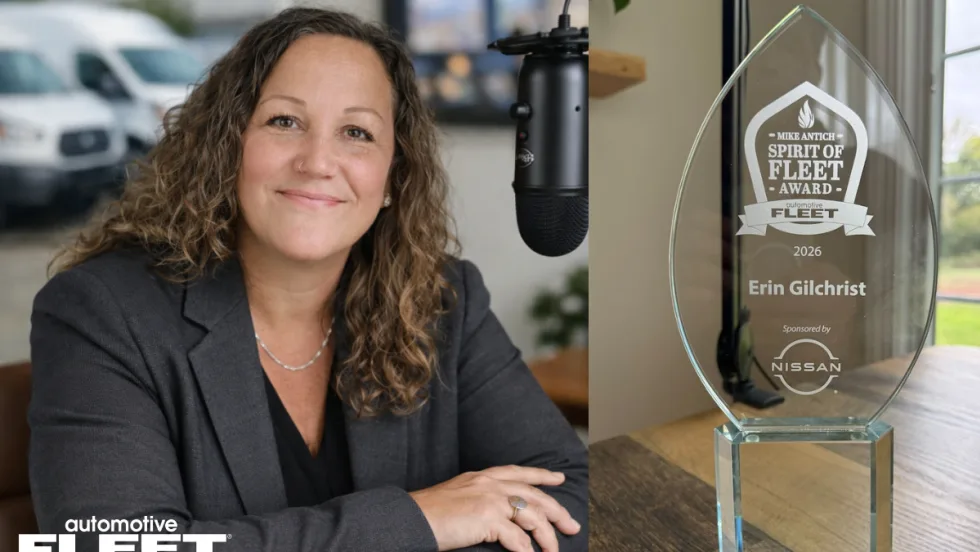
Erin Gilchrist Receives Mike Antich Spirit of Fleet Award
Last week at AFLA in Vegas, Erin Gilchrist received the inaugural, brand-new Spirit of Fleet Award.
Read More →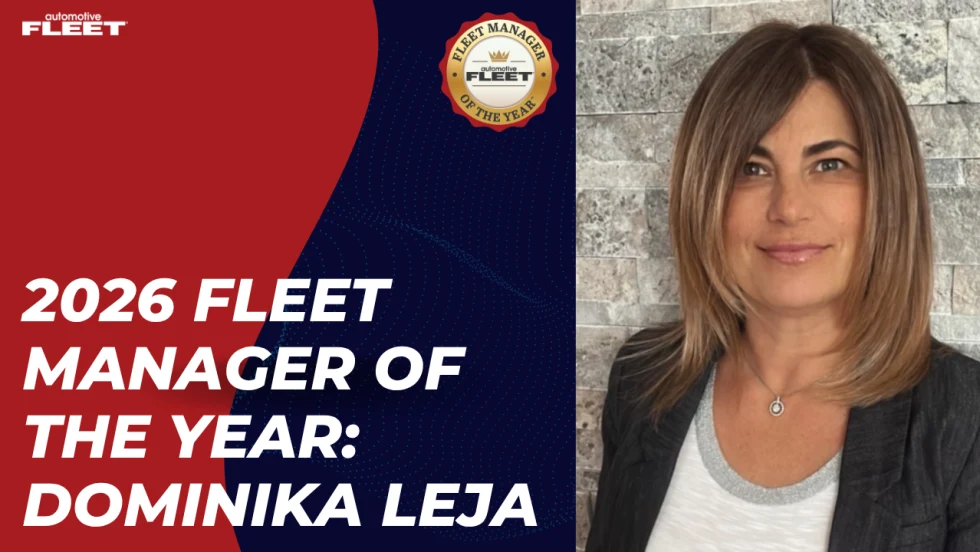
Dominika Leja Named the 2026 Fleet Manager of the Year
The AstraZeneca associate director of fleet was recognized for her leadership in fleet electrification, cost savings, and operational transformation.
Read More →
Jamie McKay Named the 2026 Fleet Visionary Award Winner
The Aptive Pest Control fleet manager was recognized for her approach to operations, data, lifecycle management, and driver needs.
Read More →
Fleet Forward Conference Introduces One-Day Passes for 2026
New one-day registration gives fleet professionals the flexibility to attend Tuesday, Wednesday, or Thursday, with passes available for $199 through Sept. 18.
Read More →
Vibe Coding: When Fleet Managers Become Software Builders
Five fleet professionals — none with programming skills — discuss how they’re using AI to build fleet solutions in-house and in a fraction of the time.
Read More →
Fleet Forward Conference Tackles Fleet Industry’s Growing Leadership Gap
This session will examine succession planning, knowledge transfer, and the skills the next generation of fleet leaders will need as veteran professionals leave the industry.
Read More →
2026 Fleet Manager of the Year Finalists Announced
Who are the 2026 Fleet Manager of the Year finalists?
Read More →
John Rossant to Deliver Opening Keynote at 2026 Fleet Forward Conference
The CoMotion founder will draw on developments across Europe, China, the Middle East, and other international markets to identify trends that could influence how U.S. fleets plan for the coming decade.
Read More →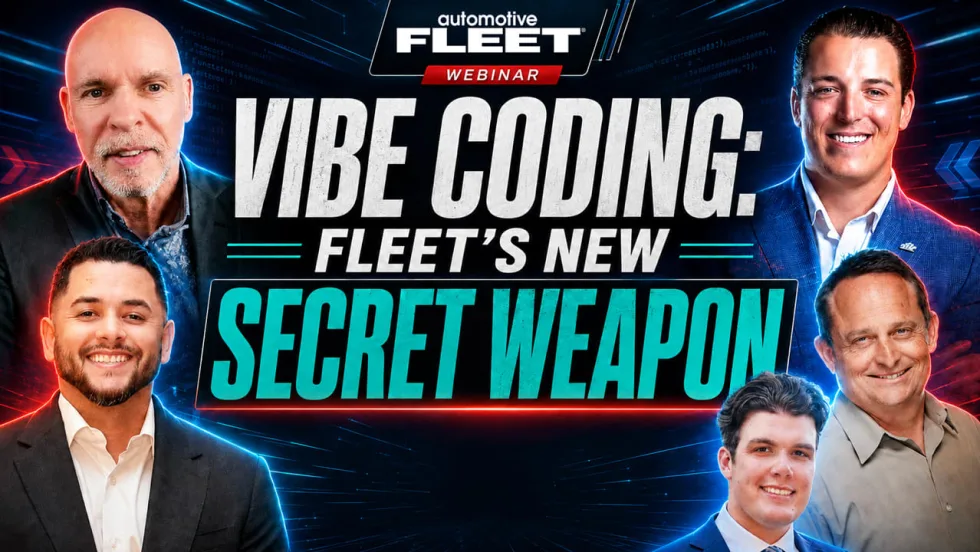
How to Build Custom Fleet Tools With AI and Vibe Coding [Webinar]
A new Automotive Fleet webinar explores how fleet managers are using AI and vibe coding to automate routine work and create simple operational tools without traditional programming skills.
Read More →