




Unilever Consolidates Fleet Leasing With a Single Lessor
Recently, Lever Brothers Company, a part of Unilever United States, switched from company ownership to leasing as part of a corporate-wide decision. In addition, this decision allowed all Unilever companies to use a single lessor.
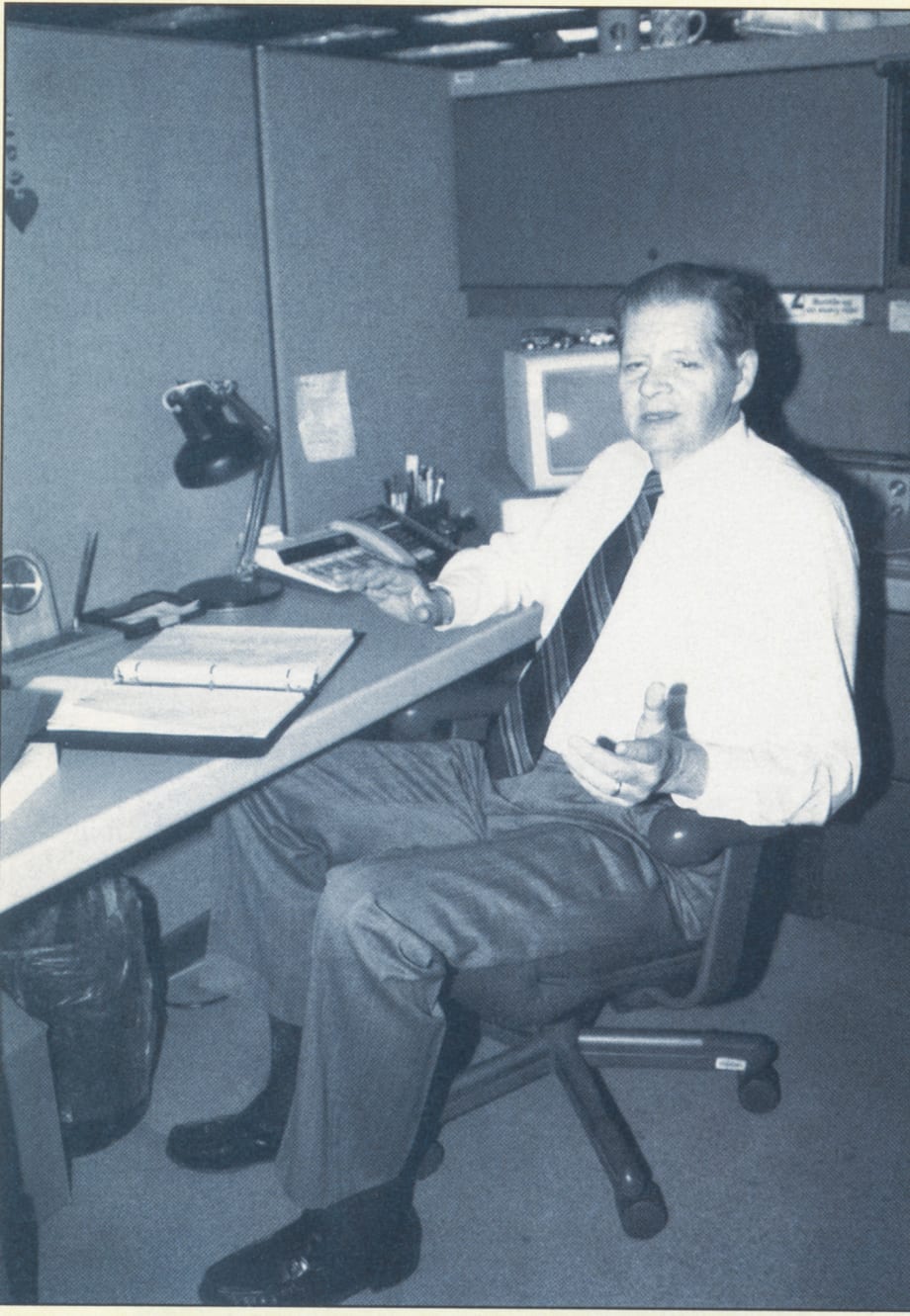
"Right now I don't see where a leasing company can do some of the things better than we've done them ourselves." Frank Kraus, Unilever (1990)
Most fleets periodically examine the lease versus own question.
Recently, Unilever United States tackled this problem and decided that the fleets of its subsidiary companies should be leased through a single lessor. Altogether, Unilever United States operates about 2,700 vehicles in several companies, which includes Lever Brothers, Thomas J. Lipton, and Chesebrough-Ponds.
Last year, the various company fleet departments of Unilever United States formed a task force to jointly review the lease versus own question and apply the results company-wide. (Previously, each Unilever company decided independently whether to lease or own, and negotiated its own arrangements.)
At the time this task force was formed, all of the Unilever companies' fleets were leased with the exception of Lever Brothers, which was company-owned. Lever Brothers operates about 700 vehicles nationwide, with concentrations in the major cities on the West Coast, Midwest, and East Coast. About 60 percent of the vehicles are General Motors products.
To determine what was involved in this decision-making process, Automotive Fleet recently interviewed Frank Kraus, auto fleet manager of Lever Brothers, for his perspective. Kraus, a former president of the National Association of Fleet Administrators, has been with Lever Brothers for 34 years, of which the past 23 years have been in fleet.
AF: Recently, Unilever United States established a task force to analyze the leasing options available to its various subsidiary companies. How was this project organized?
Kraus: Each of the Unilever fleet managers was a member of the task force called the Unilever Fleet Managers Group. Over a period of about one year, the group reviewed proposals and presentations from six major leasing firms. Each firm was asked to submit a proposal quoting its adjustment to factory invoice, the basis on which the interest rate would be determined and their management fee. Lessors were told that the interest rate was to float on a monthly basis.
From a financial review of the proposals, the group decided that based on discounted cash flow and net present value it would be advantageous for Unilever to lease rather than own its motor vehicle fleet. This was strictly a financial decision and did not consider any other operational factors. After the group reviewed each of the proposals, each lease firm made a personal presentation to the Fleet Managers Group. The group conducted additional negotiations before making a selection.
One difficulty we had was accommodating the individual requirements and interests of each of our Unilever companies. Early in the process we decided that each company would continue to operate autonomously and any lease agreement we made would be available to all the companies. Since we also agreed that all our decisions were to be made unanimously, numerous compromises were required. We feel, for the most part, it is an agreement that we worked out in cooperation with each other. We seemed to be able to get an agreement without a lot of difficulty once we decided on what each company wanted and needed.
AF: What other departments were involved in this decision-making process?
Kraus: The Fleet Managers Group handled the whole process and made unanimous decisions. It was only at the end of the entire process that the finance and legal departments were brought in to review and approve the agreements that the fleet managers had negotiated.
AF: Once the decision was made to lease, what factors were considered in selecting a particular lessor?
Kraus: Well, of course, like anyone else, we evaluated cost first, but in addition, some companies required other services such as maintenance management and expense control. Most of the companies were already leasing. Lever was the only one during the negotiations that was not leased. All the others were already leasing from various firms.
AF: During the selection process, did you actually visit any of the leasing companies to see their operations?
Kraus: No, not until we decided amongst ourselves which leasing company we would like to use. Then we went to evaluate the one we chose.
AF: How many lessors will you use?
Kraus: As I said before, we requested proposals from six lessors. All were very competitive. It came clown to the question of trying to choose one that would give us everything in one package. We had to look at the difficulties of some of our companies changing lessors. We have decided to use only one lessor - GE Capital Fleet Services.
AF: Why did you decide to use only one lessor?
Kraus: Unilever did not require us to have more than one supplier. Again, this was an agreement hammered out amongst a number of companies. While some had a desire to go to two lessors, we felt no pressure to do that. We felt that in negotiating a lease agreement we would be better off if we pooled all our vehicles to go with one lessor to obtain the best deal.
AF: Was there any problem with Unilever companies having to switch lessors?
Kraus: Basically, we have only one company that needs to switch the entire fleet, and they seem to be agreeable to go along with the negotiations. It was easy for them to make the decision since the new lease is less costly than the lease they had before.
AF: In other words, you are saying that in addition to improved cash flow and lower net present value, there will be other savings?
Kraus: Yes, some companies will have substantial savings over a two-year period.
AF: How often will this lease decision be reviewed?
Kraus: I would think at least every two years. I, myself, would like to do it every year.
AF: What leasing company services are the companies going to use?
Kraus: Basically, we're all going to use the same things. We will use the maintenance management program. Most of the companies will use the preventive maintenance system to improve maintenance. Services such as collision, car rental, and things such as that will not be part of the Lever program, but may be desired by other companies.
AF: Who is doing the acquisition of the vehicles?
Kraus: All field cars are handled by the leasing company. We do, however, buy some other cars ourselves from dealers and send the invoices to the leasing company for payment. We also have a pool of executive cars which we intend to buy and not lease. This is a small portion, about five percent. We intend to handle the executive cars ourselves to be absolutely certain they receive the kind of service that they require.
AF: Do you feel that the leasing company is offering services that your company would not be able to handle on its own?
Kraus: No.
AF: Are they doing anything better than Lever Brothers has done on its own?
Kraus: At this point, I don't know. I would say right now, no. When we've had time to analyze the programs we'll have a better answer. Right now I don't see where a leasing company can do some of the things better than we've done them ourselves. It goes back to the fact that the decision to lease was financial and some of the other areas came about as part of a package to get the larger volume to benefit all of our companies.
AF: How will this change to leasing affect the operation of the Unilever fleet departments?
Kraus: Well, I can't really speak for the others since they're pretty autonomous and they're doing what they need to do for their own fleet. In our fleet we haven't yet seen a major change. We may encounter a change as we go on into the maintenance management. It's too soon to tell yet. We've only been on it one month. So we really don't know how its going to work. The lease has not basically changed the way we operate. We receive the selectors from the drivers, we review them and mail them on to the leasing company.
AF: What prompted Unilever to change from an in-house maintenance control program to one provided by the leasing company?
Kraus: Again, this was part of the larger Unilever group decision that in order to negotiate what we considered a good arrangement, we needed to put more cars into the agreement. Since some companies had maintenance control and others did not, we all decided to use it in order to gel the benefit of the greater volume. So far, the program is working very smoothly.
AF: How did the lease affect other divisions?
Kraus: When we established the lease, we did it in a way that would give each company complete autonomy and flexibility. Each company is free to use the lease in the way it works best for them. Some companies were leasing from other lessors and had to switch. They did not object, however, since the new lease offered cost savings.
AF: How is the new lease program working?
Kraus: We have had a number of start-up problems with the service arrangements caused primarily by the Lever switch from ownership to leasing. We had leased many years ago but without the service arrangements. GE and Unilever are both working very hard to correct problems as they arise. We expected to have these kinds of problems and are sure that they will be resolved. I must say that GE Capital has done a good job addressing problems. We look forward to a good, long-term relationship.
More Operations

Fleet Has a Talent Pipeline Problem. What Comes Next? | AF News Recap
Where will fleet’s next generation of leaders come from? This week, we’re looking at the industry’s talent pipeline, what certification can add to a fleet career, how to build an award-worthy track record, and the return of Automotive Fleet’s Personal Use Survey.
Read More →
Smith System Launches Driver Risk Management Program
Fleets have more driver data than ever, but identifying risky behavior doesn't necessarily correct it. Smith System's new Driver Risk Management program combines monitoring, training, and follow-up coaching to help fleets connect risk signals with driver intervention.
Read More →
Automotive Fleet Opens 2026 Personal Use Survey for Commercial Fleet Managers
Less than two weeks left! Commercial and corporate fleet managers are invited to share how their organizations handle company vehicle personal-use policies, charges, and driver eligibility.
Read More →
From AI Prompts to AI-Generated Safety Songs | AF News Recap
Can better prompts make AI more useful for fleet managers? This week, we’re breaking down smarter fleet analysis, an AI-assisted experiment that turned safety training into music, and what happened to fuel prices in August.
Read More →
How to Write Better AI Prompts for Fleet Analysis
Include these six elements in your fleet prompts to generate more relevant analysis and accurate answers.
Read More →
Fleet Meets: Eric Kilgore
This edition of the Fleet Meets series features one of the industry's best leaders driving multi-market and national operations.
Read More →
Why Reactive Fleet Management Is Becoming Too Expensive to Sustain
Research highlights a growing need for proactive management strategies to address rising costs in fleet operations effectively.
Read More →
What Your Fleet KPIs Aren’t Telling You
Tracking fleet metrics is only useful when the data leads to better decisions. This guide helps fleet leaders assess cost, utilization, and downtime more accurately, identify performance gaps, and prioritize the actions that can improve operational results.
Read More →
Hidden in Plain Sight: Fleet Compliance Risks
Fleet compliance isn't just about having policies — it's about consistently enforcing them. This practical guide reveals six hidden compliance risks common in public sector and shared fleet operations and outlines proven strategies to improve visibility, accountability, and audit readiness
Read More →
Turning Fleet Payment Data into Executive Insights
Does data alone drive results in operations?
Read More →