




Your Local Dealer Knows More Than You Think
Your local dealer can provide an information advantage that extends well beyond courtesy deliveries.

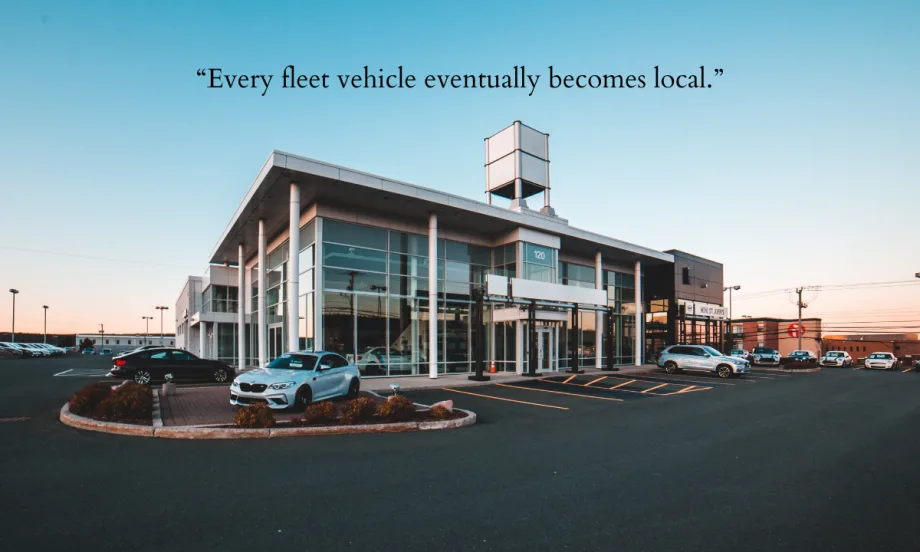
Your local dealer — even a retail one — can be a great source of real-time information in the fleet ecosystem.
Automotive Fleet
For corporate fleets, vehicle ordering can be somewhat perfunctory. The fleet management company (FMC) handles the acquisition, manufacturer incentives are applied behind the scenes, and weeks or months later a local dealership receives the vehicle, completes the pre-delivery inspection, removes the shipping plastics, installs license plates, and hands over the keys.
Once the vehicle leaves the lot, many fleet managers don't think much about that dealership until it's time for service. But that may be selling the relationship short.
Whether it's a dedicated commercial fleet or a retail operation, your local dealer can be a great source of real-time information in the fleet ecosystem. While FMCs and OEM fleet representatives provide national expertise and strategic guidance, local dealers see what's happening on the ground every day, from service bottlenecks and warranty trends to factory constraints and vehicle availability.
That local perspective can give fleet managers an information advantage that's difficult to find anywhere else.
National Strategy Meets Local Execution
FMCs provide sophisticated analytics, lifecycle planning, maintenance management, fuel reporting, and acquisition expertise across thousands of vehicles.
But every fleet vehicle eventually becomes local. It arrives at a dealership. It's serviced by local technicians. It waits for locally available parts. It may need warranty work, a recall repair, or coordination with an upfitter before entering service.
That's where local dealers’ perspective becomes valuable, and fleet managers should consider them another source of operational intelligence.
Dealers Often Hear About Changes First
Dealerships are in constant communication with automakers, service departments, transportation companies, and commercial customers, so they hear about developing issues before they’re widely known.
Perhaps an ordering bank is expected to close sooner than anticipated. Maybe a popular powertrain is moving into production constraint. A recall campaign may be beginning to jam up service departments, or a parts shortage could lengthen repair times.
None of these situations may appear in a formal bulletin immediately, but they're often discussed inside dealerships as they develop.
For fleet managers, those conversations can provide valuable lead time to adjust purchasing plans, reschedule maintenance, or prepare internal stakeholders for delays.
Dealers Know What's Happening in Your Market
One of the biggest advantages local dealers offer is context. An FMC may be able to tell you average repair times nationally. Your local dealer knows whether the technician certified to work on your vehicle line is on vacation this week.
They know which repairs are taking longer than expected. They know whether a parts shipment finally arrived. They know which recalls are creating scheduling backlogs and which warranty claims are moving smoothly.
That kind of local intelligence rarely appears in reports, but it can make a meaningful difference when a critical vehicle is out of service.
They Can Help When Plans Change
Fleet ordering generally follows a carefully planned replacement cycle, but reality doesn't always cooperate.
A vehicle is totaled; a new contract is awarded. A key employee starts sooner than expected. A customer suddenly needs additional capacity.
When immediate transportation becomes the priority, local dealers often know where to start looking.
Dedicated commercial fleet dealers may have access to incoming inventory, dealer trades, or manufacturer resources that aren't immediately obvious. Even retail dealerships frequently know which nearby dealers specialize in commercial customers or where particular models may be available.
They may not always have the solution, but often know who does.
They're Another Set of Eyes on Your Fleet
Local dealers also see patterns that individual fleet managers may not.
A service advisor might notice several vehicles with the same recurring issue before it becomes a widespread concern. A fleet manager at the dealership may recognize that a particular specification is creating maintenance headaches or that another commercial customer has successfully solved a similar problem.
Those conversations don't typically happen during a transactional vehicle delivery, but they do happen through fostered relationships.
Even Retail Dealers Can Be Valuable Resources
Not every fleet operates near a dedicated commercial dealership. In many markets, the dealership handling courtesy deliveries is primarily retail oriented, but that doesn't diminish its value.
Retail dealerships that regularly support commercial customers still understand local service operations, warranty procedures, recall scheduling, and dealership networks. If they can't answer a question directly, they often know which commercial fleet dealer, truck center, or specialty operation can.
In other words, they can help fleet managers navigate the local landscape—even if they aren't a dedicated fleet dealership themselves.
Build the Relationship Before You Need It
The best time to introduce yourself to your local dealership isn't when a repair has stalled, or a replacement vehicle is urgently needed.
Know who manages commercial accounts. Meet the service manager. Understand who coordinates courtesy deliveries and warranty work. Make sure they know your fleet and understand your operation.
You aren’t building these relationships to receive special treatment but to improve communication when unexpected challenges arise.
The next time one of your vehicles rolls through a courtesy delivery, consider it more than the end of the acquisition process — it could be the beginning of a new, valuable resource.
More Operations

How Fleets Can Recruit and Train Veterans for Technician Roles
Here's how the technician shortage has affected uptime for fleets, and what to do about it.
Read More →
Avis Budget Group Deploys Neology Toll Management Technology Across Major Brands
Neology’s neoFleet platform will manage toll transactions and toll-authority operations for vehicles across Avis, Budget, Payless, Budget Truck and Zipcar.
Read More →
Fleet Personal-Use Charges Edge Higher in 2026
Nearly eight in 10 surveyed fleets allow personal use of company vehicles, while just over half of respondents report charging employees for the privilege.
Read More →
The Future of Fleet + What’s Changing Right Now | AF News Recap
Could developments overseas offer a preview of what’s coming for U.S. fleets? This week, we’re looking at the future of AI, autonomy, and electrification, plus Ford Pro’s new certified pre-owned program, smarter vehicle offboarding, and a new way for fleets to manage toll expenses.
Read More →
How to Handle Vehicle Offboarding
What do fleet managers need to do when a driver leaves?
Read More →
Fleet Manager’s Ultimate Playbook: Navigating the New Standard in OEM Connectivity
Rising operating costs, driver safety concerns, and unplanned downtime are putting unprecedented pressure on modern fleets. Discover how fleet managers use embedded OEM connectivity and real-time vehicle data to cut TCO, prevent downtime, and protect drivers without aftermarket telematics hardware.
Read More →
U.S. Bank Adds Verra Mobility Toll Management to Voyager Fleet Platform
The integration allows U.S. Bank Voyager fleet customers to manage toll payments and violations alongside fuel, EV charging and maintenance expenses.
Read More →
ADAS Prevents Crashes. But Repairs Cost More | AF News Recap
ADAS-equipped vehicles may crash less often, but they can cost more when they do. This week, we’re breaking down what that tradeoff means for fleets, plus Subaru’s first Forester Wilderness Hybrid, Nissan’s new e-POWER Rogue, and why Calstart has become Catalyst Mobility.
Read More →
Moventum Fleet Management Names Mark Iorillo Head of Sales
Iorillo brings nearly 20 years of fleet management and sales experience to the role, including previous positions at Element Fleet Management, CEI, Donlen and Ryder.
Read More →
Fleet Has a Talent Pipeline Problem. What Comes Next? | AF News Recap
Where will fleet’s next generation of leaders come from? This week, we’re looking at the industry’s talent pipeline, what certification can add to a fleet career, how to build an award-worthy track record, and the return of Automotive Fleet’s Personal Use Survey.
Read More →