




Taking Fuel Management from Challenge to Success
With fuel prices impacted by everything from supply and demand to weather to location, there can be little argument that managing fuel expenses is one of the most difficult and important parts of a fleet manager's job.

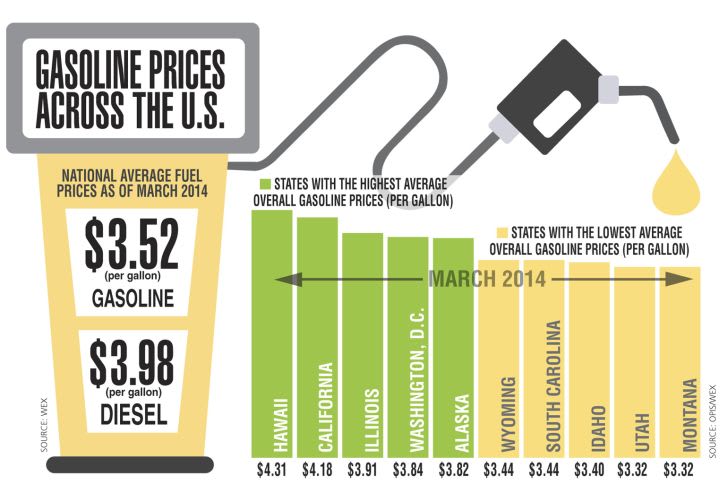
Source: WEX
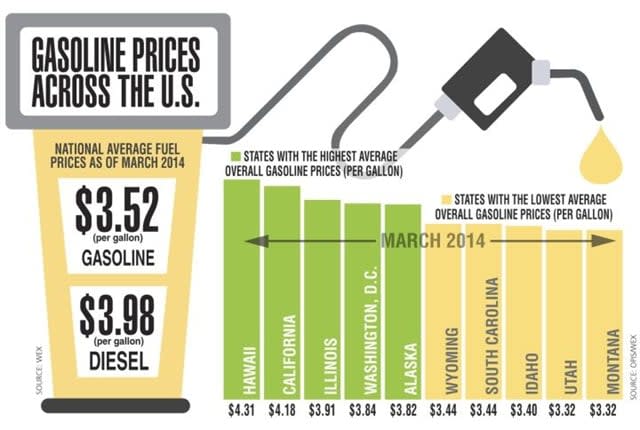
Source: WEX
Fuel remains a No. 1 fleet operating expense for one very key reason — fleets cannot move without vehicles and the fuel to power them. With fuel prices impacted by everything from supply and demand to weather to location, there can be little argument that managing fuel expenses is one of the most difficult and important parts of a fleet manager's job.
While the stabilization of fuel prices is something often discussed and yet to be reached, Abe Stephenson, fleet and administration manager for DISH, noted one silver lining: "Fortunately, high fuel prices and legislation are creating a wave of product innovation and is change focused on fuel efficiency and fuel-use reduction," he said.
Looking back at the May 2013 issue of Automotive Fleet, the industry's reaction was that prices were getting "scary." Fleet professionals from around the country and from varying industries share their current challenges and successes as we see what has, or hasn't changed in the past year.
"In today's environment, fuel prices will always be 'scary.' Any hiccup around the globe can send prices upward. What I found extremely scary is that the most recent spike in fuel prices was due to the cold winter and tied to our crop production because of the 10-percent ethanol we put in our fuel," said Tom Armstrong, director of fleet for ThyssenKrupp Elevator.
Jonathan Kamanns, fleet services manager for Ingersoll Rand is optimistic.
"The fuel cost spikes of the not-so-distant past actually enabled significant maturity in the fleet decision-making process," he pointed out. "Consider that it was just a few short years back that companies were offering large SUVs, full-size six-cylinder sedans, big eight-cylinder light-duty trucks, etc. The idea of 'downsizing' vehicles to meet the actual business needs was a foreign concept, only leveraged by the most mature organizations."
Detailing the Challenges
One of the greatest challenges the fleet industry faces in regards to fuel, aside from price volatility, is simply the fact that we must have it, commented Armstrong of ThyssenKrupp Elevator.
While some fleets may have the limited ability to cut back on fuel usage or "go green" with alternative-fuel vehicle choices, some fleets do not have those options.
"Because of what we do, we do not have the luxury of cutting back or going green, and the colder it is, the more fuel we need to get our Pipe repair liner up to temperature. This year was particularly bad," commented Carl Nelson, fleet manager for AM-Liner East, a sewer and manhole rehabilitation provider.
Stephenson of DISH agreed. "Fuel is now the top operating expense for most service fleets, due to commonly needing to use significantly less fuel-efficient vehicles to deliver products and services," he said.
Armstrong noted that most commodities managed by fleet have options. "For example, if a manufacturer or lessor, or other supplier, is charging too much, we can change. However, if fuel costs too much, we still have to use it," he said.
A continuing challenge in managing fuel costs and usage is the driver.
"The driver has the biggest impact in maximizing the fuel efficiency. Our organization is large and diverse. It's a challenge to spread our passion for eco-driving to the driver," said Christy Coyte Meyer, director, global fleet management for Johnson Controls, Inc.
Fleets working to reduce fuel spend should also look toward tighter fuel card controls and management.
"One challenge that we still face in the service environment is educating our internal customers that the vehicle fuel-card program is not intended for fueling other assets such as generators and compressors," said Kamanns of Ingersoll Rand.
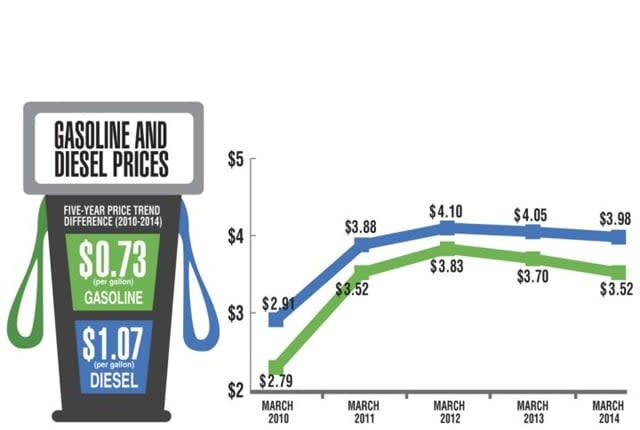
Source: WEX
Reveling in the Successes
The fleet industry sees challenges as opportunities, and with challenges come ultimate successes.
"We have actually seen a reduction in the magnitude of day-to-day price volatility over the past couple of years," said Joe Broski, senior sourcing manager - fuel for Republic Services. "Continuing to follow fundamental practices such as competitive and contract pricing, understanding daily market moves and responding accordingly, ensuring proper inventory management, automation, and so on, will improve a fleet's overall fuel cost structure as it will provide a stable and predictable operating environment."
Fleet managers are continuing to look to technology to help manage fuel expenses.
"Automation is key in providing accurate, timely data, and providing productivity gains from eliminating the need for manual touches of fuel data," said Broski.
Telematics is one use of technology fleet managers are finding helpful.
"Route optimization, through telematics, will help any service fleet. We have also done engine calibrations to help manage idling, rpm, and top speed. Both solutions transfer accountability from the driver to the vehicle/tool/system, and can provide consistent, everyday benefits above and beyond relying on driver behavior," said Stephenson of DISH.
Coyte Meyer of Johnson Controls also noted success through technology.
"We have had success in deploying several different initiatives, including hybrids, four-cylinder engines, speed governors, and rightsizing on a few vehicle types," she said. "We're seeing the greatest benefit, however, with the deployment of telematics. These changes have delivered more than $1 million in savings in 2013 alone."
One of ThyssenKrupp's successes has been the migration to smaller, more fuel-efficient vehicles in all segments, where applicable, without hindering business.
"We have reduced our fuel consumption by 16 percent from September 2010 to September 2013 while increasing the fleet size by 2 percent. In addition, we have 81 propane-autogas vehicles in six different cities," Armstrong noted.
Tips for Management Fuel Expense
Broski of Republic Services noted that fuel is a data-intensive business.
"Understanding markets, pricing, invoices, freight, and price change mechanisms requires understanding and analysis of a lot of data," he said. "Your suppliers have the information, so you need to be as informed as they are if not better informed."
Broski recommended reviewing data over a long term, such as 18 to 24 months, not just 30 days.
"Break invoices out into the various elements so you can understand and address all cost drivers," he suggested. "Audit and validate your deals and invoices, as well. Pricing transparency is a common term in fuel. Ensure you are getting it from your suppliers."
Nelson of AM-Liner East also closely watches billing, looking at fuel bills line-by-line each month, requiring drivers to explain questionable purchases.
"Let drivers know, in no uncertain terms, that they are being watched and may have to justify their expenses," he said. "Although they always seem to come up with a reasonable explanation, they now know their charges are being closely watched. It is no surprise that each driver contacted has not had a questionable expense since, and the number of drivers I have needed to contact each month has steadily decreased. I count that as a win."
Additionally, Broski of Republic Services said one way to help control costs is understanding a fleet's fueling equipment, assets, and usage patterns. Plan for adequate safety stock and order lead times to prevent run outs and be proactive in winter and heading into storm seasons. Also, aggregate volumes for improved buying power where possible.
Broski also noted fleet managers who provide on-site fueling must maintain fuel quality: testing fuel and tanks, treating as needed, removing water, and keeping fuel island(s) in good shape, including seals, covers, and tanks.
For fleets that utilize fuel cards, Kamanns of Ingersoll Rand recommended clearly identifying the use of the fuel card program and make adjustments as needed. "This helps ensure compliance and ease of enforcement," he said.
One tip recommended by Stephenson of DISH involved driver training. "This includes the impact of driving behavior on fuel consumption, such as idling, hard acceleration/braking, checking tire pressure, using lower cost fuel stations in the area (typically the same list of stations week to week), and having ongoing controls in place to audit for fraudulent usage," he said.
Another tip Stephenson noted was choosing the best fuel economy vehicles for the job. Armstrong of ThyssenKrupp agreed, suggesting that reducing vehicle and engine size, where applicable, can help improve overall fleet fuel economy.
Stephenson also recommended implementing telematics for routing efficiencies and tracking of driver behavior.
Armstrong of ThyssenKrupp suggested deploying a GPS solution to track vehicles. "It can also improve operating efficiencies, reduce idle time, monitor/reduce personal use, and improve driving behavior," he said.
No matter what, according to Coyte Meyer of Johnson Controls, be flexible.
"There may not be one silver bullet for your fleet. Talk to manufacturers to understand product availability and offerings. Talk to FMCs who can provide data on mileage, total cost of ownership (TCO), etc. Also, have policies in place to support and manage fuel exceptions," she said.
Kamanns of Ingersoll Rand agreed. "Don't just look for the popular or more widely accepted options," he said. "At some point, you are going to be asked your opinion on how to drive up efficiencies and drive down costs. These won't be popular suggestions."
Delving Into Tools & Technology
With driver behavior and distraction an ongoing concern for fleet managers, Armstrong of ThyssenKrupp noted that he is very excited about new technology to stop or limit the ability to text, e-mail, or browse the Web while driving.
Stephenson of DISH noted that alternative-fuel technologies and new euro-spec vans coming to the marketplace are exciting at the moment.
"Although all of these vehicles are currently more expensive than their existing counterparts, fleets can still see TCO benefits from the fuel economy savings," Stephenson said. "With everything else equal, even if came down to a break-even proposition, it's better to shift spend from fuel (and equivalent carbon emissions) to vehicle product costs. This will result in significant impacts to corporate sustainability goals, while shifting resource allocation from foreign oil to a more domestically sourced product and/or labor."
Telematics is exciting to just about all fleet professionals, but one fuel-related aspect is of particular interest to Kamanns of Ingersoll Rand.
"What really excites me is that some suppliers of telematics have already tied in to fuel management data to provide a much more robust compliance program with significant ease of use," he said.
More Fuel
Fuel Prices Surge in September | September Fuel Update
September brought major fuel price swings, including diesel crossing $6 a gallon. Here’s how gas and diesel prices changed throughout the month, and where they stood heading into October.
Read More →
Turning Fleet Payment Data into Executive Insights
Ramel Lindsay of U.S. Bank Voyager discusses how fleets can transform payment and transaction data into actionable intelligence to reduce costs, improve oversight, and support executive decision-making.
Read More →
Why the IRS Raised Its Mileage Rate in the Middle of 2026
Fuel-price volatility drove the rare increase to 76 cents per mile, the fifth midyear adjustment since 2000.
Read More →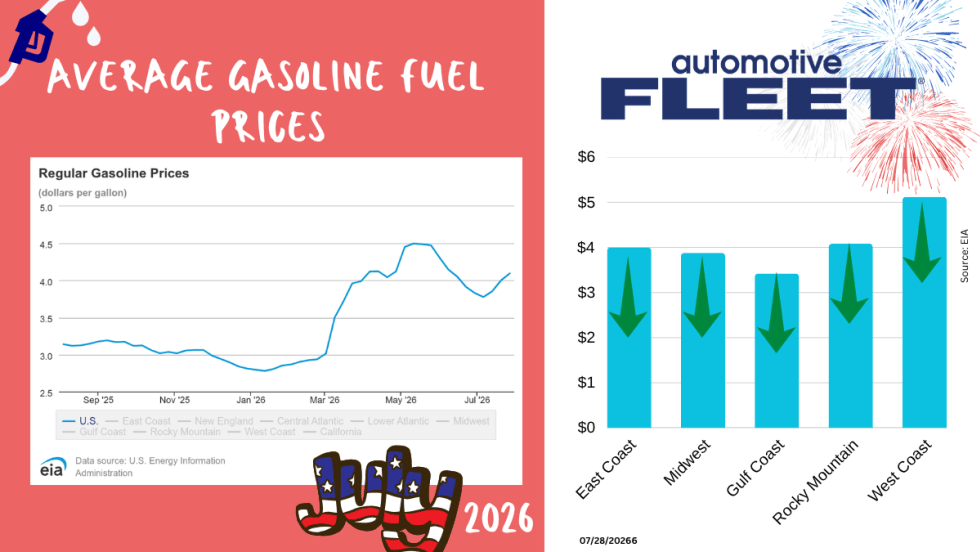
July Fuel Update: Prices Keep Rising in Light of More Conflict
Gas prices continue to rise as more and more conflicts do, too.
Read More →
Bob Adamsky on Fuel Volatility: "Don't Panic, Have a Plan."
When it comes to up and down fuel prices, Adamsky has a message for fleets: “Don’t panic.”
Read More →
How Fleets Can Gain Control of Non-Fuel Spend
Fuel often gets the spotlight, but non-fuel expenses can have a major impact on fleet costs. Ramel Lindsay of U.S. Bank Voyager discusses how fleets can gain better visibility and control over these often-overlooked expenditures.
Read More →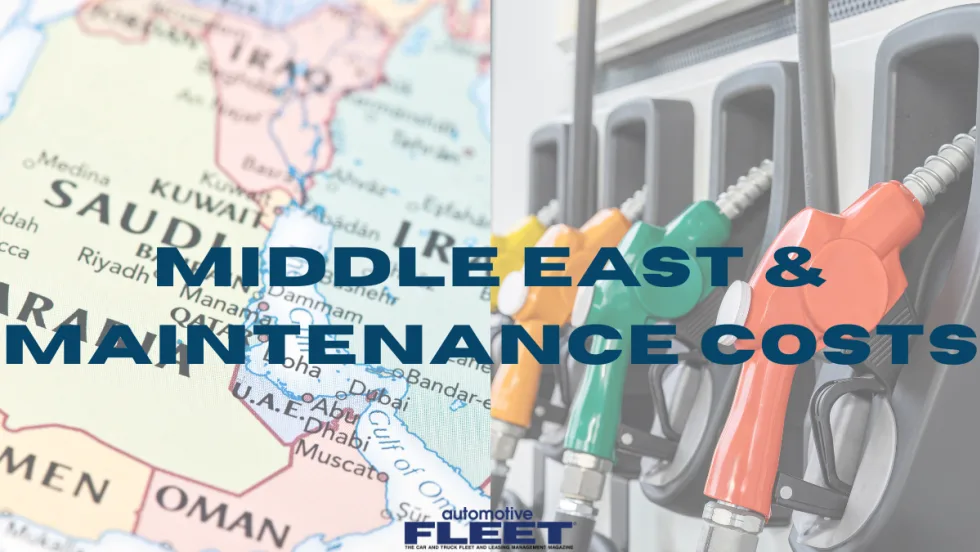
Fuel is Just the Start: How Middle East Tensions are Driving Up Fleet Maintenance Costs
The Middle East conflict is doing more than pushing up fuel prices. It’s also raising the cost of key maintenance products your fleet depends on, from motor oil to tires to windshield wipers. Here’s what you need to know about this budget-busting situation.
Read More →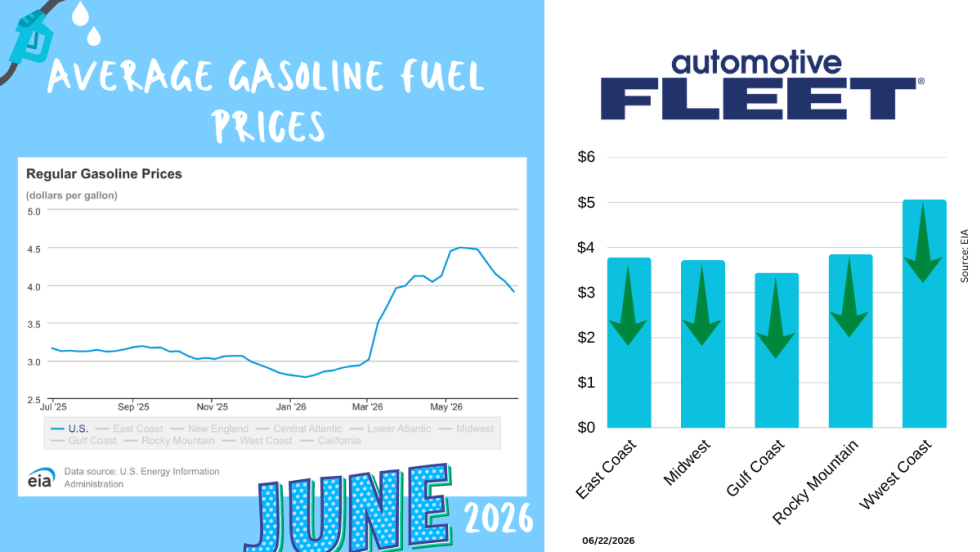
June Fuel Update: Prices Fall Below $4
Drivers are finally getting some relief at the pump. The national average gas price has dropped below $4 a gallon for the first time in months, with prices falling in 47 states as oil markets react to developments in U.S.-Iran negotiations.
Read More →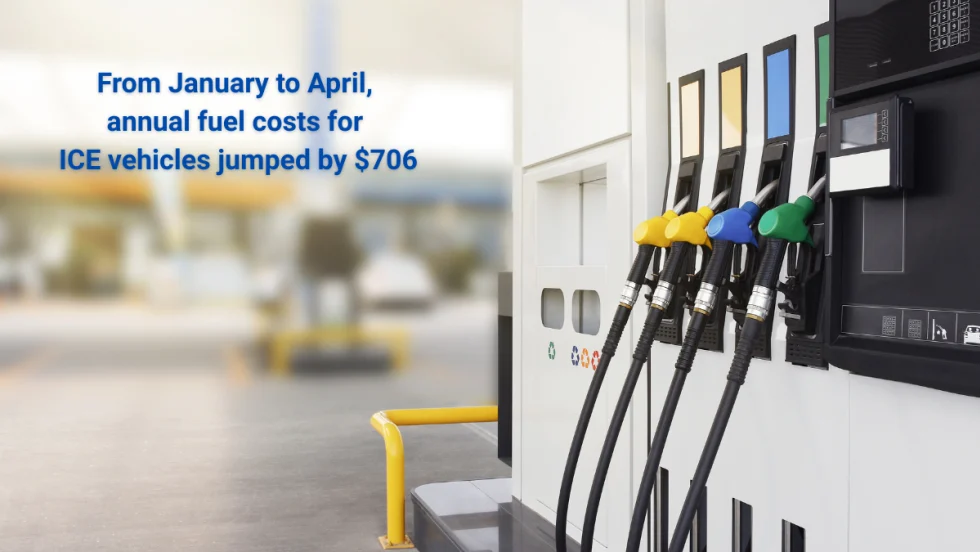
Study: How 2026's Gas Price Hikes Affect Different Vehicle Types
New data from iSeeCars reveals how rising fuel costs have affected different vehicle segments as gasoline prices climbed nearly 46% over the past four months.
Read More →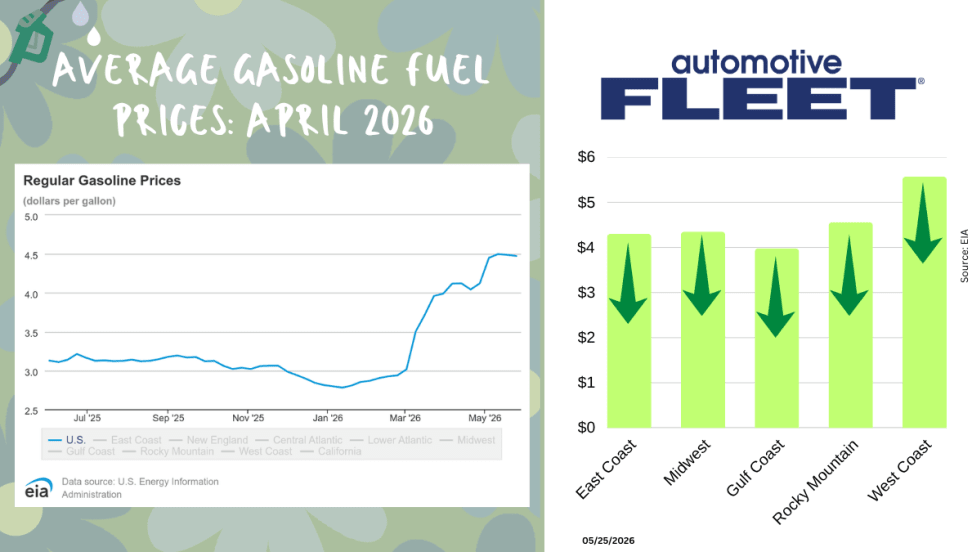
May Fuel Update: All Regions Experience Declines
Gas prices are finally easing in much of the country, but experts warn global tensions could quickly reverse the trend as the national average remains well above last month’s levels.
Read More →