




Leased Truck Fleets Conserve Capital Dollars
A leased truck fleet can be tailored to meet a company's needs...with many distinct financial advantages
With the continuing, steady growth in truck leasing on a national scale, Armund ]. Schoen, president of Wheels, Inc., Chicago, the oldest fleet leasing organization in the nation, presents his analysis of truck fleet leasing . . . and its many obvious advantages to private carrier companies. Schoen, an astute pioneer in the leasing field, proves his thesis that "Leased Truck Fleets Conserve Capital Dollars."
At what point does it "pay" a private carrier company to lease its truck fleet on a "finance lease" plan?
This is an extremely difficult question to answer mainly because the truck finance lease plan has not been offered long enough to establish positive data. However, we do know that it has proven advantageous in the non-automotive equipment field and similarly, with automobile fleets.
Finance leasing in these areas has been successful largely on the basis that companies with certain levels of earnings find it a swift and inexpensive method of acquiring the use of long-term capital in the form of fixed assets. In certain instances leasing is cheaper than freezing company working capital in such assets. Or stated another way the leasing of fixed assets will enable a company to earn more not profits than owning the same fixed assets.
Today, many private operators of largo fleets are taking another look at finance leasing as a means of releasing capital or raising new money because of the tight money situation. As a result, financing has become a more important factor to company financial officers than comparisons of cost-per-mile operation. Proof of this attitude is shown in the statement by the president of a large company: "Money retained and used as working capital in our business earns a considerably greater return than we would pay in the form of interest through leasing. In 1965, we earned 10 per cent on our stockholders' investment. It is obvious then that we can afford to pay the lease cost of 7 per cent per annum (3% per cent after taxes) to earn 10 per cent."
Operators of financed lease trucks are simply borrowing long-term capital in the form of a truck fleet. In addition, they are getting trucks engineered to their specific requirements, a vitally important service provided by the leasing company. Trucks designed and engineered by the leasing companies save customers considerable time and money by providing properly designed vehicles for specific jobs, thus eliminating the problem of over or under engineering. Many fleet operators have garage and maintenance facilities and, those who do not, can be adequately serviced at local truck agencies-viz., a Chevrolet agency for Chevrolet truck service, etc. - which have day and night service in many cases.
The True Cost of Working Capital
As stated, finance leasing often is the most inexpensive form of acquiring a truck fleet because it enables the lessee to earn more profits than owning the same fixed assets. Leasing charges run approximately 7 to 12 per cent per annum on the average depreciated value of the truck fleet with the variation in rate due to the size of the fleet. Since this is a deductible item, the cost to the lessee is 3:1/2 to 6 per cent after taxes. This means that the lessee has the alternative of paying 7 to 12 per cent to the leasing company, or making a substantial capital investment in the purchase of a truck fleet.
For example, a company investing $100,000 into a truck fleet presumably can borrow from a bank on a term loan at 6 to 7 per cent. However, this is not the true cost of the capital invested in the truck fleet. Today, a company may be in a position to make additional loans without difficulty, but over the long run, four to live dollars must be maintained in the form of equity for every dollar borrowed.
Therefore, it is reasonable to assume that a company cannot claim to be borrowing $100,000 for a truck fleet with only a 6 or 7 per cent price tag. The company's capital is made available on a "package deal" basis, and it is the "mix" of capital sources that constitutes the cost of company capital.
It is not difficult to estimate; the cost of funds for the company which proposes a buy a truck fleet for $100,000. A firm which obtains 20 per cent of its funds from debt and 80 per cent from its owners pays about 6 per cent for its borrowing, or an after tax cost of about 3 per cent.
We estimate that to entice equity funds from shareholders in the future will cost at least 12 per cent of better in terms of current after-tax earnings and adjusted for flotation expenses. With these estimates, we can compute the average cost of funds used by a typical large manufacturing company.
Proportions of sources of funds | After taxes yield rate | ||||
Debt | 20% | X | .03 | = | .60 |
Equity | 80% | X | .12 | = | 9.60 |
Total | 10.2% | ||||
Therefore, the typical large company today would pay 10.2 per cent after taxes for its funds while privately held companies will normally pay more. The cost of capital is always an important guide to capital spending and it will vary from company to company as the proportion of debt and equity varies.
Although a company president knows how much it costs to raise funds, this is not the whole answer. The company president or treasurer must have some idea of not only what working capital costs, but what it can earn. This leads us to the key question: Is it worthwhile for the typical company to take some of its working capital and freeze it in a truck fleet or is it preferable to pay a leasing company 7 to 12 per cent to provide a truck fleet?
The answer is obvious. All companies which earn at least 12 per cent on net working capital before taxes, or 6 per cent on net working capital after taxes, are on the dividing line. With such companies it costs them no more to use their own working capital to buy a fleet than it does to hire a leasing company. In both cases the cost is 12 per cent before taxes, or 6 per cent after taxes. For companies which earn less than 12 per cent on working capital before taxes, such companies cannot afford to lease. It costs them more to "hire" the leasing company's capital than to use their own.
Evaluating the Leasing Company
The selection of a leasing company is important. The company should be qualified to provide all of the following three services:
1. Experienced engineers to study the lessee's operations to insure that every unit of trucking equipment is tailored to the lessee's requirements. "Engineering" a truck requires expert skill in evaluating and assaying the tasks to be performed by the truck. Expert skill is required in deciding what weight, engine power, chassis and body is needed for the job. If the truck is too heavy for the work, money has been spent needlessly. If the truck is under-equipped, maintenance costs will be expensive. Few companies have qualified engineers to specify truck requirements and they run the risk of not matching the job with the equipment.
2. The ability to purchase trucks and special truck bodies at fleet discount prices.
Most companies, in buying a truck fleet for their own use, normally receive some sort of fleet discount price. However, finance lease companies obtain trucks at the best fleet discount price, thus providing the lessee with the best advantage.
3. The ability to sell used trucks for the lessee at the, best possible price in the best possible market.
Finance lease firms which operate on a national basis are in the best position to keep their fingers on the pulse of the used truck market in every major market area of the country. An alert leasing company is able to advise its clients precisely when to sell their trucks and where. This often can mean the difference of $50 to $100 on small trucks-or $1000 to $2000 on larger diesel trucks.
The main objective of a leasing company is to supply a private carrier company with the most suitable equipment to do the job at the most economical costs. A properly tailored lease to a company's needs will prove economically sound.
More Telematics

Element Expands Waymo Partnership to Support Toronto Robotaxi Fleet
As Waymo prepares to enter the Canadian market, Element Fleet Management will oversee the fleet operations supporting its planned Toronto launch. The partnership highlights the maintenance, charging, and infrastructure requirements behind operating autonomous vehicles at scale.
Read More →
GM Launches OnStar Fleet Intelligence Platform With AI Assistant
The new platform brings vehicle data, order tracking, connected services and fleet analytics into one system, with an AI assistant that can answer fleet questions using natural-language prompts.
Read More →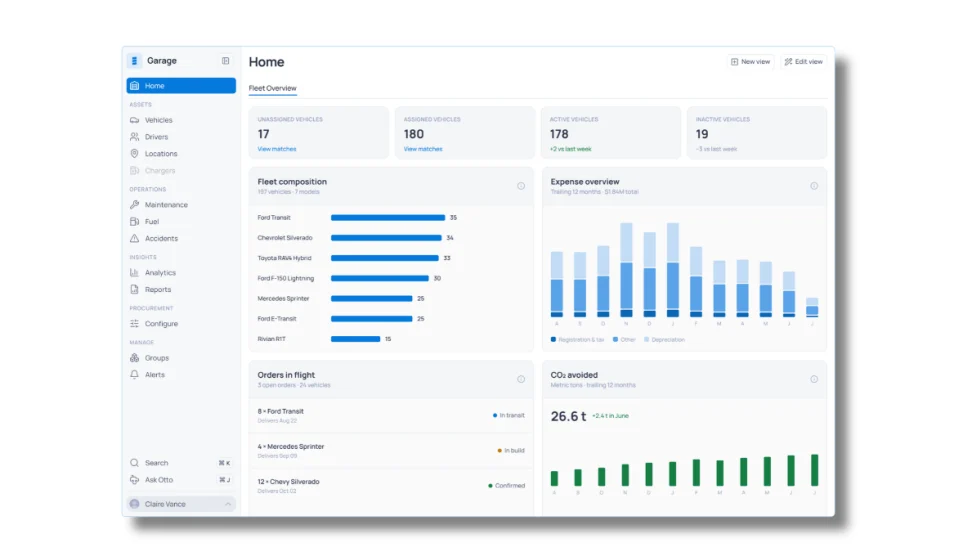
Inspiration Fleet Introduces Garage 2.0 Fleet Intelligence Platform
Fleet managers increasingly have access to data from vehicles, telematics, fuel, charging, and other systems, but those sources don't always communicate with one another. Inspiration Fleet's Garage 2.0 platform brings that information together while letting fleets keep working with different technology and service providers.
Read More →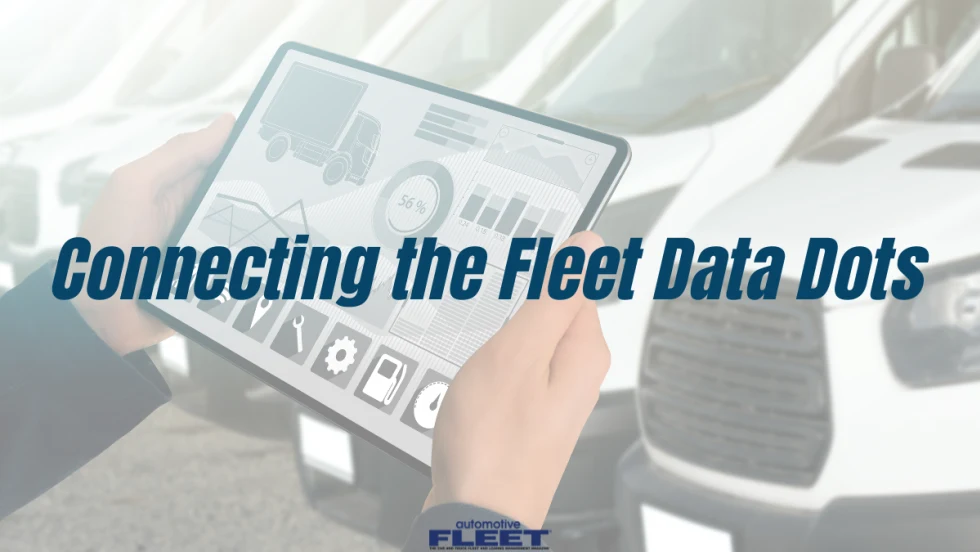
Inside Inspiration Fleet’s New Platform for Connecting Fleet Data
Inspiration Fleet CTO Chris Getner explains how the new Garage 2.0 platform is designed to connect disparate fleet data and what that could mean for fleet managers in practice.
Read More →
Fleet Manager’s Ultimate Playbook: Navigating the New Standard in OEM Connectivity
Rising operating costs, driver safety concerns, and unplanned downtime are putting unprecedented pressure on modern fleets. Discover how fleet managers use embedded OEM connectivity and real-time vehicle data to cut TCO, prevent downtime, and protect drivers without aftermarket telematics hardware.
Read More →
Samsara Driver Perks Adds New Benefit for Corporate Fleet Drivers
The rewards program gives eligible professional drivers access to discounts from more than 50 brands while giving fleets another way to support recruitment, retention, and the driver experience.
Read More →
Inside the Church of Jesus Christ of Latter-day Saints’ Two-Track Telematics Strategy
With 20,000 vehicles and two fundamentally different driver populations, the Church faced a fleet management problem that a single telematics program couldn't solve. How it responded offers a replicable framework for any fleet where one size doesn't fit every driver.
Read More →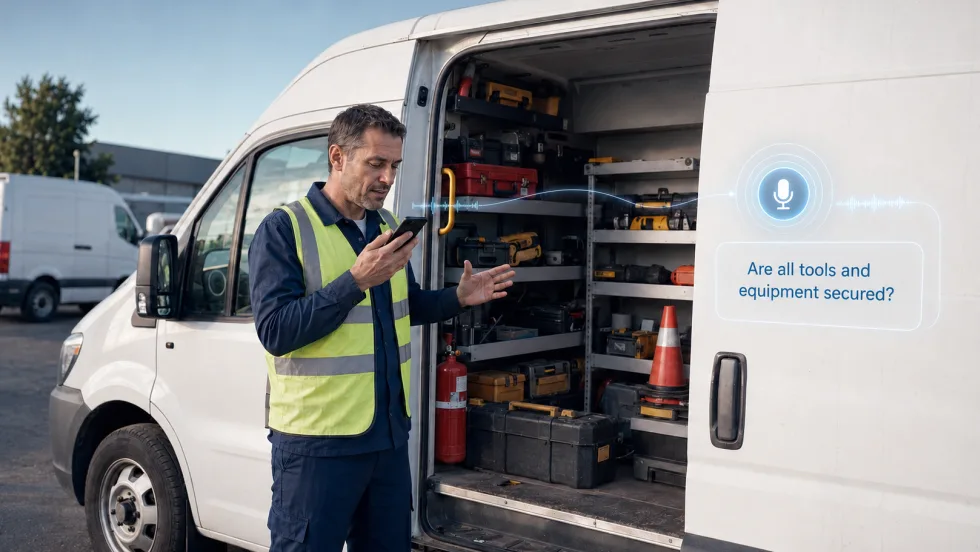
How Conversational AI Can Make Fleet Tasks Easier for Drivers
While most generative AI tools help fleet managers interpret data at their desks, Connex2X is applying voice interaction to tasks behind the wheel.
Read More →
Why Fleets Are Creating Dedicated Fleet Analyst Positions
Are fleet analyst positions the new norm? Listen here to find out.
Read More →
Teletrac Navman Begins Next Chapter as Standalone Private Company
What's new with Teletrac Navman and its new owner?
Read More →