




How One Fleet Manager Put a New Spin on Safety Training
Joe Lewis turned a pre-trip inspection lesson into an AI-assisted song, then four safety albums. The experiment also revealed why human oversight matters when AI enters driver training.

What started as an intentionally cheesy song about pre-trip inspections grew into a larger experiment in using generative AI to communicate fleet safety messages.
Automotive Fleet
- Joe Lewis innovatively transformed a pre-trip inspection lesson into an AI-assisted song, enhancing safety training.
- This creative endeavor resulted in the development of four comprehensive safety albums for driver education.
- The project highlighted the crucial role of human oversight when integrating AI into driver training programs.
*Summarized by AI
There are only so many ways to remind drivers to complete a pre-trip inspection before another safety presentation starts to feel familiar.
For Joe Lewis, transportation manager at Marimor Industries, the answer was to try something completely different: turn the lesson into a song.
The idea began while preparing for a staff in-service focused on the importance of pre-tripping a van. Rather than deliver another traditional presentation, Lewis wanted something intentionally cheesy, catchy, and, most importantly, memorable.
Generative AI helped turn the safety message into an original song. From there, Lewis created a music video using prerecorded footage supplied through a music-video maker.
Then the project kept growing.
“After completing the video, I thought, ‘Why stop there?’” Lewis said.
One song eventually became multiple albums spanning country, rock, pop and R&B, with topics including distracted driving, pre-trip inspections, road rage, passenger safety and the responsibility drivers carry behind the wheel.
But as Lewis experimented with AI as a creative tool, the project also demonstrated something important for fleets considering the technology: AI can help deliver the message, but it should not determine what that message is.
Making Familiar Safety Messages Stand Out
When Lewis first shared the song and video with transportation drivers, the reaction was positive.
“Our transportation drivers thought the project was really cool, and one driver wanted to share it with her husband, who drives a semi,” Lewis said.
The project also reached employees in other departments who drive as part of their jobs. Lewis introduced the expanding project with some humor, explaining that one music video had “spiraled out of control” into several albums available on major streaming platforms.
The staff laughed, enjoyed the video, and responded to the unusual format.
Compared with a traditional safety presentation, Lewis saw stronger immediate engagement. However, there was no formal measurement of whether the songs led to better long-term retention.
The project was designed as another way to communicate safety information that might actually engage the audience a bit more than traditional methods. Today, the songs remain available for voluntary listening rather than required training.
“After all, forcing people to listen to country music may be a crime in some jurisdictions,” Lewis joked.
Some of the songs were built around storytelling. “Rage Cage,” for example, was inspired by the narrative style of the Chicks’ “Goodbye Earl.” Others take a more serious approach, including songs intended to encourage drivers following frightening situations such as vehicle crashes.
By varying the style and tone, Lewis explored whether common safety topics could be communicated differently depending on the message and audience.
When AI Gets the Safety Message Wrong
Creating the music also highlighted a risk of using generative AI for fleet training.
Lewis selected the topic and intended message for each song, then reviewed and refined what AI produced. That human review became particularly important while developing a song about road rage.
AI initially suggested that a driver engage with the other motorist. That was the exact opposite of what Lewis teaches employees. The language was removed and corrected before it became part of the finished material.
For Lewis, the incident provided a clear example of where AI's role should end.
“The line is verification and decision-making,” Lewis said. “I use AI as an assistant for brainstorming, organizing ideas and finding new ways to communicate, not as a primary source of information or the final authority.”
That means Lewis independently verifies factual information generated by AI before relying on it.
The same principle applies even outside fleet safety. Lewis, who conducts historical research as a hobby, uses AI to help reconstruct timelines or identify where primary-source records might be located. But conclusions are based on the original documents retrieved and reviewed, not AI's answer.
Fleet safety requires an even firmer standard.
“When it comes to safety, any guidance I use must be consistent with established training, organizational policies and recognized professional practices,” Lewis said. “AI can help me make that guidance clearer, more engaging or easier to understand, but it does not establish the guidance itself.”
From One Song to a Fleet Safety Experiment
Eventually, the project expanded to four safety-focused albums as well as a tribute album honoring members of the transit community.
Lewis also discovered that a digital music distribution service could make the albums available across major streaming platforms. What started as material for one internal staff in-service could now potentially reach drivers, trainers, and fleet organizations outside the organization.
So far, Lewis has not received confirmation that another fleet or transit organization is using the music.
Still, the project offers a relatively low-stakes example of what experimentation with generative AI can look like inside a fleet operation.
Instead of asking AI to create safety policy or decide what drivers should do, Lewis started with an established safety message and used the technology to explore a new way to communicate it.
That is also the approach Lewis recommends to other fleet managers interested in testing AI.
“Explore, experiment and think outside the box,” Lewis said. “Try different formats, styles and approaches that might make familiar safety messages more engaging. Not every idea will work, but one idea can lead somewhere completely unexpected.”
Getting useful results can also require treating AI less like a one-time search engine and more like an iterative creative tool.
“As strange as it may sound, I also think it helps to talk to AI as if it were another member of the team,” Lewis said.
That means giving the tool context, responding to what it produces, challenging material that does not work, and refining the idea through multiple rounds.
Most importantly, Lewis said fleet managers should treat anything the technology creates as a draft.
“Verify every safety claim and refine the material until it matches your established training and standards.”
For fleet managers, that may be the bigger lesson behind the music. Generative AI can offer new ways to package information drivers have heard before.
But whether the output comes as a presentation, a training exercise, or even a country song, the humans still have to decide whether the message is correct.
More Vehicle Research
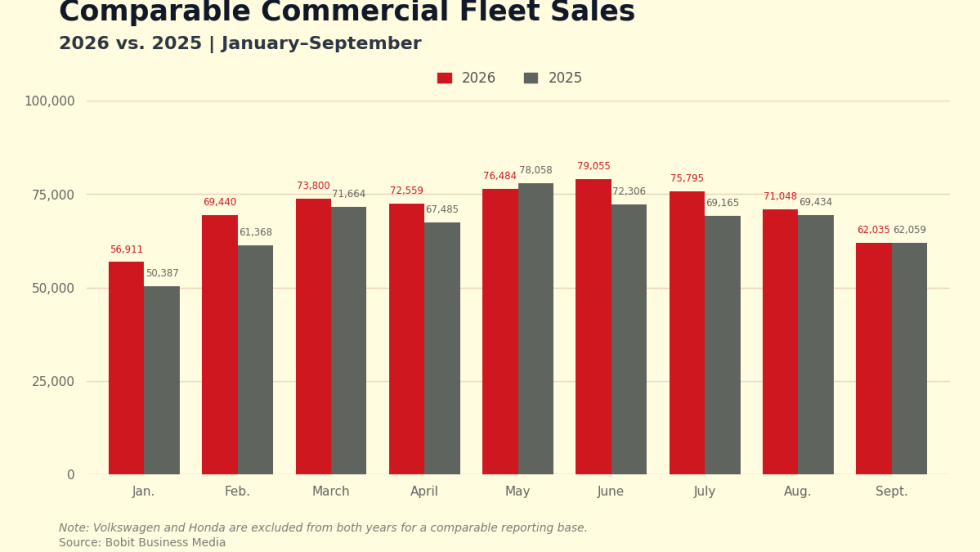
Commercial Fleet Sales Rise 5.8% Through September 2026
September commercial fleet sales were essentially unchanged from a year earlier, slowing year-to-date growth while keeping volume ahead of 2025.
Read More →
Hall of Fame Inductee: John Dmochowsky
The longtime Mondelēz International fleet executive joins the Automotive Fleet Hall of Fame.
Read More →
Hall of Fame Inductee: Lee Miller
After more than four decades at Boehringer Ingelheim, Lee Miller leaves a legacy built on fleet expertise.
Read More →
Hall of Fame Inductee: Mark F. Petersen
From managing fleets of thousands of vehicles to advancing safety and mentoring fellow professionals, Mark F. Petersen made his mark across both the corporate and supplier sides of fleet.
Read More →
When Charger Downtime Becomes a Fleet Availability Problem
As EV deployments move beyond pilot programs, charger reliability can directly affect vehicle readiness, driver productivity and route scheduling.
Read More →
2027 Nissan Rogue Hybrid Adds e-POWER, Standard AWD
The new Rogue Hybrid uses Nissan’s e-POWER system with dual electric motors, offers an estimated 40 mpg and starts at $35,490.
Read More →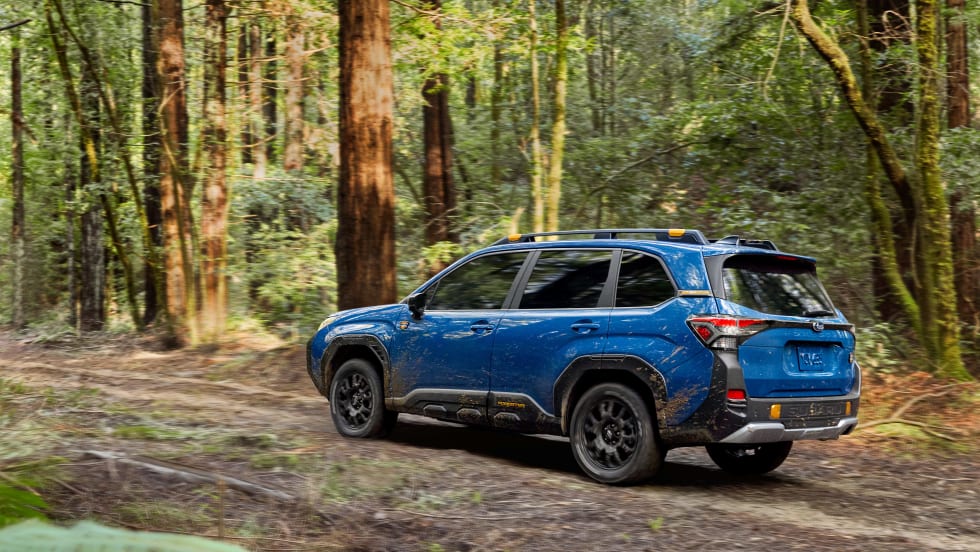
2027 Subaru Forester Adds First Wilderness Hybrid
The 2027 Forester lineup starts at $29,995 and adds a Wilderness Hybrid with 194 combined horsepower and 9.3 inches of ground clearance.
Read More →
EV Realty Names Henrik Holland President as Charging Platform Expands
The former Prologis Mobility and Shell executive will help expand EV Realty’s truck charging business and move its power-first infrastructure model into autonomous vehicle depots and other fleet sectors.
Read More →
Mercedes-Benz Introduces Electric GLC With Up to 350 Miles of Range
The GLC 400 4MATIC Electric features an 800-volt architecture, 330-kW DC fast charging and a 94-kWh battery, along with Mercedes-Benz's new MB.OS operating system.
Read More →
Fleet Has a Talent Pipeline Problem, not a Talent Problem
Where will the next generation of fleet leaders come from, and what does the industry need to do differently to find them?
Read More →