




How Does a Mid-Major FMC Compete? Ask BBL Fleet
This Pittsburgh-based FMC built a technology-first culture, sustained double-digit organic growth, and expanded its Midwest footprint through a recent acquisition. How did it happen?

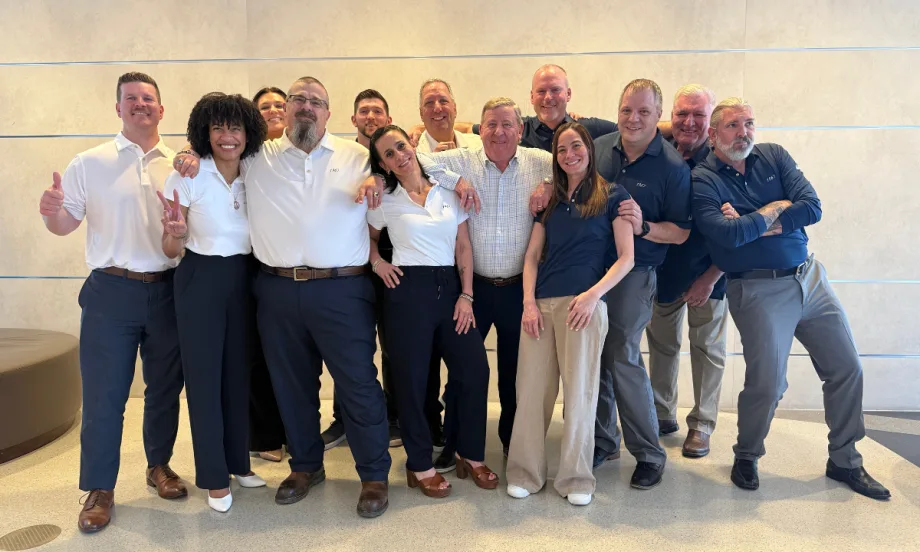
BBL Fleet’s approach combines technology, in-house service, and a relationship-driven model to compete in the mid-market. President and CEO Bud Behling is in the center in a button-down shirt.
Chris Brown
In college basketball, “mid-majors” are loosely defined as Division 1 programs outside of the Power Four conferences. They grab the limelight each spring when a few make a run in the NCAA tournament and earn the “Cinderella” moniker.
Mid-majors have a persona. They don't have the recruiting budgets of a Duke or a UConn, but they win with culture, continuity, and a system. Kids stay four years. They find overlooked players. The system makes them better. And they consistently knock off bigger programs when those bigger programs get complacent.
At more than $300 million in annual revenue — a number that dwarfs regional operators but is well short of the billion-dollar giants of fleet management — BBL Fleet occupies exactly the mid-major tier.
Founded in Pittsburgh in 1967 as Bud Behling Leasing, BBL has never chased scale for its own sake. It has grown deliberately and organically, increasing its revenue by nearly 30% over the last 18 months amid significant industry consolidation. In April, BBL announced the acquisition of Velcor Leasing Corp., a fleet management company based in Madison, Wisconsin.
Automotive Fleet connected with Bud Behling, BBL's president and CEO, Ron Abbott, BBL’s chief operating officer, and Mike Eggers, Velcor's president, to talk origin stories, tech stacks, and how to prevail as a mid-major.
"When you stack us against anyone," said Behling, whom you might call the coach of this mid-major, “we win.”
BBL's 59-Year Journey
BBL Fleet traces its origins to the Behling family’s Chrysler dealerships, which offered vehicle leasing as an ancillary service. The business might have remained within the dealer world indefinitely, until fate intervened.
Behling was learning the business in the 1970s when his father died in a plane crash.
"I didn't want to be the attached leasing company for a dealership," Behling recalled. "We terminated the dealerships. Now I really had to make a decision." BBL would stand on its own.
Decades of organic growth followed, marked by strategic acquisitions that landed high-profile accounts like Heinz, while expanding BBL's reach to offices in Denver, Madison, Chicago, Cleveland, and Tampa.
The Technology Edge
As a mid-market player, you’d think the answer to the question, “What separates you from the competition?” would routinely be answered by “We care for every client.”
While that answer is true, Behling and Abbott also attribute their edge to the technology the company built itself.
Lease Central, BBL's proprietary fleet management portal, is the client experience engine designed for mid-major fleets. It is a powerful platform that consolidates transactional activity and delivers tailored reports for every aspect of fleet operations
The system also processes maintenance approvals, going so far as to support multi-level approval workflows that automatically route requests through a company's chain of command, escalating until authorization is received — whether the approver is at lunch, in a meeting, or on the road.
"We write all of our own software. There's no square peg, round hole," Behling said. "A client comes to us and says they'd like to see something. If it makes sense across the board, we write it. And it benefits everybody."
Clients who moved to BBL from larger national providers were consistently struck by how much Lease Central could do — a reflection, Behling says, of a core philosophy: “If you build a report and it doesn't tell a story, you're wasting your time.”
BBL also manages all receivables in-house — a point of differentiation from competitors who rely on third-party fuel and other fleet services programs and the reporting gaps that come with them. The system flags anomalies in real time, enabling fraud prevention capabilities that larger platforms struggle to match.
What’s Driving the Growth
A 30% growth rate is remarkable for a privately held company that has largely grown organically.
Part of the story involves BBL competing in the capital markets for fleet financing, the same asset-backed channel used by much larger fleet management players. That access levels the playing field on funding costs, allowing BBL to price competitively with much larger FMCs.
The other part of the story is competitive positioning. BBL targets a wide swath of mid-market fleets. That segment has been disrupted by consolidation, creating openings for companies that can deliver enterprise-grade capabilities without the enterprise-level bureaucracy.
The company's sales force has grown commensurately, with hires across Florida, Denver, and now the Midwest through Velcor. Training is an important part of the company's culture — BBL invests heavily in developing people rather than relying solely on lateral hires.
The Velcor Acquisition and Cultural Match
Velcor Leasing Corp. was founded in 1987, twenty years after BBL. It built a solid business in the small-to-mid-fleet segment with strong relationships in the Midwest.
Rather than absorbing Velcor's brand identity, "We're not going to close it down," Behling said. "We're going to build it."
What drove the sale? Velcor's three original shareholders had each reached a point where their priorities (financial, personal, and generational) had shifted. "They wanted BBL because we're all about culture, a similar culture to Velcor’s," Behling said.
Eggers, who has accepted an executive vice president role with the combined organization, views the deal as an acceleration. The constraints that kept Velcor from pursuing larger mid-market clients, such as IT infrastructure, capital capacity, and headcount, disappear inside BBL.
"The excitement comes from the expanded offerings we can provide to our clients," Eggers said. "They're growing. We want to grow with them. And the IT platform — while we've had some very solid shareholders behind us, they haven't been intimately involved in the business day-to-day. That's a big difference."
"We just have a lot more horsepower now,” Eggers said. “Our people realize that. Our customers will see that over time."
BBL's integration approach reflects the same deliberateness that characterizes its growth philosophy. Velcor's Madison office will be staffed up, not wound down. Employees who want to stay are staying. Lease Central will roll out to Velcor's client base in phases, giving clients a preview of expanded capabilities rather than a disorienting overnight transition.
The priority is continuity. "We'll give them a glimpse of what's on the other side," Eggers said. "You're dealing with the same people, except we have more resources behind us."
Competing in the Mid-Market
The fleet management landscape has become increasingly bifurcated. At the top end, the largest players compete for the largest corporate accounts with scale, geographic reach, and deep OEM relationships. At the regional end, smaller companies serve clients who value familiarity and personal service.
BBL occupies a considered position in the middle — large enough to offer national account infrastructure, capital markets financing, and proprietary technology, but small enough to be responsive and relationship-driven.
Across all competitive scenarios, BBL points to three differentiators: technology depth, in-house service management, and organizational flatness. When a client needs an answer or approval, they talk to someone who can provide it — without having to navigate a service chain designed for a company ten times its size.
"It's always about transparency," Abbott said. "You're talking to live people."
What's Next?
BBL enters the second half of 2026 with the wind at its back. Further acquisitions are not off the table, but Behling is clear about the criteria: cultural alignment comes first, every time.
For Behling, BBL is proof that in fleet management, as in basketball, you don't need the biggest budget to win. You need the best system and players who believe in it.
More Leasing
Martin Kuhn on the Future of Mike Albert Fleet Solutions
The new president and CEO explains how Mike Albert Fleet Solutions plans to invest in technology, data, and people without losing the personal service fleet customers value.
Read More →
Mike Albert Fleet Solutions Names Marty Kuhn CEO, First from Outside the Family
Kuhn has a theory of what sets the company apart from larger FMCs: depth of partnership over breadth of volume.
Read More →
Union Leasing Rebrands as Moventum Fleet Management
The name Moventum reflects the company’s position at the intersection of movement and momentum, with the guiding principle "Keep Work Moving."
Read More →
What’s Really Happening in Fleet Supply Right Now
Fleet supply has improved, but not everywhere. Merchants Fleet’s Charles Matthew explains where constraints still exist, what risks are emerging, and why fleets shouldn’t wait to place orders.
Read More →
These Edges Are Measured in Inches — Matt Dyer on Fleet’s New Normal
The Merchants Fleet CEO contends that fleets that drive the business win the inches. In 2026, every one of them counts.
Read More →
Who Gets a Company Car? (In 2026 and Beyond)
As costs rise and scrutiny increases, fleets are refining criteria that govern eligibility for company-owned vehicles.
Read More →
DriveItAway Holdings, Free2move Launch Operations In Nine Cities
The co-branded program with Stellantis’ mobility division scales up leasing and financing options nationwide with more cities to come online in 2026.
Read More →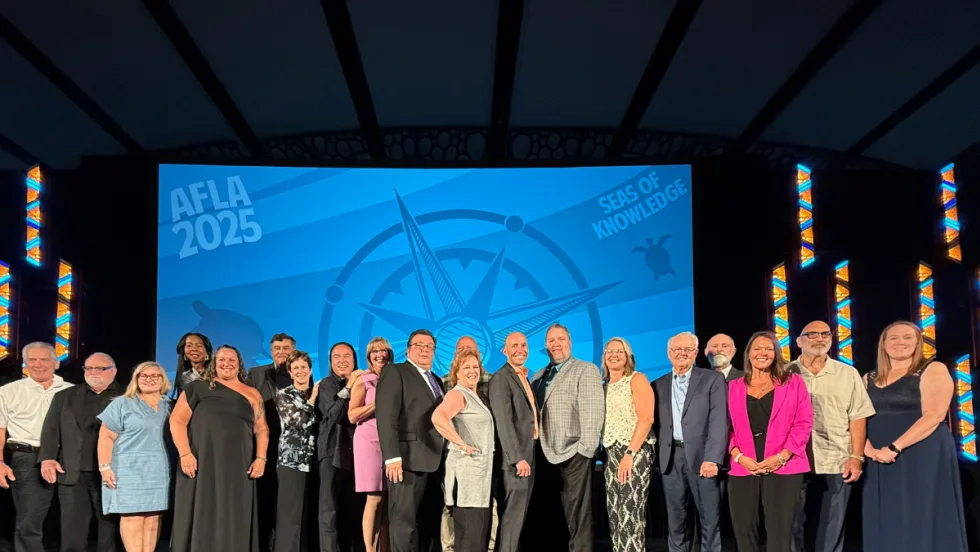
AFLA 2025 Conference in Pictures
Drawing over 640 attendees, the 2025 AFLA Annual Conference was held Sept. 14-17 at the JW Marriott Marco Island Beach Resort in Florida.
Read More →
DriveItAway, Free2move Partner to Expand Vehicle Access for Dealers
The arrangement enables franchise dealers to offer flexible lease-to-own programs with no credit checks, no down payments, and no long-term commitments.
Read More →
New Survey: How Well Are FMCs Serving Fleets? We Want Your Input
Fleet managers: Share your experience to help benchmark fleet management companies’ service, strategy, and support.
Read More →