




Great Fleets Share Best Practices
The individuals behind some of the best-managed commercial fleets in the U.S. offer strategies on how they keep operations running smoothly.


Photo courtesy of iStockPhoto.com.

Seasoned professionals, including several Professional Fleet Manager of the Year Award winners and nominees, share best practices that have deemed them some of the industry’s “great fleets.”
Develop Relationships
Maintaining good relationships plays a significant role in running a successful fleet operation. This means working well with not only a fleet’s internal staff and customers, but outside parties as well.
Lee Miller, senior manager of fleet services for Boehringer Ingelheim, operates a fleet of 4,000 vehicles. She supervises a staff of two and highly recommends collaborating and partnering with vendors. “Our industry includes a diverse group of vendors that can provide assistance, guidance, and support, not only for day-to-day activities, but also for special projects or reporting. We have been lucky to partner with the best and we approach everything as a team to help one another,” she said. Miller also advised fleets to collaborate with manufacturers in developing new processes for expansion ordering.
Wendy Dymkowski, manager fleet administration for Bristol-Myers Squibb, agreed. With a total fleet staff of just three and a fleet of 3,000 vehicles, collaboration is important. “Work closely with your internal stakeholders and your third-party partners,” she advised.
By partnering with its leasing companies, Johnson Controls developed fleet business reviews for its internal customers/business owners and leadership. Christy Coyte Meyer, corporate global fleet manager and 2009 Professional Fleet Manager of the Year, said the partnerships provide the opportunity to review cost-saving initiatives and identify areas for improvement. “The reviews are ‘working sessions’ and everyone is engaged,” said Coyte Meyer, who oversees the company’s global fleet of 18,300 vehicles with the help of seven direct reports.
For example, implementing sustainability initiatives is one area that requires involvement from several different groups. “While we have leadership support, it is challenging to have buy-in at the user level where they don’t always understand the full scope of the initiatives,” Coyte Meyer explained.
Coyte Meyer has conducted periodic fleet feedback sessions, inviting suppliers, internal reps from operations and safety, and drivers to perform reviews of current and new vehicles. “It takes a team to run a great fleet. Engaging key stakeholders will help your challenges and successes,” she said.
Patrick McGrath, global fleet commodity manager of United Technologies Corp. (UTC), knows all about the importance of teamwork. Managing the UTC North American fleet requires the coordination of nine different companies in industries as diverse as power and energy, heating and cooling, fire and security, elevators, and helicopter manufacturing. In 2011, he and his 10-member staff transitioned the entire 10,116-unit fleet from one fleet management company (FMC) to another in 30 days. In spite of the short time frame, the team was able to establish an infrastructure and strategy to create sustained savings and continuous improvement.
“It was challenging to initiate the collaboration and efforts of the UTC fleet team, but the success is exhibited through the level of participation by each company and the executed strategy and cost savings,” McGrath said. “Fleet managers should seek opportunities to collaborate with stakeholders and develop an internal value proposition that promotes continuous improvement, particularly through technology. Work to elicit commitment from diverse business stakeholders, companies, and personalities.”
Baker Hughes worked closely with its FMC to customize an electronic vehicle ordering tool. “The tool streamlined our process, including workflow approvals within the tool, which increased our productivity and reduced costs associated with maintaining paper files,” said Brenda Davis, strategic sourcing fleet commodity manager. The company’s current fleet totals 12,000 vehicles in the U.S. and an additional 1,500 units in Canada. Davis is one of seven fleet employees for the company’s U.S. operations. She recommended seeking knowledge from “industry peers, customers, and suppliers, and building a network of trusted advisors.”
Leveraging the expertise of others has also proven a beneficial strategy for the three-member staff managing Altria Client Services’ 2,800-vehicle fleet. “I love to meet with various service providers to see the solutions they have developed to problems we all face,” said Ted Treece, manager of fleet procurement. “You don’t have to invent it yourself and there are many sources for innovation, from your fleet management company to small providers, which have developed a better mousetrap.”
Newsletters help keep Valero’s drivers engaged and promote good communication. Fleet Administrator Randy Burwell said 398 of the 1,660-plus vehicles in the fleet are assigned to employees. The newsletters enable them to stay up-to-date on policies regarding safety and driving.
Network & Benchmark
Theresa Belding, senior manager of fleet services at Forest Pharmaceuticals, has definitely taken advantage of networking and benchmarking with others in the industry. With a 3,250-unit fleet and three fleet staff, honing in on her craft and expanding her industry knowledge put her on the path to earn the title of 2011 Professional Fleet Manager of the Year.
“Don’t operate your fleet in a vacuum,” Belding advised. “Get information from the professionals around you. Fleet managers are willing to share their expertise. There are a ton of very experienced fleet managers in the industry. Seek them out and benchmark.”
Miller from Boehringer Ingelheim echoed Belding’s advice. “Ask questions and make connections — there is nothing more valuable!” she said.
Spend Wisely
Staying on budget requires fleet managers to keep close track of spending through total cost of ownership (TCO) and data analysis.
Forest Pharmaceuticals creates its selector based on TCO versus simple acquisition cost. The company also rarely purchases vehicles out of stock since the bulk of its order are replacement vehicles, and limits the number of vehicle choices offered at each level, according to Belding.
In 2011, Bristol-Myers Squibb staggered its ordering cycle, which is typically an annual event, to a multi-phased approach in order to deal with limited vehicle availability resulting from the impact of last year’s disasters in Japan.
Fleet policies at Ecolab were revised in 2008 to focus on total cost of ownership and sustainability. The 17,700-plus global fleet operations, managed by Global Fleet Director Gayle Pratt and 11 other employees, also achieved significant savings despite fuel costs that were higher than budgeted. “We offset those higher costs by managing the vehicle remarketing timing, replacement orders, and maintenance expense. It was a big success; we came in favorable to our original budget by a substantial amount,” she shared.
Valero has been able to save by purchasing vehicles instead of leasing due to accelerated depreciation programs offered by the government. The fleet also takes a single source manufacturing approach based on in-depth analysis of lifecycle vehicle costs and transfers vehicles for optimal utilization, according to Burwell.
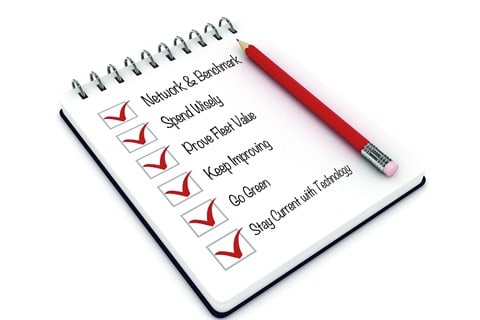
Prove Fleet Value
Moving beyond the “grease monkey in a suit” image is an obstacle many fleet managers struggle to overcome. Proving your worth to upper management and the rest of the company is essential.
“Align yourself with leadership and always show your value,” said Miller of Boehringer Ingelheim. “Celebrate your success and share it with your senior leadership.”
With a 13,500-vehicle fleet and 23 fleet employees, Mark Leuenberger, assistant VP, supply chain management for Cox Enterprises, emphasized the need to truly “own” the fleet. “As a fleet manager, no matter what the fleet size, you need to have ownership of the fleet. It is important to make upper management understand that there are often significant savings to be made by letting the experts (you) have full control of your vehicles,” he said.
Fred Turco, senior director of global fleet procurement and operations for Pfizer, manages the company’s U.S. fleet of 6,200 vehicles (33,000 global fleet) with that same approach. With one full-time and one part-time staff member in the U.S., he does his best to get deserved acknowledgement from company leadership. “Define your team’s value proposition to your organization. Validate it with senior leadership, and build your management system around consistently delivering against and demonstrating that value,” he said.
The same sentiment rings true with Merck & Co.’s 8,900-unit North American fleet (30,000 units globally), managed by Director of Global Fleet Services Joe LaRosa, 2008 Professional Fleet Manager of the Year, and a staff of 11 other fleet employees around the globe. “The best way to achieve fleet results is to ensure that you have sponsorship at the highest levels within the company,” LaRosa said.
Merck has developed a set of “21 Global Guiding Principles” that its fleet managers around the world utilize in developing each of their country-specific fleet policies and procedures. “Many country managing, HR, and finance directors have welcomed these global principles,” LaRosa said. “The guiding principles include recommendations for HR decision makers, financial reporting for total cost of ownership, CO2 reduction goals, and fleet administration recommendations.”
Keep Improving
Great fleets are constantly evolving and being improved.
Pfizer measures key performance indicators (KPIs) related to value and takes a pare-to approach to continually improve each KPI, according to Turco. Similarly, Ecolab’s Pratt emphasized the importance of paying “attention to detail; actively managing the plan, total costs, and KPIs.”
For Cox, it’s all about the process. “We have spent a great deal of time and effort developing our internal processes to guarantee that we maximize our resources in managing fleet,” said Leuenberger. “Your internal process should create a system of checks and balances that assure their performance is delivering the best results. Remember that you are ultimately responsible for your fleet, so never rely 100 percent on a third party,” he added.
ServiceMaster utilizes several lean manufacturing methods (such as waste identification, value-mapping, and 5S) to improve the performance of service process to its business operations, while providing those services at a more efficient cost, according to Mary Kay Runyan, vice president of the ServiceMaster fleet of 13,700 vehicles and 30 fleet associates.
Johnson Controls has standardized fleet vehicles and the internal process, such as standardized forms and the approval process, to boost efficiency.
Go Green
Striving for sustainability has been an effective strategy for a number of fleets.
For AT&T’s global fleet of more than 70,300 vehicles, going green has been an important focus since the company announced its plans in March 2009 to invest up to $565 million as part of a long-term strategy to deploy approximately 15,100 alternative-fuel vehicles through 2018.
This includes a goal to replace up to 8,000 service vehicles with lower-emission compressed natural gas (CNG) vehicles. “As we retire gasoline-powered passenger vehicles in our fleet, we’ve continued replacing them with alt-fuel models. As part of our 10-year initiative, we expect to replace 7,100 passenger cars by the end of 2018,” said Jerome Webber, VP, global fleet operations. The company opened a private CNG refueling station in Los Angeles last year and is working with the Department of Energy, local and regional Clean Cities coalitions, and industry stakeholders to encourage the development of publicly available refueling facilities.
Alt fuels are just one way to go green. Rightsizing has been another common best practice used by fleets such as Bristol-Myers Squibb, UTC, and Valero. UTC realized nearly $3.8 million in savings over a 14-month period through vehicle rightsizing, which contributed to an 8-percent increase in average fleet mpg and reduced its CO2 output by 8,000 tons in one year. Switching to four-cylinder models also resulted in a 6.5 cents-per-mile savings over the life of each unit in Valero’s fleet.
ServiceMaster has also focused on improving fuel consumption by converting diesel lawn service trucks to smaller gasoline-powered models, testing hybrid electric propulsion systems, and improving routing to reduce miles required to service customers.
Stay Current with Technology
Fleet managers should stay up with current technology and innovations, “but make sure they are right for your fleet before you implement them,” Treece from Altria Client Services advised.
AT&T’s Webber agreed. “Learn before you leap! We’ve learned that a mix of solutions is right for our fleet. So, there are multiple technologies that can effectively reduce our fuel consumption and impact on the environment,” he said.
UTC introduced driver risk assessment and training tools, including MVR checks. According to McGrath, the vehicles equipped with telematics saw a 90-percent reduction in speeding, a 44-percent reduction in at-fault accidents, and 20-percent reduction in total accidents.
Greater productivity and lower contractor cost has resulted from installing GPS in Valero’s fleet.
Challenge Norms
Most important, fleet managers should always be ready to step it up.
“Never be satisfied with the status quo. Diligently seek innovation and technology to ensure best-in-class process,” said Davis of Baker Hughes.
“Challenge industry and internal norms, promote appropriate change, and execute flawlessly against approved change to actualize value,” said Turco of Pfizer. “If we, as fleet managers, don’t challenge the current norms and promote change, then others will do it for us.”
More Fuel

Fuel Prices Surge in September | September Fuel Update
September brought major fuel price swings, including diesel crossing $6 a gallon. Here’s how gas and diesel prices changed throughout the month, and where they stood heading into October.
Read More →
Turning Fleet Payment Data into Executive Insights
Ramel Lindsay of U.S. Bank Voyager discusses how fleets can transform payment and transaction data into actionable intelligence to reduce costs, improve oversight, and support executive decision-making.
Read More →
Why the IRS Raised Its Mileage Rate in the Middle of 2026
Fuel-price volatility drove the rare increase to 76 cents per mile, the fifth midyear adjustment since 2000.
Read More →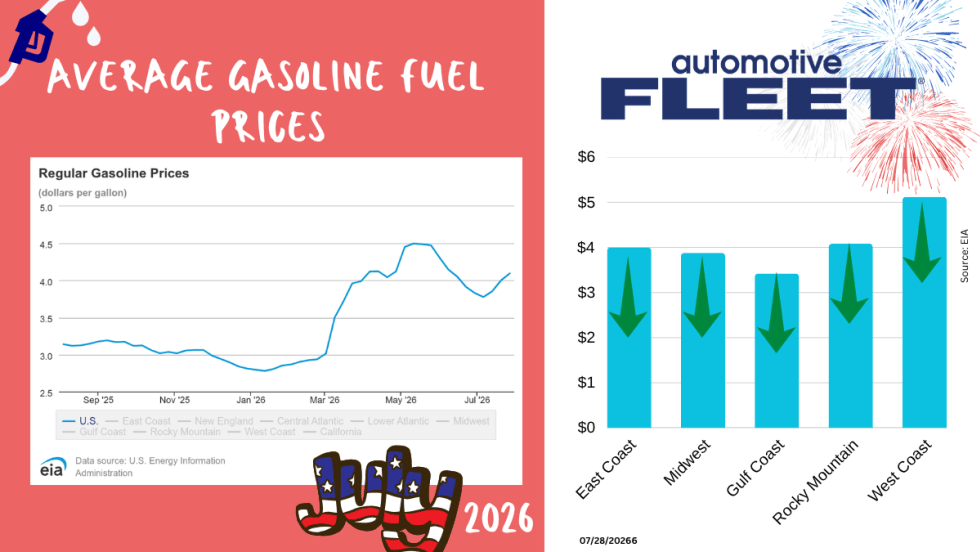
July Fuel Update: Prices Keep Rising in Light of More Conflict
Gas prices continue to rise as more and more conflicts do, too.
Read More →
Bob Adamsky on Fuel Volatility: "Don't Panic, Have a Plan."
When it comes to up and down fuel prices, Adamsky has a message for fleets: “Don’t panic.”
Read More →
How Fleets Can Gain Control of Non-Fuel Spend
Fuel often gets the spotlight, but non-fuel expenses can have a major impact on fleet costs. Ramel Lindsay of U.S. Bank Voyager discusses how fleets can gain better visibility and control over these often-overlooked expenditures.
Read More →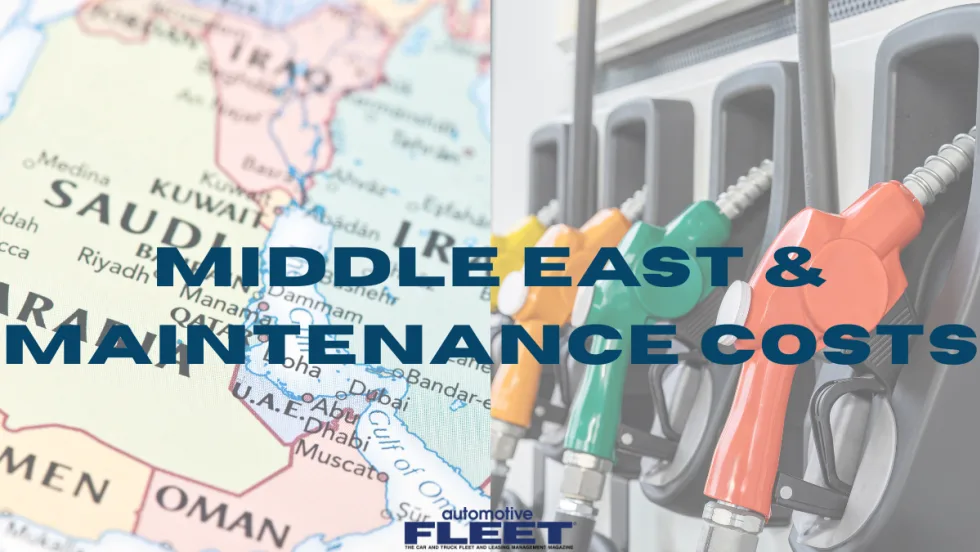
Fuel is Just the Start: How Middle East Tensions are Driving Up Fleet Maintenance Costs
The Middle East conflict is doing more than pushing up fuel prices. It’s also raising the cost of key maintenance products your fleet depends on, from motor oil to tires to windshield wipers. Here’s what you need to know about this budget-busting situation.
Read More →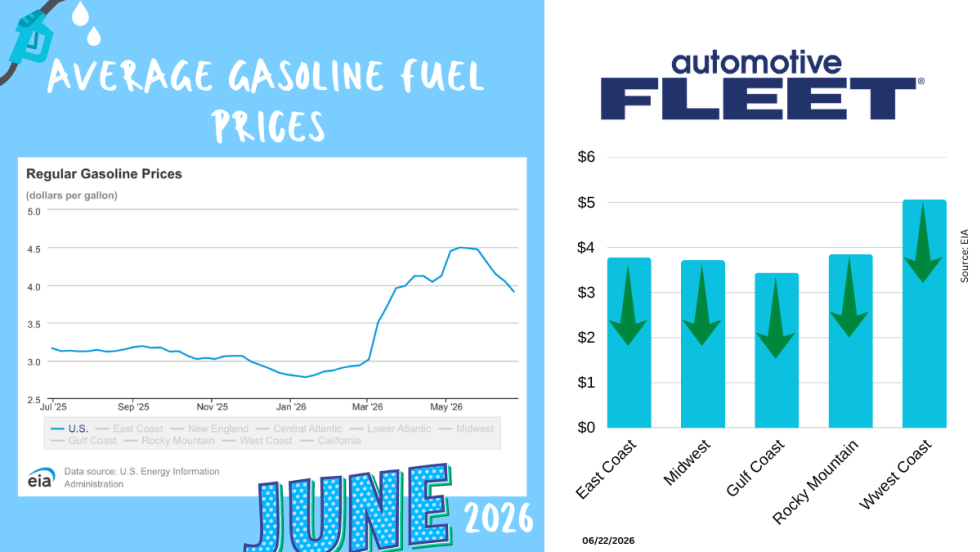
June Fuel Update: Prices Fall Below $4
Drivers are finally getting some relief at the pump. The national average gas price has dropped below $4 a gallon for the first time in months, with prices falling in 47 states as oil markets react to developments in U.S.-Iran negotiations.
Read More →
Study: How 2026's Gas Price Hikes Affect Different Vehicle Types
New data from iSeeCars reveals how rising fuel costs have affected different vehicle segments as gasoline prices climbed nearly 46% over the past four months.
Read More →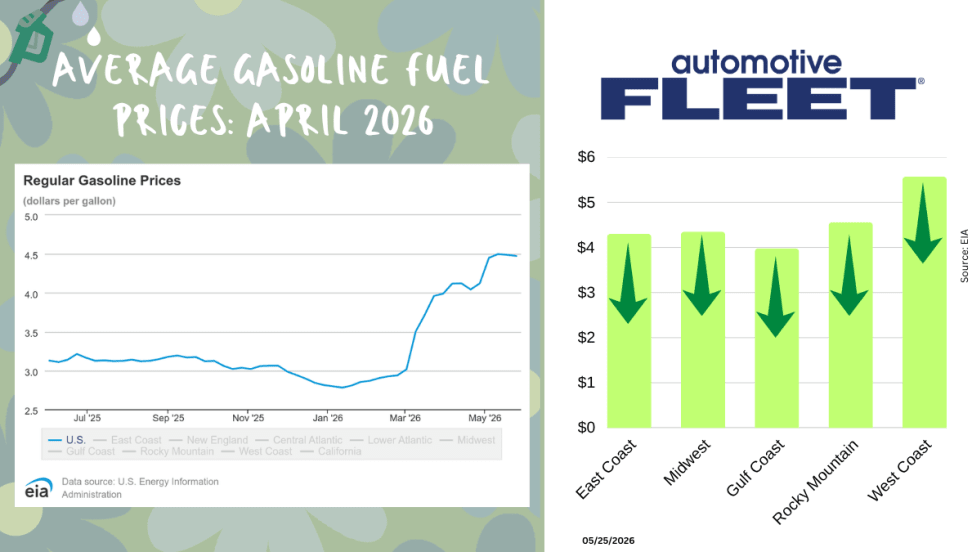
May Fuel Update: All Regions Experience Declines
Gas prices are finally easing in much of the country, but experts warn global tensions could quickly reverse the trend as the national average remains well above last month’s levels.
Read More →