





Next Up: Deleting Driver Data Is No Longer Enough in Connected Vehicles
Connected Fleets Face Growing Cyber Risks as Technological Landscape Grows
As fleets adopt more connected vehicles, telematics, and AI-powered technologies, cyber threats are evolving just as quickly. From ransomware and cargo theft to vulnerabilities in connected vehicle systems, here's what fleet managers need to know to stay ahead of the risks.
July 23, 2026
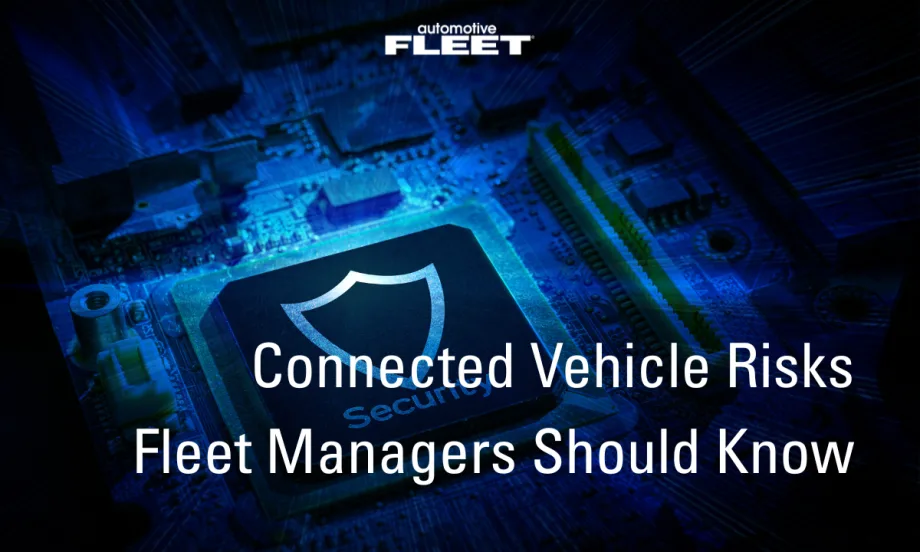
As connected technology continues to expand throughout the transportation industry, understanding cyber risks, evaluating technology providers, and adopting recognized security frameworks become increasingly important.
Credit:
Automotive Fleet
3 min to read
As fleets continue adopting connected vehicles, telematics platforms, and AI-powered technologies, cybersecurity is becoming an increasingly important part of fleet operations.
During a recent discussion with Automotive Fleet, Yaniv Maimon, VP of Cyber Services at Upstream, outlined the evolving cyber threat landscape for commercial fleets and explained why fleet managers should begin treating cybersecurity as a business risk rather than solely an IT concern.
Ransomware Remains the Most Common Threat
Among the cyber incidents affecting fleets today, ransomware continues to pose one of the greatest operational risks. Rather than targeting vehicles directly, ransomware attacks typically focus on the organizations that operate them, encrypting critical systems or preventing employees from accessing fleet management platforms and business data.
Third-party technology providers can also become targets.
One example discussed was an outage involving a cloud-based electronic logging device (ELD) provider. When the provider's systems became unavailable, fleets relying on its service were forced to switch to manual logging, creating operational delays and compliance challenges.
These incidents highlight how dependent fleets have become on connected technologies and cloud-based services.
Cargo Theft Has Entered the Digital Age
Cybercriminals are also changing how they steal freight.
Rather than relying on physical theft, attackers are increasingly using stolen credentials, compromised business systems, or impersonated fleet accounts to redirect valuable shipments.
According to Maimon, these digitally enabled cargo theft schemes have resulted in hundreds of millions of dollars in losses and continue to become more sophisticated.
The growing threat has attracted federal attention as law enforcement agencies monitor the increase in organized cargo theft targeting commercial transportation.
Connected Vehicles Add a New Layer of Attack
Modern vehicles communicate with mobile applications, telematics platforms, and manufacturer cloud services every day. While those connections provide fleets with valuable operational data, they also create additional entry points that attackers may attempt to exploit.
Security researchers have demonstrated vulnerabilities in some vehicle ecosystems that could allow unauthorized users to perform remote functions, such as unlocking doors, starting a vehicle, or accessing its location, if left unaddressed.
Although these scenarios typically require exploiting software vulnerabilities, they demonstrate why cybersecurity must now be considered part of vehicle risk management.
Lessons from Autonomous and Ride-Hailing Fleets
The continued expansion of connected mobility services also offers insight into future cybersecurity challenges.
Maimon pointed to incidents involving ride-hailing and autonomous vehicle platforms where attackers manipulated transportation systems by dispatching large numbers of vehicles to the same location, creating traffic congestion and operational disruptions.
These incidents illustrate how software-based attacks can increasingly affect transportation operations.
Smaller Fleets May Face Greater Challenges
Although cyber threats affect organizations of every size, smaller fleets often operate with fewer cybersecurity resources.
Larger organizations typically have dedicated IT teams, security controls, and established processes for identifying and responding to threats. Smaller businesses, by comparison, may have limited technical staff and fewer protections, making them attractive targets for attackers seeking easier access.
For fleets looking to assess their cybersecurity readiness, Maimon recommended using the National Institute of Standards and Technology (NIST) Cybersecurity Framework.
AI is expected to reshape both cyber defense and cybercrime.
Advanced AI systems are becoming increasingly capable of identifying software and hardware vulnerabilities at unprecedented speed, but they also add a layer of vulnerability.
Subscribe to Our Newsletter
More Articles
2027 Toyota Camry Offers Hybrid Powertrain Across Five Grades
The 2027 Toyota Camry is a carryover with new pricing.
Read More →
Chevrolet Updates 2027 Trax and Trailblazer with More Standard Safety Features
Chevrolet is updating two of its smallest SUVs with added driver-assistance technology, redesigned interiors, and revised trim options. The changes could add more safety equipment as standard for commercial fleets, while a new Trailblazer configuration adds another all-wheel-drive option.
Read More →
What’s Next for Fleet? Safety, AI & Industry Recognition | AF News Recap
Could your company's culture be encouraging distracted driving? This week, we're exploring how workplace expectations affect driver safety, what AI, EVs, and autonomous vehicles could mean for the future of fleet management, and how fleet professionals can strengthen their award nominations.
Read More →


Sponsored•October 14, 2026
A buyer's guide to fleet management software in 2027
Buying fleet management software in 2027 means looking beyond features and price. As fleet operations, technology and expectations evolve, this guide explores what today’s fleet professionals should consider when choosing a system that can deliver value now and adapt to what comes next.
Read More →
Does Your Fleet's Culture Encourage Distracted Driving?
What happens when the people responsible for enforcing safety rules are the ones setting the wrong example? The answer may reveal why some of the biggest risks to fleet drivers have little to do with what's written in the employee handbook.
Read More →
What Will Shape the Next Era of Fleet Management?
EVs, AI, and autonomous vehicles are reshaping fleet management. Discover what’s ahead—and how fleet leaders can prepare for the next era.
Read More →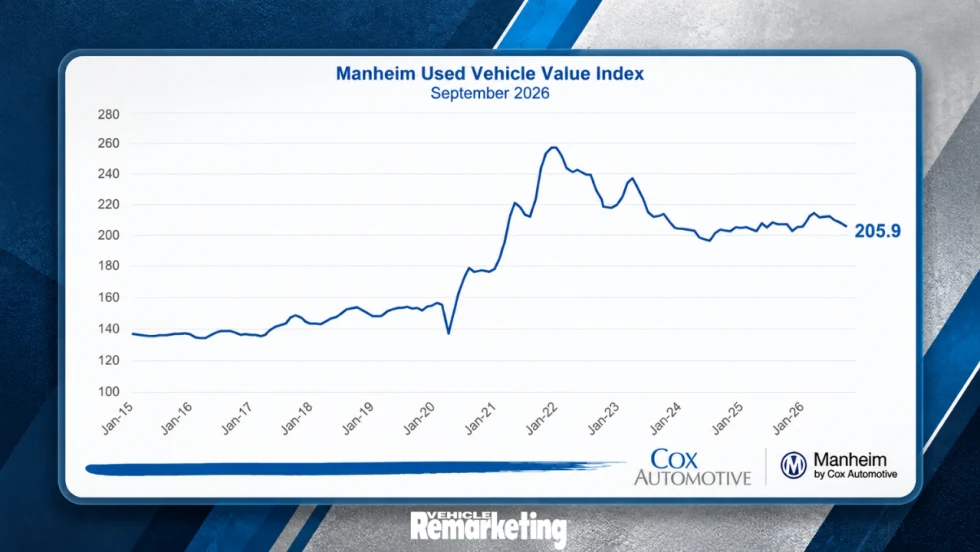
Wholesale Used-Vehicle Values Fall as Cox Automotive Cuts 2026 Forecast
Wholesale used-vehicle prices declined in September as depreciation accelerated, prompting Cox Automotive to lower its year-end forecast.
Read More →
FLD Promotes Three Executives in Leadership Changes
FLD has promoted three longtime executives, naming Gary Mott CEO, Richard Mallek president, and Ron Sanders managing partner.
Read More →
How Fleets Can Recruit and Train Veterans for Technician Roles
Here's how the technician shortage has affected uptime for fleets, and what to do about it.
Read More →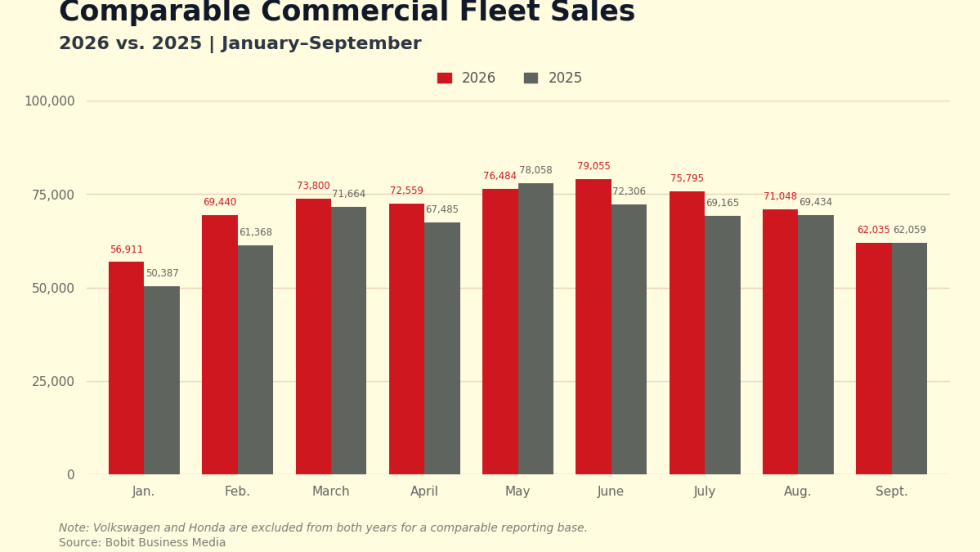
Commercial Fleet Sales Rise 5.8% Through September 2026
September commercial fleet sales were essentially unchanged from a year earlier, slowing year-to-date growth while keeping volume ahead of 2025.
Read More →