




Commercial Fleet Maintenance Costs Remain Flat in CY-2014
Maintenance costs have decreased in the past 12 months with the primary reason being increased vehicle quality. But, there are concerns about vehicle complexity, part prices, labor rates, and soft costs such as driver downtime.

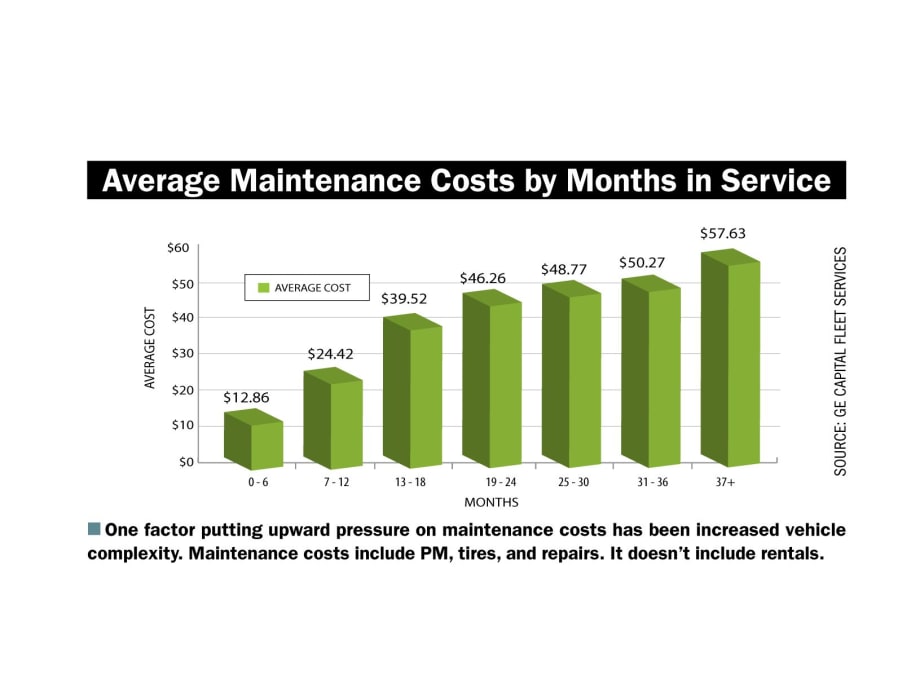
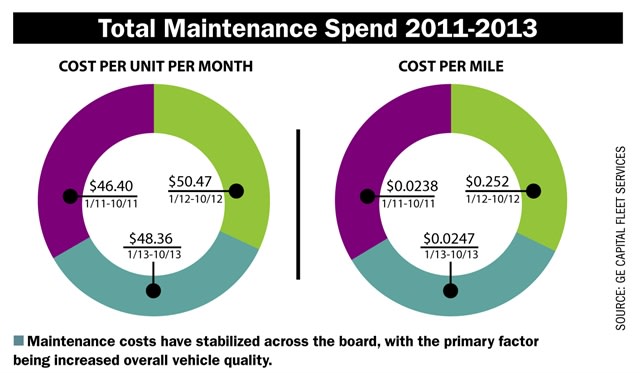
Maintenance costs have decreased across the board with the primary factor being increased overall vehicle quality.
Contributing to this decrease has been fleet adherence to OEMs’ scheduled preventive maintenance programs. This, along with improved vehicle quality, has positively impacted maintenance expenses in 2014 and promises to stabilize maintenance expenses in future years
“When adjusting for inflationary factors in some categories, maintenance and repair costs remained relatively flat in the past year,” said Tony Piscopo, director, fleet management services at ARI.
The key factor driving fleet maintenance costs is the overall increase in vehicle quality and reliability.
“Vehicle quality continues to improve, reducing failures for fleets and their drivers. While the new technologies on today’s vehicles can be expensive to repair, their failure rates are fewer and the impact is minimized,” said Robert Cascarano, manager, fleet management services at Donlen.
“Routine maintenance costs have been reduced by longer maintenance intervals as well as ‘bundling’ of services by some vendors. For example, many national account providers have included free tire rotations with their oil change services. In addition, some OEMs are offering complimentary preventive maintenance service, generally up to about 24,000 miles, which is reducing preventive maintenance costs.”
However, truck maintenance costs have been increasing, especially those revolving around selective catalytic reduction (SCR) emission systems.
“The new diesel emissions standards and the related components have had an adverse effect on fleet operating expenses. Repair to these systems is expensive, time consuming, and requires specialized equipment and training that is not available in every market,” said Mike Crumlett, manager, North America truck services at Emkay.
Ongoing Parts Shortages
There continues to be an ongoing parts shortage, which is causing an increase in rental expenses and driver downtime.
“Significant delays with some replacement parts has been challenging for fleets — ball joints, restraint control modules, fuel pumps, and automatic transmission clutches have been common backordered parts. These parts delays have often extended rental vehicle needs,” said Eric Strom, maintenance & safety product manager at GE Capital Fleet Services.
There are a variety of factors contributing to parts shortages, such as just-in-time deliveries and the proliferation of complex vehicle componentry.
“Parts pricing is increasing overtime, and new technologies such as hybrid drive systems, diesel emissions aftertreatment, and electric steering assist have driven that increase. Additionally, the widespread use of ‘just-in-time’ manufacturing and the minimal parts inventories of the manufacturers have led to many new parts being unavailable,” said Crumlett of Emkay.
Another consequence to delays due to parts shortages is increased rental vehicle expenses.
“I have seen an increase in rental expenses related to back-ordered parts and dealer service department backlogs. While many of the manufacturers will offer loaner vehicles or reimburse some of the rental expenses, it is not uncommon to see fleet drivers stuck in rental vehicles for over a month at a time,” said Crumlett.
A growing fleet maintenance issue revolves around the “soft costs” of driver and vehicle downtime.
Downtime issues have increased and rental costs have risen. “Rental costs have increased, in some cases, as a result of delays due to replacement parts on backorder, repair provider workload capacity, repair technician shortage, and oil patch area challenges with repair provider capacity,” said Chad Christensen, strategic consulting manager at GE Capital Fleet Services.
Upward Pressure on Labor Rates
Labor rates for repair shops increased moderately in 2014, with high cost-of-living markets experiencing the greatest increases.
“Repair provider labor rates have increased moderately as many shops held rates for a number of years,” said Christensen. “We have seen significant labor, parts, and tire cost increases in select areas, such as oil patch regions.”
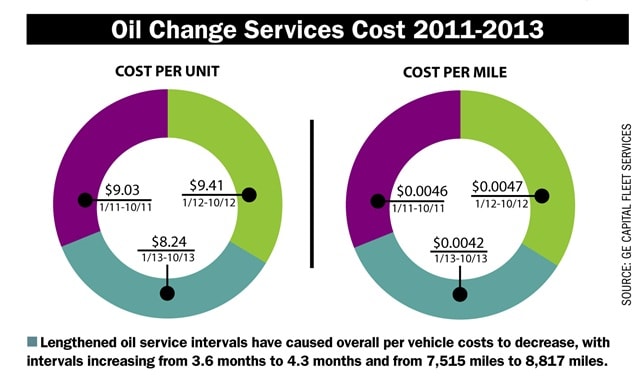
The ongoing technician shortage is also putting upward pressure on labor rates. Staffing shortages create a backlog of work in many facilities throughout the country. The technician shortage is especially acute in the oil patch and rural areas.
“A well-managed fleet will see maintenance costs remain flat or trend slightly downwards in 2014-2015. Proper vehicle spec’ing and selection, a comprehensive maintenance control program, and good driver education can offset the increased parts and labor costs,” said Dale Jewell, manager, U.S. maintenance center operations at Emkay.
Dealers Targeting Fleet Business
Franchised dealers are experiencing declines in maintenance revenues as warranties are extended by OEMs and as unscheduled repairs and maintenance incidents decrease as a result of increased vehicle quality. In an effort to mitigate some of these lost revenues, some franchised dealers and their OEMs are actively looking to solicit fleet maintenance business.
“We have also seen additional OEMs offering free maintenance plans for a specified time/miles period that encourages customers to go to their dealerships for the services,” said Christensen of GE Capital Fleet Services.
Others, likewise, see OEMs actively seeking to drive fleet maintenance business to their franchised dealers.
“We believe there will be a continued trend toward better-quality vehicles along with better warranties. We expect OEMs will continue to entice fleets with free services and other incentives to encourage drivers back to dealership facilities,” said Piscopo of ARI.
However, the free services being offered have yet to result in significant decreases in fleet operating expenses.
“The free preventive maintenance offered by some manufacturers has not led to an overall reduction in expenses. We are recommending fleets take advantage of an increased fleet incentive in lieu of free preventive maintenance,” said John Bauer, manager, fleet analytics at Wheels Inc.
Another issue is driver convenience, since many dealerships may require out-of-the-way travel by company drivers.
“More OEMs are offering free scheduled maintenance for vehicles allowing fleets to reduce oil spend while ensuring vehicles adhere to preventive maintenance schedules. Since drivers have to take the vehicle to the dealership, convenience is one factor keeping many fleets from taking full advantage of this program,” said Megan McMillan, client consultant at Donlen.
Future Maintenance Challenges
As OEMs develop a new generation of smaller displacement engines that offer not only increased fuel efficiency, but also increased horsepower, fleet maintenance subject-matter experts are keeping a close eye on the maintenance patterns of these new powertrains.
“Close attention will be paid to OEM fuel economy initiatives such as turbochargers with extended life, aluminum blocks and heads, and transmissions with added complexity,” said Christensen of GE Capital Fleet Services.
Many drivers used to driving six-cylinder engines or larger displacement four-cylinder engines may be unfamiliar with the different driving characteristics of the newer, smaller displacement powertrains, resulting in driver misperceptions.
“Manufacturers are under pressure to engineer powertrain components to do more with less. In the balance of efficiency versus performance, manufacturers are engineering automatic transmissions with up to 10 speeds combined with the greater use of even smaller turbocharged engines. This is sure to change the performance of a new vehicle. Evolving technology can lead drivers to think there is an issue with the way a vehicle performs when, in reality, there are no issues at all. This leads to unnecessary driver downtime with visits to the dealership combined with possible rental costs,” said Mark Malanca, mechanical lead coordinator, truck maintenance at LeasePlan USA.
Increasing vehicle complexity is a potential issue not only with drivers, but also with service technicians.
“Some repair providers, both dealerships and independents, may face challenges staying current with new technologies causing longer downtimes due to additional diagnostic time and cost when moving a vehicle to a shop with the proper diagnostic capabilities,” said Strom of GE Capital Fleet Services. “Repair providers have also reported a shortage of new technicians entering the industry and the lack of experienced diagnostic technicians.”
Another maintenance area being closely followed relates to the proliferation of accident avoidance technology and safety equipment on many fleet vehicles.
“Vehicles are being engineered to help reduce accident rates, and, in some cases, drive the vehicle for the driver. All the sensors and electronics required for this safer vehicle do come at a cost — not only at the time of purchase but also as it relates to maintenance and collision repairs,” said Tony Blezien, vice president, operations at LeasePlan USA.
Preventive Maintenance Trends
For many years, OEMs have been trending toward longer oil drain intervals, which have helped stabilize PM costs.
“Fleets continue to increase oil drain intervals as a method to reduce costs for PM services. We have seen a decrease in frequency of PM services due to this factor. Additionally, the price difference between mineral and synthetic (or synthetic blends) motor oils continue to shrink to the fleet’s advantage. Fleets do need to ensure other vehicle components are maintained and inspected as appropriate when increasing intervals,” said Piscopo of ARI.
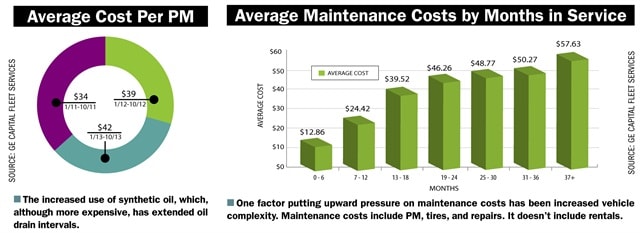
The trend toward synthetic oils appears to be increasing.
“There are some repair facilities that have discontinued carrying an inventory of conventional motor oils, but they can provide it if needed. Some repair facilities are choosing to market their synthetic blend oil change pricing versus conventional oil pricing, which is more realistic for the newer vehicle oil requirements,” said Strom of GE Capital Fleet Services.
Currently, synthetic oil is more expensive, but some foresee the cost per quart declining with the increasing volume of use.
“If crude oil prices decrease, that will help keep a lid on material costs for oil changes. The cost of synthetic oil will continue to decline as the utilization increases,” said Bob Sandler, senior vice president, customer experience & enterprise consulting at Element Fleet Management.
More Maintenance

Fleet Manager’s Ultimate Playbook: Navigating the New Standard in OEM Connectivity
Rising operating costs, driver safety concerns, and unplanned downtime are putting unprecedented pressure on modern fleets. Discover how fleet managers use embedded OEM connectivity and real-time vehicle data to cut TCO, prevent downtime, and protect drivers without aftermarket telematics hardware.
Read More →
How Can Fleet Managers Tell Which Repairs Require Closer Review?
Fleetio’s Brianna Perry demonstrates how Service Advisor evaluates maintenance requests, identifies pricing anomalies, and provides the context fleet managers need to focus their attention on potential problems.
Read More →
Why Roadside Assistance Belongs in a Fleet Risk Strategy
Roadside assistance is more than a tow. See how the right partner can protect drivers, uncover fleet trends, and strengthen your risk strategy.
Read More →
Hidden in Plain Sight: Fleet Compliance Risks
Fleet compliance isn't just about having policies — it's about consistently enforcing them. This practical guide reveals six hidden compliance risks common in public sector and shared fleet operations and outlines proven strategies to improve visibility, accountability, and audit readiness
Read More →
How Maintenance Costs Compare Across 27 Fleet Vehicles
Vincentric’s three-year, 60,000-mile projections reveal wide differences for both scheduled and unscheduled maintenance among selected vehicle categories. Projected maintenance visits also play a factor.
Read More →
The EV Breakdown Nobody's Talking About: Why Most Electric Vehicle Roadside Calls Aren't Mechanical Failures
Here's why EV breakdowns are widely misunderstood.
Read More →
How Stellantis Plans to Get Ahead of Fleet Downtime
Keeping fleet vehicles on the road has become as important as buying them. Darren Bradshaw of Mopar North America explains how connected vehicle data, AI, and proactive service strategies are helping Stellantis reduce downtime and move closer to predictive maintenance.
Read More →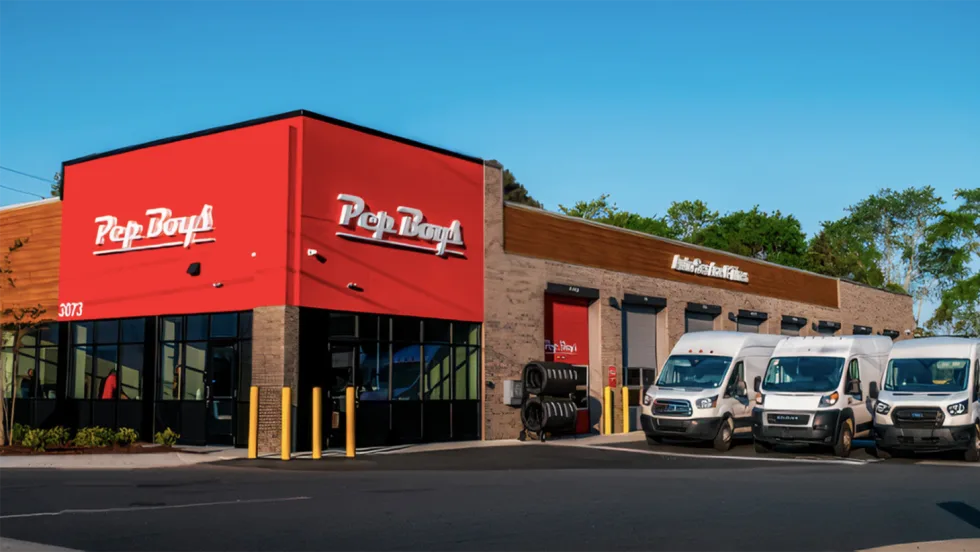
Merchants Fleet Expands Maintenance Network with Pep Boys
Merchants Fleet has expanded its relationship with Pep Boys, increasing the service provider's role within its national maintenance network. The move is intended to enhance maintenance coordination and support commercial fleets through Pep Boys' nationwide footprint.
Read More →
The Two Biggest Summer Downtime Threats for Fleets
A conversation with a maintenance expert reveals the two most common summer maintenance pains and how to prevent them.
Read More →
From Marine Corps Motor Pool to Managing 460 Fleet Vehicles
Cesar Ayala of O’Connell Landscape Maintenance shares how he transitioned from the Marine Corps to managing a 460-vehicle fleet—and the real-world challenges of maintenance, compliance, and driver management in California.
Read More →