




Analysis of Fleet Fuel Spend Trends in CY-2014
Fuel prices remain stable with the continued shift to smaller displacement engines and increased oil production in the U.S. One unintended consequence may be the emergence of driver complacency to maximizing fuel economy.

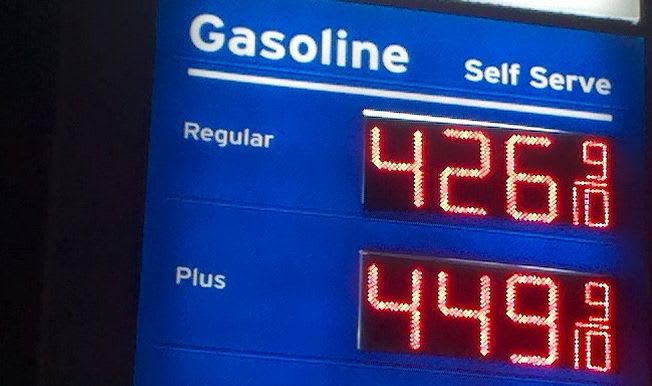
Photo via Wikipedia.
Photo via Wikipedia.
The fact that fleet fuel pricing continues to be flat, despite significant international tensions in the Middle East and other oil-producing regions, runs contrary to the majority of predictions about fuel pricing that were made as recently as five years ago. In the past, these international tensions were key factors influencing the futures market for crude oil, which generated unpredictable pricing volatility. However, this fuel pricing volatility did not occur in CY-2014.
There are a variety of factors contributing to this; however, two stand out as being significant — the ongoing renaissance in U.S. oil production that continues to increase year-over-year and the dramatic improvements in fuel economy by gasoline-powered engines.
“Overall, pricing trends have remained relatively flat on an average cost-per-gallon basis through 2014 in a year-over-year comparison. That said, there have been several notable, short-term spikes in index pricing because of global events, but the impact at the pump has been short-term and minimal,” said Tony Piscopo, director, fleet management services at ARI.
The forecast is for fuel prices to remain stable, even decline in the 2015 calendar-year. The short-term forecast for fuel pricing is positive.
“Improved fuel economy and increased oil production in the U.S. should lead to lower demand and relatively stable fuel pricing, at least in the short-term,” said Amy Blaine, vice president, consulting, analytics, and sustainability at Donlen.
Another factor is that fuel management initiatives at many companies are intertwined with fleet sustainability initiatives.
“Internal management and external customer focus on fuel consumption as a part of green strategies is driving the fuel-use conversation in many cases as much as fuel cost,” added Piscopo.
Technology on the March
The fuel price volatility in the 2004-2005 time frame, in particular, the psychological shocks when the price of gasoline surpassed $3 per gallon and, later, $4 per gallon, triggered an industry-wide trend to downsize to smaller displacement engines.
“We are seeing a continued shift to smaller, four-cylinder displacement engines from larger, four-cylinder engines, where available within a given model,” said Becky Langmandel, director of strategic modeling and analytics research team at LeasePlan USA.
However, there are unintended consequences to downsizing for greater fuel efficiency.
“In some cases, the smaller displacement engines, although more fuel efficient, carry a higher transaction price. In turn, a fleet management company’s role is to now provide analytics surrounding the payback period for the per-mile fuel savings versus the higher up-front cost for the more fuel-efficient engine. Depending on the fleet’s operating parameters (miles per year and replacement cycles), in some cases, our clients opt to stay with the larger, four-cylinder engine based purely on the total cost of ownership, not just fuel savings,” said Langmandel.
Most fuel management strategies start with the vehicle selector development.
“Fleets are rightsizing their vehicle selectors to take advantage of fuel-efficient technologies, weight reductions, higher speed transmissions, and appropriate drive types to meet their business necessity,” said Mark Donahue, team lead, fleet analytics at Emkay.
A holistic, multi-pronged approach to fuel management is needed to assist fleet managers in curbing fuel expenditures.
“This includes downsizing vehicles where possible, reducing weight and idle time, using telematics, and increasing driver involvement and education,” said Wayne Reynolds, manager of upfit design and consultation at LeasePlan USA. “The retirement of the Ford Econoline series and the introduction of new van models with improved fuel economy have stimulated clients to make changes to their vehicle selectors — something they may not have otherwise pursued.”
The Risk of Fuel Complacency
While the stability in fuel pricing during the 2014 calendar-year is welcomed, an unintended consequence is that fleets, drivers, in particular, may become complacent about maximizing fuel economy.
“Fleets have a wide ranging level of involvement in the management of fuel costs. Flat pricing at the pump decreases emphasis from some fleets given built-in cost controls because of a steady market. Regardless, fuel expense continues to be an opportunity for cost improvement for fleets large and small,” said Piscopo of ARI.
According to Piscopo, strategies for fuel-cost reduction include:
Focus on mpg improvement and reduced idle time.
Use of online tools to ensure drivers are seeking the lowest cost alternative with each fueling event.
Increase monitoring of fuel cards for potential misuse.
So far, fuel management complacency has not been widespread among most commercial fleets and most continue to be vigilant.
“Although costs were not changed, fleets continue to take steps to mitigate the high cost of fuel. While not widespread, the use of telematics is increasing. Service fleets are evaluating cargo, parts, and tool requirements to ensure the weight carried is as low as possible. Passenger fleets have introduced competitions among drivers to encourage fuel-efficient driving,” said John Bauer, manager, fleet analytics at Wheels Inc.
Another area of focus by fleets to manage their fuel spend is implementing programs and technology to modify driver behavior.
“Driver behavior and telematics continue to be a key area of focus, as 30 percent of fuel economy can be impacted by driver behavior. Fleets tend to have seasonal variations in their fuel economy, which can be tied to behavior factors such as idle time, improper driving in hazardous conditions, and inefficient vehicle speeds when conditions are clear,” said Blaine of Donlen. “In addition, examining fuel exceptions on a regular basis for fleets on a managed fuel program continues to be an effective way to counter issues impacting fuel spend.”
All fleet management companies view the modification of driver behavior as an essential component in optimizing fuel management control.
“The implementation of driver behavior training to reduce speeds, idling, improve accident avoidance, and avoiding rapid deceleration, continue to gain momentum within the industry. When paired with technological GPS solutions, route optimization can reduce miles driven, scheduling, speeds, and personal use,” said Donahue of Emkay.
Route optimization is another integral part of effective fuel management.
“Fleets continue to focus on efforts to improve efficiency in consumption through route optimization and telematics tools. They have also looked to influence driver purchasing decisions through fuel locator applications and driver education,” said Jayme Schnedeker, fuel product manager at GE Capital Fleet Services.
Interest in Telematics on the Rise
Although telematics devices have been around for a long time, their adoption have been slow. However, fleet management companies are reporting a renewed and widespread interest in reexamining the implementation of telematics in fleet vehicles.
“We’re witnessing an increased use of telematics by fleets to monitor idling time and fuel usage. For example, one of the biggest contributors to poor fuel efficiency is idling, followed by rapid acceleration and speeding. Telematics can track these factors and provide fleets the quickest payback, with almost immediate results and cost savings. The technology can track risky behind-the-wheel driving behaviors (e.g., failure to use seat belts, speeding, harsh braking, and cornering), which delivers a longer-term provable payback in reduced accident rates and associated costs,” said Bob Sandler, senior vice president, customer experience & enterprise consulting at Element Fleet Management.
More Telematics

Samsara Driver Perks Adds New Benefit for Corporate Fleet Drivers
The rewards program gives eligible professional drivers access to discounts from more than 50 brands while giving fleets another way to support recruitment, retention, and the driver experience.
Read More →
Inside the Church of Jesus Christ of Latter-day Saints’ Two-Track Telematics Strategy
With 20,000 vehicles and two fundamentally different driver populations, the Church faced a fleet management problem that a single telematics program couldn't solve. How it responded offers a replicable framework for any fleet where one size doesn't fit every driver.
Read More →
How Conversational AI Can Make Fleet Tasks Easier for Drivers
While most generative AI tools help fleet managers interpret data at their desks, Connex2X is applying voice interaction to tasks behind the wheel.
Read More →
Why Fleets Are Creating Dedicated Fleet Analyst Positions
Are fleet analyst positions the new norm? Listen here to find out.
Read More →
Teletrac Navman Begins Next Chapter as Standalone Private Company
What's new with Teletrac Navman and its new owner?
Read More →
Why Fleets Are Creating Dedicated Fleet Analyst Positions
Telematics, AI, EVs, and connected technologies are generating more fleet data than traditional teams can effectively manage. Reed Jackson explains why dedicated fleet analytics roles are emerging to turn that information into better operational decisions.
Read More →
Deleting Driver Data Is No Longer Enough in Connected Vehicles
A factory reset may erase what's stored inside a vehicle, but it doesn't always end a former driver's digital connection. Here's how fleets can make digital offboarding part of every vehicle transition to reduce privacy, security, and compliance risks.
Read More →
How AI Can Help Fleet Managers Build Their Own Solutions
Syneos Health Fleet Manager Kristin Leary is exploring how AI-powered development tools, telematics data, and predictive analytics could help fleets solve operational challenges without waiting for a vendor roadmap.
Read More →
Cameras, Safety and Insurance: From Reactive Claims to Real-Time Prevention (Part 2 of 2)
Part Two: Commercial auto remains one of the most challenging and costly lines of coverage for fleet operators and insurers alike. Continue learning more about how to effectively address these issues from Onur Aksan, Enterprise Business Development Executive, Geotab
Read More →
100% Fleet Uptime? Here's Stellantis' Strategy
Keeping commercial vehicles on the road is becoming just as important as getting them into service. Stellantis’ U.S. fleet chief Michael Ferreira shares how connected technology and AI are changing the way fleets manage uptime.
Read More →