





Want More? Hiring Fleet Drivers — When Drivers Hold the Cards
Choosing the Right Vehicle for Tall Fleet Drivers
Why investing in vehicles for taller drivers is about more than just comfort. Plus, how popular fleet vehicle offerings rank in head- and legroom.
March 19, 2024

Finding vehicles that your drivers fit into well is about more than just comfort; it’s also a matter of safety.
Photo: Canva/Automotive Fleet
5 min to read
For commercial fleet managers with tall drivers, it can be tough to figure out which vehicle will be the most comfortable for them.
While the average U.S. male is roughly 5’7” and the average U.S. female is about 5’3” — according to the U.S. Centers for Disease Control & Prevention — fleet managers must sometimes find vehicles that can accommodate drivers well over 6 ft.
Moving Beyond Comfort: Keeping Safety at the Forefront
Finding vehicles that your drivers fit into well is about more than just comfort; it’s also a matter of safety, says Sue Miller, fleet industry veteran.
Drivers must have optimal control over their vehicles in order to be able to operate them properly. If a driver is too big for their vehicle, they may be more likely to have difficulty operating the vehicle effectively, which can increase the risk of accidents.
“The safety of our drivers was always paramount. That plus the impact to their ergonomics within the vehicle to their health and comfort required us to make concessions,” Miller said of her time working for McDonalds Corp.
Miller had drivers who measured at 6’5”, with one coming in at 6’7”.
“Considering the amount of time they were required to spend on the road, the compact SUV offered as the standard company car, was not optimal for their safety and comfort,” she added.
Add a Vehicle Size Policy
Once you begin to make exceptions for some drivers based on their size, it can be easy for others to ask for a larger vehicle as well. Especially if their company allows them to use their fleet vehicle for personal use and they want more space for their family.
“It can be a slippery slope because once you make one exception, others expect the same for different reasons. For example, I have four kids — or more — and need a larger vehicle,” Miller explained.
Miller recommends developing parameters to manage such situations and sticking to them.
“Having the policy and staying course maintained fairness and consistency,” she said.
A written policy and process is essential, ABM Fleet Senior Manager of Global Fleet David Hayward agreed.
In his experience, requests for larger vehicles have been treated as if they were an Americans with Disabilities Act (ADA) accommodation. Drivers are required to fill out a form and get a sign-off from a doctor or from the company’s internal HR partner.
Don't forget your shorter drivers! Check out why shorter drivers need to part of the vehicle spec'ing process, too!
How Do Popular Fleet Vehicles Measure Up?
Now that we know why it’s important to keep your taller drivers in mind, let’s look at some of the options available.
Automotive Fleet ranked vehicles that were popular among commercial fleets in 2024 by the amount of head and legroom they have. It’s important to note that this is not an exhaustive list; we did not include luxury vehicles on this list.
We skipped pickup trucks and large SUVs, because many of the options available to fleet managers are made with optimal cabin space in mind. We also included electric vehicles (EVs), but did not break them down by vehicle size, since there are not as many options available.
In some cases, one vehicle had more headroom than another, but the other vehicle had more legroom than the first. We ranked these by which vehicles have the most headroom. Additionally, the legroom measurements are the maximum space that can be achieved, assuming that the front seat is as far back as it can go.
The rankings are for the front seat only. Data comes from 2024 models, unless otherwise noted.
Sedans
Ranking | Make/Model | Headroom | Legroom |
1 | Kia K5 | 40.2 in.* | 46.1 in. |
2 | Hyundai Sonata | 40.0 in.* | 46.1 in. |
3 | Honda Accord | 39.5 in. | 42.3 in. |
4 | Subaru Legacy | 39.4 in. | 42.8 in. |
5 | Nissan Altima | 39.1 in. | 43.8 in. |
6 | Toyota Camry | 38.3 in.* | 42.1 in. |
7 | Mazda3 | 38.0 in. | 42.3 in. |
*measurement of vehicle with no moonroof, where moonroof is an option, or otherwise specified
Compact SUVs/Crossovers
Ranking | Make/Model | Headroom | Legroom |
1 | Subaru Forester | 41.2 in. | 43.3 in. |
2 | Nissan Kicks | 40.4 in. | 43.7 in. |
3 | Hyundai Tucson | 40.1 in. | 41.4 in. |
4 | Ford Escape | 40.0 in. | 42.4 in. |
5 | Honda CR-V | 40.0 in. | 41.3 in. |
6 | Chevrolet Equinox | 40.0 in. | 40.9 in. |
7 | Mazda CX-5 | 39.7 in.* | 41.0 in. |
8 | Kia Sportage | 39.6 in.* | 41.4 in. |
9 | Volkswagen Tiguan | 39.6 in. | 40.2 in. |
10 | Jeep Compass | 39.2 in. | 41.8 in. |
11 | Toyota RAV4 | 37.7 in. | 41.0 in. |
*measurement of vehicle with no moonroof, where moonroof is an option, or otherwise specified
Mid-Sized SUVs
Ranking | Make/Model | Headroom | Legroom |
1 | Nissan Pathfinder | 42.3 in.* | 44.3 in. |
2 | Volkswagen Atlas | 41.3 in. | 41.7 in. |
3 | Toyota Highlander | 41.2 in. | 42.0 in. |
4 | Hyundai Palisade | 40.7 in. | 44.1 in. |
5 | Ford Explorer | 40.7 in. | 43.0 in. |
6 | Honda Pilot | 40.5 in. | 41.0 in. |
7 | GMC Acadia (2023) | 40.0 in. | 41.0 in. |
8 | Jeep Grand Cherokee | 39.9 in. | 41.3 in. |
9 | Chevrolet Blazer | 39.8 in. | 41.0 in. |
*measurement of vehicle with no moonroof, where moonroof is an option, or otherwise specified
EVs
Ranking | Make/Model | Headroom | Legroom |
1 | Tesla Model Y | 41.0 in. | 41.8 in. |
2 | Volkswagen ID.7 (2025) | 40.4 in.** | 37.8 in. |
3 | Tesla Model 3 | 40.3 in. | 42.7 in. |
4 | Chevrolet Bolt (2023) | 40.0 in. | 44.3 in. |
5 | Nissan Ariya (2023) | 39.6 in. | 42.3 in. |
6 | Ford Mustang Mach-E (2023) | 38.9 in. | 43.3 in. |
*measurement of vehicle with no moonroof, where moonroof is an option, or otherwise specified
**measurement of vehicle with panoramic roof; only data available as of March 2024
Subscribe to Our Newsletter
More Vehicle Research
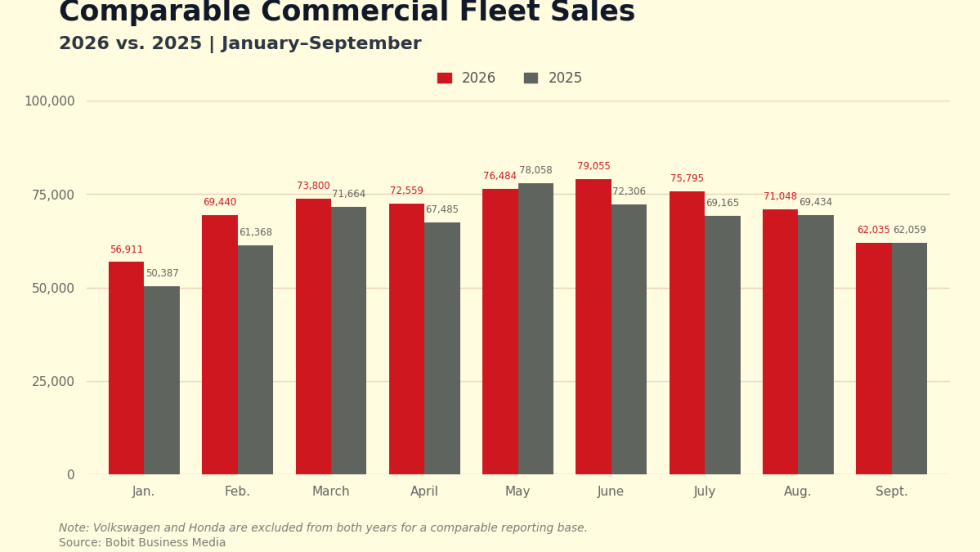
Commercial Fleet Sales Rise 5.8% Through September 2026
September commercial fleet sales were essentially unchanged from a year earlier, slowing year-to-date growth while keeping volume ahead of 2025.
Read More →
Hall of Fame Inductee: John Dmochowsky
The longtime Mondelēz International fleet executive joins the Automotive Fleet Hall of Fame.
Read More →
Hall of Fame Inductee: Lee Miller
After more than four decades at Boehringer Ingelheim, Lee Miller leaves a legacy built on fleet expertise.
Read More →
Hall of Fame Inductee: Mark F. Petersen
From managing fleets of thousands of vehicles to advancing safety and mentoring fellow professionals, Mark F. Petersen made his mark across both the corporate and supplier sides of fleet.
Read More →
When Charger Downtime Becomes a Fleet Availability Problem
As EV deployments move beyond pilot programs, charger reliability can directly affect vehicle readiness, driver productivity and route scheduling.
Read More →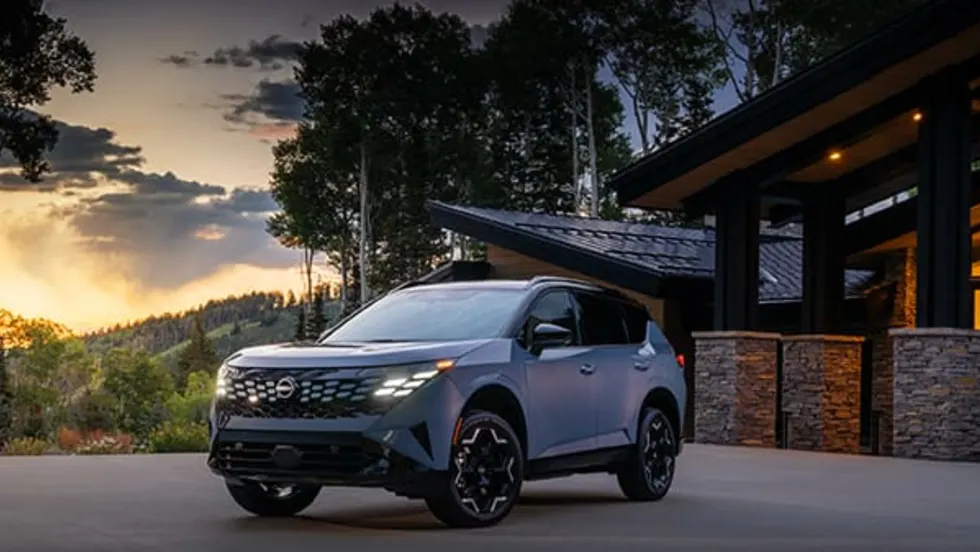
2027 Nissan Rogue Hybrid Adds e-POWER, Standard AWD
The new Rogue Hybrid uses Nissan’s e-POWER system with dual electric motors, offers an estimated 40 mpg and starts at $35,490.
Read More →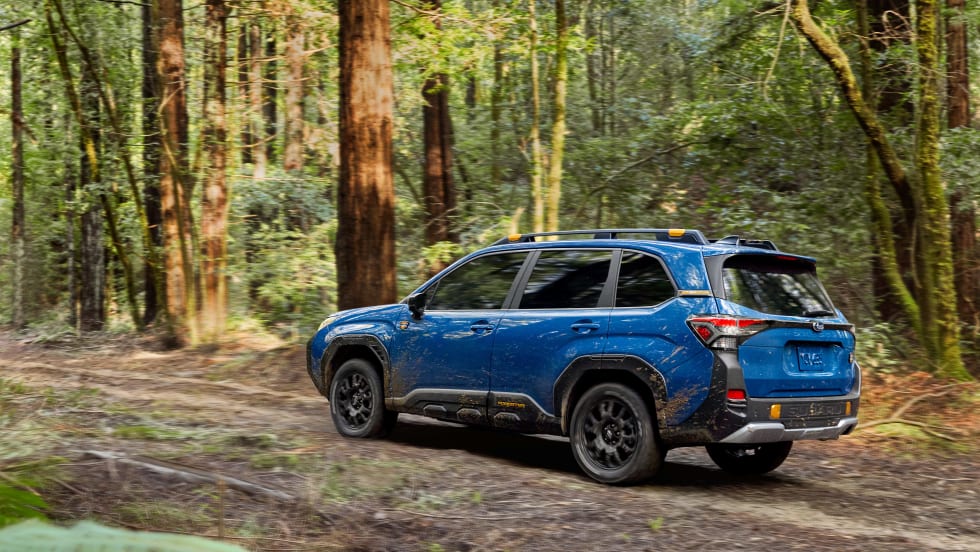
2027 Subaru Forester Adds First Wilderness Hybrid
The 2027 Forester lineup starts at $29,995 and adds a Wilderness Hybrid with 194 combined horsepower and 9.3 inches of ground clearance.
Read More →
EV Realty Names Henrik Holland President as Charging Platform Expands
The former Prologis Mobility and Shell executive will help expand EV Realty’s truck charging business and move its power-first infrastructure model into autonomous vehicle depots and other fleet sectors.
Read More →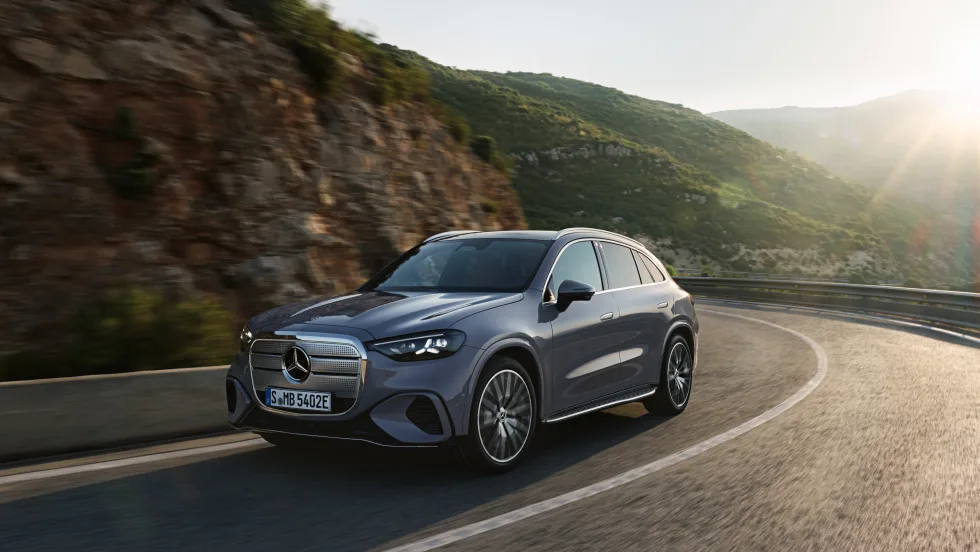
Mercedes-Benz Introduces Electric GLC With Up to 350 Miles of Range
The GLC 400 4MATIC Electric features an 800-volt architecture, 330-kW DC fast charging and a 94-kWh battery, along with Mercedes-Benz's new MB.OS operating system.
Read More →
Fleet Has a Talent Pipeline Problem, not a Talent Problem
Where will the next generation of fleet leaders come from, and what does the industry need to do differently to find them?
Read More →