




Biodiesel by the Numbers
Biodiesel offers a straightforward path to a greener fleet. Before implementing, choose the right blend, know all fueling options, and understand engine warranty and maintenance obligations.

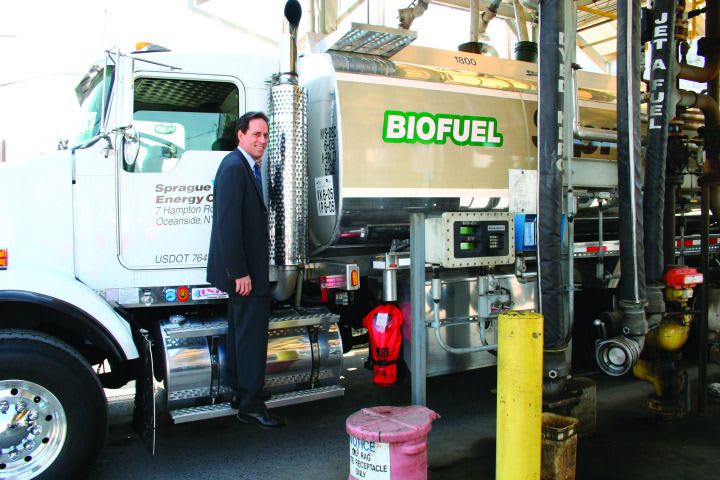
Though quality checks and balances are the industry rule, Steven Levy of Sprague Energy recommends confirming through documentation that your supplier adheres to ASTM standards and BQ-9000 accreditation.
Biodiesel, a form of diesel fuel produced from vegetable oils or animal fats, is the only alternative fuel that runs in any conventional diesel engine. As such, biodiesel offers a straightforward path to a greener fleet.
Manufactured domestically, biodiesel cuts emissions of carbon monoxide, sulfur, smog-producing particulate matter, and carbon dioxide - the main greenhouse gas causing global warming.
Through rigorous standards, testing, and evaluation, biodiesel shed its early misperception as a vegetable oil "homebrew." Still, there are challenges to implementation, including limited retail availability, fluctuating pump prices, maintenance and performance concerns, and vehicle warranty issues. Here's a "how-to guide" to determine if biodiesel will work in your fleet.
Know the Standards
Biodiesel is blended with petroleum diesel for most retail fuel applications. Common blends are B-2 (2-percent biodiesel), B-5, B-20, and B-100 (pure biodiesel). B-20 is the most commonly used biodiesel blend in the United States. This blend provides a good balance between material compatibility, cold weather operability, performance, emission benefits, and costs, according to the National Renewable Energy Laboratory (NREL).
Standards development body ASTM International sets minimum accepted values for fuel properties. The standard for petroleum diesel fuel is ASTM D975, while ASTM D6751 covers pure biodiesel (B-100) for blending with petrodiesel in levels up to 20 percent by volume.
Today, biodiesel must meet the ASTM D6751 standard to be legally defined and sold at retail fueling stations. Further, producers and marketers of biodiesel have created a voluntary accreditation program of biodiesel fuel. BQ-9000 is a quality systems program for biodiesel storage, sampling, testing, blending, shipping, distribution, and fuel management.
Though these quality checks and balances are the industry rule, it is a good idea to confirm through documentation that your supplier adheres to accepted standards and accreditation, said Steven Levy, managing director of Sprague Energy, a supplier of traditional and alternative fuels.
Check Engine Warranty
Check your vehicle engine manufacturers' warranty statements on biodiesel. Note that parts failures resulting from the use of any fuel are not covered.
Currently, most engine manufacturers state the use of up to B-5 blends will not void warranties, provided the fuel meets ASTM standards.
Chrysler, Cummins, Ford, General Motors, and International/Navistar have certified certain models for B-20. Other enginemakers are "currently completing research for B-20 support," according to the National Biodiesel Board (NBB) Web site, www.biodiesel.org, which lists warranty statements for most manufacturers.
Fleets regularly use higher blends not covered in OEM warranty statements. While this runs the risk of voiding a warranty, fleet managers concentrate on the quality of the biodiesel to safeguard against parts failures.
Jim Evanoff, environmental protection specialist for Yellowstone National Park, said his supplier conducts his own tests in addition to ASTM certification. "We don't give it a thought, to be honest," Evanoff said. "We've never had a warranty issue." The park has been using varying blends of biodiesel for 15 years.
The New York City Department of Sanitation has been running B-5 for five years in close to 6,000 vehicles and started a B-20 pilot test in November 2009. Rocco DiRico, deputy commissioner for the Bureau of Support Services, reported no issues with engine malfunctions related to biodiesel.
[PAGEBREAK]
Find It, Price It
The NBB Web site lists biodiesel distributors and 1,336 retail fueling locations nationwide in list and map format.
The Midwest has the most retail fueling stations; Illinois lists 151 locations. The Northeast has limited coverage at present; only 15 stations are listed in the state of New York. With the introduction of and recent revisions to the EPA's Renewable Fuel Standard, which sets mandatory lifecycle greenhouse gas emissions thresholds for renewable fuel categories, biodiesel will likely become more readily available at retail service stations, according to Levy.
If your area has limited retail fueling stations, one option is to investigate on-site tank installation and delivery. However, this may not make sense for small fleet applications.
"There are a whole slew of hidden costs for having your own pump," said Levy. "You could save a nickel per gallon [for bulk fuel distribution], but the cost to maintain the tank may far outweigh the savings."
In addition to installation, Levy pointed out costs such as tank maintenance, administrative overhead, managing inventory, and environmental compliance. Amortizing those costs for an on-road, centrally fueled fleet using 100,000 gallons a month may be worth the tank installation; for fleets needing 10,000 gallons a month, it may not make sense. "And you always have the liability risk of leaky tanks," Levy said.
B-20 has an average price per gallon that ranges from 4 cents less to 27 cents more than conventional diesel fuel on average, according to a July 2010 Clean Cities report.
Maintenance a Must
The initial switch from petroleum diesel to a biodiesel blend requires attention to fuel filters. Biodiesel has solvent properties that can loosen the petroleum diesel deposits that accumulate on tank walls and pipes, and a sudden influx of particles can clog fuel filters.
Evanoff said clogged filters were an issue on older vehicles with significant sludge buildup. "We increased the frequency of the filter change and monitored the situation more closely," Evanoff said. "Eventually, they clean themselves out."
DiRico manages the issue through strict preventive maintenance, which happens regardless of biodiesel concerns. Trucks are on a regular 40-day inspection cycle. Fuel filters are changed as needed, but at intervals no longer than 250 engine hours.
Biodiesel can also soften or degrade natural rubber hoses and gaskets, leading to fuel leaks and spills. Engines built before 1993 should be checked and natural rubber parts replaced. Newer engines with synthetic rubber parts do not encounter this problem.
Yellowstone stores its biodiesel in 28 underground tanks around the park. Evanoff said that in-ground temperatures stay a constant 56 degrees, which is conducive to algae and bacterial growth, especially with water contamination.
DiRico's team has its in-ground tanks inspected yearly. Tank filters are changed every two months, whether it's needed or not. Checking filters - on the tank or the truck - is a good way to catch a problem before it develops, DiRico said.
If slight contamination is detected, the tank can be treated with an algicide and cleaned without having to be emptied. These issues can happen with any fuel, DiRico said.
On the plus side, biodiesel provides greater lubricity to engine parts, leading to less engine wear and extended engine life.
Cold Weather Gel?
One issue traditionally associated with biodiesel was its tendency to gel in cold temperatures and clog fuel lines. These issues have largely been resolved with ASTM standardization and the implementation of specific blend formulations for cold weather climates.
Check with your fuel supplier to ensure the blend you're using is suitable for the environment.
"We've made it work here in Yellowstone with our severe climate and high elevation," said Evanoff.
More Fuel

Fuel Prices Surge in September | September Fuel Update
September brought major fuel price swings, including diesel crossing $6 a gallon. Here’s how gas and diesel prices changed throughout the month, and where they stood heading into October.
Read More →
Turning Fleet Payment Data into Executive Insights
Ramel Lindsay of U.S. Bank Voyager discusses how fleets can transform payment and transaction data into actionable intelligence to reduce costs, improve oversight, and support executive decision-making.
Read More →
Why the IRS Raised Its Mileage Rate in the Middle of 2026
Fuel-price volatility drove the rare increase to 76 cents per mile, the fifth midyear adjustment since 2000.
Read More →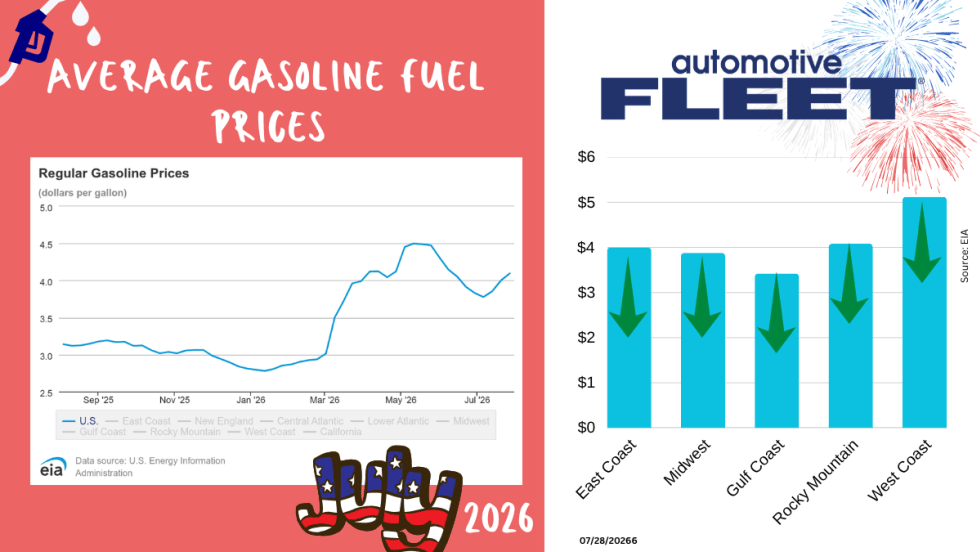
July Fuel Update: Prices Keep Rising in Light of More Conflict
Gas prices continue to rise as more and more conflicts do, too.
Read More →
Bob Adamsky on Fuel Volatility: "Don't Panic, Have a Plan."
When it comes to up and down fuel prices, Adamsky has a message for fleets: “Don’t panic.”
Read More →
How Fleets Can Gain Control of Non-Fuel Spend
Fuel often gets the spotlight, but non-fuel expenses can have a major impact on fleet costs. Ramel Lindsay of U.S. Bank Voyager discusses how fleets can gain better visibility and control over these often-overlooked expenditures.
Read More →
Fuel is Just the Start: How Middle East Tensions are Driving Up Fleet Maintenance Costs
The Middle East conflict is doing more than pushing up fuel prices. It’s also raising the cost of key maintenance products your fleet depends on, from motor oil to tires to windshield wipers. Here’s what you need to know about this budget-busting situation.
Read More →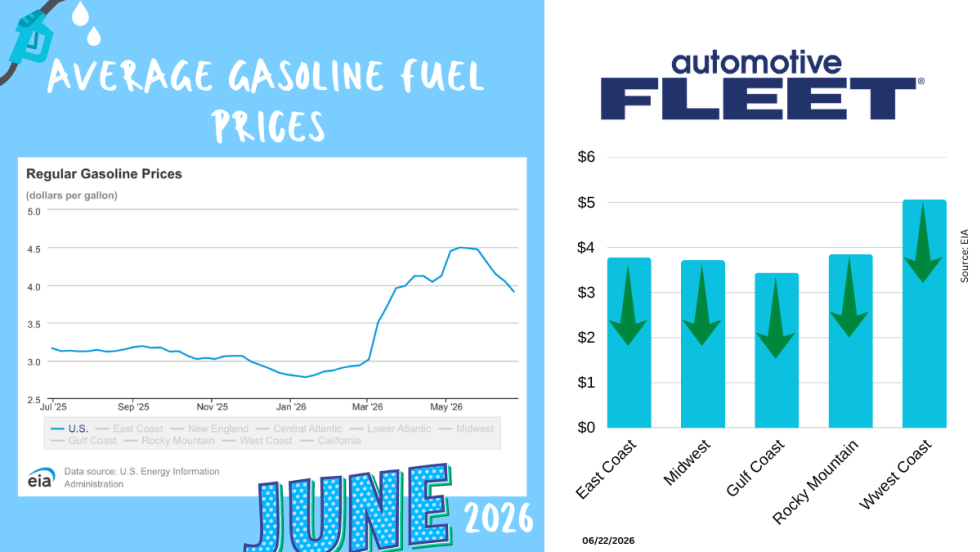
June Fuel Update: Prices Fall Below $4
Drivers are finally getting some relief at the pump. The national average gas price has dropped below $4 a gallon for the first time in months, with prices falling in 47 states as oil markets react to developments in U.S.-Iran negotiations.
Read More →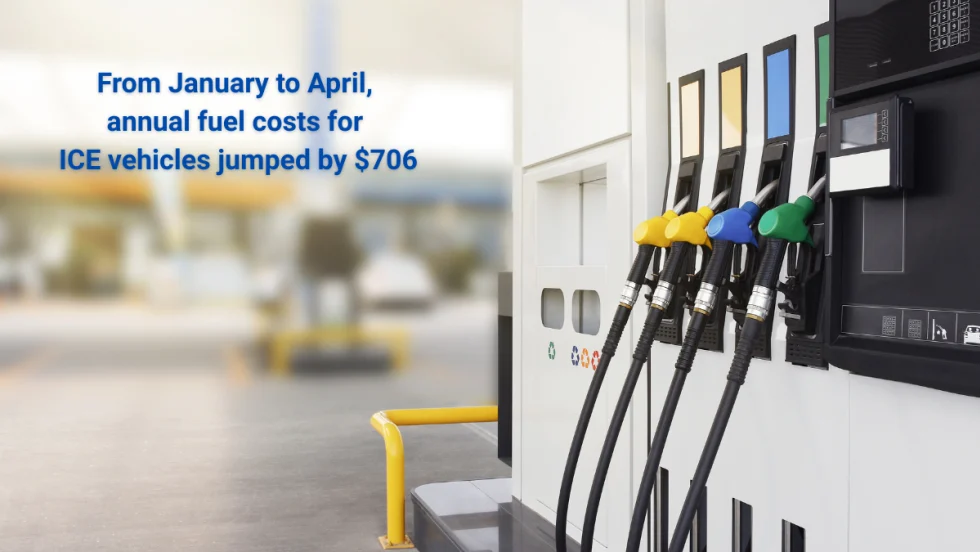
Study: How 2026's Gas Price Hikes Affect Different Vehicle Types
New data from iSeeCars reveals how rising fuel costs have affected different vehicle segments as gasoline prices climbed nearly 46% over the past four months.
Read More →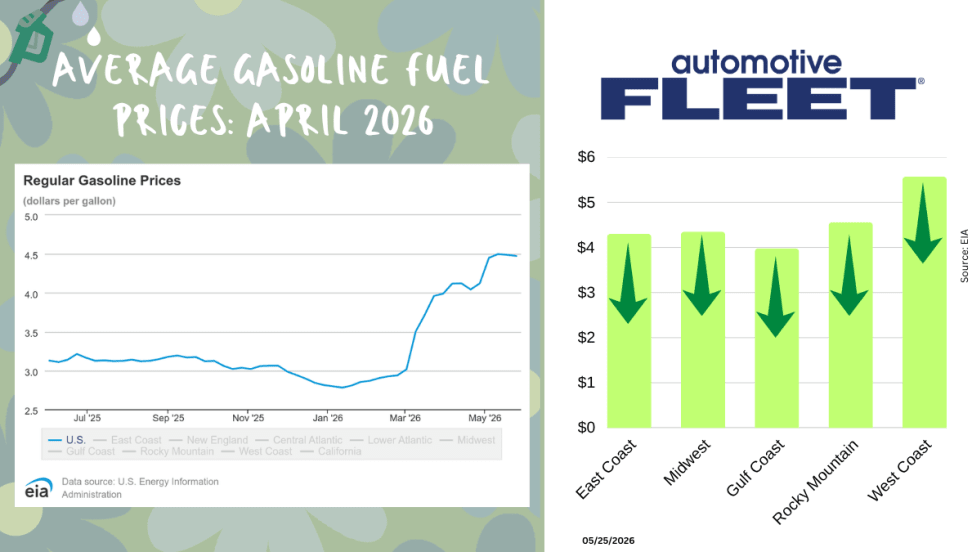
May Fuel Update: All Regions Experience Declines
Gas prices are finally easing in much of the country, but experts warn global tensions could quickly reverse the trend as the national average remains well above last month’s levels.
Read More →