




6 Micro Changes to Improve Fuel Efficiency
Small changes that require little or no investment can lead to big fuel savings. It all starts with managing driver behavior.


Your drivers are the first and best gateways to reducing fuel spend. Find ways to make them aware of their behaviors and then gamify fuel reductions using customizable driver scorecards.
Photo: Cox Automotive
When it comes to improving fuel efficiency, fleets have numerous options. Many fleets invest in telematics, fuel management software, or routing solutions that help them reduce fuel-wasting behaviors, stay on top of maintenance, and reduce miles driven. These have proven to be highly effective strategies.
But smaller changes can add up too, leading to better fuel economy and reduced fuel spend — with little, and sometimes no investment required. We call them micro changes.
Increase Driver and Operator Awareness
Arnie Braun, senior director, operations management for FleetNet America by Cox Automotive runs a team that manages an internal fleet of 15,000 vehicles and 5,000 assets. Braun says the first micro change fleets can make is simply to make drivers and operators aware of how their actions affect fuel economy.
Braun cites idling as an example. “If one hour of idling equals, conservatively, 25 miles of driving, drivers need to understand what idling means in terms of wasting fuel, wear and tear on the engine, and how it drives additional maintenance costs,” he said.
One way to increase drivers’ awareness is to dispel common idling myths — idling is good for the vehicle, the need for long warm-up times, and restarting the engine wastes fuel and wears out starters.
Another way is through data reporting. “Drivers need to see the data. The more you can build reporting mechanisms, the more they will see the proof that their behaviors matter,” he said.
“We give access to all of the supervisors so every week they can see by region, by teams, and by driver how everyone is doing on idling, utilization, fuel usage, and carbon creation.”
Robert Bales, director of product management for Samsara, also said data can help fleet managers understand and address driver behaviors.
“To further reduce fuel spend related to idling, fleet managers should leverage as many data points as possible to better understand this behavior at scale,” he said. “For example, which type of vehicle is involved? What’s the average idle time or idle location?”
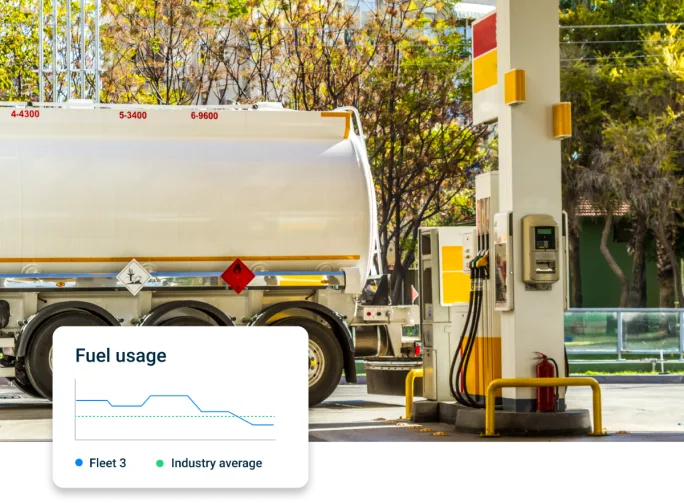
Giving drivers immediate access to fuel data through fuel cards and telematics reporting invests them in the overall goal of reducing fuel spend.
Photo: Samsara
Monitor Gas Station Behaviors
Fleets not ready to invest in telematics can also use fuel card data to monitor the type of fuel drivers choose, how much they purchase, and how often they stop to fill up. Each of these gas station behaviors can affect fuel budgets but require minimal effort to address.
Fuel type: Braun said most of his fleet vehicles don’t require premium fuel, but some drivers still choose it. “We roll reports up to the supervisors so they can have conversations with those drivers about not putting premium fuel in their vehicles,” he said.
Fuel amount: Tracking the number of gallons per fill-up and comparing it to the fuel tank’s capacity can reveal fuel “slippage” — when drivers fill up others’ tanks.
Number of stops: Identifying and coaching drivers who fuel up more often than necessary can reduce miles driven to and from the station while also reducing downtime and improving productivity.
Reducing passive idling, like waiting in a running car to pick someone up, completing paperwork, or having lunch with the engine running can add up quickly across the fleet.
Braun said giving out rewards based on how much drivers can reduce idling has motivated his fleet drivers to take action.
Each week, Braun tracks idling by driver; if drivers meet a certain target, they can earn points that can be redeemed for rewards. Braun said the savings on fuel can easily offset the cost of the rewards program especially if idle is high in a fleet.
“If we can move the needle on idling, we can drive significant savings,” Braun explained. “However, we never want to force idle shutdowns to the detriment of safety. If you're in Las Vegas and it's 140 degrees in your cab, I would much rather you be safe than worry about the five minutes of idle.”
Beyond idling, other fuel-wasting driver behaviors include rapid starts and speeding. Drivers can also save fuel by driving at the most efficient RPM — also known as the green band — and using cruise control on highways.
“Several factors contribute to fuel spend, and many are directly in the hands of drivers,” Bales said.
“Tracking these insights and gamifying the experience through driver scoring can effectively incentivize and encourage more fuel-efficient driving. Within the Samsara platform, Driver Efficiency Scores can also be weighted and customized to best suit the needs and goals of your organization, resulting in an individualized approach.”
Bales underscores that making these micro changes can do more than reduce fuel use.

Arnie Braun of FleetNet America by Cox Automotive runs a team that manages a fleet of 15,000 vehicles and 5,000 assets.
Photo: Cox Automotive
“Encouraging these micro changes in driver behavior isn’t just about saving money; the rapidly evolving reporting regulations on emissions means this data is important for compliance, too,” he said. “Advanced fleets use both behavioral data and aggregated emissions data to understand where they excel and where there’s room for improvement.”
Employ Active Anti-Idling
Where reducing passive idling is in the hands of fleet drivers, active anti-idling uses devices to automatically shut down an engine once it’s idled for a specified amount of time. The devices can be factory spec’d.
Once installed, the benefit of active idling devices is they don’t require coaching, Braun said. Vocational fleets are prime targets, as are passenger vehicle fleets. Others are not. I can't have idle shutdown on a bucket truck where somebody's working on a pole; that's not going to work,” he said.
While automatic engine shutoff isn’t ideal for applications that use their vehicles to power tools and equipment, Braun said battery protection is an active anti-idling option.
“Battery protection allows operators to use auxiliary power to run their inverters without having concerns about draining the battery and not having enough battery to cycle the vehicle on,” he said. “With battery protection on the vehicle, when the battery hits a low point, it disconnects.”
Compared to the cost of fuel required to idle vehicles, battery protection solutions are relatively inexpensive.
Purchase Low-Cost Accessories for Drivers
In some cases, an even smaller investment can empower drivers to increase fuel efficiency.
For instance, tire pressure gauges don’t cost much, but keeping tires properly inflated can improve gas mileage by up to 3%. Conversely, under-inflated tires can lower gas mileage by about 0.2% for every 1 PSI drop pressure.
About five years ago, Braun purchased gauges in bulk for his fleet drivers for just a couple of dollars each. Drivers are asked to check tire pressure consistently and stop into a Cox shop or depot to fill up when pressure is low.
Braun also purchased sunshades to help keep vehicles cool while drivers make service calls, which in turn helps to reduce idling to run the air conditioning.
Don’t DisableAuto Start/Stop
Auto start/stop helps reduce idling but unfortunately, some drivers disable this fuel-saving setting out of convenience or concern for wearing out the starter. Braun said that’s a myth that needs to be dispelled.
“I had that concern as a fleet manager at first,” Braun said. “For the first couple of years we were watching that like a hawk, but we didn't see any change in the number of starters we replaced.”
More Fuel
Fuel Prices Surge in September | September Fuel Update
September brought major fuel price swings, including diesel crossing $6 a gallon. Here’s how gas and diesel prices changed throughout the month, and where they stood heading into October.
Read More →
Turning Fleet Payment Data into Executive Insights
Ramel Lindsay of U.S. Bank Voyager discusses how fleets can transform payment and transaction data into actionable intelligence to reduce costs, improve oversight, and support executive decision-making.
Read More →
Why the IRS Raised Its Mileage Rate in the Middle of 2026
Fuel-price volatility drove the rare increase to 76 cents per mile, the fifth midyear adjustment since 2000.
Read More →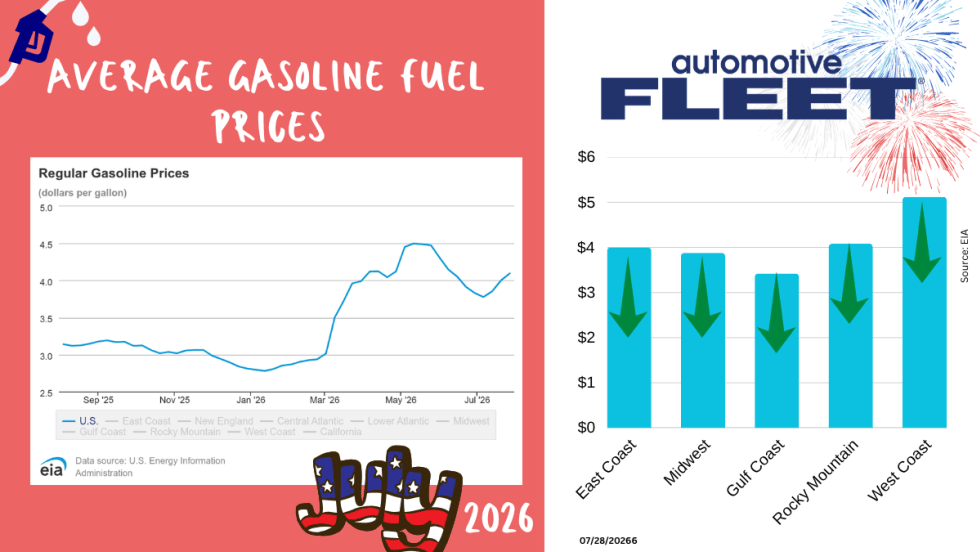
July Fuel Update: Prices Keep Rising in Light of More Conflict
Gas prices continue to rise as more and more conflicts do, too.
Read More →
Bob Adamsky on Fuel Volatility: "Don't Panic, Have a Plan."
When it comes to up and down fuel prices, Adamsky has a message for fleets: “Don’t panic.”
Read More →
How Fleets Can Gain Control of Non-Fuel Spend
Fuel often gets the spotlight, but non-fuel expenses can have a major impact on fleet costs. Ramel Lindsay of U.S. Bank Voyager discusses how fleets can gain better visibility and control over these often-overlooked expenditures.
Read More →
Fuel is Just the Start: How Middle East Tensions are Driving Up Fleet Maintenance Costs
The Middle East conflict is doing more than pushing up fuel prices. It’s also raising the cost of key maintenance products your fleet depends on, from motor oil to tires to windshield wipers. Here’s what you need to know about this budget-busting situation.
Read More →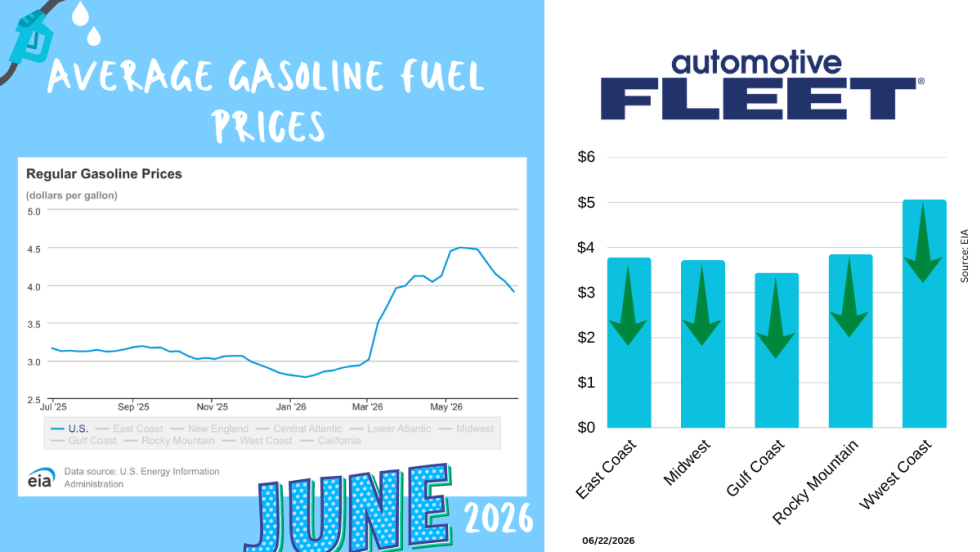
June Fuel Update: Prices Fall Below $4
Drivers are finally getting some relief at the pump. The national average gas price has dropped below $4 a gallon for the first time in months, with prices falling in 47 states as oil markets react to developments in U.S.-Iran negotiations.
Read More →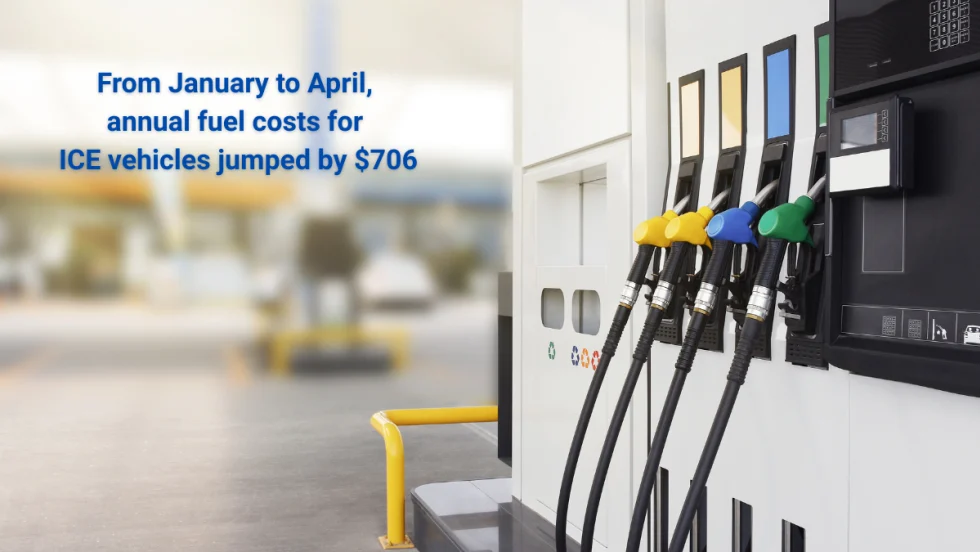
Study: How 2026's Gas Price Hikes Affect Different Vehicle Types
New data from iSeeCars reveals how rising fuel costs have affected different vehicle segments as gasoline prices climbed nearly 46% over the past four months.
Read More →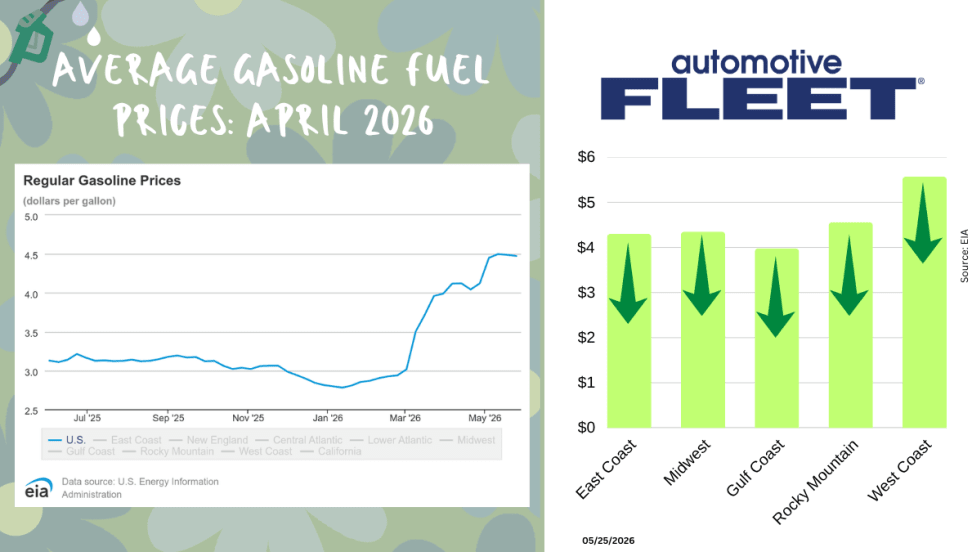
May Fuel Update: All Regions Experience Declines
Gas prices are finally easing in much of the country, but experts warn global tensions could quickly reverse the trend as the national average remains well above last month’s levels.
Read More →