





Miss This? Introducing the Fleet Remarketing Industry Council
5 Ways AI Is Transforming Vehicle Remarketing
From smarter pricing to faster inspections, artificial intelligence is bringing more speed, accuracy, and trust to vehicle remarketing.
August 25, 2025

Allen Levenson, director of data and analytics at AutoMobility Advisors and a former General Motors executive, has devised key steps needed to build a successful data and AI-driven organization.
Credit: Ross Stewart/Stewart Digital Media
3 min to read
The terms data, analytics, and AI can intimidate as well as enlighten businesses looking to upgrade their operations. At the 2025 Conference of Automotive Remarketing (CAR), industry experts shared how AI is moving beyond buzzwords to deliver real value across the wholesale used vehicle market.
"When combined into a unified approach or plan, data and AI-driven analysis tools can push an operation to more breakthroughs and better results," said Allen Levenson, director of data and analytics at AutoMobility Advisors and a former General Motors executive. Here are five ways AI is already transforming remarketing operations.
1. Smarter Vehicle Valuations
Traditional valuation relies on year, make, model, mileage, and regional factors. According to Christopher Schnese, director of product management at Cox Automotive, and Scott Levy, operational analytics director at Cox, AI now brings VIN-specific configurations, micro-market trends, and even local demand variations into the equation. The result: greater confidence in pricing through faster, data-driven decisions; consistency by reducing human error or bias; and efficiency through quicker turn times and more accurate pricing strategies.
2. Faster, More Accurate Condition Assessments
Imaging tunnels are modernizing condition assessments as vehicles pass through camera-equipped lanes. AI not only selects the best “hero” images for listings but also analyzes thousands of photos for damage. With 70% of Manheim’s inventory now sold online — and 38% of dealers increasing digital sales — AI-generated condition reports are becoming indispensable. They ensure transparency and comparability across listings, removing the ambiguity of subjective assessments.
3. Scalable and Trustworthy Vehicle Inspections
The clipboard-and-pen days of vehicle inspections are starting to look as quaint as Texas Instruments calculators and antenna TVs. At CAR, Dan Kennedy of DAK Consulting moderated a session that highlighted how AI is boosting efficiency while supporting human inspectors. "The way we think about it is it gives our inspectors superpowers," said Dustin Cruz, vice president of operations of OPENLANE. "It's making them better and more consistent at their jobs, allowing them and the process to be more efficient. They can do more inspections." Raj Pofale, founder and CEO of Claim Genius, underscored how AI can provide unbiased decisions when assessing vehicles.
"I can say confidently that all of us in the room would assess a vehicle differently, because our understanding of the assessment varies." Kevin Kostuk, co-founder and director of Ariaal, sees AI as a tool to relieve employees of the stresses of tedious and repetitive tasks.
"People are busy. They're running hard. Anything we can do to reduce the cognitive load and get them to add value will be appreciated and help them live a better life and enjoy their jobs more."
4. Assurance Products That Build Confidence
Assurance solutions — tools that simplify the process of reselling vehicles — rely increasingly on AI. These include accurate vehicle evaluations and condition reporting.
AI can analyze past transaction data to help create a pricing floor that allows dealers to accept trades and pursue new inventory strategies.
5. Smarter Logistics and Transport Pricing
AI is also transforming how vehicles are shipped. Traditional transport pricing depended on fixed lanes and historical averages. Today, AI incorporates climate, fuel prices, geographic nuances, and carrier-specific variables to predict fair, dynamic shipping rates.
The outcome creates transparency for both shippers and carriers, enabling quicker negotiation and reducing idle vehicle time. With fewer delays, vehicles move to market faster, speeding up inventory turnover.
What This Means for Remarketers
The five applications of AI shared at CAR highlight a common thread: efficiency and trust.
By improving how vehicles are priced, inspected, reported, and transported, AI reduces uncertainty for both buyers and sellers. Remarketers who embrace these systems can shorten cycle times, make more confident decisions, and offer customers clearer insights while freeing staff to focus on higher-value work.
Subscribe to Our Newsletter
More Vehicle Research
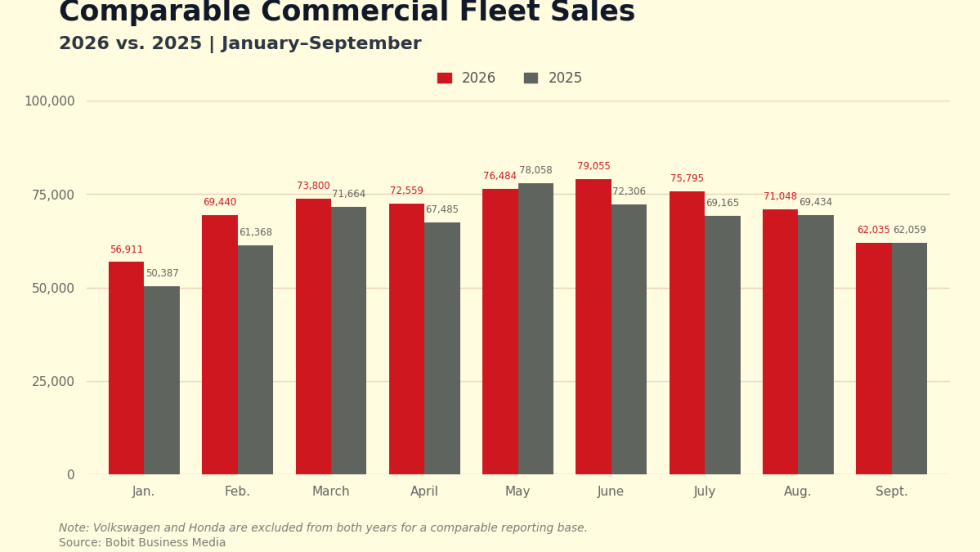
Commercial Fleet Sales Rise 5.8% Through September 2026
September commercial fleet sales were essentially unchanged from a year earlier, slowing year-to-date growth while keeping volume ahead of 2025.
Read More →
Hall of Fame Inductee: John Dmochowsky
The longtime Mondelēz International fleet executive joins the Automotive Fleet Hall of Fame.
Read More →
Hall of Fame Inductee: Lee Miller
After more than four decades at Boehringer Ingelheim, Lee Miller leaves a legacy built on fleet expertise.
Read More →
Hall of Fame Inductee: Mark F. Petersen
From managing fleets of thousands of vehicles to advancing safety and mentoring fellow professionals, Mark F. Petersen made his mark across both the corporate and supplier sides of fleet.
Read More →
When Charger Downtime Becomes a Fleet Availability Problem
As EV deployments move beyond pilot programs, charger reliability can directly affect vehicle readiness, driver productivity and route scheduling.
Read More →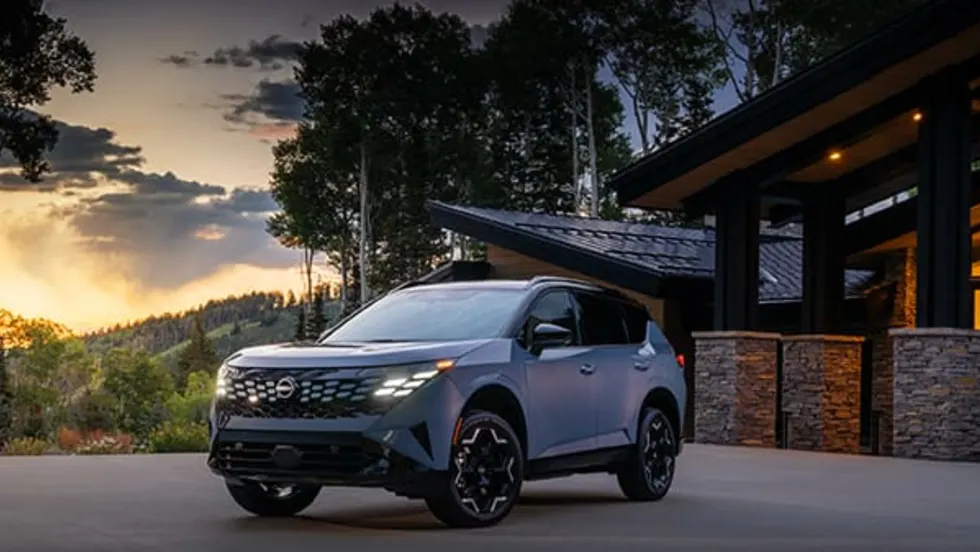
2027 Nissan Rogue Hybrid Adds e-POWER, Standard AWD
The new Rogue Hybrid uses Nissan’s e-POWER system with dual electric motors, offers an estimated 40 mpg and starts at $35,490.
Read More →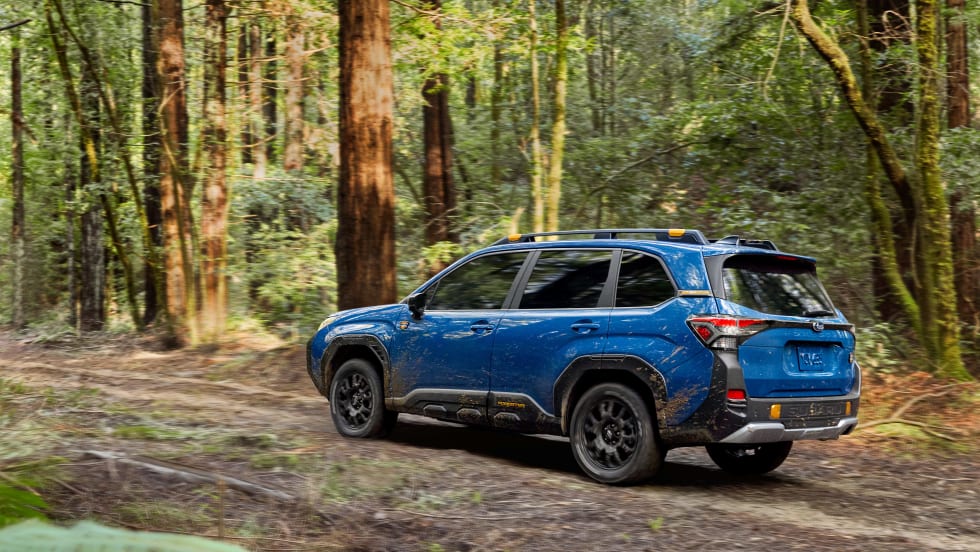
2027 Subaru Forester Adds First Wilderness Hybrid
The 2027 Forester lineup starts at $29,995 and adds a Wilderness Hybrid with 194 combined horsepower and 9.3 inches of ground clearance.
Read More →
EV Realty Names Henrik Holland President as Charging Platform Expands
The former Prologis Mobility and Shell executive will help expand EV Realty’s truck charging business and move its power-first infrastructure model into autonomous vehicle depots and other fleet sectors.
Read More →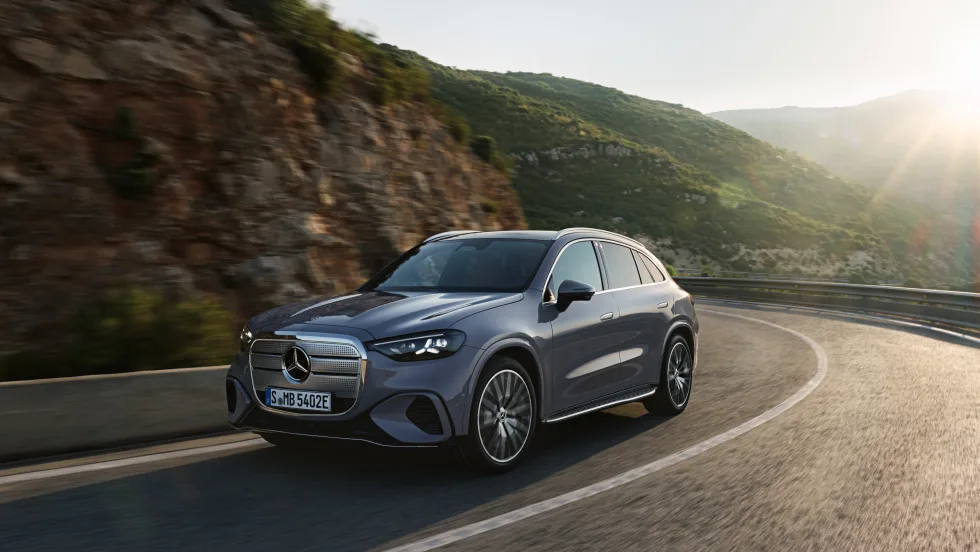
Mercedes-Benz Introduces Electric GLC With Up to 350 Miles of Range
The GLC 400 4MATIC Electric features an 800-volt architecture, 330-kW DC fast charging and a 94-kWh battery, along with Mercedes-Benz's new MB.OS operating system.
Read More →
Fleet Has a Talent Pipeline Problem, not a Talent Problem
Where will the next generation of fleet leaders come from, and what does the industry need to do differently to find them?
Read More →