





Fleet Tips: The 6 Vehicle Tracking System Must-Have Features
More Fleets Reap Benefits of GPS Tracking
There was a rise in fleets that used GPS tracking software in 2019, the total of which 98% reported having reaped positive benefits, according to Verizon Connect’s 2019 Fleet Tracking Trends Report.
December 6, 2019
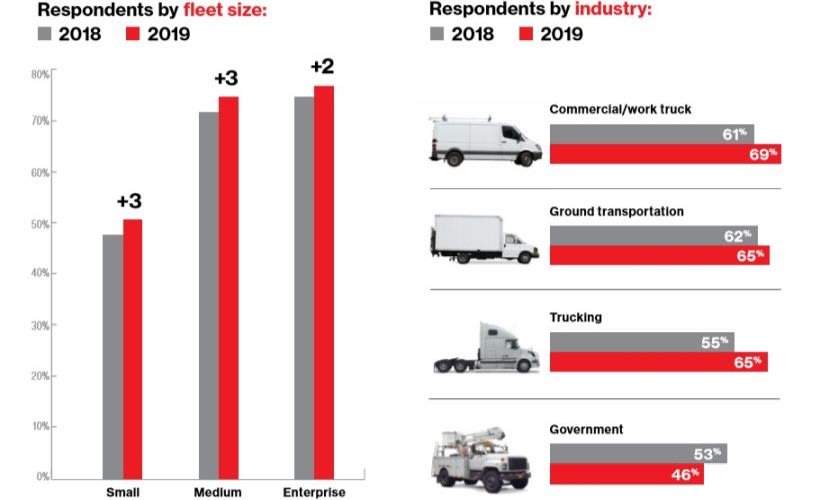
Overall, 64% of all respondents currently use fleet tracking software—up from 59% in 2018. Enterprise fleets and commercial/work truck fleets lead the way, with trucking seeing the largest increase in adoption over 2018.
Image: Verizon Connect.
2 min to read
There was a rise in fleets that used GPS tracking software in 2019, the total of which 98% reported having reaped positive benefits for their companies, according to Verizon Connect’s 2019 Fleet Tracking Trends Report.
The report found that 45% of fleets that used this type of software achieved a positive return on investment (ROI) in 11 months or less, which was up 18.5% from last year, according to the report. Meanwhile, 22% reported seeing a positive ROI in less than three months, up 37.5% from 2018. Verizon also conducted a Driver Policy Reveal Customer Survey that found fleets could improve safety and save approximately $51,000 a year by using fleet management software.
Potential annual savings for companies leveraging fleet management software include:
$45,540 due to increased daily stop duration on a job
$1,030 due to decreased daily idle time
$4,089 due to decreased daily distance per stop
Of the fleets who found GPS tracking software beneficial, 80% consider fleet tracking “very” or “extremely” beneficial, which was up from 74% in 2018, according to the report.
The findings of the report are based on surveys completed by more than 1,200 fleet professionals. There was a 5% increase of fleets that reported using GPS fleet tracking software when compared to last year, up to 64% from 59% in 2018.
Commercial and work truck fleet respondents reported having the highest percent of utilization, 69%, when compared to other industry segments. Roughly 65% of ground transportation fleet respondents, as well as trucking fleets, reported using the software also. Meanwhile, government fleets saw a 7% decrease when compared to 2018.
Fleets using the software also reported seeing improvements elsewhere in their businesses, using key performance indicators (KPIs) to measure their success. Companies reported an increase in customer service (50%), productivity (53%), routing (45%), maintenance (49%), ELD and compliance (52%), fuel consumption decrease (36%), decrease in accidents (22%), and a decrease in labor costs (13%).
More than 50% of respondents—and 72% of trucking companies—cite improved Hours of Service (HOS) compliance from an electronic logging device (ELD) as a major benefit of fleet technology, the results of the report found.
More Telematics

GM Launches OnStar Fleet Intelligence Platform With AI Assistant
The new platform brings vehicle data, order tracking, connected services and fleet analytics into one system, with an AI assistant that can answer fleet questions using natural-language prompts.
Read More →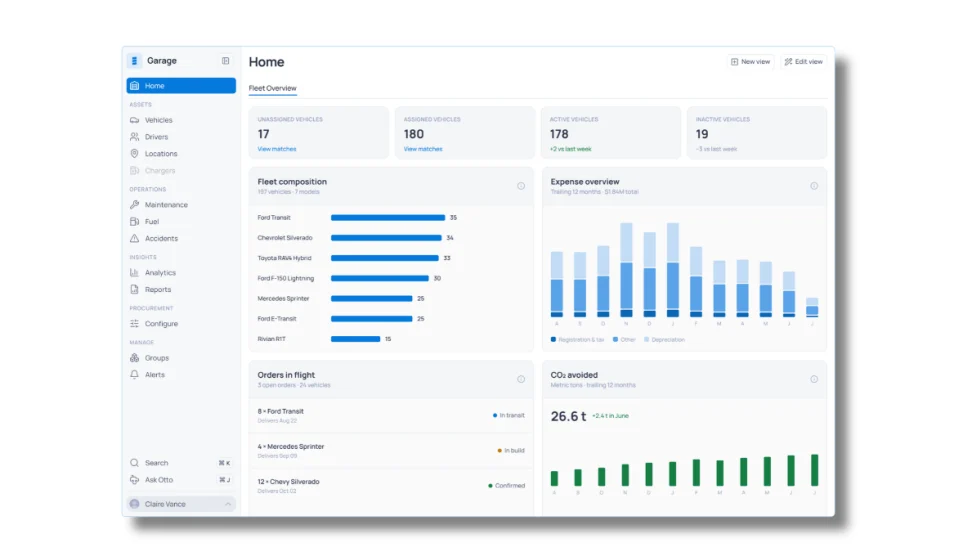
Inspiration Fleet Introduces Garage 2.0 Fleet Intelligence Platform
Fleet managers increasingly have access to data from vehicles, telematics, fuel, charging, and other systems, but those sources don't always communicate with one another. Inspiration Fleet's Garage 2.0 platform brings that information together while letting fleets keep working with different technology and service providers.
Read More →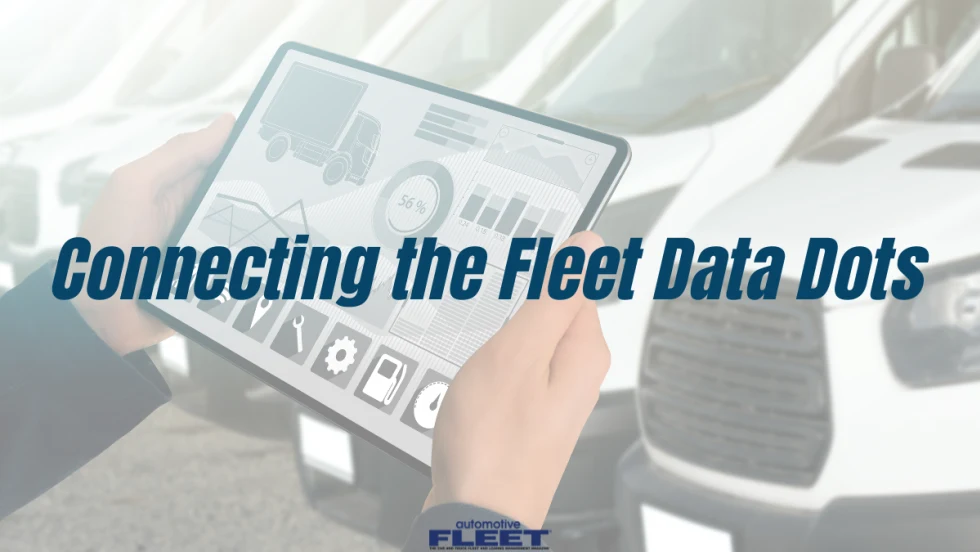
Inside Inspiration Fleet’s New Platform for Connecting Fleet Data
Inspiration Fleet CTO Chris Getner explains how the new Garage 2.0 platform is designed to connect disparate fleet data and what that could mean for fleet managers in practice.
Read More →
Sponsored•October 1, 2026
Fleet Manager’s Ultimate Playbook: Navigating the New Standard in OEM Connectivity
Rising operating costs, driver safety concerns, and unplanned downtime are putting unprecedented pressure on modern fleets. Discover how fleet managers use embedded OEM connectivity and real-time vehicle data to cut TCO, prevent downtime, and protect drivers without aftermarket telematics hardware.
Read More →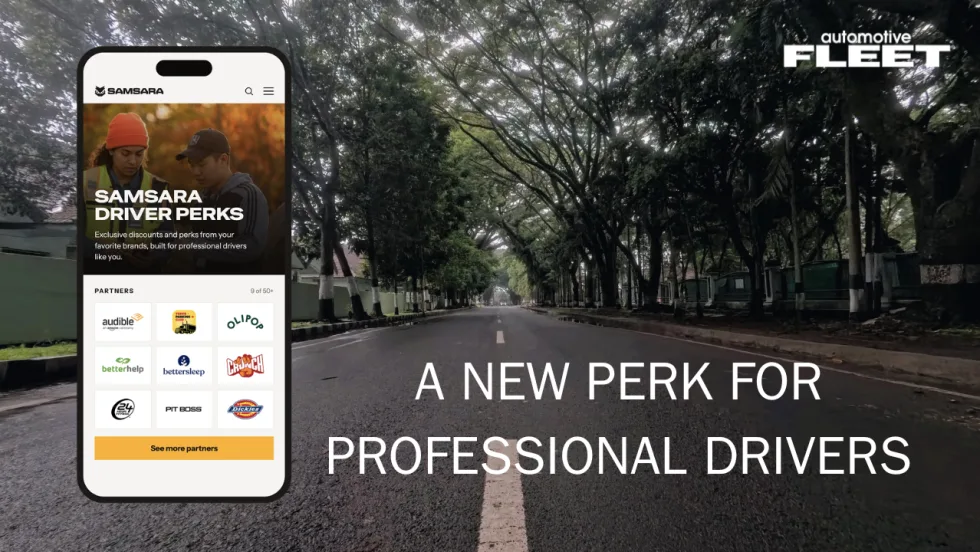
Samsara Driver Perks Adds New Benefit for Corporate Fleet Drivers
The rewards program gives eligible professional drivers access to discounts from more than 50 brands while giving fleets another way to support recruitment, retention, and the driver experience.
Read More →
Inside the Church of Jesus Christ of Latter-day Saints’ Two-Track Telematics Strategy
With 20,000 vehicles and two fundamentally different driver populations, the Church faced a fleet management problem that a single telematics program couldn't solve. How it responded offers a replicable framework for any fleet where one size doesn't fit every driver.
Read More →
How Conversational AI Can Make Fleet Tasks Easier for Drivers
While most generative AI tools help fleet managers interpret data at their desks, Connex2X is applying voice interaction to tasks behind the wheel.
Read More →
Why Fleets Are Creating Dedicated Fleet Analyst Positions
Are fleet analyst positions the new norm? Listen here to find out.
Read More →
Teletrac Navman Begins Next Chapter as Standalone Private Company
What's new with Teletrac Navman and its new owner?
Read More →
Why Fleets Are Creating Dedicated Fleet Analyst Positions
Telematics, AI, EVs, and connected technologies are generating more fleet data than traditional teams can effectively manage. Reed Jackson explains why dedicated fleet analytics roles are emerging to turn that information into better operational decisions.
Read More →