




Related: The Most Important Function of Fleet Management is Saving Lives
Creating a Recipe for Safe Driving
An average of 21 percent of fleet vehicles are involved in some form of crash each year. So, how can fleet managers implement their own recipe for safe driving an improve safety while lowering costs associated with accidents.
by Anthony Foster
March 2, 2015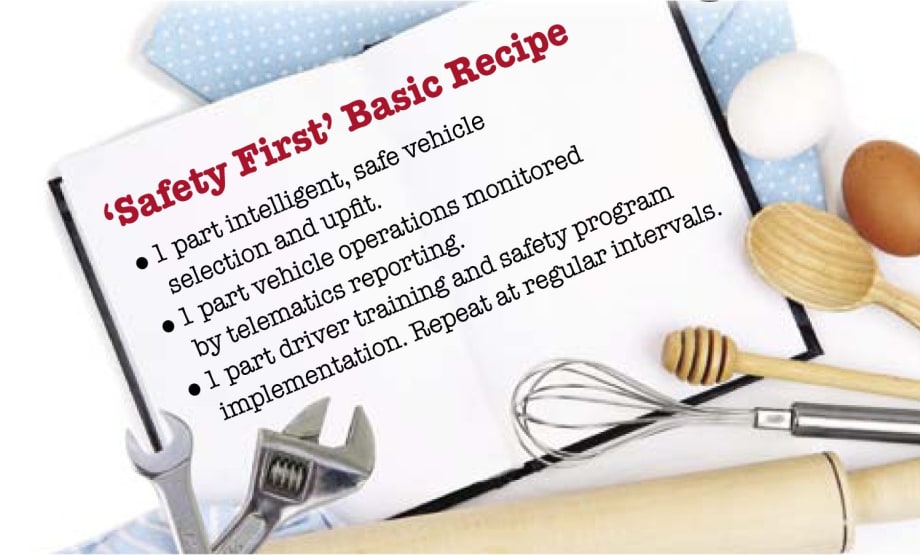
Photo via iStockPhoto.com.
3 min to read
Photo via iStockPhoto.com.
Motor-vehicle-related accidents are consistently the leading cause of work-related fatalities in America, according to the National Institute of Occupational Safety and Health (NIOSH). So, why do some companies spend more on office ergonomics than they do on their fleet vehicle safety and training?
Based on statistics alone, they definitely shouldn’t. According to the National Highway Traffic Safety Administration (NHTSA), the average vehicle accident costs an employer $16,500 in medical care, property damage, legal expenses, and lost productivity. An average of around 20 percent of fleet vehicles are involved in some form of crash each year. So, how can fleet managers move the dial and make their companies’ fleets safer?
Moving the Dial on ‘Safety First’
For employees who drive on the job, having the safest vehicle available and being well trained on employer safety policies are vital in helping to reduce crash risks. The time is now to make the change and act on “safety first.” Besides reducing costs and minimizing downtime, it also means keeping employees safe and saving lives.
The move starts with selecting the safest vehicle available. When ordering vehicles, in addition to performance and maintenance statistics, fleet managers should consider vehicle ergonomics, safety ratings, vehicle weight, and expected cargo, along with optional safety features, such as brake assist, rearview cameras, blind spot indicators, accident avoidance, and enhanced in-cab safety features. Frequently, the cheapest models are not the safest models; however, the safety features available on the costlier models are almost invaluable to companies and their drivers, making the move worthwhile.
Fostering safe drivers result in more economical drivers, and this is aided by vehicle telematics reporting. Implementing an effective safety program as a result of telematics reporting and driver training results in lower costs, fewer claims, reduced maintenance costs, and downtime, as well as providing a safer work environment for employees.
The above are just the initial steps toward focusing on “safety first.” Once these are in place, continued awareness and training on safety issues for employees is needed and should be accomplished by a combination of methods including e-mail, instructor-led and online training, and a company intranet site that relays information in a straightforward and concise manner.
Making the change to safer drivers makes sense to companies from an economic as well as a humane standpoint. It is an operational issue well worth up front investing rather than paying the price later after an accident has occurred. Thus, you have the basic recipe for “Safety First” on which to build.
Creating the ‘Safety First’ Basic Recipe
The “safety first” basic recipe consists of:
1 part intelligent, safe vehicle selection and upfit.
1 part vehicle operations monitored by telematics reporting.
1 part driver training and safety program implementation. Repeat at regular intervals.
Anthony Foster is the corporate fleet manager at Pioneer Natural Resources, a large independent exploration and production oil and gas company.
Subscribe to Our Newsletter
More Safety

Nexar-Nauto Merger Aims to Give Fleets Better Safety Intelligence Through Larger Driving Dataset
Stefan Heck tells Automotive Fleet that combining more than 10 billion miles of driving history with Nexar's AI models will give fleets deeper insights into driver risk and roadway conditions than either company could provide independently.
Read More →
Don't Wait for a Crisis: 5 Ways to Build Mental Health Into Your Fleet Safety Program
For Suicide Prevention Month, fleet and safety leaders have an opportunity to put mental health where it belongs: at the center of workplace safety.
Read More →
How Camera Data Can Strengthen a Fleet’s Insurance Renewal
Insights from a commercial insurance carrier and a broker show how fleets can turn video telematic data, driver coaching, and improved claims results into a stronger case at insurance renewal.
Read More →
The Safest Fleets Aren’t the Ones with the Most Technology
You’ve made the telematics investment. Here’s how to capture the other half of its value and build the safest fleet on the road.
Read More →
Sponsored•August 7, 2026
Hidden in Plain Sight: Fleet Compliance Risks
Fleet compliance isn't just about having policies — it's about consistently enforcing them. This practical guide reveals six hidden compliance risks common in public sector and shared fleet operations and outlines proven strategies to improve visibility, accountability, and audit readiness
Read More →
NETS Sets 2026 Fleet Safety Benchmark Conference for Indianapolis
The Sept. 15–17 program will feature fleet benchmarking data, case studies, emerging technologies, and implementation strategies while running alongside the NSC Safety Congress & Expo.
Read More →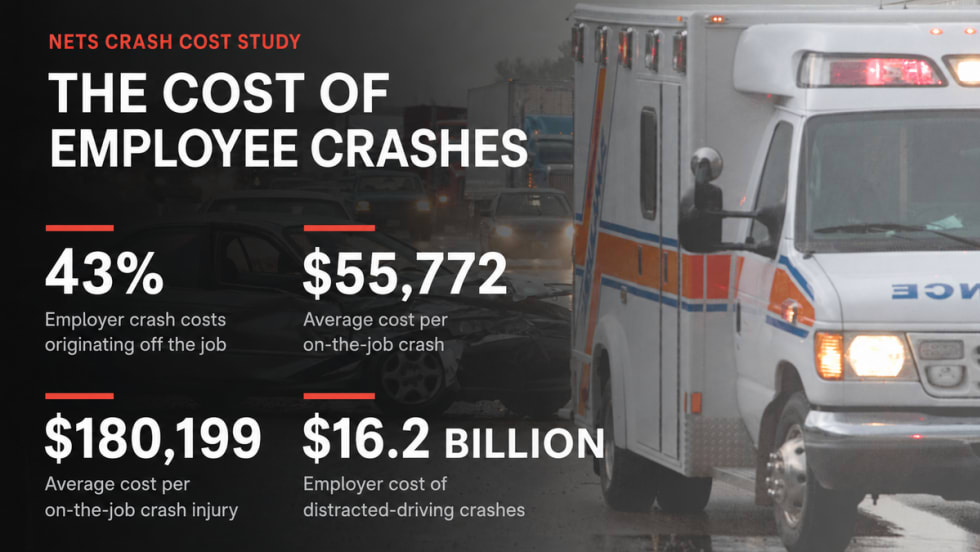
Off-the-Job Crashes Account for 43% of Employers’ $61.7 Billion Crash Burden
NETS quantifies costs dispersed across fleet, risk, HR, and other departments while providing new per-crash benchmarks for employers.
Read More →
Ram Recalls More Than 1.27 Million 1500 Pickups for Seat Belt Anchor Issue
The recall affects certain 2019-2026 Ram 1500 pickups that may have improperly attached second-row seat belt buckle anchors.
Read More →
Sponsored•July 17, 2026
How Better Visibility Cut Speeding Violations by 48%
Fleet leaders don't need more data, they need clearer visibility into what the data is saying. This case study explores how one utility replaced speeding-event counts with a single metric — miles driven in violation — to strengthen safety and significantly reduce speeding violations.
Read More →
Operation Safe Driver Week: Why the Industry's Oldest Safety Campaign Still Matters to Fleets
A look at how a 2007 enforcement initiative became one of the most consequential weeks on the fleet safety calendar, and what it means for your drivers in 2026.
Read More →