





More Tips: 5 Winter Driving Mistakes to Avoid
How to Drive Safely in Winter Weather
When frigid weather and its attendant snow, ice, and wind sweep over roadways, safety is even more of a front-and-center concern for fleet drivers. There are several ways drivers can stay safe in adverse winter conditions.
December 2, 2014
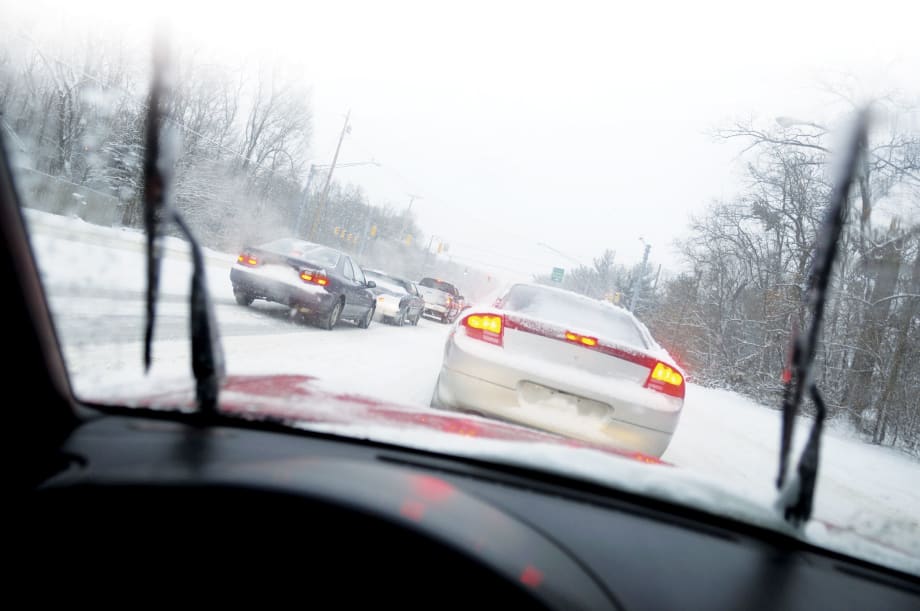
One step drivers can take in inclement winter weather is to allow for more following distance when driving, making it easier to prepare for icy patches or other low-traction conditions.
3 min to read
One step drivers can take in inclement winter weather is to allow for more following distance when driving, making it easier to prepare for icy patches or other low-traction conditions.
Editor's Note: this piece was originally posted in 2014 and was updated in September of 2026 for continued relevance.
It’s that time of year again — roads can be slick with ice and snowfall is accumulating, and driving can be more risky and dangerous than during the warmer-weather months. What can drivers do to keep safe while traveling in adverse winter conditions?
According to William Van Tassel, Ph.D., manager of driver training operations at AAA, one crucial thing fleet drivers should do in winter weather is adjust their speed according to road conditions.
“If there’s heavy rain, snow, or ice, you might lose about one-third of your traction. To maintain the same degree of traction you have when it’s dry, you should drop your speed by about that same percentage,” Van Tassel said.
In addition, Van Tassel recommended allowing for more space around the vehicle, particularly in the front. This space allowance can help drivers prepare for icy patches or other low-traction conditions.
“When conditions are clear and dry, you’d normally follow behind a car by three or four seconds. In more difficult conditions, you want to be six, eight, or more seconds behind the vehicle in front of you. If the vehicle ahead has to hit its brakes or starts to swerve, you’re going to have more time to respond,” Van Tassel said.
Preparing for the Road
Before drivers get on the road, fleet managers should ensure company vehicles are prepared for inclement conditions.
First, ensure each vehicle is stocked with supplies in case of an emergency, such as tools, flares or reflective triangles, and jumper cables.
In addition, fleet managers should have vehicle components checked regularly, particularly the engine, brakes, battery, and tires. According to Van Tassel, fleet managers should ensure drivers check a vehicle’s tire pressure once a month, as well as examine tire tread. Specifically, tires should have at least four thirty-secondths of an inch of tread, Van Tassel said.
The AAA pamphlet “How to Go on Ice and Snow” recommends drivers wear warm and comfortable clothing that provides freedom of movement. In addition, the pamphlet suggests that drivers position their seat so they can more effectively see the road and perform the precise and smooth movements necessary for safe winter driving.
Before leaving their parked position, drivers should turn on their headlights, Van Tassel added. “You’re about twice as visible to other drivers when you have your headlights on. You really want them to be able to see you,” he said.
Driving with Caution
Once on the road, motorists can use driving techniques to stay safe in harsh conditions. In particular, Van Tassel emphasized that drivers perform one act at a time when braking, turning, and accelerating — all while doing those things smoothly.
“We like to tell people to pretend there’s an egg under the accelerator pedal. You want to very gently squeeze the pedal so you don’t break the egg. Likewise, pretend your brake pedal is a sponge, and you’re trying to gently squeeze water out of the sponge. You want to be very smooth with your application,” Van Tassel said.
If a driver gets caught in a skid, Van Tassel recommended focusing on the road while continuing to steer normally. “We think it’s important for drivers to remember that cars don’t lose control — drivers do. So, if a car is skidding, it’s generally because a driver has asked a car to do more than it can do,” he said.
Ultimately, for driving in winter conditions, drivers need to even more vigilantly follow the basic principles they should already remember every time they get behind the wheel: Be cautious and be prepared.
Subscribe to Our Newsletter
More Safety
IIHS Crash Avoidance Tests Reveal Safety Gaps in Cargo Vans and Work Trucks
New crash-avoidance ratings from the Insurance Institute for Highway Safety reveal inconsistent performance among commercial vehicles, with several popular cargo vans and heavy-duty pickups struggling to avoid collisions with other vehicles and pedestrians.
Read More →
What’s Next for Fleet? Safety, AI & Industry Recognition | AF News Recap
Could your company's culture be encouraging distracted driving? This week, we're exploring how workplace expectations affect driver safety, what AI, EVs, and autonomous vehicles could mean for the future of fleet management, and how fleet professionals can strengthen their award nominations.
Read More →
Does Your Fleet's Culture Encourage Distracted Driving?
What happens when the people responsible for enforcing safety rules are the ones setting the wrong example? The answer may reveal why some of the biggest risks to fleet drivers have little to do with what's written in the employee handbook.
Read More →
Sponsored•October 1, 2026
Fleet Manager’s Ultimate Playbook: Navigating the New Standard in OEM Connectivity
Rising operating costs, driver safety concerns, and unplanned downtime are putting unprecedented pressure on modern fleets. Discover how fleet managers use embedded OEM connectivity and real-time vehicle data to cut TCO, prevent downtime, and protect drivers without aftermarket telematics hardware.
Read More →
From Driver Well-Being to EV Charging | AF News Recap
Mental health belongs in the fleet safety conversation. This week, we’re looking at five ways fleets can support employee well-being before a crisis, plus Holman’s expansion in Mexico, new one-day Fleet Forward passes, and why EV charging demand is outpacing infrastructure growth.
Read More →
Nexar-Nauto Merger Aims to Give Fleets Better Safety Intelligence Through Larger Driving Dataset
Stefan Heck tells Automotive Fleet that combining more than 10 billion miles of driving history with Nexar's AI models will give fleets deeper insights into driver risk and roadway conditions than either company could provide independently.
Read More →
Don't Wait for a Crisis: 5 Ways to Build Mental Health Into Your Fleet Safety Program
For Suicide Prevention Month, fleet and safety leaders have an opportunity to put mental health where it belongs: at the center of workplace safety.
Read More →
How Camera Data Can Strengthen a Fleet’s Insurance Renewal
Insights from a commercial insurance carrier and a broker show how fleets can turn video telematic data, driver coaching, and improved claims results into a stronger case at insurance renewal.
Read More →
The Safest Fleets Aren’t the Ones with the Most Technology
You’ve made the telematics investment. Here’s how to capture the other half of its value and build the safest fleet on the road.
Read More →
Sponsored•August 7, 2026
Hidden in Plain Sight: Fleet Compliance Risks
Fleet compliance isn't just about having policies — it's about consistently enforcing them. This practical guide reveals six hidden compliance risks common in public sector and shared fleet operations and outlines proven strategies to improve visibility, accountability, and audit readiness
Read More →