





Related: Startup ZMD Motors Developing Electric Conversion for Ram 5500 Work Trucks
Harbinger Debuts Electric and Range-Extended HC Series Cab for Medium-Duty Fleets
New low-cab-forward platform offers up to 500 miles of range, 26,000-lb. GVWR, and 15 kW exportable power as fleets weigh EV and hybrid work truck options.
March 11, 2026
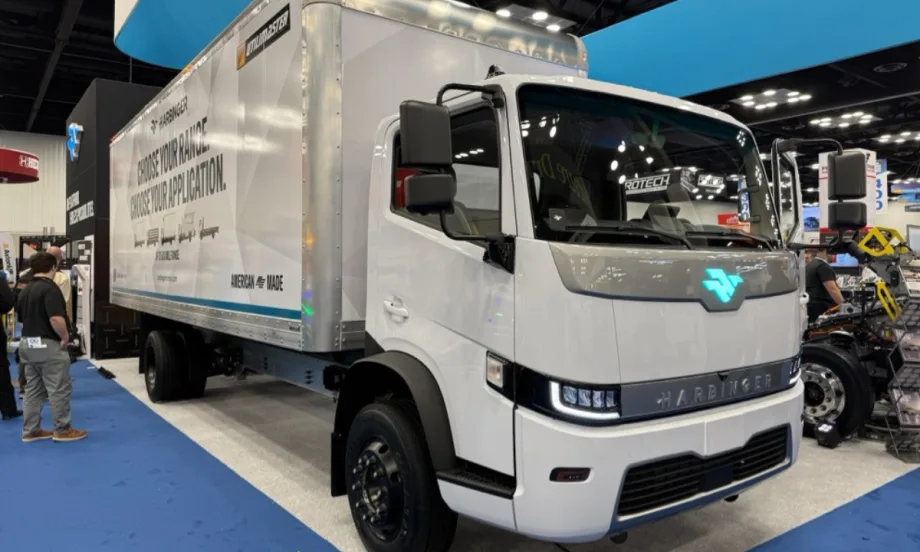
The Harbinger HC Series Cab medium-duty work truck platform is designed for multiple body configurations and is available with electric or range-extended hybrid powertrains.
Credit: Chris Brown
4 min to read
Harbinger introduced a new medium-duty low-cab-forward work truck platform, the HC Series Cab, at NTEA Work Truck Week in Indianapolis.
The vehicle expands Harbinger’s medium-duty lineup and is available in both all-electric and plug-in hybrid versions. The company said the platform is designed to support a wide range of upfits — including box trucks, flatbeds, and stake beds — while improving maneuverability, payload efficiency, and operational flexibility for fleets.
“With the HC Series Cab, fleets no longer have to compromise between payload, maneuverability, range, and
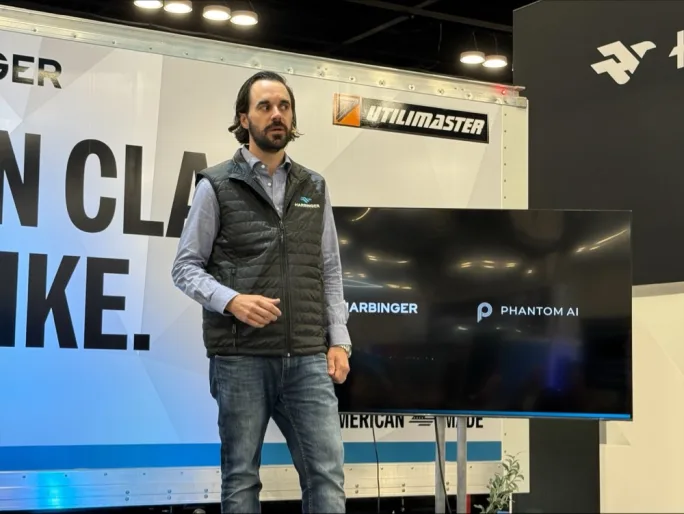
Harris presents the company’s electric truck platform and new driver-assistance technology partnership with Phantom AI during Work Truck Week in Indianapolis.
Credit: Chris Brown
onboard capability,” said John Harris, co-founder and CEO of Harbinger. “We engineered this platform to outperform legacy diesel options while unlocking new advantages through electrification and our range-extended hybrid system.”
Low Cab Forward Design Targets Urban Fleets
The HC Series Cab uses a low cab forward (LCF) architecture that allows longer cargo bodies to be installed on shorter wheelbases, helping fleets increase cargo capacity without increasing overall vehicle length.
The truck carries a gross vehicle weight rating of up to 26,000 pounds and is designed to compete with traditional medium-duty trucks while offering the benefits of an electric platform.
"Harbinger vehicles are designed from the ground up as electric platforms," said Fred DePerezl, SVP of sales. "That fundamentally simplifies maintenance—fewer moving parts, fewer oil changes, no traditional transmission systems—translating into fewer interruptions and more predictable operating performance.”
Harbinger said the design is particularly suited for urban and regional fleet applications where maneuverability and visibility are important. The platform offers a turning diameter of 42 feet on the 158-inch wheelbase configuration, which the company says is tighter than comparable trucks from Ford and Isuzu.
Additional features aimed at fleet operations include a low frame height of about 29 inches to ease loading and unloading, improved sightlines from the cab-forward driving position, and independent front suspension designed to improve ride quality and handling in stop-and-go routes.
Electric and Hybrid Powertrain Options
The HC Series Cab is offered as both a fully electric truck and a range-extended plug-in hybrid model.
In the hybrid configuration, a gasoline engine recharges the vehicle’s batteries, allowing the truck to achieve up to 500 miles of range depending on configuration and operating conditions.
The hybrid system also allows the truck to recharge while parked without an external charger, enabling continuous power generation for tools and jobsite equipment.
Both EV and hybrid versions support an onboard AC inverter capable of delivering up to 15 kilowatts of exportable power, allowing crews to operate external equipment directly from the vehicle.
Platform Built for Uptime and Serviceability
Harbinger said the HC Series Cab was developed on the company’s proprietary electric-vehicle architecture
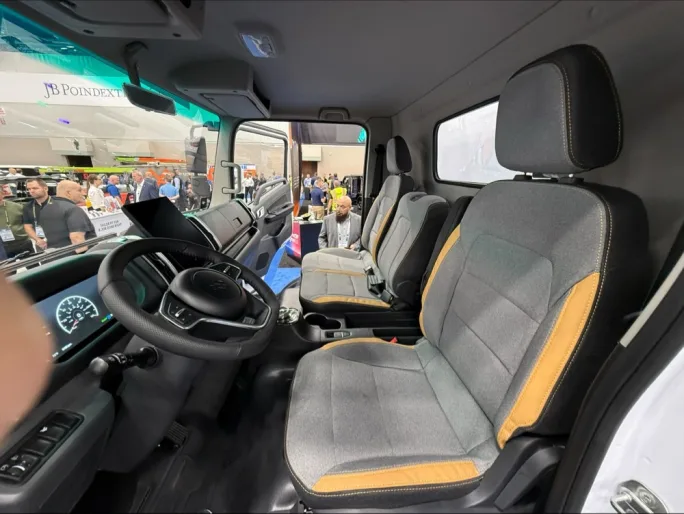
The HC Series Cab interior features a spacious three-seat layout and modern driver controls.
Credit: Chris Brown
rather than on an internal-combustion chassis.
The vertically integrated platform includes components designed and manufactured in-house, including the powertrain, battery system, steering, and braking systems.
Shared components across Harbinger vehicles are intended to simplify parts inventories and maintenance processes for fleets operating multiple vehicles on the platform. Electric drivetrain architecture also reduces routine maintenance requirements compared with diesel-powered trucks.
The chassis is designed for durability targets exceeding 450,000 miles and a service life of up to 20 years.
Driver Safety and Technology
Harbinger said the HC Series Cab introduces additional driver-assistance technologies to the medium-duty segment, where advanced safety features have historically been limited.
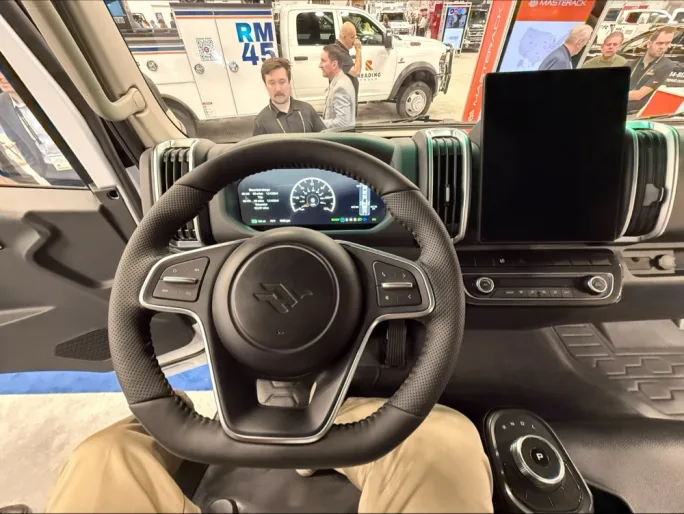
Seen from the driver’s seat, Harbinger’s new HC Series Cab showcases a modern, technology-focused cockpit designed for medium-duty fleet operations and urban maneuverability.
Credit: Chris Brown
Existing safety systems include backup cameras with dynamic trajectory guidance, virtual bumper detection, and acoustic vehicle alerting systems.
Following Harbinger’s acquisition of Phantom AI, the company said it plans to add advanced driver assistance features, including automatic emergency braking, adaptive cruise control, and lane-keeping systems, to its medium-duty vehicles beginning in 2026.
"Drivers in this segment are not just commuting around town," said DePerezl. "They’re working—they’re operating equipment, managing tight schedules, and navigating unpredictable conditions that create real physical and mental fatigue. Advanced driver assistance reduces the cognitive load in traffic and high-density environments, helping drivers stay focused and confident throughout the day."
Availability and Configurations
The HC Series Cab is available for order now and can be configured with multiple wheelbases and body options to support various commercial applications.
Wheelbase configurations include:
158-inch wheelbase (Class 4–6) with up to 22,000 GVWR
178-inch wheelbase (Class 5–6) with up to 26,000 GVWR
208-inch wheelbase (Class 5–6) with up to 26,000 GVWR
More Vehicle Research
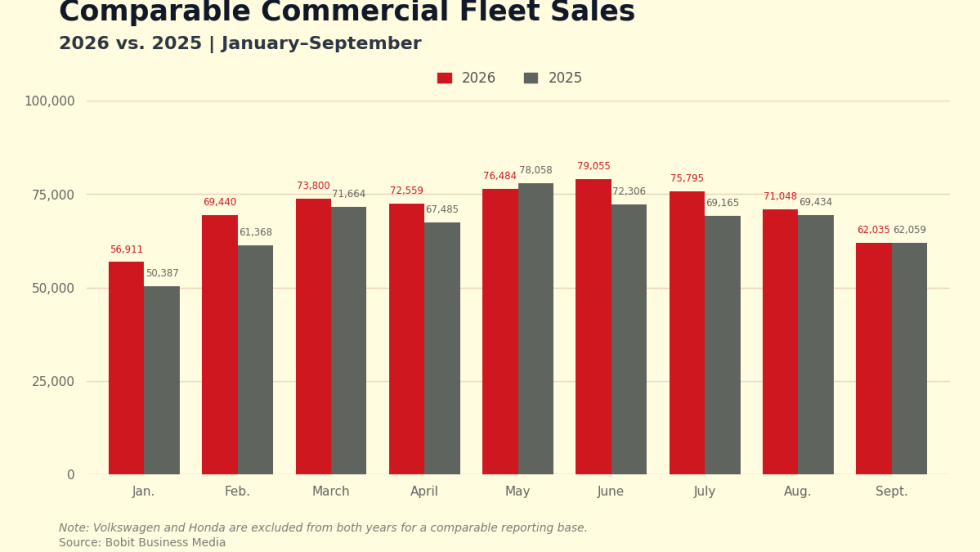
Commercial Fleet Sales Rise 5.8% Through September 2026
September commercial fleet sales were essentially unchanged from a year earlier, slowing year-to-date growth while keeping volume ahead of 2025.
Read More →
Hall of Fame Inductee: John Dmochowsky
The longtime Mondelēz International fleet executive joins the Automotive Fleet Hall of Fame.
Read More →
Hall of Fame Inductee: Lee Miller
After more than four decades at Boehringer Ingelheim, Lee Miller leaves a legacy built on fleet expertise.
Read More →
Hall of Fame Inductee: Mark F. Petersen
From managing fleets of thousands of vehicles to advancing safety and mentoring fellow professionals, Mark F. Petersen made his mark across both the corporate and supplier sides of fleet.
Read More →
When Charger Downtime Becomes a Fleet Availability Problem
As EV deployments move beyond pilot programs, charger reliability can directly affect vehicle readiness, driver productivity and route scheduling.
Read More →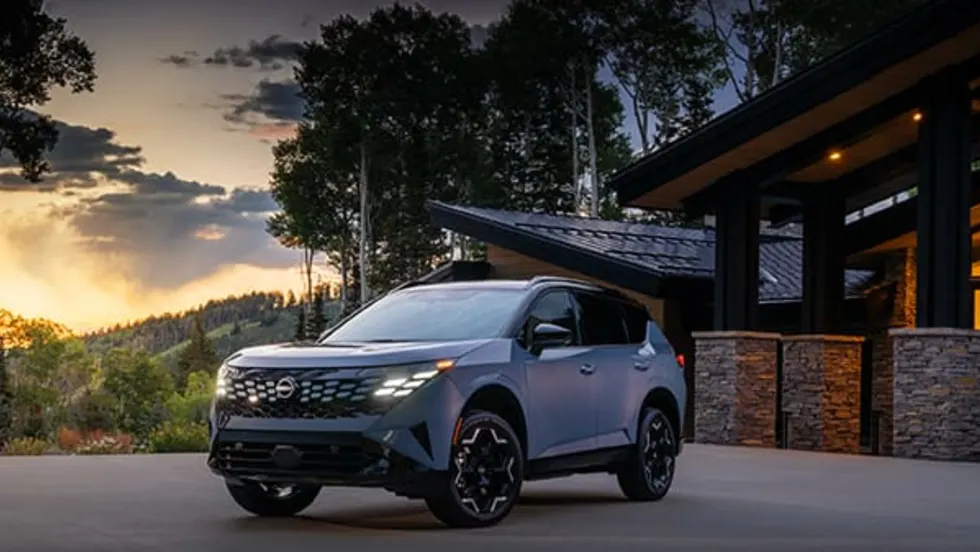
2027 Nissan Rogue Hybrid Adds e-POWER, Standard AWD
The new Rogue Hybrid uses Nissan’s e-POWER system with dual electric motors, offers an estimated 40 mpg and starts at $35,490.
Read More →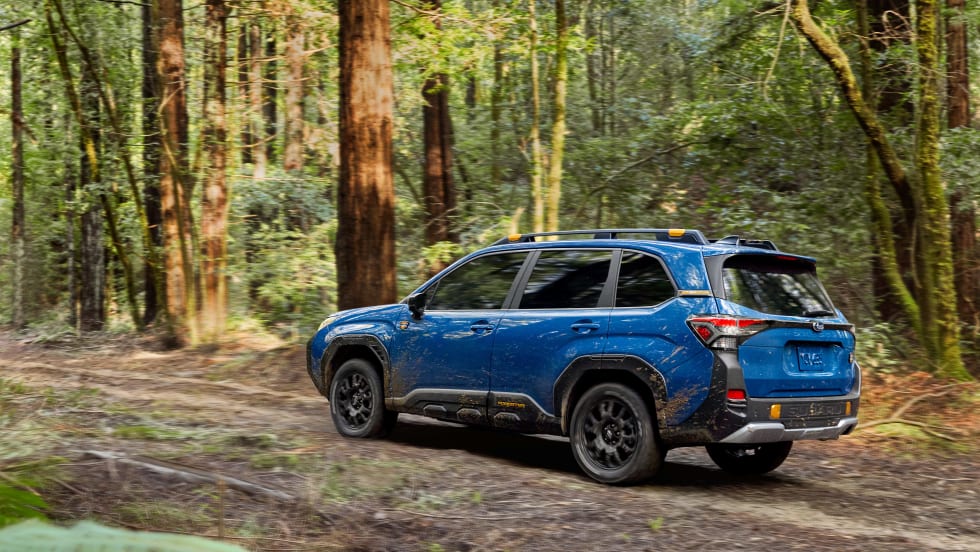
2027 Subaru Forester Adds First Wilderness Hybrid
The 2027 Forester lineup starts at $29,995 and adds a Wilderness Hybrid with 194 combined horsepower and 9.3 inches of ground clearance.
Read More →
EV Realty Names Henrik Holland President as Charging Platform Expands
The former Prologis Mobility and Shell executive will help expand EV Realty’s truck charging business and move its power-first infrastructure model into autonomous vehicle depots and other fleet sectors.
Read More →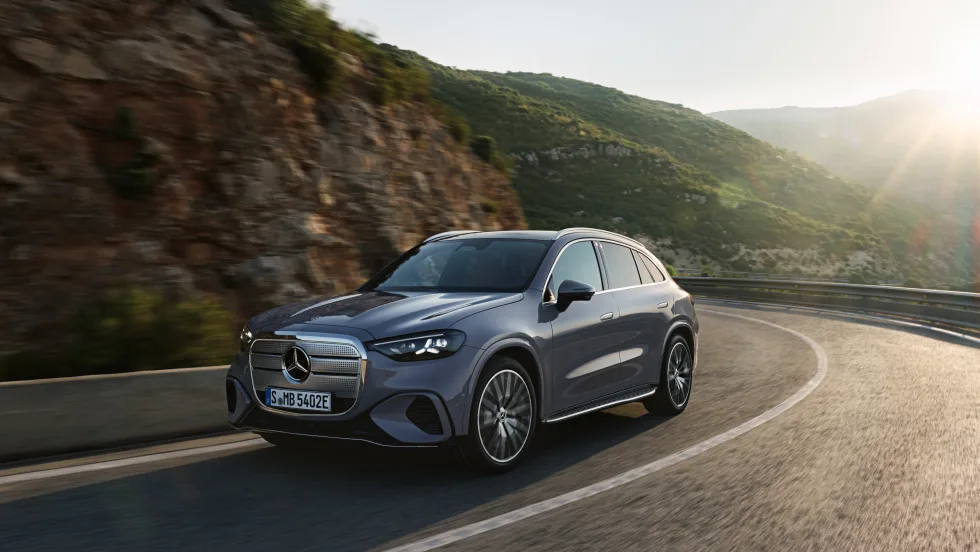
Mercedes-Benz Introduces Electric GLC With Up to 350 Miles of Range
The GLC 400 4MATIC Electric features an 800-volt architecture, 330-kW DC fast charging and a 94-kWh battery, along with Mercedes-Benz's new MB.OS operating system.
Read More →
Fleet Has a Talent Pipeline Problem, not a Talent Problem
Where will the next generation of fleet leaders come from, and what does the industry need to do differently to find them?
Read More →