





Keep Reading! Geotab Honors 2026 Innovation Award Winners Driving Safer, Smarter Fleets
Geotab Releases a Report on the State of Commercial Transportation
Geotab data from the report maps the current state of transportation worldwide, covering safety, pandemic echoes, EVs, and AI.
February 26, 2026
The most recent transportation report marks its 25th anniversary for Geotab.
Credit: Automotive Fleet
3 min to read
Marking its 25th anniversary, Geotab released its 2026 State of Commercial Transportation report, titled "Navigating the Crossroads of Resilience and Reinvention."
Drawing from a massive, anonymized dataset of nearly 6 million connected vehicle subscriptions and 100 billion daily data points, the report identifies areas of inflation, high interest rates, and a cycle of mass fleet asset retirement, referred to as the pandemic echo, affecting the fleet sector.
The 2026 analysis reveals an inflection point for the industry. While operational efficiency remains a priority, resilience and the ability to absorb market shocks without losing momentum emerged as the primary survival strategy.
"The industry is navigating a perfect storm of economic pressure, but the data shows that fleets are responding with incredible adaptability," said Mike Branch, vice president of data and analytics at Geotab. "Whether it is rightsizing assets to combat the repercussions of the pandemic or using generative AI to identify maintenance failures before they happen, our customers are proving that data is the ultimate defensive layer against volatility."
The Pandemic Echo in Asset Management
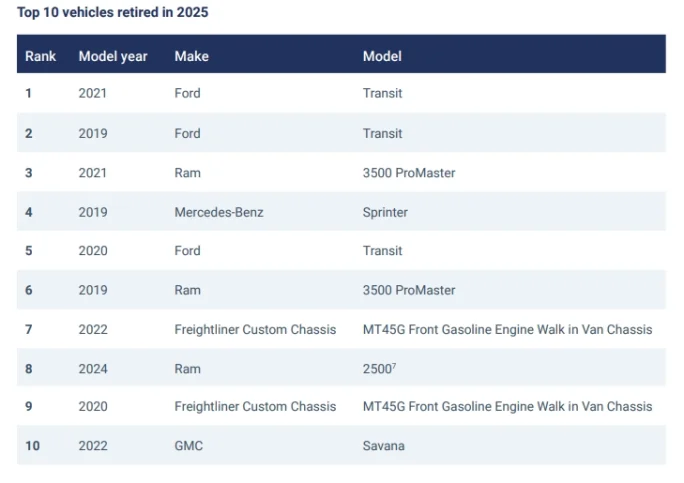
The “pandemic echo” is now visible in retirement data, as fleets rebalance portfolios and shed high-mileage vehicles acquired during peak demand.
Credit: Geotab
Fleets are currently managing a mass replacement of assets acquired during the pandemic. The report highlights that the 2021 Ford Transit became the most retired model in 2025, confirming a strict four-year replacement cycle for high-utilization vans. Data suggests many fleets are sitting on idle capital; on average, vehicles are active only 186 days per year, prioritizing availability over optimized total cost of ownership (TCO). While repair speeds have improved by up to 25% year-over-year, breakdown frequency has risen, necessitating proactive health monitoring.
The Global EV Divergence
The transition to electric vehicles continues to show stark regional contrasts. While EVs account for 10.8% of
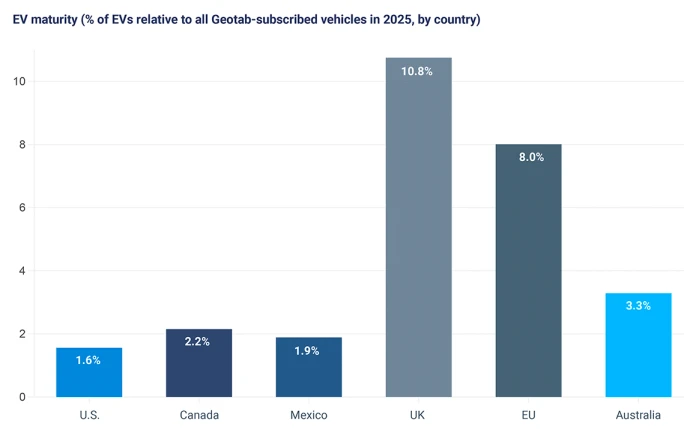
U.S. fleet electrification remains in its early stages, at 1.6% of connected vehicles.
Credit: Geotab
all Geotab-connected vehicles in the UK and 8.0% in the EU, the U.S. lags significantly at 1.6%. Lack of confidence remains a hurdle in North America, as evidenced by underutilization and "panic-charging": 65% of North American EVs are charged before their batteries drop below 50%. Despite this, the operational reality is promising: 53% of heavy-duty and 56% of medium-duty depot-based diesel trucks currently operate within their existing EV range.
Safety: Impact of the Riskiest 10%
Geotab’s longitudinal analysis shows significant long-term progress in road safety across the continent. Over a five-year period (2021–2025), the U.S. and Canada saw a 38.7% reduction in collisions per million miles.
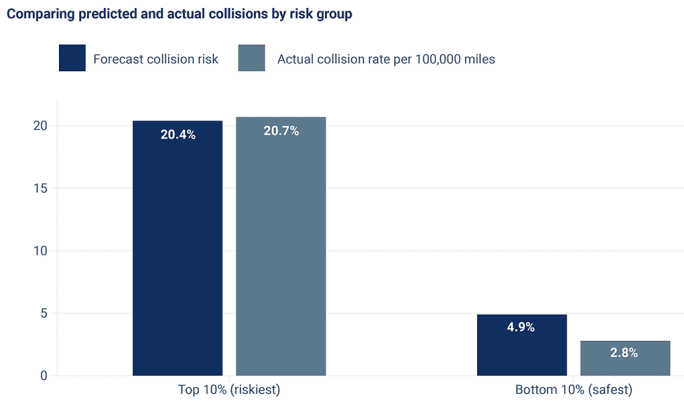
Geotab’s collision risk model shows that the riskiest 10% of drivers account for roughly one in five collisions and are 7.4 times more likely to crash than the safest drivers.
Credit: Geotab
What’s more, on a global scale, active users of Geotab’s safety solutions achieve 28.7% fewer collisions than non-users, proving that internal discipline can mitigate even the most challenging external driving environments.
Safety risk remains highly concentrated. Modeling reveals that the riskiest 10% of drivers account for 1 in 5 collisions and are 7.4 times more likely to crash than the safest drivers. Speeding remains a critical precursor to accidents. Severe speeding (20% above the limit) was found to trigger a 7-fold surge in collision probability within just five seconds.
AI Shifts from Reporting to Strategy
Generative AI is reshaping fleet management, moving users from simple administrative reporting to "conversational partnerships." Data from Geotab Ace shows that 65% of AI queries now focus on vehicle performance and fuel efficiency, indicating a shift toward strategic decision-making rather than simple hindsight reporting.
Read the full report for a detailed look at the new reality of commercial transportation: https://www.geotab.com/resources/ebook/state-of-commercial-transportation-2026/
More Vehicle Research
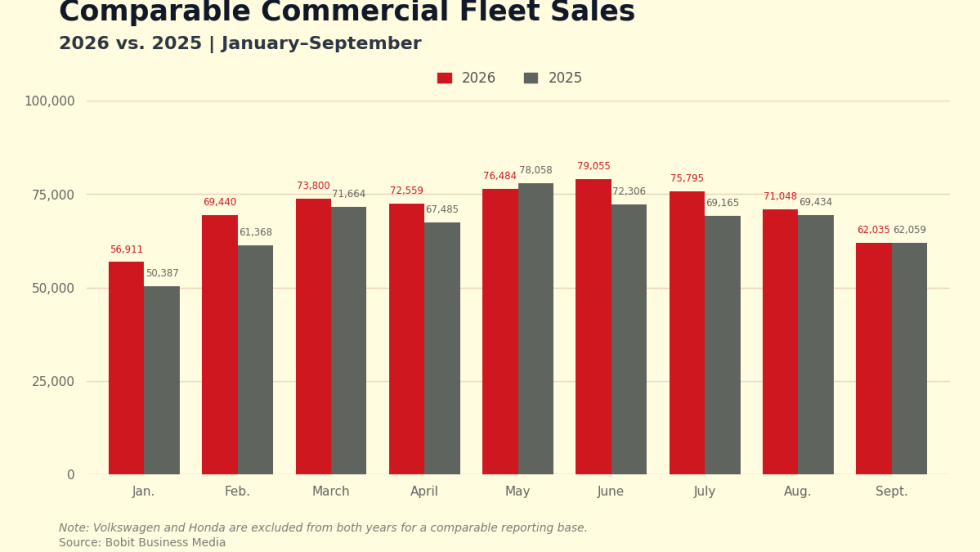
Commercial Fleet Sales Rise 5.8% Through September 2026
September commercial fleet sales were essentially unchanged from a year earlier, slowing year-to-date growth while keeping volume ahead of 2025.
Read More →
Hall of Fame Inductee: John Dmochowsky
The longtime Mondelēz International fleet executive joins the Automotive Fleet Hall of Fame.
Read More →
Hall of Fame Inductee: Lee Miller
After more than four decades at Boehringer Ingelheim, Lee Miller leaves a legacy built on fleet expertise.
Read More →
Hall of Fame Inductee: Mark F. Petersen
From managing fleets of thousands of vehicles to advancing safety and mentoring fellow professionals, Mark F. Petersen made his mark across both the corporate and supplier sides of fleet.
Read More →
When Charger Downtime Becomes a Fleet Availability Problem
As EV deployments move beyond pilot programs, charger reliability can directly affect vehicle readiness, driver productivity and route scheduling.
Read More →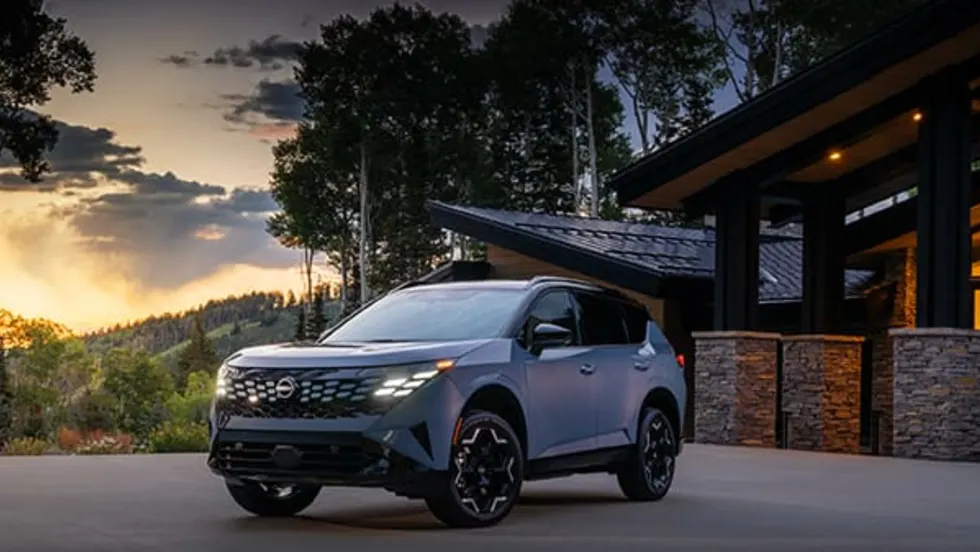
2027 Nissan Rogue Hybrid Adds e-POWER, Standard AWD
The new Rogue Hybrid uses Nissan’s e-POWER system with dual electric motors, offers an estimated 40 mpg and starts at $35,490.
Read More →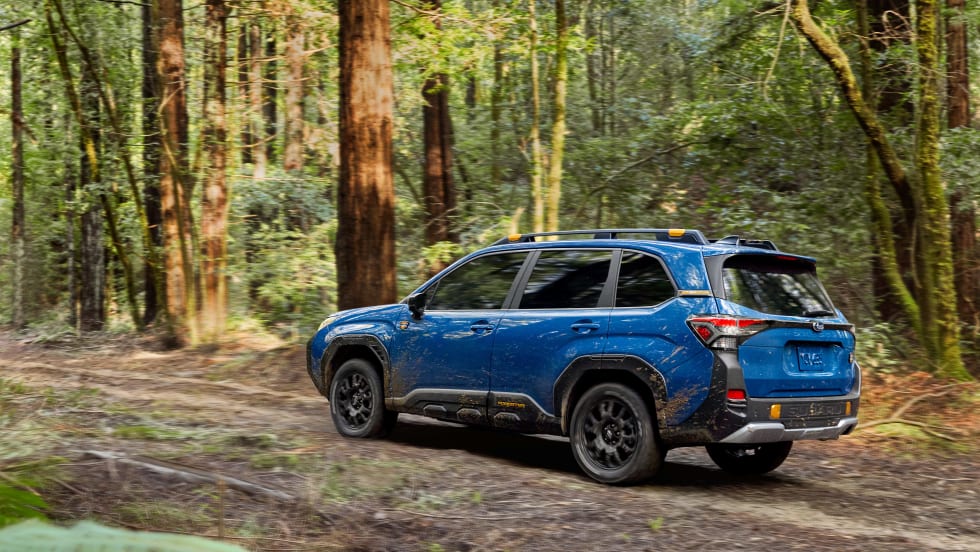
2027 Subaru Forester Adds First Wilderness Hybrid
The 2027 Forester lineup starts at $29,995 and adds a Wilderness Hybrid with 194 combined horsepower and 9.3 inches of ground clearance.
Read More →
EV Realty Names Henrik Holland President as Charging Platform Expands
The former Prologis Mobility and Shell executive will help expand EV Realty’s truck charging business and move its power-first infrastructure model into autonomous vehicle depots and other fleet sectors.
Read More →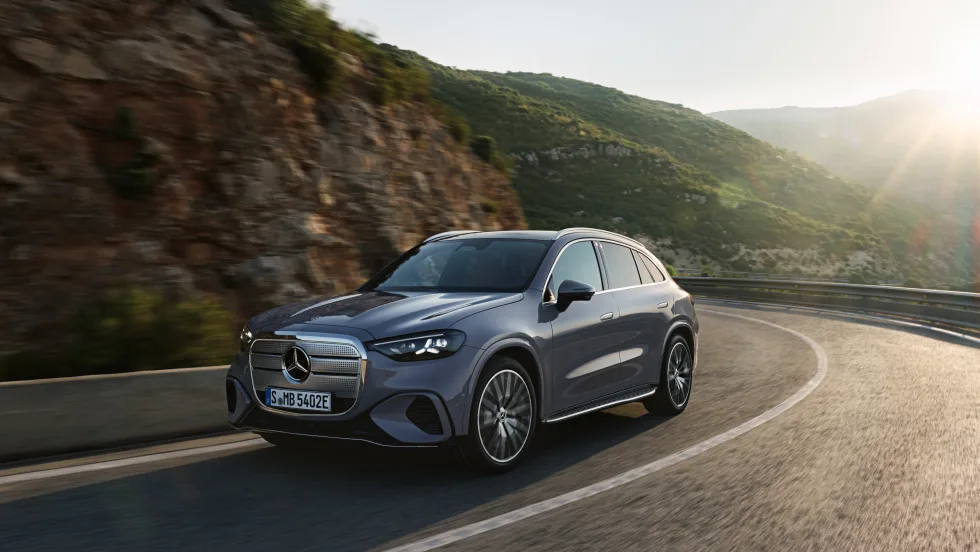
Mercedes-Benz Introduces Electric GLC With Up to 350 Miles of Range
The GLC 400 4MATIC Electric features an 800-volt architecture, 330-kW DC fast charging and a 94-kWh battery, along with Mercedes-Benz's new MB.OS operating system.
Read More →
Fleet Has a Talent Pipeline Problem, not a Talent Problem
Where will the next generation of fleet leaders come from, and what does the industry need to do differently to find them?
Read More →