





Unravelling the Tariff Tangle: Four Strategic Moves to Make Today
Ted Cannis on the Future of Fleet, Unfiltered
At the 2025 Fleet Forward Conference, the former Ford Pro leader broke down tariffs, the realities of electrification, software-defined vehicles, and why fleets should expect more volatility before stability returns.
November 20, 2025
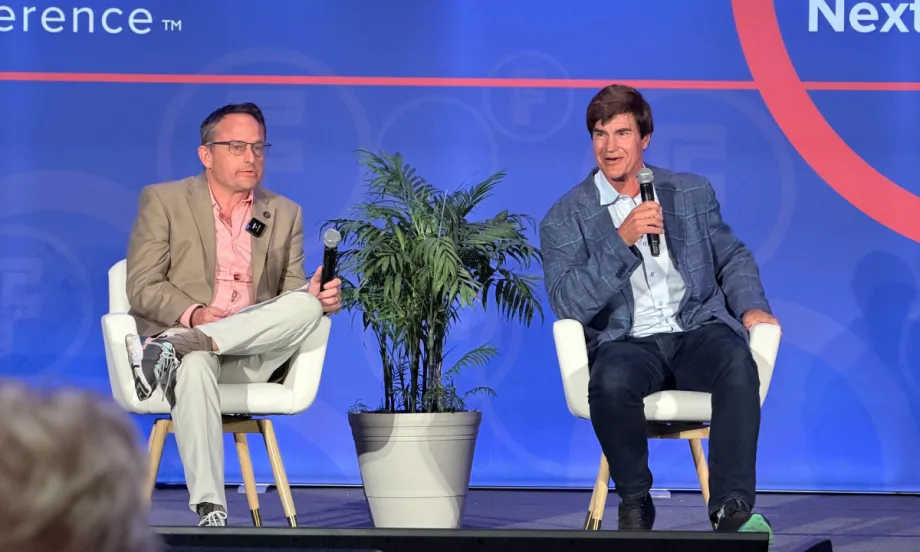
Former Ford Pro CEO Ted Cannis spoke at the Fleet Forward Conference on October 23, 2025. The industry faces tariff uncertainty, rising charging costs, shifting OEM strategies, and a correction in EV demand. Software-defined vehicles, ADAS insurance data, and global pressure from Chinese EV leaders will shape the next 12–18 months.
Photo: Jonathan Robbins
6 min to read
The fleet industry is entering another turning point. The transition to electrification is not as clean as expected. We’ll never return to pre-pandemic normalcy. Tariffs are a perpetual wildcard. AI integration and new digital tools increase expectations to do more with less.
With shifting economics and uneven technological readiness, where are we headed?
At the closing keynote of the 2025 Fleet Forward Conference, Ted Cannis offered one of the most candid assessments of this moment. Speaking from decades of experience leading commercial strategy at Ford, Cannis laid out the new pressures fleets are navigating and the forces that will shape decisions through the end of the decade.
Fleet vs. Retail: “The great generalities are useless.”
Cannis began with a reminder that most national EV and mobility conversations ignore fleet realities. “Everybody has to customize the business to what you’re doing. The great generalities are completely useless.”
Duty cycles, local regulations, and charging environments differ. Two fleets that appear similar on paper still require completely different electrification and operational strategies.
Cannis also warned against “symbolic” pilots, conducted to demonstrate activity rather than to validate pathways to scale. “We all dabble. But if the pilot isn’t intended to scale to something, don’t even bother,” he said. “It’s just all a great big waste of time.”
Fleets should design pilots to answer one question: Can this be scaled across the entire fleet? Anything else burns resources and delays real progress.
Tariffs: “A great big pause in decisions.”
Tariffs have become one of the most unpredictable forces affecting fleet costs, vehicle availability, and production timelines. “It’s a daily surprise. And that is really bad in an industry with long time frames,” Cannis said.
Tariff adjustments create hesitation throughout the supply chain. OEMs don’t know whether to shift sourcing from China to Mexico or the U.S. Suppliers don’t know which vehicle types to prioritize. Even utilities and infrastructure partners are hesitant to commit without clarity.
The result is paralysis. Product programs pause until sourcing is settled. Suppliers slow production, unsure whether ICE, hybrid, or EV components will be needed most. Parts availability becomes unpredictable. “It’s putting a great big pause in decisions,” Cannis said, “which is going to cause disruption and product delays.”
Even after the post-pandemic shocks eased, the system remains fragile, with suppliers still stretched and ICE/hybrid/EV swings creating new stress. Additional pivots, like the industry’s renewed emphasis on hybrids, add new strain. Cannis cautioned the audience to expect erratic timing and avoid assuming current lead times will hold.
Electrification: “The great push is tailing off.”
Cannis described today’s EV environment as a recalibration rather than a collapse in momentum. “There was a great push towards EVs,” he said, “and that is definitely tailing off.”
The industry overextended based on early demand signals, stimulus-driven enthusiasm, and aggressive forecasting. Now, OEMs must rebalance by expanding hybrid offerings, reinvesting in ICE programs, and adjusting EV capacity to match realistic demand curves.
This correction can feel like retreat, but it’s not. “There will be a great thinning of companies,” Cannis said, especially in China, “but we will still have more EVs, because the rest of the world is still going to have a lot of EVs.”
The hype phase is being replaced by one shaped by economics rather than aspirations.
EV Realities: “You’re losing 20% for sure.”
Cannis stressed that the day-to-day realities of operating electric vehicles are where fleets must be most grounded. Passenger car assumptions don’t translate cleanly to commercial vans and pickups, he noted, because the physics shift dramatically once you add frontal area, payload, and real work environments.
In one northern Canadian example, a contractor’s van outfitted with two racks of glass essentially behaved like a “parachute in winter,” cutting range far beyond published MPG. When it comes to cold weather and range, “You’re losing 20% for sure.”
Infrastructure planning carries similar misconceptions. Cannis emphasized that the cost of installing fleet charging is routinely underestimated because operators initially reference residential pricing. Trenching, panel upgrades, transformer access, and site design multiply the cost well beyond the charger's price.
He was equally blunt about public charging: For commercial duty cycles, it simply isn’t a viable backbone. Public networks remain too inconsistent in uptime, power levels, and location to support predictable operations.
The only reliable model, he said, is controlled charging at a depot or centralized hub where fleets can manage access and cost.
Electricity: “Kilowatt cost is going up.”
Cannis pointed to rising electricity rates as a major blind spot in fleets' EV TCO modeling. “There’s no question that kilowatt cost is going up.”
The growing load from data centers will influence rate structures starting around 2027. While California is already feeling it, the trend is national. “It’s coming. And it’s a lot more predictable than crude.”
For EVs, fleets should update TCO models now, as electricity, once considered stable, may soon become a more volatile line item than fuel.
Software-Defined Vehicles: “Moving to battery electric is easier.”
Cannis argued that the auto industry’s toughest transition is not EVs — it’s software. “Moving internal combustion to battery electric is easier than becoming a software-defined vehicle,” Cannis said.
Legacy architectures rely on dozens of independent modules built by different suppliers. None were designed to share data or enable integrated updates. Shifting to unified software platforms requires rewriting everything from control logic to supplier agreements.
Yet progress is happening. “Some recalls can be solved 100% by software. That wasn’t happening even five years ago,” he said.
Still, the shift comes with risk: “A software-driven vehicle can get hacked,” Cannis said, “that is going to keep every person in every facility up all the time.”
ADAS: “What’s it doing for me?”
Autonomous-driving headlines often overshadow the value of ADAS, which fleets can measure today. “The key thing for fleet companies is, ‘What’s it doing for me?’”
As insurers release more detailed claims data, and as fleets merge telematics and OEM data, performance differences between equipped and unequipped vehicles will become unmistakable. “If your data is organized, you should be able to see the difference,” he said.
ADAS will increasingly be judged not by capability demonstrations but by accident reduction, claim frequency, and liability protection.
China’s Influence: “Formidable competitors.”
Cannis was unequivocal about the competitive strength of Chinese automakers. While political tensions and tariff barriers will likely keep Chinese-built vehicles out of the U.S. for the foreseeable future, he emphasized that their influence is already being felt globally. “They are very formidable competitors,” he said, adding that Chinese OEMS have “software-defined EV vehicles with beautiful designs.”
Chinese OEMs have benefited from years of policy-driven scale, unified EV architectures, and a technology culture that moves at incredible speed. Cannis noted that many of these companies have built interior experiences, user interfaces, and OTA capabilities that often outpace Western competitors.
However, he also pointed out that the Chinese market is saturated with too many players, making it unsustainable. Most manufacturers are losing money, and a “great thinning” is inevitable.
But the survivors — the well-capitalized, technologically advanced leaders — will continue to influence the global competitive landscape, including the expectations of U.S. fleet buyers, even if their vehicles never enter the market directly.
The Near Future: “Not that stable.”
Cannis described the coming 18 months as a period of continued turbulence driven by economic, regulatory, and technological forces. “I don’t think it’s going to be that stable.”
He explained that tariff costs will slowly but inevitably be passed through to vehicle pricing as OEMs and suppliers adjust production strategies. At the same time, changes to federal EV incentives will create a temporary dip in EV sales — the kind of dip that will generate headline-driven narratives about the “end of EVs,” even though such claims are cyclical and short-lived.
Cannis also warned that suppliers, already stretched thin from years of volatility, will face renewed pressure as automakers rebalance their mix of ICE, hybrid, and EV production.
Exchange-rate swings, EV repricing, quarterly earnings cycles, and shifting customer demand will keep the industry in constant recalibration. “There’s six months of hype cycle to go,” he said.
Subscribe to Our Newsletter
More State of the Fleet Industry
Is the Future of U.S. Fleets Already Unfolding Overseas?
Fleet Forward Conference keynote speaker John Rossant examines how AI, autonomy, and electrification are converging, and why developments in China, Europe, and the Middle East could preview what’s coming for U.S. fleets.
Read More →
Fleet Meets: Amy McAdams
In this edition of Fleet Meets, Amy McAdams shares how an unexpected career move led to more than 15 years in fleet.
Read More →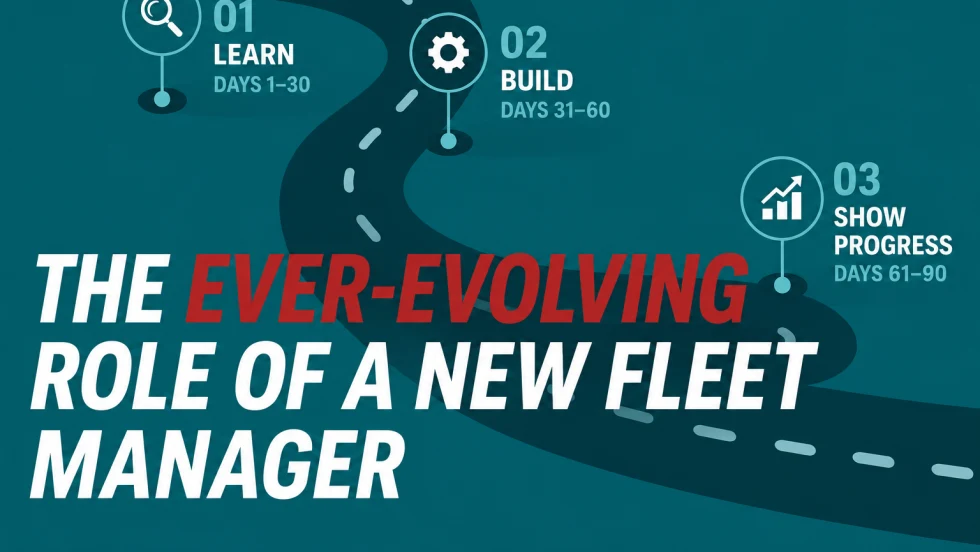
From Tactical to Strategic: A Fleet Manager's First 90 Days
The first 90 days as a fleet manager can be daunting, and the role has changed a lot over the years. What's important now?
Read More →
Fleet Industry Mourns the Passing of Donna Bibbo
Fleet leader Donna Bibbo passed away after a long battle with uterine cancer and a failing heart.
Read More →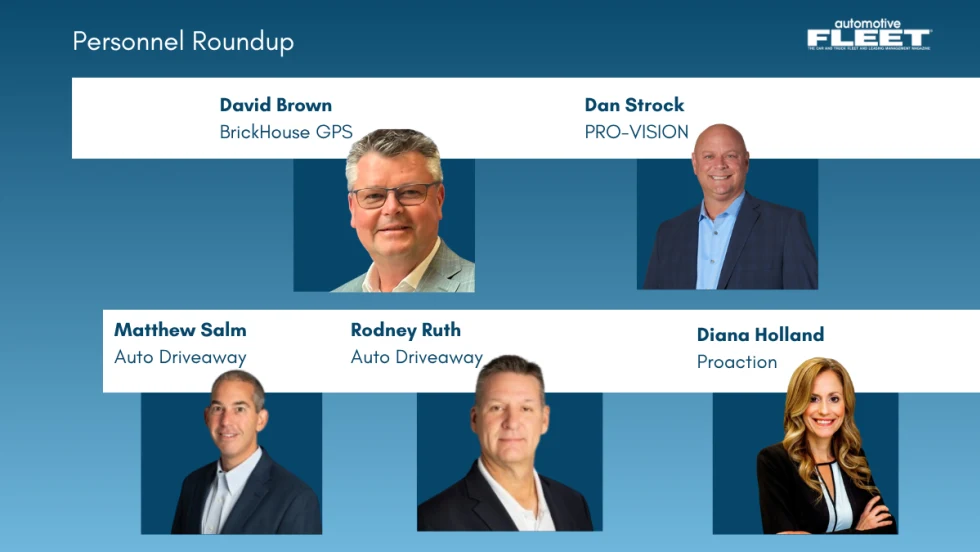
Personnel Update: BrickHouse GPS, PRO-VISION, Auto Driveaway, and Proaction
Check out the latest must-know fleet personnel updates from the last couple of months.
Read More →

‘Mike Just Gives Cars to People’ — And Other Misconceptions Fleet Managers Need to Fix
Most organizations misunderstand fleet. The best managers make sure that doesn’t happen.
Read More →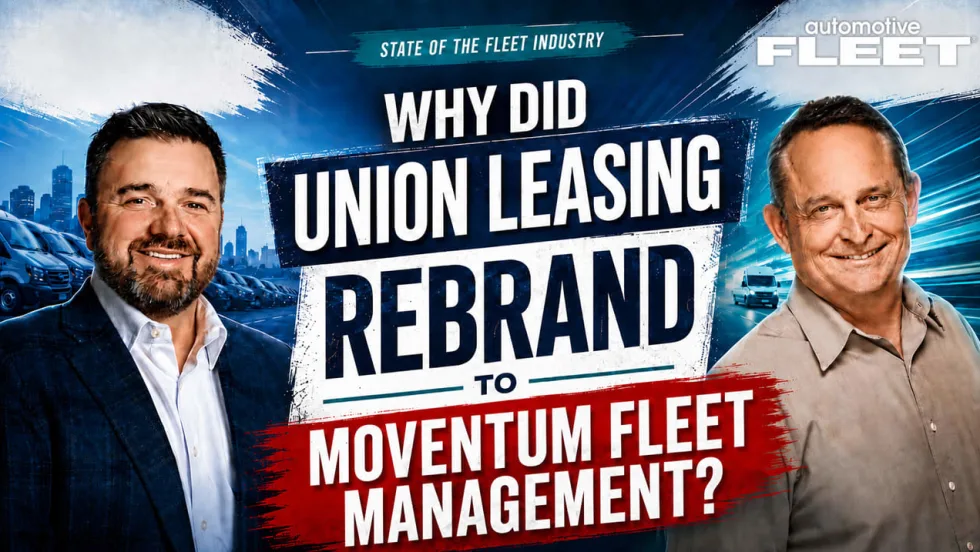
Why Union Leasing Rebranded to Moventum Fleet Management
Mark Hogland discusses Union Leasing’s transition to Moventum Fleet Management and how the rebrand reflects the company’s growing focus on strategic fleet management and lifecycle support.
Read More →
From Storm Response to Data Strategy: Fleet Trends to Watch | AF News Recap
In this AF news recap, host Faith Howell covers this week's most pressing industry updates.
Read More →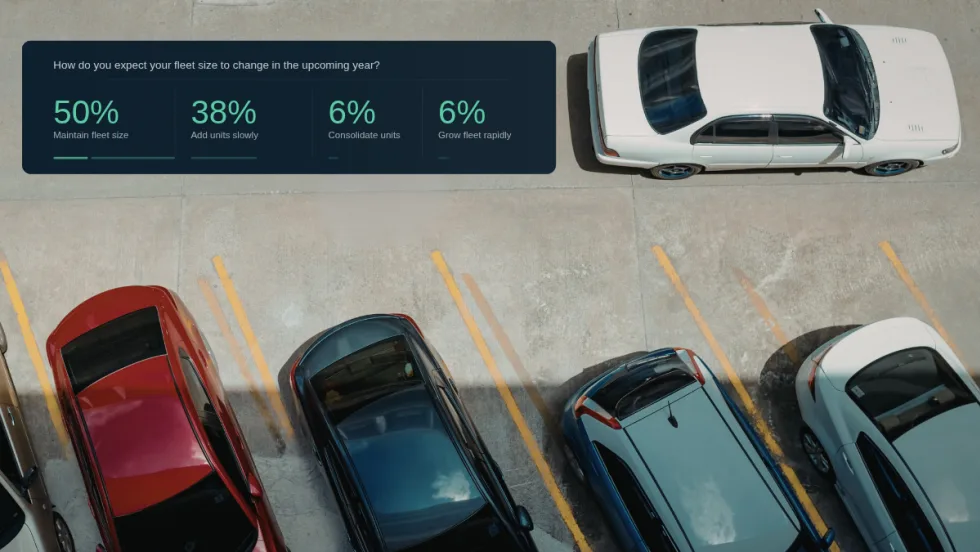
Report: 36% of Fleet Managers Are Delaying Replacements
Element’s 2026 Market Pulse Report finds fleets are slowing replacement cycles amid tariffs, economic uncertainty, and rising costs.
Read More →