





Related: Hyundai to Increase US Investment - Where is the Money Flowing?
Hyundai Motor Outlines Growth Strategy at CEO Investor Day
Hyundai Motor outlined its long-term growth strategy at CEO Investor Day in New York, focusing on electrification, software-defined vehicles, and expanded U.S. manufacturing.
September 25, 2025

Hyundai Motor shared its mid- to long-term strategy with investors and stakeholders during its first CEO Investor Day held outside Korea.
Photo: Automotive Fleet
3 min to read
Hyundai Motor Company presented its mid- to long-term growth strategy at its first CEO Investor Day held outside Korea, outlining product expansion, manufacturing investment, and technology plans.
CEO José Muñoz highlighted Hyundai’s path toward becoming a global mobility leader through electrification, software-defined vehicles, and expanded production.
“In an industry facing unprecedented transformation, Hyundai is positioned to succeed through our products, manufacturing flexibility, dealer partners, and global scale,” Muñoz said.
Hyundai aims to achieve 5.55 million global vehicle sales by 2030, with electrified models accounting for 60% of volume.
Product Portfolio Expansion
Hybrids: More than 18 hybrid models planned by 2030, including Genesis models beginning in 2026.
Palisade Hybrid: Will feature next-generation TMED-II technology for improved performance and efficiency.
Pickup Truck: Hyundai will launch a mid-size pickup for the North American market before 2030, expanding on experience from the Santa Cruz.
EV Strategy: Region-specific EVs include the IONIQ 3 for Europe, a localized EV for India, the Elexio SUV and C-segment sedan in China, and continued rollout of IONIQ 5, IONIQ 6, and IONIQ 9.
Extended Range EVs (EREVs): Launching in 2027 with more than 600 miles of range through battery-engine integration using in-house battery technology.
High-Performance N Models: More than seven models expected by 2030, including the IONIQ 6 N.
Commercial Vehicles: Expansion in North America with XCIENT Fuel Cell Trucks, Hyundai Translead trailers, and entry into the electrified large van market.
Global Manufacturing
Hyundai Motor Group Metaplant America (HMGMA) will expand capacity to 500,000 units by 2028, focusing on hybrids and EVs, and creating 3,000 jobs in Georgia.
Hyundai plans to produce more than 80% of vehicles sold in the U.S. domestically by 2030. Globally, the company will add 1.2 million units of capacity by 2030 through expansions in the U.S., India, Korea, and Saudi Arabia.
The company also plans to advance its Software-Defined Factory approach with robotics integration, predictive maintenance, and advanced automation.
Technology Development
Battery Innovation: Hyundai is targeting 30% lower costs, 15% higher energy density, and 15% shorter charging times by 2027. Data from IONIQ 5 models shows more than 90% battery performance retention after 250,000 miles.
Battery Safety: Cloud-based Battery Management Systems (BMS) and multiple safety layers will be introduced starting in 2026.
Fuel Cells: Hyundai has sold 73,000 cumulative FCEVs and is developing next-generation fuel cell systems for commercial applications.
Software-Defined Vehicles (SDVs): Hyundai is rolling out its CODA architecture and Pleos operating system for improved software updates, personalization, and diagnostics. Pleos Connect infotainment launches in 2025 with multi-window functionality and in-vehicle apps.
AI Applications: Atria AI for autonomous driving without maps, Gleo AI for voice interaction, and Capora AI for fleet management.
Genesis Brand Growth
Genesis, Hyundai’s luxury brand, has surpassed one million cumulative sales. The brand targets 350,000 annual sales by 2030.
Plans include expanding SUVs, launching halo models, and entering endurance racing with Genesis Magma Racing. Genesis will strengthen its U.S. and European presence while expanding into emerging markets.
Strategic Partnerships
Waymo: IONIQ 5 prototypes with full autonomous technology undergoing U.S. testing.
General Motors: Joint development of five vehicles by 2028, targeting 800,000 annual sales across multiple regions.
Amazon Autos: Collaboration to increase brand awareness, support dealer profitability, and enhance online sales.
Financial Projections
CFO Seung Jo (Scott) Lee outlined Hyundai’s financial plans:
Revenue Growth: Target revised upward 5–6%.
Operating Profit Margin: Adjusted to 6–7% due to U.S. tariffs.
Investment Plan: KRW 77.3 trillion from 2026–2030, including KRW 30.9 trillion for R&D, KRW 38.3 trillion for CAPEX, and KRW 8.1 trillion for strategic investments.
Profitability Goals: Operating profit margin of 7–8% by 2027 and 8–9% by 2030.
Shareholder Returns: Total Shareholder Return of over 35% from 2025 to 2027, including dividends, buybacks, and treasury stock cancellations.
More Vehicle Research
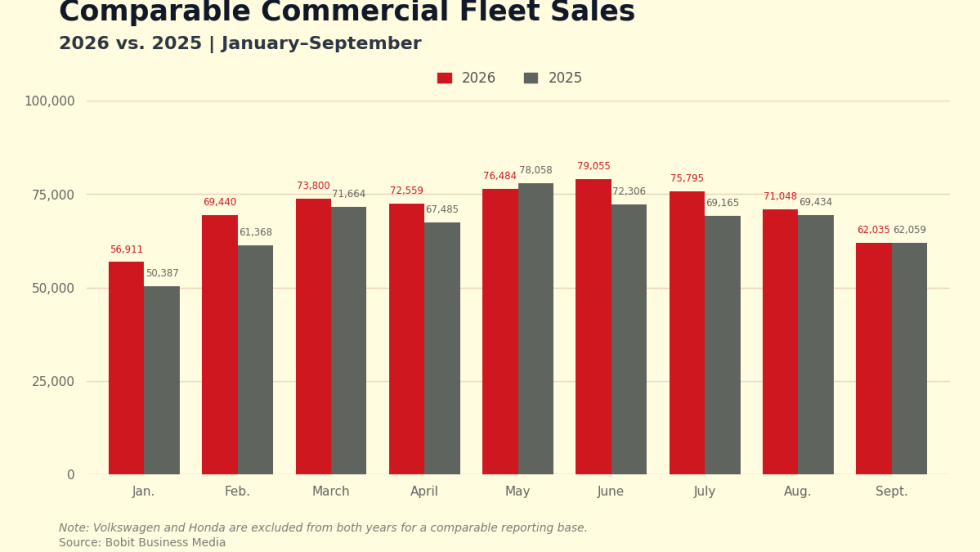
Commercial Fleet Sales Rise 5.8% Through September 2026
September commercial fleet sales were essentially unchanged from a year earlier, slowing year-to-date growth while keeping volume ahead of 2025.
Read More →
Hall of Fame Inductee: John Dmochowsky
The longtime Mondelēz International fleet executive joins the Automotive Fleet Hall of Fame.
Read More →
Hall of Fame Inductee: Lee Miller
After more than four decades at Boehringer Ingelheim, Lee Miller leaves a legacy built on fleet expertise.
Read More →
Hall of Fame Inductee: Mark F. Petersen
From managing fleets of thousands of vehicles to advancing safety and mentoring fellow professionals, Mark F. Petersen made his mark across both the corporate and supplier sides of fleet.
Read More →
When Charger Downtime Becomes a Fleet Availability Problem
As EV deployments move beyond pilot programs, charger reliability can directly affect vehicle readiness, driver productivity and route scheduling.
Read More →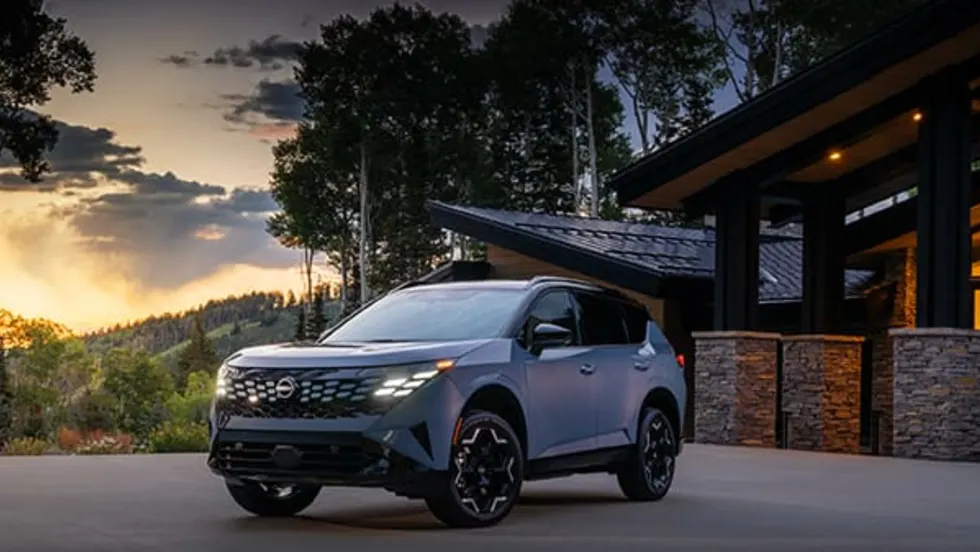
2027 Nissan Rogue Hybrid Adds e-POWER, Standard AWD
The new Rogue Hybrid uses Nissan’s e-POWER system with dual electric motors, offers an estimated 40 mpg and starts at $35,490.
Read More →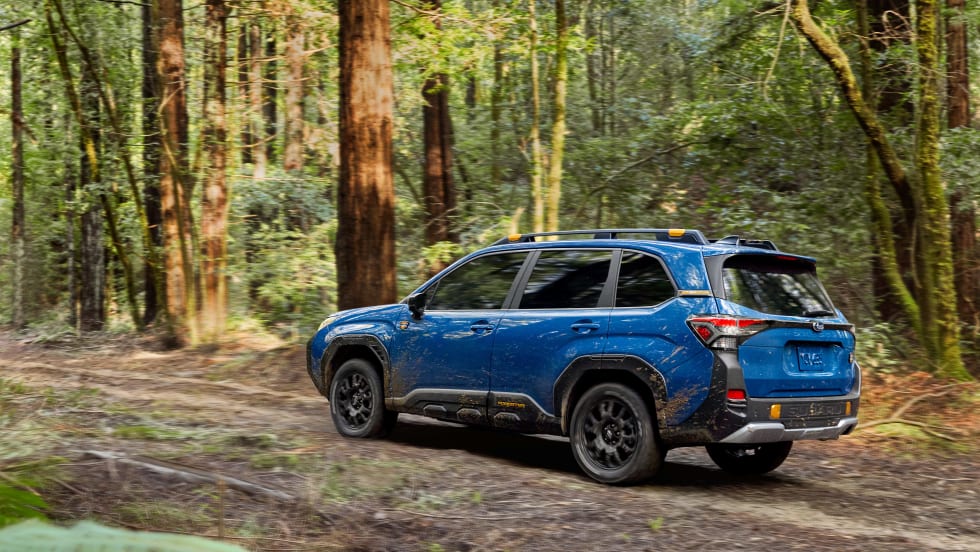
2027 Subaru Forester Adds First Wilderness Hybrid
The 2027 Forester lineup starts at $29,995 and adds a Wilderness Hybrid with 194 combined horsepower and 9.3 inches of ground clearance.
Read More →
EV Realty Names Henrik Holland President as Charging Platform Expands
The former Prologis Mobility and Shell executive will help expand EV Realty’s truck charging business and move its power-first infrastructure model into autonomous vehicle depots and other fleet sectors.
Read More →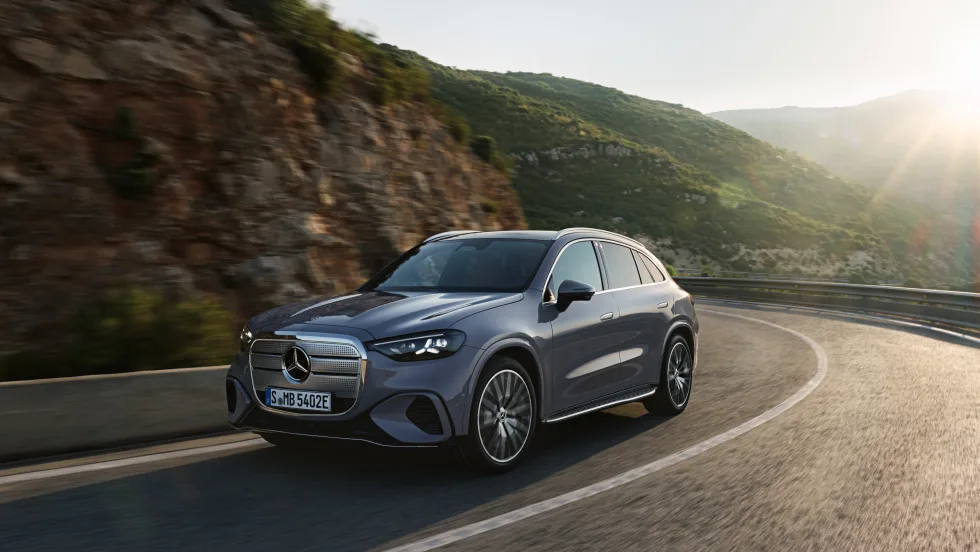
Mercedes-Benz Introduces Electric GLC With Up to 350 Miles of Range
The GLC 400 4MATIC Electric features an 800-volt architecture, 330-kW DC fast charging and a 94-kWh battery, along with Mercedes-Benz's new MB.OS operating system.
Read More →
Fleet Has a Talent Pipeline Problem, not a Talent Problem
Where will the next generation of fleet leaders come from, and what does the industry need to do differently to find them?
Read More →