




Valuing Electric Vehicles for Successful Buying and Selling
CAR 2024: Unlike a combustion engine, an EVs long-term value is maintained daily, based on the unique charging habits and battery management of its owner.

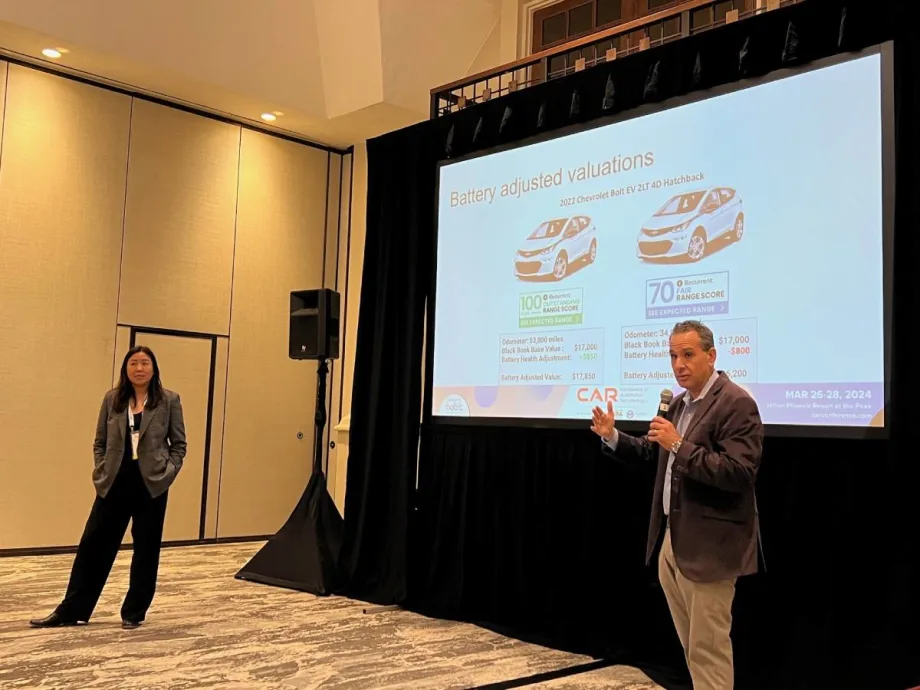
Julie Woo of Recurrent and Jared Kalfus of Black Book show how EV battery data is redefining the resale values of used electric vehicles, during a workshop at the Conference of Automotive Remarketing on March 26, 2024 in Phoenix, Arizona.
Photo: Martin Romjue / Bobit
With its primary value in battery quality, electric vehicles are redefining how their used versions should be valued and resold on wholesale and retail markets that are still mostly unpredictable.
While the mainstream EV market kicked off more than a decade ago with the launch of the Tesla Model S sedan in 2012, it wasn’t until the 2020s that the market grew to a point where a viable second-hand market could take shape.
Two experts delved into recent EV market dynamics during a workshop hosted by the Automotive Remarketing Alliance on March 26 at the Conference of Automotive Remarketing in Phoenix, Arizona.
Improving Valuation Accuracy
The used EV market is gaining momentum as used EV sales will surpass 550,000 vehicles this year and lower price points are making them more affordable to a wider consumer segment, said Julie Woo, head of product for Recurrent, a company that uses technology to evaluate EV batteries and bring more clarity to used EV transactions.
In 2018, for example, a used Tesla Model 3 averaged about $40,000, whereas a new one can now be bought at the same price. Most used EVs this year average $25,000 to $30,000, and below.
Lower prices are happening in tandem with more precise valuations based on vehicle identification numbers (VINs), said Jared Kalfus, president of Black Book. Through VIN numbers, buyers and sellers can decode a vehicle’s history.
Called enhanced vehicle matching (EVM), the process enables customers to get a 96% value fit to the exact model, trims, and condition of the vehicles.
Black Book created this history adjusted value that enables 1.2 billion vehicles to be decoded each month through Auto Check by Experian which produces a full report that would include accidents, past rental car status, towing incidents, and certifications of a vehicle.
Each Black Book value has come standard with the history adjustment value, Kalfus said.
The pairing this year of Black Book with Recurrent yielded a battery adjusted value suited to electric vehicles, which means that every time an EV is decoded, the valuation tool makes an adjustment based on the condition and state of the battery.
“What matters for a used EV is the battery age, exposure, battery temperature, charging speed, charge-discharge cycles, depth of discharge, and states of charge,” Woo said. “An EV battery has a shelf life, where calendar degradation happens. Battery age matters more than vehicle age or mileage,” she added, comparing EVs to internal combustion engine (ICE) vehicles.
With electric vehicles, two major data pieces contributing to a valuation — the traditional market value of the EV overall and the specific battery adjustment based on data — can change daily in real time, Kalfus said.
3 Ways EV Driving Affects Resale Value
Woo explained how varying modes of EV usage affect the eventual resale value during the first ownership of the vehicle:
Exposure and battery temperature: Extreme heat and cold can impact an EV, with heat speeding up battery degradation and extreme cold diminishing the range.
Charging habits: How you charge an EV matters for battery quality, especially L3 fast charging versus the slower L2 charging and how much of each occurs during the life of the EV battery. The faster DC chargers with higher power and voltage generate faster electrons that cause more degradation over time.
Charge-discharge: What is the state of battery when you plug in and plug out? How much have you used before you plug in again? How often do you charge from 0% to 100%, which strains an EV battery more than 20% to 80% charges. It’s better to stay in that latter mid-range, which means less is more for the long-term. Battery performance depends on lifestyle,” said Woo, citing how and where a driver uses an EV and what range they need for daily trips and commutes.
Boosting EV Battery Performance
Woo referenced battery management systems that can control and optimize EV performance to preserve the balance between usage and longevity.
According to an article by Cyient, an engineering and technology solutions company, "a battery management system (BMS) manages the electronics of a rechargeable battery, whether a cell or a battery pack. It becomes a crucial factor in ensuring EV safety. It safeguards both the user and the battery by ensuring that the cell operates within its safe operating parameters. BMS monitors the state of health (SOH) of the battery, collects data, controls environmental factors that affect the cell, and balances them to ensure the same voltage across cells."
Data Benefits Growing for EVs
As more EVs enter the ground transportation system, the more data they produce. At Recurrent, analysts have studied 30,000 digitally connected electric vehicles covering 66 makes and models and their 440 million miles driven across 50 states. These are used to generate reports on individual vehicles.
“Real world miles and data can help us understand how far cars travel and how they are driven,” Woo said. “We tell you as owner and buyer what the range is, battery insights, and how the EV drives today versus the future and versus new cars.”
Another factor affecting range duration is seasonality in different geographic regions and climate zones.
“The range score looks at how far a used EV can go on a full charge compared to that of a new vehicle,” she said. “Sometimes a vehicle with more miles can get a higher battery and range score.”
A 93 score, for example, means a used EV gets 93% of its range when it was new. Those scores are shared with Black Book.
Kalfus emphasized that the VIN-based decoding of EV battery health nets out to a valuation adjustment based on the data. “It’s not art or going with your gut,” he said. “It’s about what the data is telling us. This data set can be used anywhere in the auto eco-system.”
With more EVs moving into consignor, auction, and dealer trade channels, such precise EV data plays into more accurate transactions, appraisals, and buyer-seller decisions, Kalfus said.
The process also helps other vendors and services along those channels, including lenders, insurance companies, extended warranty providers, leasing, and commercial fleets, he added.
To further expand the data sets, Recurrent is talking with OEMs about applying more telematics data, as well as information on the impacts of evolving EV battery technology, Woo said.
“The data helps with remarketing and valuation decisions in all sectors. This is a new era for EV valuations.”
More Remarketing
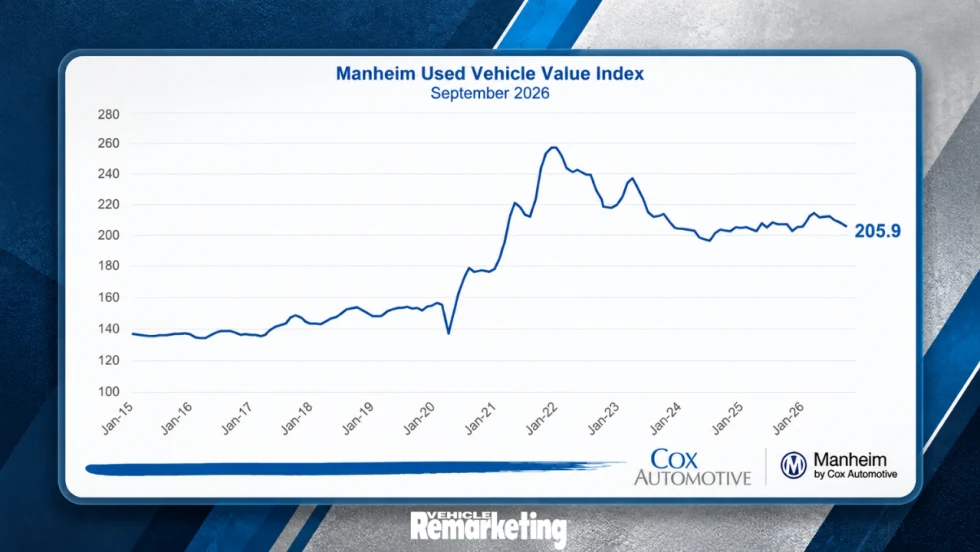
Wholesale Used-Vehicle Values Fall as Cox Automotive Cuts 2026 Forecast
Wholesale used-vehicle prices declined in September as depreciation accelerated, prompting Cox Automotive to lower its year-end forecast.
Read More →
FLD Promotes Three Executives in Leadership Changes
FLD has promoted three longtime executives, naming Gary Mott CEO, Richard Mallek president, and Ron Sanders managing partner.
Read More →
Ford Pro Launches Certified Pre-Owned Program for Commercial Vehicles
Ford Pro Advantage will offer certified pre-owned Class 1-7 commercial vehicles through more than 700 Ford Pro Commercial Vehicle Centers.
Read More →
Copart to Acquire ACV in $1.9 Billion Deal
The acquisition would expand Copart beyond its traditional salvage business into dealer-to-dealer wholesale remarketing while adding ACV’s vehicle data, inspection, and valuation technology.
Read More →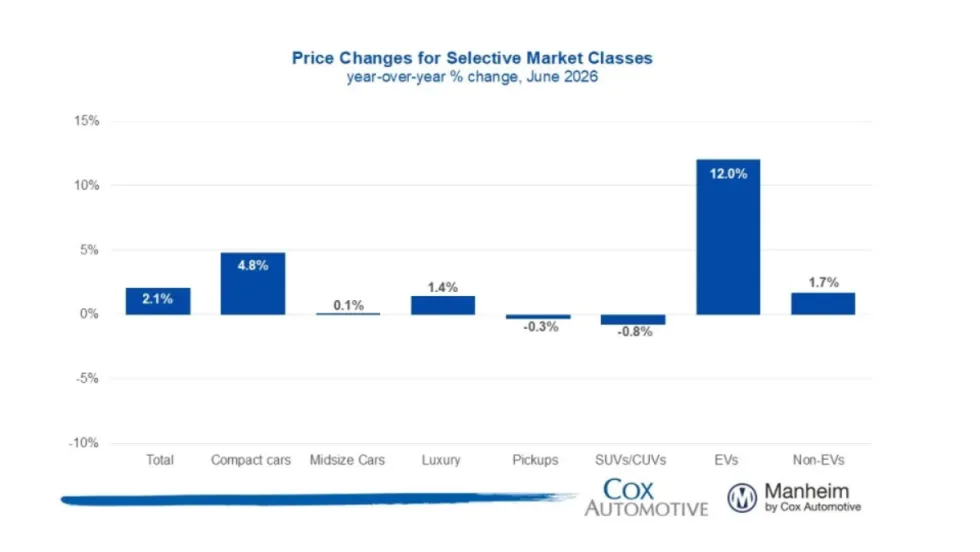
Manheim Index Shows Used-Vehicle Wholesale Prices Up 2.1% in June
The market is seeing stronger appreciation in older used vehicles this year, and the most affordable segments have been among the year’s best performers.
Read More →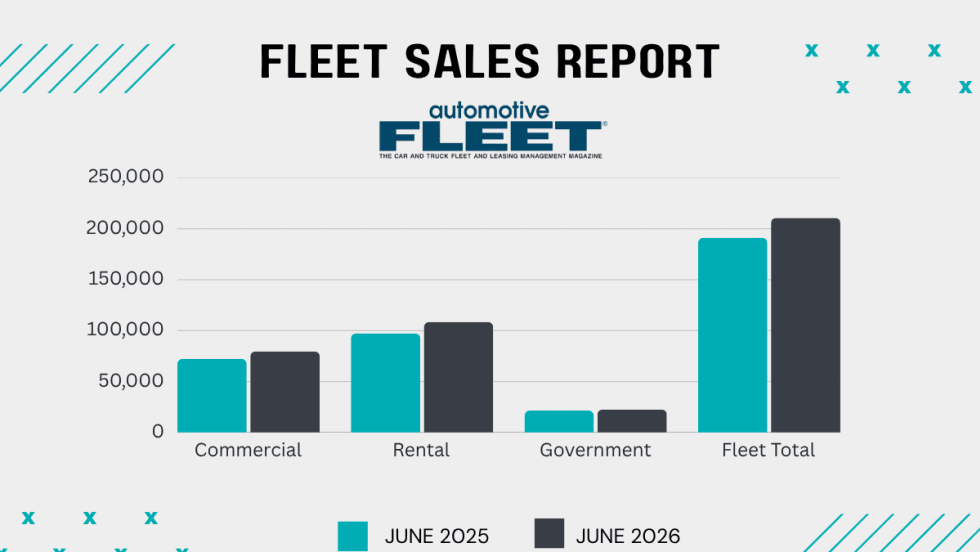
Commercial Fleet Sales Contribute To June, YTD Gains
The fleet sector has boosted its vehicle purchases at a reliable pace in the first half of this year compared with 1H 2025.
Read More →
Used Vehicle Prices Climb Higher As Sales Pace Slows
The higher prices at used retail reflect strong wholesale values earlier in the spring, particularly for older, more affordable vehicles.
Read More →
Wholesale Used Vehicle Market Sustains Moderate Rise In Values, Prices
Trends continue to normalize after a strong start to the year, as consumers contend with higher gas prices in the coming summer months.
Read More →
Commercial Fleet Sales Still Lead Sectors Despite May Mini Dip
The U.S. economy's continued growth and positive business investment are creating a favorable environment for fleet vehicle demand.
Read More →
How Connected Vehicle Data Is Lifting Fleet Resale Values
A vehicle health score could improve the value of fleet vehicles at remarketing. The path to a universal standard is forming, and fleets that understand the process early will be better positioned when it arrives.
Read More →