




Variable Speed Limit Technology Leads to Crash Reduction
Variable speed limits can create a safer driving environment for fleet drivers who travel during inclement weather. Since the implementation of variable speed limits in Lake County in 2017, crashes in the area have dropped by over 35%.

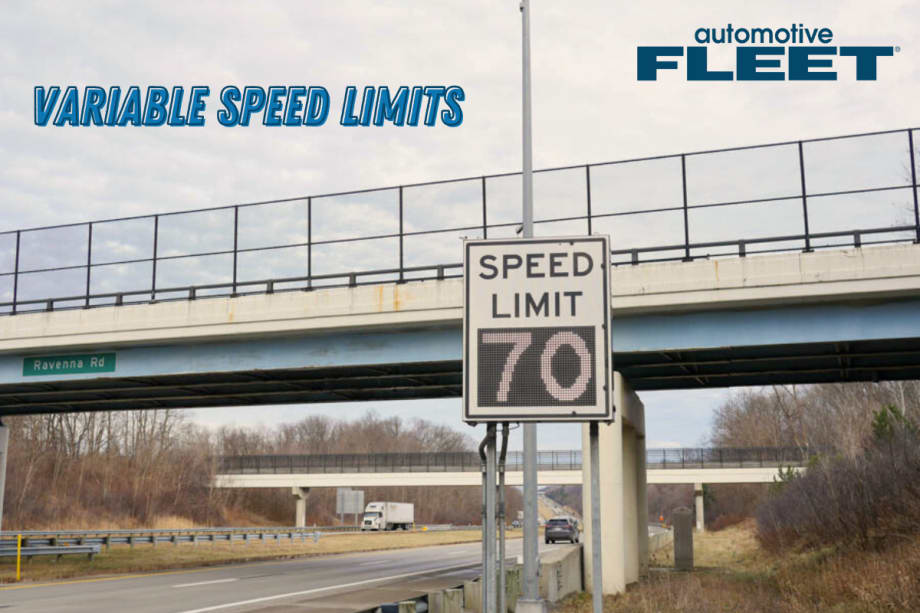
Ohio's variable speed limit sign system works in coordination with ODOT's existing Intelligent Transportation System, which includes traffic cameras, dynamic message signs, and road weather information stations to monitor visibility and precipitation.
Photo: Ohio Department of Transportation/Canva/Automotive Fleet
An ongoing test run of variable speed limits in an Ohio county reveals their implementation can lead to a decrease in roadway crashes.
What Are Variable Speed Limits?
According to the Federal Highway Administration, variable speed limits (VSLs) use roadway information such as traffic speed, volumes, weather, and road surface conditions, to determine appropriate speeds at a given time and display them to drivers.
The strategy is meant to improve safety performance and traffic flow by reducing speed variance. For example, snowy conditions may warrant a slower speed.
Where the speed limit on a highway might normally be 70 mph, inclement weather conditions might warrant a slower speed to prevent crashes.
Local authorities determine the safe speed and use signage to make drivers aware of the speed limit.
The higher the speed in a crash, the more likely a fleet driver is to be injured, or worse.
"In a high-speed crash, the vehicle can’t withstand the force of the impact and still maintain the integrity of the occupant compartment, so the compartment may collapse in on the driver or passenger. As speed increases, the effectiveness of safety systems like air bags and seat belts is reduced," Advanced Driver Training Services Director of Operations Judie Nuskey told Automotive Fleet.
A Look at Lake County's VSL Program
Lake County, Ohio, began implementing a VSL program in 2017, when the Ohio Department of Transportation (ODOT) and Lake County Sheriff’s Department created the first VSL section of highway in the state, according to a news release.
Lake County is known for receiving large amounts of snow every winter with numerous lake effect snowstorms battering roadways, resulting in slowdowns and crashes.
The state uses digital speed limit signs that change during adverse weather. The Ohio General Assembly played a key role in the project, modifying the state’s speed limit law in the spring of 2017 to give ODOT the authority to temporarily reduce the statutory speed limit on this particular stretch of I-90.
The Proof is in the Numbers
From 2005 to 2015, the stretch of I-90 between State Route 44 and State Route 528 saw a yearly average of 76 crashes reported, with 37 of them in the winter.
Since the implementation of the VSL in 2017, crashes in this area have dropped by over 35% to an average of 49 per year, with 21 in the winter.
Here are some key data points noted since the system went live in 2017:
More than 50% reduction in major crashes.
Drop in annual average rear-end crashes from 19 to 8.
Decrease in annual average fatal and injury crashes from 20 to 9.
“ODOT’s basic mission is simple; save lives by making our system safer,” said John Picuri P.E., P.S. District 12 Deputy Director. “This is a great example of our engineers, maintenance forces and local safety forces working together to utilize technology to increase safety during severe weather events that are unique to this area along Lake Erie.”
It's important to note that the system will only work if drivers comply, Nuskey told AF.
"Effectiveness varies based on the compliance of drivers, which should involve educating and driver safety training to trust the system and comply, and not to challenge the system’s effectiveness," she said.
How Ohio's VSL Program Works
Ohio's VSL sign system works in coordination with ODOT's existing Intelligent Transportation System, which includes traffic cameras, dynamic message signs, and road weather information stations to monitor visibility and precipitation.
Information from these sources is funneled to the ODOT Traffic Management Center in Columbus. That team works with local law enforcement and ODOT managers to make decisions on when to lower speed limits.
When the weather changes, the speed limits are reduced in 10 mph increments to warn motorists of hazardous traveling conditions.
For example, a moderate amount of precipitation would warrant a 60-mph speed limit, while blowing and drifting conditions with poor visibility could warrant a 50-mph speed limit.
The lowest permitted speed limit is 30 mph, reserved for high-impact events such as a full road closure.
More Safety
Tips for Driving Safely on Halloween Night
This video features a reminder from the Connecticut Department of Transportation (DOT) and the Connecticut Police Chiefs Association, urging drivers to prioritize safety this Halloween.
Read More →
IIHS Crash Avoidance Tests Reveal Safety Gaps in Cargo Vans and Work Trucks
New crash-avoidance ratings from the Insurance Institute for Highway Safety reveal inconsistent performance among commercial vehicles, with several popular cargo vans and heavy-duty pickups struggling to avoid collisions with other vehicles and pedestrians.
Read More →
What’s Next for Fleet? Safety, AI & Industry Recognition | AF News Recap
Could your company's culture be encouraging distracted driving? This week, we're exploring how workplace expectations affect driver safety, what AI, EVs, and autonomous vehicles could mean for the future of fleet management, and how fleet professionals can strengthen their award nominations.
Read More →
Does Your Fleet's Culture Encourage Distracted Driving?
What happens when the people responsible for enforcing safety rules are the ones setting the wrong example? The answer may reveal why some of the biggest risks to fleet drivers have little to do with what's written in the employee handbook.
Read More →
Fleet Manager’s Ultimate Playbook: Navigating the New Standard in OEM Connectivity
Rising operating costs, driver safety concerns, and unplanned downtime are putting unprecedented pressure on modern fleets. Discover how fleet managers use embedded OEM connectivity and real-time vehicle data to cut TCO, prevent downtime, and protect drivers without aftermarket telematics hardware.
Read More →
From Driver Well-Being to EV Charging | AF News Recap
Mental health belongs in the fleet safety conversation. This week, we’re looking at five ways fleets can support employee well-being before a crisis, plus Holman’s expansion in Mexico, new one-day Fleet Forward passes, and why EV charging demand is outpacing infrastructure growth.
Read More →
Nexar-Nauto Merger Aims to Give Fleets Better Safety Intelligence Through Larger Driving Dataset
Stefan Heck tells Automotive Fleet that combining more than 10 billion miles of driving history with Nexar's AI models will give fleets deeper insights into driver risk and roadway conditions than either company could provide independently.
Read More →
Don't Wait for a Crisis: 5 Ways to Build Mental Health Into Your Fleet Safety Program
For Suicide Prevention Month, fleet and safety leaders have an opportunity to put mental health where it belongs: at the center of workplace safety.
Read More →
How Camera Data Can Strengthen a Fleet’s Insurance Renewal
Insights from a commercial insurance carrier and a broker show how fleets can turn video telematic data, driver coaching, and improved claims results into a stronger case at insurance renewal.
Read More →
The Safest Fleets Aren’t the Ones with the Most Technology
You’ve made the telematics investment. Here’s how to capture the other half of its value and build the safest fleet on the road.
Read More →