





Read More: A Passion for Safe Driving
How to Safely Handle Common Highway Driving Challenges
Numerous fleet drivers log thousands of miles on highways and interstates. An expert shares knowledge about common highway driving situations from the advantages and disadvantages of traveling in any given lane to a reminder about Move Over laws.
July 18, 2023
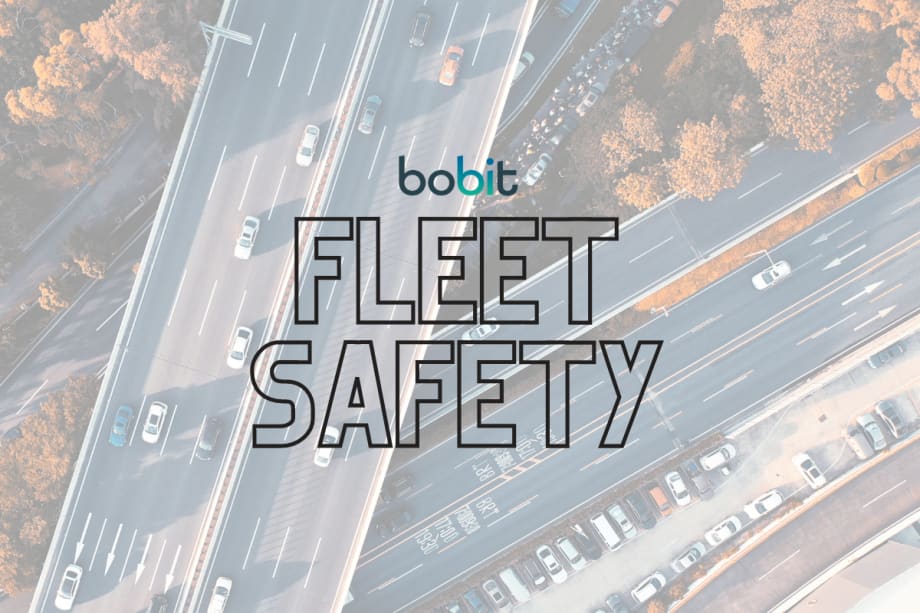
For fleet drivers, navigating multi-lane roads means dealing with more risks.
Photo: Bobit
5 min to read
Highway driving presents a unique set of risks and issues. Many fleet drivers travel on multi-lane roads, and it’s important that they know what to expect and are prepared to respond.
Navigating multi-lane roads means dealing with more risks. When the lanes are many, so are the dangers.
Which Lane is Safest?
The short answer is: It depends. Each lane on a multi-lane road offers advantages and disadvantages, which drivers should take into consideration when deciding which lane is best for them. Keep in mind that in all U.S. states and in many other regions, it is illegal to drive in the left lane unless you are actively passing another vehicle. However, this law is not always enforced when traffic is heavy enough that the left lane must be used to keep the flow moving.
Left Lane: Pros and Cons
Advantages: The left lane is often less congested than other lanes, which makes it easier to maintain a safe following distance. Since most exit and entrance ramps are on the right, you’re not likely to deal with traffic merging on and off when you ride in the left lane.
Disadvantages: Motorists travel at a higher speed in the left lane, and higher speeds are less safe because they give drivers less space and time to react to trouble. If there is a guardrail or other barrier to the left, it means drivers won’t have an escape route to their left. If there isn’t a guardrail or median to the left, then drivers at greater risk of being hit head-on by someone who crosses over from the other side of the highway.
Center Lanes: Pros and Cons
Advantages: In the event of a problem, drivers have all three escape routes potentially open: to the left, the right, and in front of them. Speeds are more moderate than in the left lane. It’s typically faster and easier to move to the right or left to exit the road.
Disadvantages: Center lanes can become congested as drivers from the left or right merge into this lane or move across it to exit the road. If these maneuvers are done abruptly or without signaling, drivers may have to react quickly to avoid a collision.
Right Lane: Pros and Cons
Advantages: It’s much easier for drivers to exit the road when ready because they’re already in the correct lane. Also, if there is a shoulder, all three escape routes are available. Traffic moves slower here than in the center or left lanes, giving drivers more time and space to react. This is a good lane to choose for fleet drivers that don’t expect to be on the highway long and plan to exit soon.
Disadvantages: Motorists merging on will move into the right lane initially, requiring drivers in the right lane to adjust frequently. As other vehicles exit, they may dart in front of a driver at the last moment — especially if they haven’t planned ahead or are driving aggressively.
Changing Lanes Safely
When drivers aren’t careful, the simple act of changing lanes can put them in serious danger. Remind your fleet drivers to avoid trouble when changing lanes by keeping the following safety tips in mind:
Avoid frequent and unnecessary lane changes. Don’t switch lanes just because you’re impatient with the driver ahead of you. This kind of aggressive behavior can lead to impulsive actions that result in collisions.
Don’t cut it close when switching lanes. Be sure you have enough space to move into the lane safely, without cutting in front of another vehicle. Heed the warning found on most side-view mirrors which cautions that objects may be closer than they appear in the mirror. This is essential when moving in front of a truck.
Scan thoroughly first. Don’t just glance at the lane you intend to move to, since some drivers will cut across multiple lanes abruptly. Check the entire area using your side- view and rear-view mirrors, then look over your shoulder for a more complete view of the driving environment.
Don’t wait until the last moment to change lanes. If you need to move over to exit, start planning ahead. Sudden lane changes put everyone at higher risk of a crash.
Stay focused while changing lanes. While you should never multi-task while driving, it’s especially dangerous when switching to another lane.
Use your turn signal to alert others before you begin to move over. It sounds obvious, but motorists often fail to signal or wait until they’re already in the process.
Know the ‘Move Over’ Laws
Highway driving brings with it many accidents and emergencies. Fleet operators should remind their drivers to always be mindful of Move Over laws.
In the U.S., Move Over laws require drivers to give a one lane buffer to stopped emergency vehicles. For example, while driving in the right lane, if the driver sees a stopped police car, the driver is required to move one lane over to the left to give enough buffer space to avoid any potential accidents. In 2000, the U.S. Department of Transportation and Federal Highway Administration began to address the issue of Emergency Scene Safety and addressed the need for improved standards and protection for emergency workers.
Move Over laws are aimed at protecting emergency responders working along the roadside. All fifty states have passed such laws, which were promoted in response to increasing roadside fatalities in the line of duty. The laws require drivers, upon noticing an emergency vehicle with sirens and/or flashing lights, to move away from the vehicle by one lane, or if that is not possible, slow down to either a reasonable speed or a fixed speed below the limit as defined by local law. This includes law enforcement vehicles, fire trucks, and ambulances.
In some states—for example, Mississippi, Pennsylvania, Rhode Island, and South Dakota—Move Over laws do not require drivers to change lanes. In states that do, Move Over laws differ in terms of specificity regarding driver action. Some observed move over laws are somewhat vague in the actions required of the driver while other laws provide explicit direction. Each state has different laws, so fleet drivers should familiarize themselves in advance when driving through each state on their route.
Subscribe to Our Newsletter
More Safety

Sponsored•October 1, 2026
Fleet Manager’s Ultimate Playbook: Navigating the New Standard in OEM Connectivity
Rising operating costs, driver safety concerns, and unplanned downtime are putting unprecedented pressure on modern fleets. Discover how fleet managers use embedded OEM connectivity and real-time vehicle data to cut TCO, prevent downtime, and protect drivers without aftermarket telematics hardware.
Read More →
From Driver Well-Being to EV Charging | AF News Recap
Mental health belongs in the fleet safety conversation. This week, we’re looking at five ways fleets can support employee well-being before a crisis, plus Holman’s expansion in Mexico, new one-day Fleet Forward passes, and why EV charging demand is outpacing infrastructure growth.
Read More →
Nexar-Nauto Merger Aims to Give Fleets Better Safety Intelligence Through Larger Driving Dataset
Stefan Heck tells Automotive Fleet that combining more than 10 billion miles of driving history with Nexar's AI models will give fleets deeper insights into driver risk and roadway conditions than either company could provide independently.
Read More →
Don't Wait for a Crisis: 5 Ways to Build Mental Health Into Your Fleet Safety Program
For Suicide Prevention Month, fleet and safety leaders have an opportunity to put mental health where it belongs: at the center of workplace safety.
Read More →
How Camera Data Can Strengthen a Fleet’s Insurance Renewal
Insights from a commercial insurance carrier and a broker show how fleets can turn video telematic data, driver coaching, and improved claims results into a stronger case at insurance renewal.
Read More →
The Safest Fleets Aren’t the Ones with the Most Technology
You’ve made the telematics investment. Here’s how to capture the other half of its value and build the safest fleet on the road.
Read More →
Sponsored•August 7, 2026
Hidden in Plain Sight: Fleet Compliance Risks
Fleet compliance isn't just about having policies — it's about consistently enforcing them. This practical guide reveals six hidden compliance risks common in public sector and shared fleet operations and outlines proven strategies to improve visibility, accountability, and audit readiness
Read More →
NETS Sets 2026 Fleet Safety Benchmark Conference for Indianapolis
The Sept. 15–17 program will feature fleet benchmarking data, case studies, emerging technologies, and implementation strategies while running alongside the NSC Safety Congress & Expo.
Read More →
Off-the-Job Crashes Account for 43% of Employers’ $61.7 Billion Crash Burden
NETS quantifies costs dispersed across fleet, risk, HR, and other departments while providing new per-crash benchmarks for employers.
Read More →
Ram Recalls More Than 1.27 Million 1500 Pickups for Seat Belt Anchor Issue
The recall affects certain 2019-2026 Ram 1500 pickups that may have improperly attached second-row seat belt buckle anchors.
Read More →