





Closer Look: Buying vs. Leasing Electric Vehicles: Pros & Cons
EV Parity with ICE Vehicles - Are We Making Progress?
J.D. Power's new Electric Vehicle Index uses data and analytics to measure the path to EV adoption and how far we've come to parity with gas-powered vehicles.
January 17, 2023

J.D. Power announced the introduction of the J.D. Power's new analytics tool will keep track of the U.S. EV market.
Photo: Canva
3 min to read
J.D. Power introduced on Jan 17 the J.D. Power EV Index, an analytics tool to track the growing electric vehicle market in the U.S.
Each month, the index will arrive at one number (on a 100-point scale) to make it easy to understand the progress to parity of EVs with traditional internal combustion engine (ICE) vehicles, according to the company's news release.
J.D. Power said the sub-category numbers will represent all the roadblocks to parity. The EV Index score is 47 (based on the most recent available data from November 2022), with some categories improving and others declining during the 12-month pilot period. The EV Index score and accompanying analysis will be available monthly.
“Vehicle electrification has industry leaders grappling with billion-dollar decisions, and hyper-detailed data and analytics will help guide their decision-making,” said Elizabeth Krear, VP of electric vehicle practice at J.D. Power. “We’ve created a smart and dynamic way to capture how the EV marketplace is performing in relation to gas-powered vehicles, and the index provides a heightened level of detail never seen before in this arena.”
Millions of data points are aggregated into six specific categories to make up the EV Index:
Interest—This factor measures the potential commitment to purchasing an EV based on the voice of the customer and online behavioral data. The Interest score is 32, up eight points from a year ago in the pilot phase, due largely to the growing number of EV models available or soon coming to market.
Availability—This factor measures the proportion of new-vehicle buyers who have an EV purchase option that meets their buying needs, reflective of factors like price, manufacturer origin, segment, and other inputs. The Availability score is 30, up 12 points year over year due largely to the ongoing introduction of EV models into new and important segments.
Adoption—This factor measures the proportion of new-vehicle buyers who purchase an EV, relative to those with a viable substitute meeting their needs. The Adoption score is 22, down four points from a year ago primarily because the expansion of EV model availability is outpacing EV retail share.
Affordability—This factor measures the total cost of ownership of an EV compared with the ICE segment average (after tax credits, rebates, incentives, operating costs, and residual values—for both purchase and lease transactions). The Affordability score is 84, down 12 points year over year as EV prices have increased and 15 models were disqualified beginning in August when the Inflation Reduction Act’s North America manufacturing criteria kicked in. The Affordability score is expected to change based on January 2023 data as the manufacturers’ volume cap is lifted, but vehicle price thresholds and income limits are factored into the purchase of an EV. Leasing, which is currently at 10%, also is expected to grow because the criteria are less restrictive for leasing.
Infrastructure—This factor measures the availability, location, speed, quality, and reliability of EV charging compared with gas stations for ICE vehicles. The Infrastructure score is 27, down four points year over year primarily because the volume of EV units in operation is outpacing the rate of reliable charger installations.
Experience—This factor measures owners’ overall satisfaction with their EVs, including appeal, quality, durability, range, and sales and service experiences, as compared with an ICE vehicle equivalent. The Experience score is 89, down two points from a year ago due largely to declining satisfaction with the EV sales experience.
The EV Index for the U.S. market enables industry stakeholders to navigate the EV environment with real-time data that is plugged into a web-based portal. The portal is equipped with a dashboard and a custom query tool that can help stakeholders make more reliable decisions.
The new service also includes substantially increased data granularity in which metrics are available at the national, regional, state, and Designated Market Area (DMA) levels, and can be broken down by segment, brand, and model.
More Vehicle Research
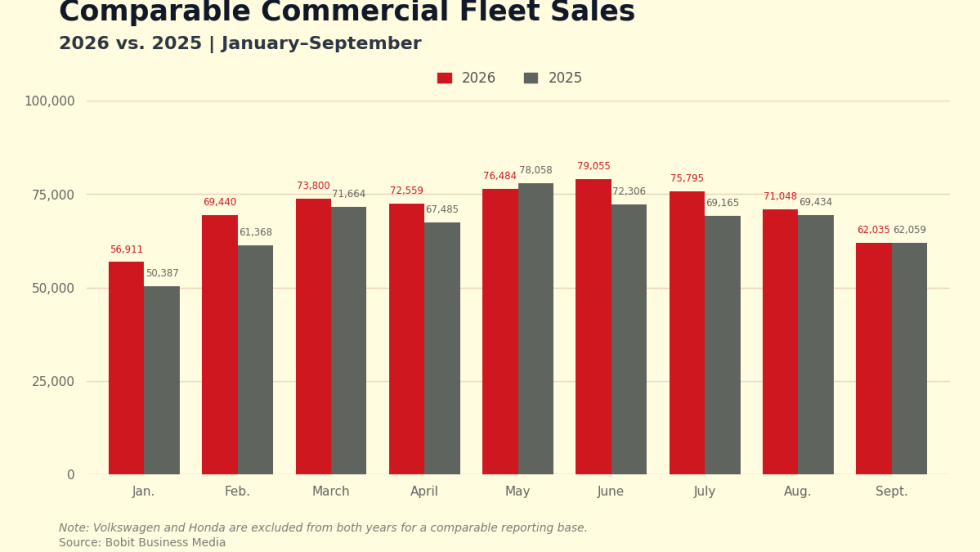
Commercial Fleet Sales Rise 5.8% Through September 2026
September commercial fleet sales were essentially unchanged from a year earlier, slowing year-to-date growth while keeping volume ahead of 2025.
Read More →
Hall of Fame Inductee: John Dmochowsky
The longtime Mondelēz International fleet executive joins the Automotive Fleet Hall of Fame.
Read More →
Hall of Fame Inductee: Lee Miller
After more than four decades at Boehringer Ingelheim, Lee Miller leaves a legacy built on fleet expertise.
Read More →
Hall of Fame Inductee: Mark F. Petersen
From managing fleets of thousands of vehicles to advancing safety and mentoring fellow professionals, Mark F. Petersen made his mark across both the corporate and supplier sides of fleet.
Read More →
When Charger Downtime Becomes a Fleet Availability Problem
As EV deployments move beyond pilot programs, charger reliability can directly affect vehicle readiness, driver productivity and route scheduling.
Read More →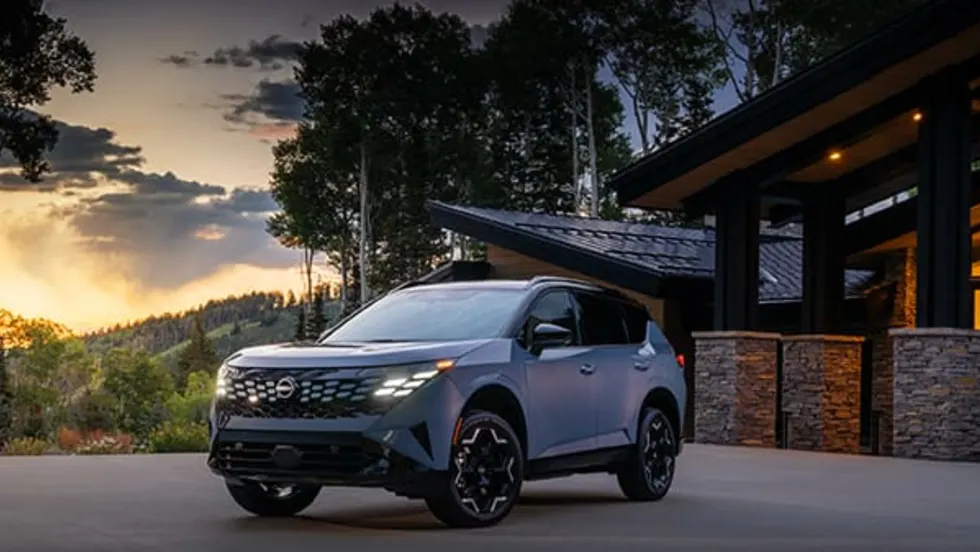
2027 Nissan Rogue Hybrid Adds e-POWER, Standard AWD
The new Rogue Hybrid uses Nissan’s e-POWER system with dual electric motors, offers an estimated 40 mpg and starts at $35,490.
Read More →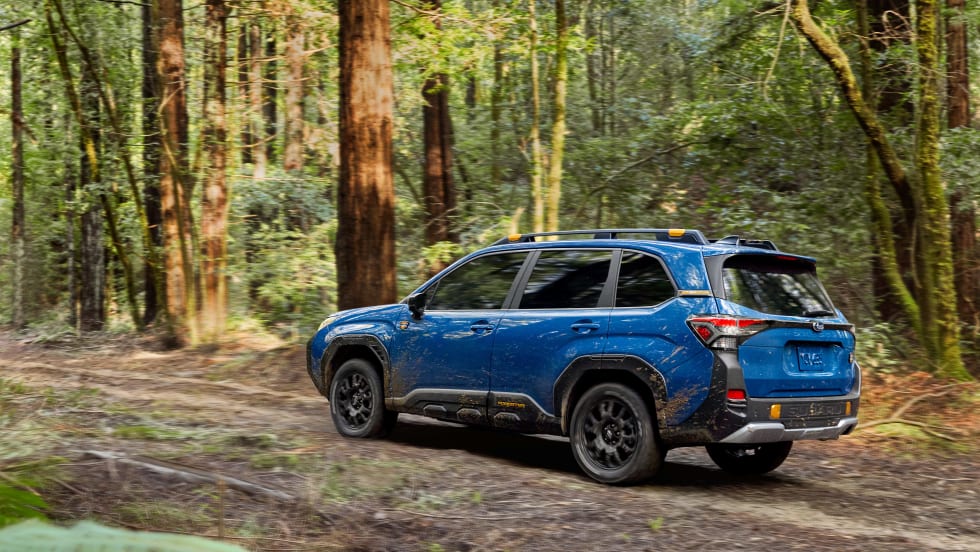
2027 Subaru Forester Adds First Wilderness Hybrid
The 2027 Forester lineup starts at $29,995 and adds a Wilderness Hybrid with 194 combined horsepower and 9.3 inches of ground clearance.
Read More →
EV Realty Names Henrik Holland President as Charging Platform Expands
The former Prologis Mobility and Shell executive will help expand EV Realty’s truck charging business and move its power-first infrastructure model into autonomous vehicle depots and other fleet sectors.
Read More →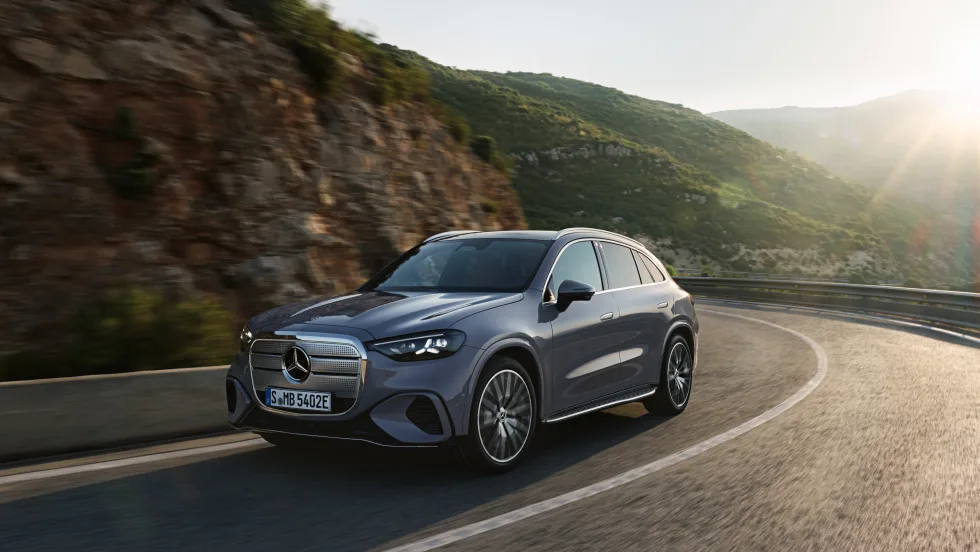
Mercedes-Benz Introduces Electric GLC With Up to 350 Miles of Range
The GLC 400 4MATIC Electric features an 800-volt architecture, 330-kW DC fast charging and a 94-kWh battery, along with Mercedes-Benz's new MB.OS operating system.
Read More →
Fleet Has a Talent Pipeline Problem, not a Talent Problem
Where will the next generation of fleet leaders come from, and what does the industry need to do differently to find them?
Read More →