




What's New for the 2024 Jeep Grand Cherokee
Jeep updates their 30-year-old SUV, alongside the three-row Cherokee L and the hybrid plug-in Cherokee 4xe.

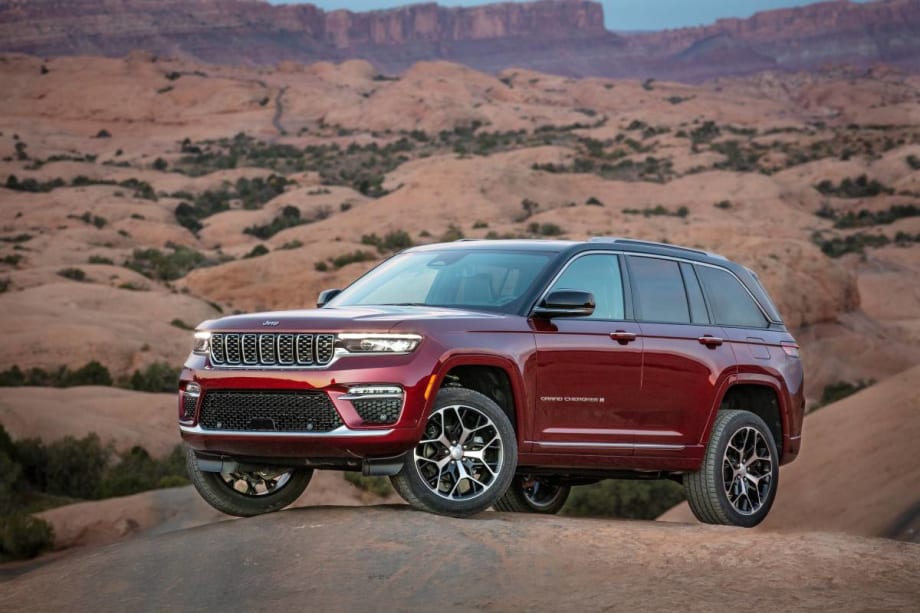
Introduced over 30 years ago, the Jeep Cherokee is being refitted with updated and additional safety features and technologies.
Photo: Jeep
Jeep on Aug. 10 announced the Grand Cherokee lineup that includes the three-row Grand Cherokee L, the Grand Cherokee, and the electrified Grand Cherokee 4xe, which delivers 56 MPGe and 25 miles all-electric range.
Built at the Detroit Assembly Complex, the fifth-generation Jeep Grand Cherokee features an available plug-in hybrid powertrain (Grand Cherokee 4xe). Jeep has designed and engineered the Grand Cherokee with more advanced safety features.
Highlights
Grand Cherokee’s architecture and sculpted aerodynamic body style combine to improve vehicle performance, safety, and reliability, while reducing vehicle weight, noise, vibration, and harshness.
Jeep Grand Cherokee also delivers composed on-road driving dynamics. The off-road capability begins courtesy of three 4x4 systems – Quadra-Trac I, Quadra-Trac II, and Quadra-Drive II with rear electronic limited slip differential (ELSD).
All three systems are equipped with an active transfer case to improve traction by moving torque to work with the wheel with the most grip.
The Jeep Quadra-Lift air suspension with electronic semi-active damping delivers up to 10.9 inches (27.7 cm) of ground clearance and 24 inches (61 cm) of water fording. The system automatically adjusts the shock tuning to changing road conditions, or it may be controlled manually with console controls.
The selec-terrain traction management system lets customers choose the on- or off-road setting for optimum 4x4 performance. This feature electronically coordinates 4x4 torque split, braking and handling, steering and suspension systems, throttle control, transmission shift, transfer case, traction control, stability control, antilock brake system (ABS), and steering feel.
The selec-terrain system offers five available terrain modes (auto, sport, rock, snow, mud/sand) to provide optimized calibrations for any given driving scenario.
Front-axle disconnect automatically places the Grand Cherokee in two-wheel drive if the vehicle senses that road conditions do not require all-wheel drive. This reduces drag on the driveline and improves fuel economy. Four-wheel drive automatically re-engages when the vehicle senses it is needed.
Standard all-aluminum 3.6-liter Pentastar V-6 engine, rated at 293 horsepower and 260 lb.-ft. of torque. The Pentastar V-6 engine is compact, with features such as exhaust manifolds integrated into the cylinder heads.
The 3.6-liter Pentastar V-6 engine is rated for a towing capacity of up to 6,200 pounds (2,812 kg) and an estimated driving range of more than 500 miles.
Grand Cherokee 4xe delivers 56 MPGe and 25 miles of all-electric range. The propulsion system combines two electric motors, a 400-volt battery pack, 2.0-liter turbocharged, four-cylinder engine, and TorqueFlite eight-speed automatic transmission for maximum efficiency and capability.
Each engine mates to the TorqueFlite eight-speed automatic transmission, which enhances fuel economy and delivers gear changes. The wide spread of gear ratios helps keep the engine RPM in the range for the task.
Active grille shutters, front wheel spats, air curtains, hood aero flick, lowered roof line (10 mm decrease) and rear vertical-pillar spoilers improve on-road performance and fuel efficiency.
Compared with the previous generation, a widened track (36 mm / 1.4-inch increase) provides handling and nimble maneuverability.
The interior front panel features slim HVAC vents, a re-aligned center stack for more driver accessibility and 10.1-inch (25.6 cm) digital screens (digital cluster and touchscreen radio), as well as segment-first available 10.25-inch (26 cm) front passenger interactive display.
The center console layout can hold two wireless devices and a wireless charger.
Customizable LED lighting with daytime/nighttime settings is standard on all trim levels.
The Jeep Grand Cherokee has more than 110 advanced safety and security features, including applications of technologies that refine the connection between driver, vehicle and the road:
Full-speed collision warning with active braking and pedestrian/cyclist detection
Rear cross path detection
Adaptive cruise control with stop and go
Active lane management
LaneSense lane departure warning with lane keep assist
Advanced brake assist
Blind-spot monitoring
ParkView rear back-up camera
ParkSense rear park assist sensors with stop
Switch-activated electric park brake
Tire-pressure monitoring
Night vision camera with pedestrian and animal detection
Intersection collision assist
Drowsy driver detection system
Parallel and perpendicular park assist and traffic sign recognition
360-degree surround view camera system with front and rear washers
Active driving assist hands-on-wheel and eyes-on-road automated driving
The fifth-generation 2024 Grand Cherokee has the most available technology features in its history:
Uconnect 5 – the most advanced Uconnect system ever offers up to three 10.1-inch (25.6 cm) and two 10.25-inch (26 cm) digital displays in the cabin and an intuitive user experience.
A segment-exclusive front passenger screen offers co-pilot assistance with navigation, camera viewing and visual entertainment.
Digital rearview mirror
Full-color, 10-inch (25.4 cm) windshield head-up display (HUD)
TomTom navigation with predictive search, natural speech and live traffic updates
Maps over-the-air updates
4G LTE Wi-Fi hotspot to connect up to eight devices
Model Lineup
For 2024, the Jeep Grand Cherokee lineup consists of four models:
Laredo
Limited
Overland
Summit
Grand Cherokee L
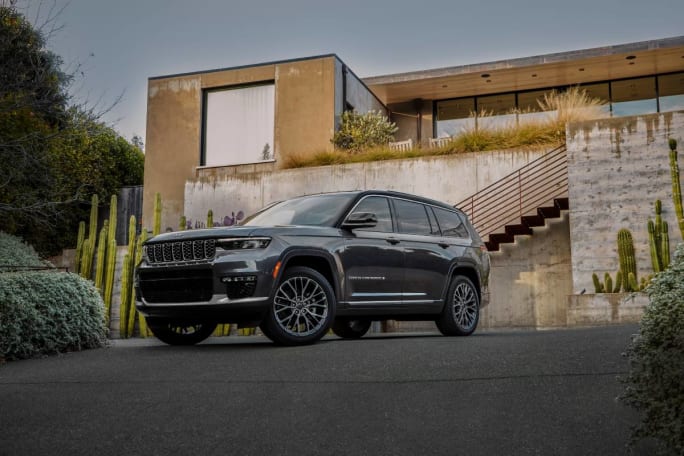
The Jeep Grand Cherokee L offers an array of standard and available safety and security features, including driver-assist systems, 360-degree surround view and night vision cameras.
Photo: Jeep
The 2024 Jeep Grand Cherokee L offers seating capacity for up to seven passengers and individual climate zones throughout the cabin for personalized comfort.
The Jeep Grand Cherokee L offers standard and available safety and security features, including driver-assist systems, 360-degree surround view and night vision cameras, plus next-generation technologies, including 10-inch digital screens, windshield head-up display (HUD), digital rearview mirror, rear-seat monitoring camera.
New for 2024
Grand Cherokee L Limited gets new standard 18-inch polished/painted aluminum wheels.
Highlights
Off-road capability courtesy of three 4x4 systems – Quadra-Trac I, Quadra-Trac II and Quadra-Drive II with rear electronic limited slip differential (ELSD); all three systems are equipped with an active transfer case to improve traction by moving torque to work with the wheel with the most grip global unibody vehicle architecture, independent front and rear suspensions and class-exclusive Quadra-Lift air suspension with semi-active damping deliver class-leading capability and premium on-road driving dynamics.
Best-in-class ground clearance of 10.9 inches and up to 24 inches of water-fording capability.
Class-leading Jeep selec-terrain switch with selectable terrain modes is standard on Grand Cherokee L 4x4 models (limited and above), with five available terrain modes (auto, sport, rock, snow, mud/sand) to provide optimized calibrations for any given driving scenario.
Hill-descent control is standard on Grand Cherokee L overland and summit models and works in both forward and reverse.
The standard Pentastar 3.6-liter V-6-powered Grand Cherokee L, rated at 290 horsepower and 257 lb.-ft. of torque, tows up to 6,200 pounds, while the available award-winning 5.7-liter V-8 packs 357 horsepower and 390 lb.-ft. of torque with best-in-class towing capacity of up to 7,200 pounds.
Each engine mates to the durable, robust TorqueFlite eight-speed automatic transmission, which enhances fuel economy and delivers crisp and smooth gear changes.
Full suite of LED exterior lighting is standard on all Jeep Grand Cherokee L trim levels
Premium, spacious three-row interior features 10-inch display screens across the instrument panel, ambient LED lighting, driver and front-passenger seat massage and personalized climate zones.
10.25-inch dynamic front-passenger touchscreen (available on limited, overland and summit, standard on summit reserve).
10.1-inch dual rear-seat entertainment touchscreens (available on limited and above)
Equipped with more than 110 advanced standard and available safety and security features, including an L2 driver-assist system with hands-on automated driving, along with 360-degree surround view and night vision cameras.
Next-generation technologies, including windshield HUD, digital rearview mirror, frameless digital cluster, rear-seat monitoring camera.
Jeep Wave customer care program comes standard with all Grand Cherokee L models and includes benefits, such as maintenance, same-day vehicle rentals, 24/7 roadside assistance, and dedicated owner support.
Model Lineup
For 2024, the Jeep Grand Cherokee L lineup consists of four models:
Laredo
Limited
Overland
Summit
Jeep Grand Cherokee 4xe
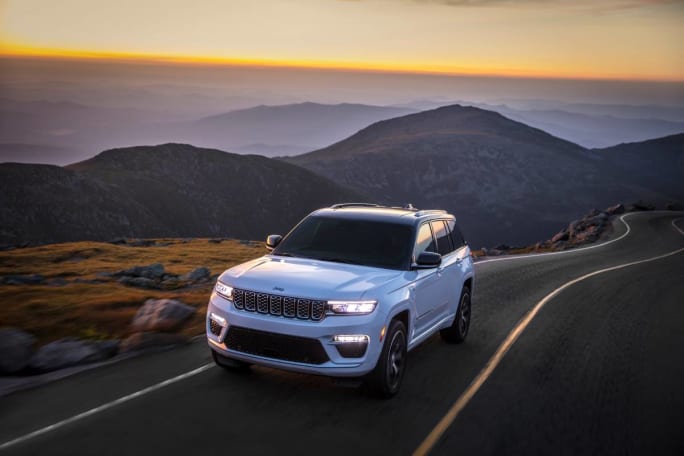
Grand Cherokee’s 4xe plug-in hybrid electric vehicle technology provides performance, fuel economy and environmental friendliness.
Photo: Jeep
The Jeep Grand Cherokee 4xe launched for the 2022 model year. This vehicle delivers 25 miles of all-electric range and 56 miles per gallon equivalent (MPGe).
The Grand Cherokee 4xe’s E selec modes – hybrid, electric, and eSave – allow the 4xe driver to tailor the hybrid powertrain to best suit each trip.
The Jeep Grand Cherokee 4xe is built at the Detroit Assembly Complex – Mack plant and the Detroit Assembly Complex – Jefferson plant. Jeep Wave customer care program comes standard with all Grand Cherokee 4xe models and includes benefits such as maintenance, same-day vehicle rentals, 24/7 roadside assistance and dedicated owner support.
Highlights
Grand Cherokee’s 4xe plug-in hybrid electric vehicle technology and the performance features include:
25 miles (40 km) of all-electric range and 56 MPGe.
375 hp and 470 lb.-ft. of torque
Quadra Trac II 4x4 system with two-speed transfer case and 2.72:1 low-range gear ratio.
6,000-lbs. (2,720 kg) 4xe max towing capability
Trail rated Jeep Grand Cherokee 4xe delivers up to 10.9 inches (28.7 cm) of ground clearance and 24 inches (61 cm) of water fording.
Grand Cherokee Trailhawk comes exclusively as a 4xe, combining 25 miles (40 km) of all-electric zero emission freedom and 56 MPGe with legendary 4x4 capability. The Grand Cherokee 4xe Trailhawk conquered the formidable rubicon trail and did so under all-electric power using Electric mode:
Quadra-Drive II 4x4 system with two-speed transfer case and 2.72:1 low-range gear ratio.
Rear electronic limited slip differential (ELSD)
Selec-terrain traction management system
Selec-speed control
10.9 inches (27.8 cm) of ground clearance
24 inches (61 cm) of water-fording capability
47.4:1 crawl ratio
25 miles (40 km) of all-electric range and 56 MPG
Grand Cherokee’s 4xe propulsion system combines two electric motors, a 400-volt battery pack, 2.0-liter turbocharged, four-cylinder engine and TorqueFlite eight-speed automatic transmission for maximum efficiency and capability.
The fuel-efficient 2.0-liter turbocharged I-4 engine is part of Stellantis Global medium engine family. The high-tech, direct-injection engine uses a twin-scroll, low-inertia turbocharger mounted directly to the cylinder head. Efficiency is enhanced via the use of electric power steering and an electrically driven air-conditioning compressor, removing those loads from the engine.
With E selec modes, the Jeep Grand Cherokee 4xe driver can tailor the hybrid powertrain to best suit each trip, whether it be commuting, off-roading or long-distance travel:
Hybrid: Blends torque from the electric motor and gas engine. The powertrain will optimize battery and engine power to deliver the best combination of fuel efficiency and performance.
Electric: Operates on zero-emission electric power only until the battery reaches the minimum charge or the driver requests more torque (such as wide-open throttle), which engages the engine.
eSave: prioritizes the engine, saving the battery charge for later use. The driver can also choose between battery save and battery charge during eSave via the hybrid electric pages in the Uconnect 5 screen.
Jeep Grand Cherokee 4xe carries a 400-volt, 17-kWh EV battery. The battery units and controls mount underneath the vehicle, packaged under the floor and protected by a series of skid plates.
The battery pack system includes a dedicated heating and cooling circuit to keep the battery at its optimum temperature for best performance. The system includes a dedicated heater unit and a chiller that uses the Grand Cherokee’s air-conditioning refrigerant to reduce coolant temperature when needed.
The Grand Cherokee’s 4xe system also includes an integrated dual charging module (IDCM) that combines a battery charger and a DC/DC converter in a single, compact unit and a power inverter module (PIM) that is reduced in size. These are mounted under the body and protected with steel shields.
All high-voltage electronics are sealed and waterproof. The trail rated Jeep Grand Cherokee 4xe is capable of water fording up to 24 inches (61 cm).
The charge port is beneath a push-open/push-close cover on the left front fender for convenient nose-in parking at charging locations. The charge port includes LED indicators of charging status. An LED battery level monitor sits on top of the instrument panel, making it easy to check the state of the battery charge at a glance.
The driver information display and main Uconnect touchscreen include Eco Coaching Pages. The Eco Coaching Pages let owners monitor power flow and see the impact of regenerative braking, as well as view their driving history with a detail of electric and gasoline usage.
Regenerative braking is part of the 4xe system. When the driver steps on the brake pedal, the powertrain control engages the maximum available regenerative braking, up to 0.25 g, from the electric motors to slow the vehicle, augmented with the Grand Cherokee 4xe’s traditional friction brakes.
With 4x4 engaged, all four wheels feed torque for regenerative braking, maximizing the energy recovery. Electricity from regenerative braking is fed to the battery pack to maintain or increase the state of charge.
A driver-selectable max regen feature deploys a more assertive regenerative braking calibration when the vehicle sees zero throttle input from the driver (coasting). Max regen can slow the Grand Cherokee 4xe faster than standard regenerative braking and generate more electricity for the battery pack.
Jeep Grand Cherokee 4xe delivers unrivaled capability along with composed on-road driving dynamics. That legendary off-road capability begins courtesy of two 4x4 systems – Quadra-Trac II and Quadra-Drive II with rear ELSD. Both systems are equipped with an active transfer case to improve traction by moving torque to work with the wheel with the most grip.
The class-exclusive Jeep Quadra-Lift air suspension, now with electronic semi-active damping, delivers up to 10.9 inches (28.7 cm) of ground clearance and 24 inches (61 cm) of water fording. The system automatically adjusts the shock tuning to changing road conditions for enhanced comfort, stability and control, or may be controlled manually with console controls, and features five height settings for optimum ride performance.
The class-leading selec-terrain traction management system lets customers choose the on- or off-road setting for optimum 4x4 performance. This feature electronically coordinates 4x4 torque split, braking and handling, steering and suspension systems, throttle control, transmission shift, transfer case, traction control, stability control, antilock brake system (ABS) and steering feel.
The selec-terrain system offers five available terrain modes (auto, sport, rock, snow, mud/sand) to provide optimized calibrations for any given driving scenario.
Jeep Grand Cherokee 4xe features front axle disconnect. If the vehicle senses that road conditions do not require all-wheel drive, the front-axle disconnect automatically places the Grand Cherokee in two-wheel drive, reducing drag on the driveline and improving fuel economy. Four-wheel drive automatically re-engages when the vehicle senses it is needed.
A lowered, tapered roof improves the Grand Cherokee 4xe’s aerodynamic performance and efficiency without sacrificing cargo spaciousness and utility, while the lowered beltline and expansive glass allow more light into the cabin and increase outward visibility.
A wider and larger iconic seven-slot grille and front fascia conceals a long-range radar and other advanced technology features. An elongated, level-set hood and bold headfirst stance deliver visual strength and the aerodynamic body style allows for design flexibility, improved fit and finish.
Active grille shutters, front wheel spats, air curtains, hood aero flick, lowered roof line (10mm decrease) and rear vertical-pillar spoilers improve on-road performance and fuel efficiency.
Jeep Grand Cherokee 4xe’s luxurious, next-generation interior has evolved to feature handcrafted materials and modern amenities:
Front panel features slim HVAC vents, a re-aligned center stack for greater driver accessibility and 10.1-inch (25.6 cm) digital screens (digital cluster and touchscreen radio), as well as segment-first available 10.25-inch (26 cm) front passenger interactive display.
Jeep seating architecture features a length adjustable cushion for the front-row passengers. The 16-way adjustable front seats have power lumbar and memory, and higher specification versions offer driver and front passenger seat back massage. Heated/vented seats are available in first two rows, with three-level configurable controls.
The center console layout can hold two wireless devices and a wireless charger.
Premium, full suite of customizable LED lighting with daytime/nighttime settings is standard on all trim levels for Grand Cherokee 4xe, and true ambient lighting with a five-color selection is available on overland, summit and summit reserve models.
The state-of-the-art Jeep Grand Cherokee 4xe ushers in an array of more than 110 advanced safety and security features, including innovative applications of technologies that refine the connection between driver, vehicle and the road. Standard safety features across the lineup include:
Full-speed collision warning with active braking and pedestrian/cyclist detection
Rear cross path detection
Adaptive cruise control with stop and go
Active lane management
LaneSense lane departure warning with lane keep assist
Advanced brake assist
Blind-spot monitoring
ParkView rear back-up camera
ParkSense rear park assist sensors with stop
Switch-activated electric park brake
Tire-pressure monitoring
Optional safety features include:
Night vision camera with pedestrian and animal detection.
Intersection collision assist.
Drowsy driver detection system
Parallel and perpendicular park assist and traffic sign recognition
360-degree surround view camera system with front and rear washers
Active driving assist (L2) hands-on-wheel and eyes-on-road automated driving
The fifth-generation Grand Cherokee has the most available technology features in its history:
Uconnect 5 – the most advanced Uconnect system ever offers up to three 10.1-inch (25.6 cm) and two 10.25-inch (26 cm) digital displays in the cabin and an intuitive user experience.
A segment-exclusive front passenger screen offers co-pilot assistance with navigation, camera viewing and visual entertainment.
Digital rearview mirror
Full-color, 10-inch (25.4 cm) windshield head-up display (HUD)
Wireless charging pad in front center console
TomTom navigation with predictive search, natural speech and live traffic updates
Maps over-the-air updates
4G LTE Wi-Fi hotspot to connect up to eight devices.
Model Lineup
For 2024, the Jeep Grand Cherokee 4xe lineup consists of four models:
4xe
4xe Trailhawk
4xe Overland
4xe Summit
More Vehicle Research
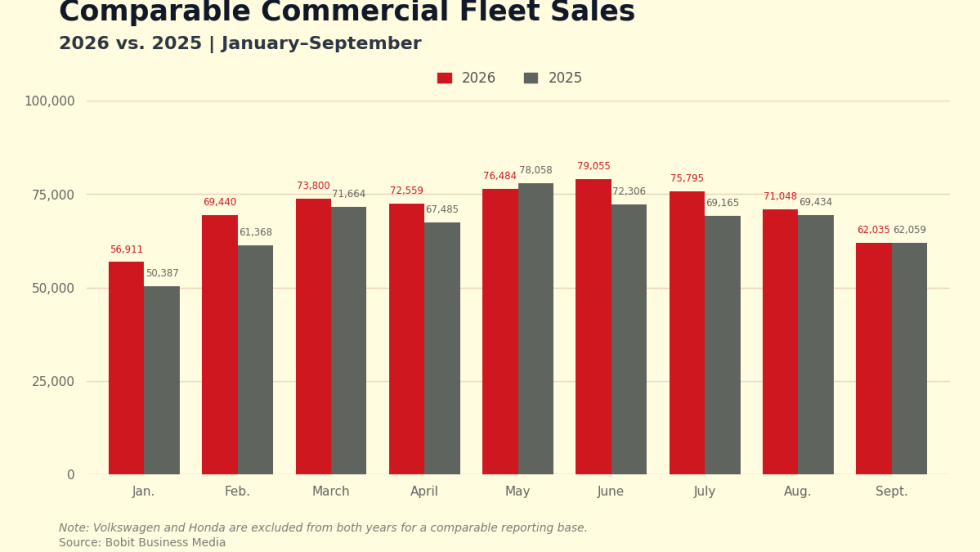
Commercial Fleet Sales Rise 5.8% Through September 2026
September commercial fleet sales were essentially unchanged from a year earlier, slowing year-to-date growth while keeping volume ahead of 2025.
Read More →
Hall of Fame Inductee: John Dmochowsky
The longtime Mondelēz International fleet executive joins the Automotive Fleet Hall of Fame.
Read More →
Hall of Fame Inductee: Lee Miller
After more than four decades at Boehringer Ingelheim, Lee Miller leaves a legacy built on fleet expertise.
Read More →
Hall of Fame Inductee: Mark F. Petersen
From managing fleets of thousands of vehicles to advancing safety and mentoring fellow professionals, Mark F. Petersen made his mark across both the corporate and supplier sides of fleet.
Read More →
When Charger Downtime Becomes a Fleet Availability Problem
As EV deployments move beyond pilot programs, charger reliability can directly affect vehicle readiness, driver productivity and route scheduling.
Read More →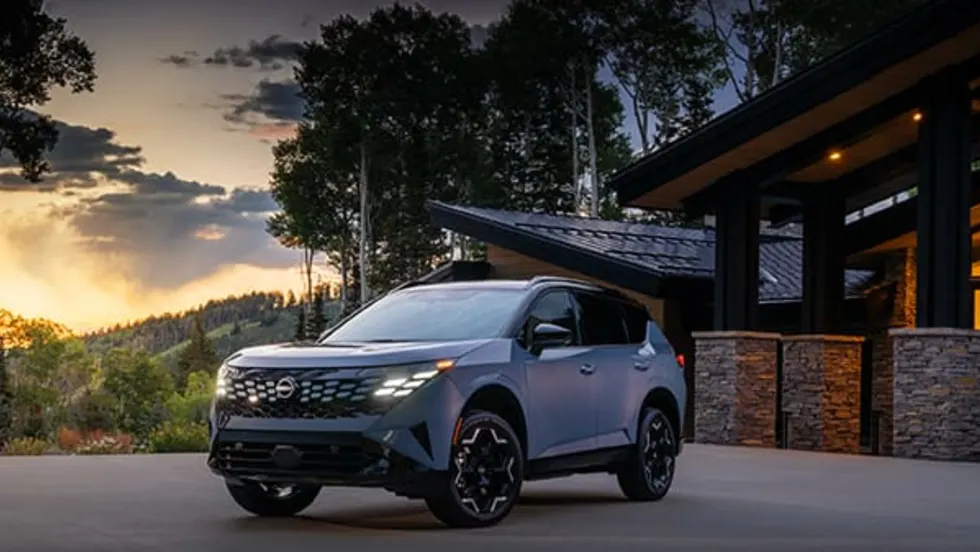
2027 Nissan Rogue Hybrid Adds e-POWER, Standard AWD
The new Rogue Hybrid uses Nissan’s e-POWER system with dual electric motors, offers an estimated 40 mpg and starts at $35,490.
Read More →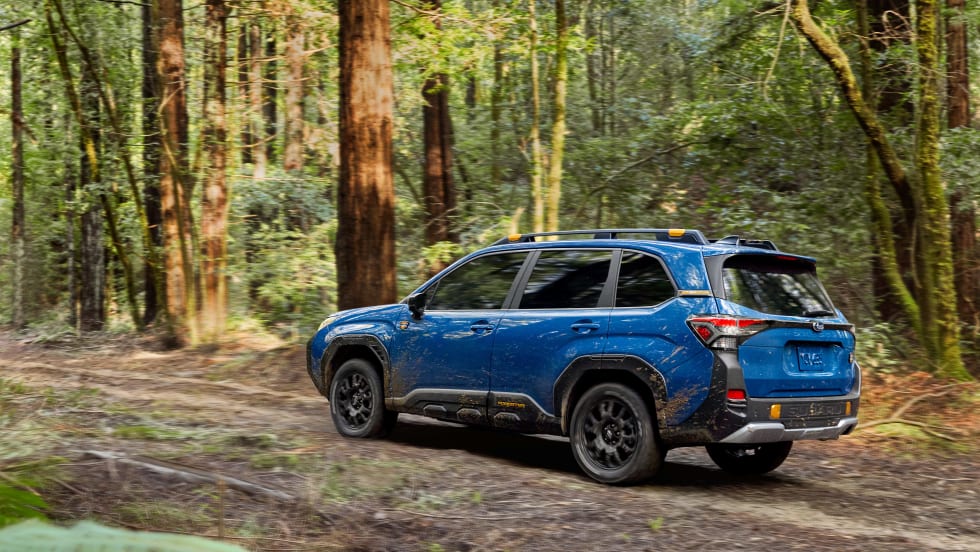
2027 Subaru Forester Adds First Wilderness Hybrid
The 2027 Forester lineup starts at $29,995 and adds a Wilderness Hybrid with 194 combined horsepower and 9.3 inches of ground clearance.
Read More →
EV Realty Names Henrik Holland President as Charging Platform Expands
The former Prologis Mobility and Shell executive will help expand EV Realty’s truck charging business and move its power-first infrastructure model into autonomous vehicle depots and other fleet sectors.
Read More →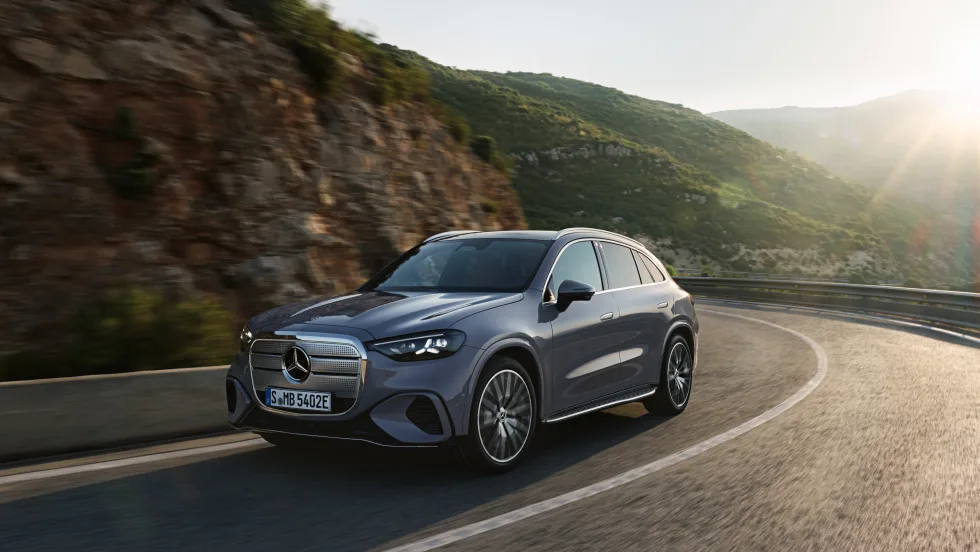
Mercedes-Benz Introduces Electric GLC With Up to 350 Miles of Range
The GLC 400 4MATIC Electric features an 800-volt architecture, 330-kW DC fast charging and a 94-kWh battery, along with Mercedes-Benz's new MB.OS operating system.
Read More →
Fleet Has a Talent Pipeline Problem, not a Talent Problem
Where will the next generation of fleet leaders come from, and what does the industry need to do differently to find them?
Read More →