




The Chrysler Group Offers Fuel Economy Improvements
AUBURN HILLS, MI – The Chrysler Group will continue to address the rising price of gas and oil through a multipronged strategy of offering consumers a variety of more fuel-efficient propulsion systems.
AUBURN HILLS, MI – The Chrysler Group will continue to address the rising price of gas and oil through a multipronged strategy of offering consumers a variety of more fuel-efficient propulsion systems.
The strategy includes a mix of more fuel-efficient gasoline engines, diesel engines, hybrid systems using both gasoline engines and electric motors, and fuel cells. Consumers and the market will ultimately determine which propulsion system and technology succeeds, company executives said.
As a result, there are more engines and transmissions in development today than at any time in this company’s history, according to Bob Lee, vice president – Power Train Product Team.
When the new Dodge Caliber concept vehicle goes on sale next year, it will feature the more fuel-efficient World Engine and the new continuously variable transmission.
A task force was established last year, when gas and oil prices began their current rise, with the mission to find short-term and long-term solutions and improvements to fuel economy for com-pany vehicles, according to Mark Chernoby, vice president – Advance Vehicle Engineering. This group has identified a number of changes to improve fuel economy and benchmarked competitive vehicles to understand what other carmakers are doing to improve their fuel economy, he said.
To date, the Chrysler Group is using its Multi-Displacement System “cylinder deactivation” technology on its HEMI engines, as well as selling the Jeep Liberty and its heavy-duty pickup trucks with diesel engines. DaimlerChrysler has finalized a deal with General Motors and the BMW Group to develop and build the next generation of hybrid vehicles.
Early next year, the Chrysler Group will begin selling a series of vehicles with its new World Engine that was developed along with partners Mitsubishi and Hyundai. The company also will begin using a new continuously variable transmission (CVT) that employs pulleys and a steel belt instead of gears to improve fuel economy on a number of vehicles.
Lee noted that until recently, fuel economy barely cracked the top 20 items that Chrysler Group customers said they felt was important when they purchased a new vehicle. The company’s goal now is to make each vehicle competitive based on U.S. Environmental Protection Agency and Consumer Reports ratings when benchmarked against its competition, Lee said.
Among the fuel economy improvements performed this year include the addition of front-axle disconnects as a standard feature on all 4x4 trucks. The system, which disconnects the front axles when they are not needed, will improve fuel economy by about 1 percent, he said.
Some Chrysler Group vehicles are getting new tires and brake systems that lessen resistance and improve fuel economy, Lee added. A lot of changes are being made to computers and elec-trical systems in cars because they play a big role in how vehicles operate, he said.
New five-speed automatic and six-speed manual transmissions are being offered on some vehicles to improve fuel economy. New suspension systems and lighter weight materials also are being employed on vehicles.
The Aero Acoustic Wind Tunnel and the Powertrain Labs in Auburn Hills are helping to improve vehicle aerodynamics and squeeze more fuel economy out of engines and transmissions. Chernoby noted that most of today’s fuel economy improvements are coming in fractions of a percent.
Chernoby said the company is focused on the highest value tradeoffs in terms of investments vs. returns. The company already has closed some gaps with the competition and is committed to not falling behind again, he said.
More Fuel
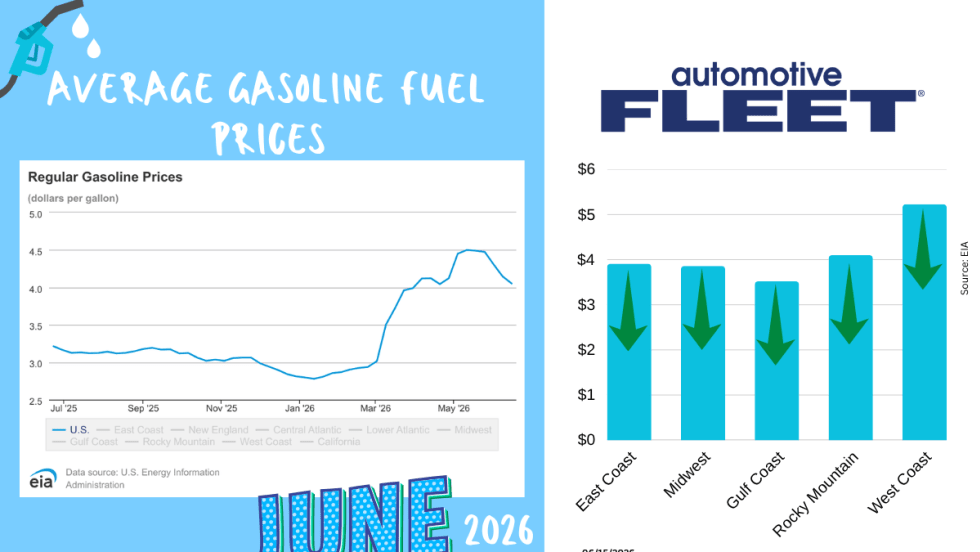
June Fuel Update: Prices Fall Below $4
Drivers are finally getting some relief at the pump. The national average gas price has dropped below $4 a gallon for the first time in months, with prices falling in 47 states as oil markets react to developments in U.S.-Iran negotiations.
Read More →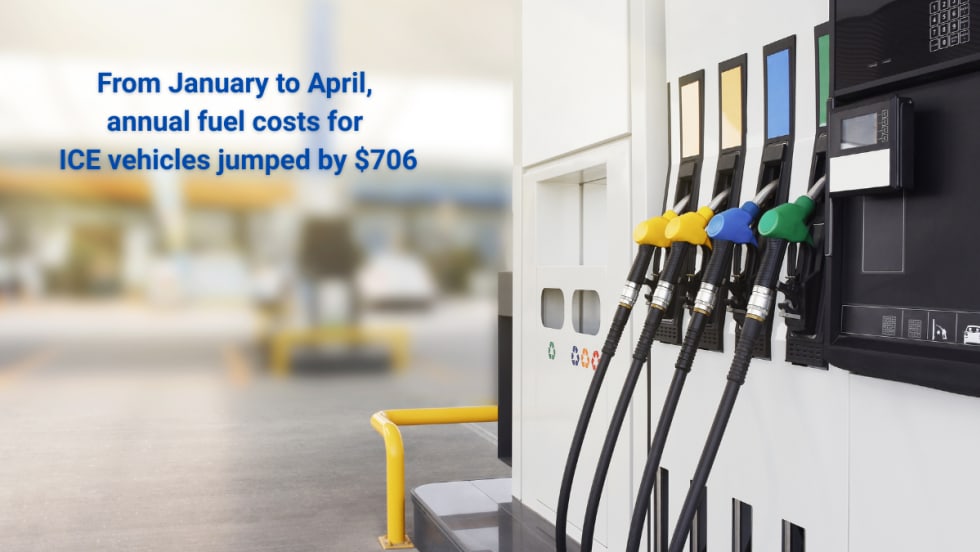
Study: How 2026's Gas Price Hikes Affect Different Vehicle Types
New data from iSeeCars reveals how rising fuel costs have affected different vehicle segments as gasoline prices climbed nearly 46% over the past four months.
Read More →
Are You Tracking Your Fleet's True Total Cost of Ownership?
Bobit Business Media surveyed 190 fleet professionals and found that while most fleets are tracking costs, fragmented systems and data gaps are keeping true TCO visibility out of reach. With rising pressure to control spend in an increasingly volatile environment, the gap between what fleets think they know and what the data actually shows is wider than you might expect. See how your peers are managing costs today and where the industry still has room to improve.
Read More →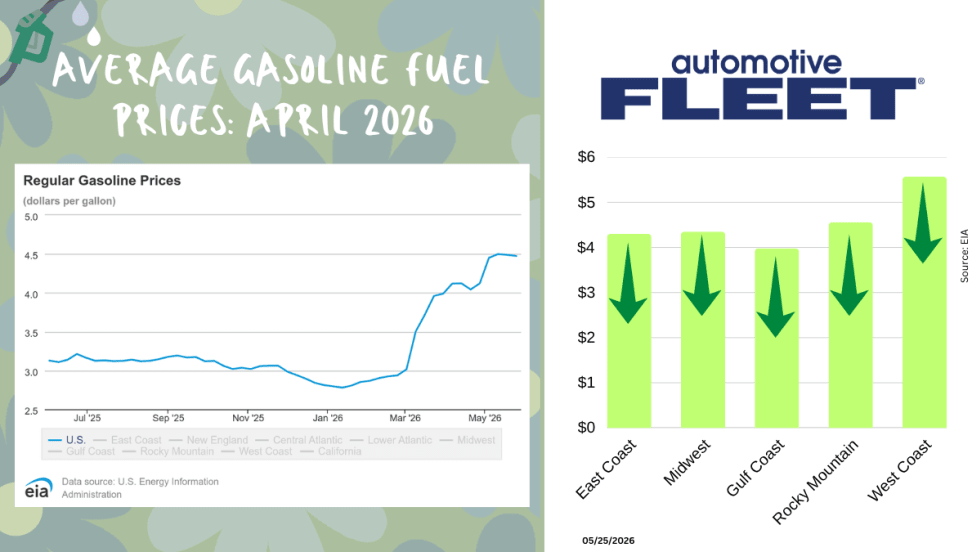
May Fuel Update: All Regions Experience Declines
Gas prices are finally easing in much of the country, but experts warn global tensions could quickly reverse the trend as the national average remains well above last month’s levels.
Read More →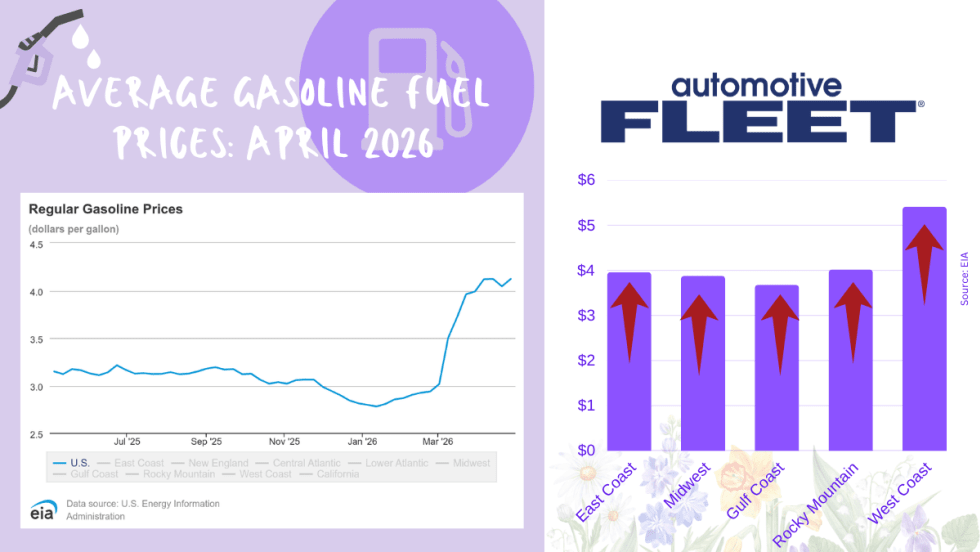
April Fuel Update: Prices Climb Above $4 as Spring Surge Accelerates
National average jumps to $4.04 per gallon, up sharply from last year, with West Coast prices topping $5 and further increases expected amid rising oil tensions.
Read More →
Tips from Fleet Managers on Saving Fuel Costs
Fleet leaders share practical strategies to reduce fuel spend through smarter policy, routing, and driver guidance.
Read More →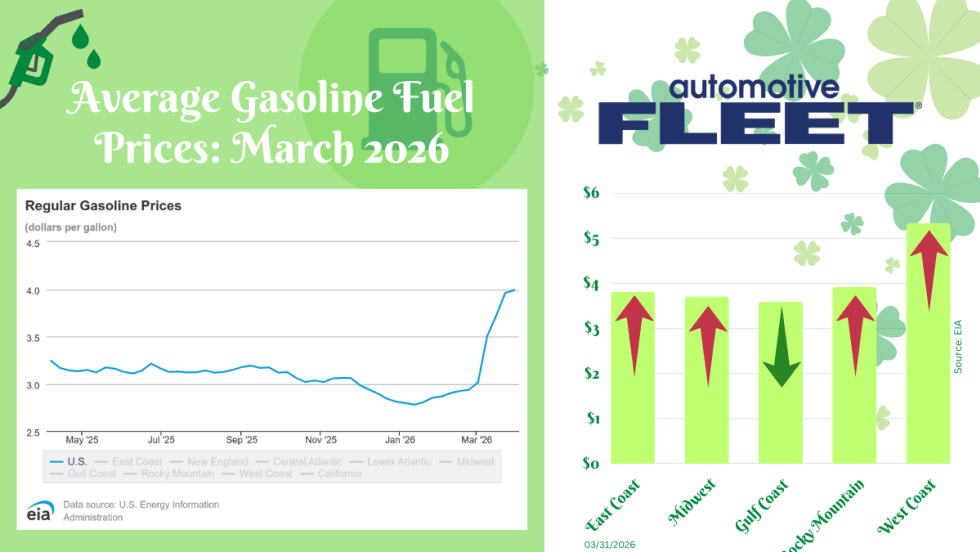
March Fuel Update: Prices Settle With a $4 Average
Fuel prices significantly slowed this week, but a $4 national average is still expected.
Read More →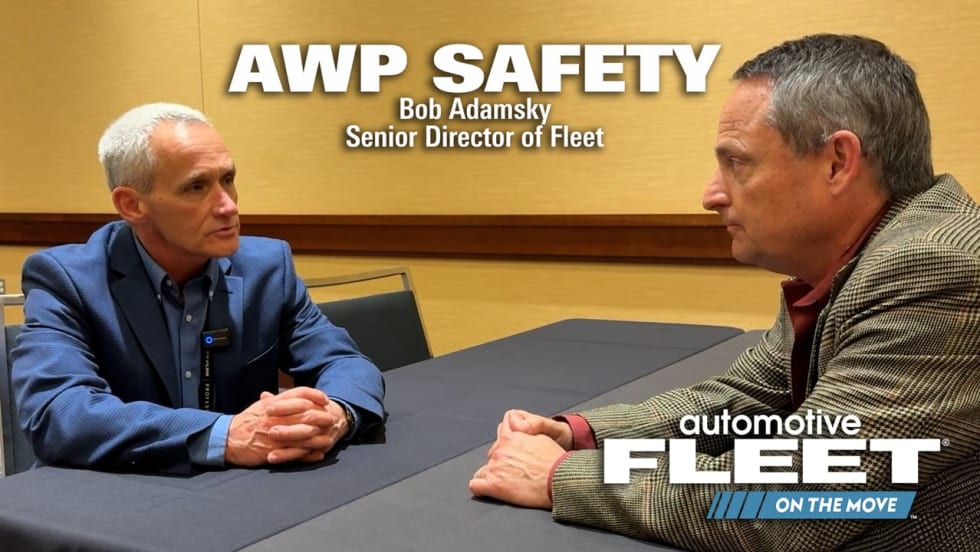
Bob Adamsky on Fuel Volatility: “Don’t Panic — Have a Plan”
With oil prices rising again, AWP Safety’s fleet manager shares how to respond to rising fuel costs and how the right strategy can turn fuel spikes into cost-saving opportunities.
Read More →
Oil Market Turbulence Is Complicating Fleet Cost Planning
Rapid swings in crude oil prices driven by the conflict in the Middle East could create longer-term cost pressures for fleets, affecting fuel prices, supply chains, and vehicle strategy, says NTEA’s Andrew Wrobel.
Read More →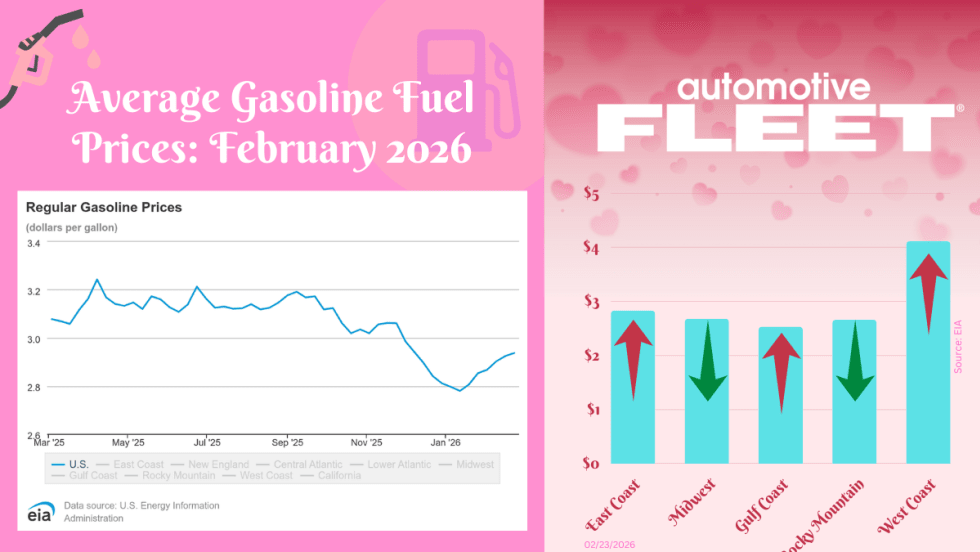
February Fuel Update: Prices Inch Higher for Third Week in a Row
The final February fuel update reveals prices continuing to inch higher for the third week in a row.
Read More →