




Tenn. Begins Pilot Biodiesel Program
KNOXVILLE, Tenn. --- The Tennessee Department of Transportation this month unveiled a biodiesel pilot fleet program at its maintenance facilities in Knoxville and Johnson City.
KNOXVILLE, Tenn. --- The Tennessee Department of Transportation this month unveiled a biodiesel pilot fleet program at its maintenance facilities in Knoxville and Johnson City. Biodiesel, made from renewable sources such as soybean oil and other materials, burns cleaner than traditional diesel and requires little or no engine modifications. “We hope to take a giant leap forward in decreasing emissions and reducing our dependency on foreign oil, plus helping out American farmers. If the program works it will be a win-win situation,” said Ed Cole, TDOT chief of environment and planning. “I’m optimistic that when this study is complete, we’ll eventually be pumping biodiesel at TDOT facilities across the state.” During the pilot program, more than 130 on-road vehicles, including dump trucks, snowplows and HELP trucks, will use the biodiesel B20 mix. B20 is a blend of 20-percent soy bean oil and 80-percent diesel fuel. The department plans to include off-road construction equipment in the study early next year. Because of recent advancements in production, biodiesel has become more economical and is nearly equal in cost to conventional diesel fuel. Biodiesel emits lower levels of carbon monoxide, unburned hydrocarbons, and particulate matter than regular petroleum diesel. “Mobile sources of air pollution, especially diesel engines, are major contributors to Tennessee’s air quality problems,” said Cole. “Using biodiesel is one way TDOT can show leadership in reducing vehicle emissions and in protecting public health and our environment.” Members of the Department of Environment and Conservation and the Department of Agriculture teamed up with TDOT to show support for the program at news conferences in the two cities. "Protecting the quality of the air we breathe is essential for our health and our environment," said Environment and Conservation Deputy Commissioner Paul Sloan. "Air quality is an important issue that we're working hard to address at both state and local levels. By starting to use cleaner burning biodiesel, TDOT is taking a significant step toward cleaner air." "This represents a growing opportunity to develop new markets for Tennessee farmers who have the capacity to supply the raw materials needed for the production of biodiesel and other bio-based fuels like ethanol," added state Agriculture Commissioner Ken Givens. "We are working with our sister agencies to encourage both increased production and use of bio-based fuels. Tennessee has the potential to be a leader in this area and we want to take full advantage of it." The department will use an estimated 13,500 gallons of biodiesel each month during the study. “Some of the early drawbacks to biodiesel were some ‘gelling’ in the wintertime, but technology has advanced to the point where biodiesel has become very reliable,” said TDOT Region One Transportation Director Fred Corum. “We are very pleased the department chose East Tennessee as the site for the biodiesel study.”
More Fuel
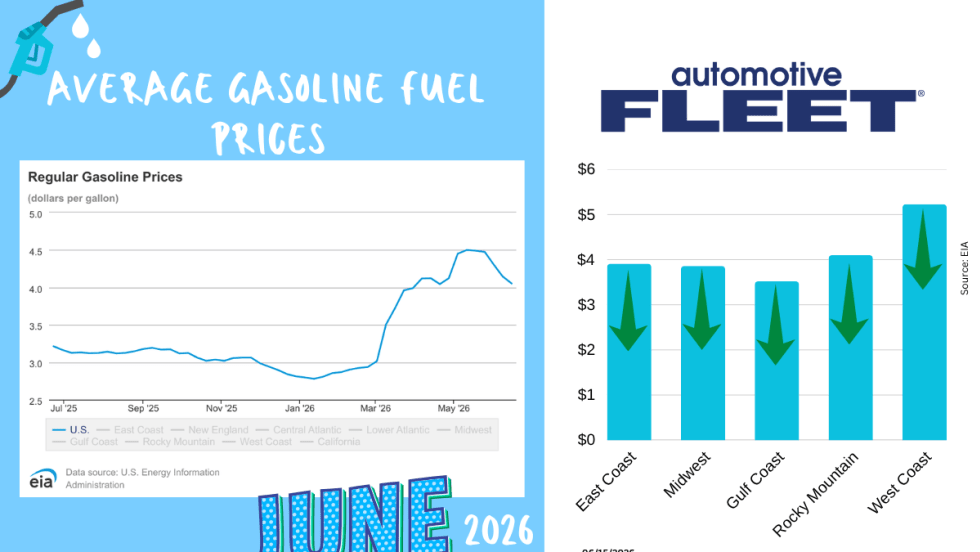
June Fuel Update: Prices Fall Below $4
Drivers are finally getting some relief at the pump. The national average gas price has dropped below $4 a gallon for the first time in months, with prices falling in 47 states as oil markets react to developments in U.S.-Iran negotiations.
Read More →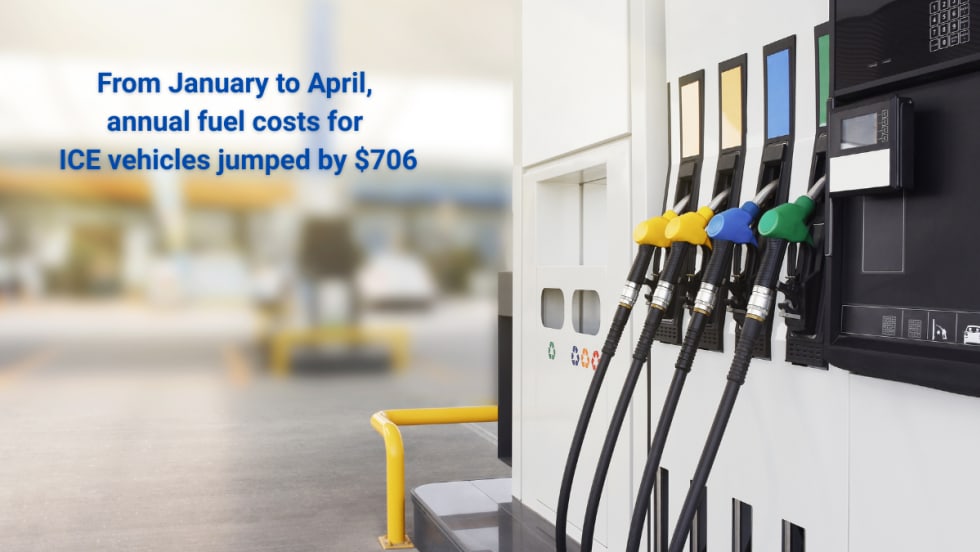
Study: How 2026's Gas Price Hikes Affect Different Vehicle Types
New data from iSeeCars reveals how rising fuel costs have affected different vehicle segments as gasoline prices climbed nearly 46% over the past four months.
Read More →
Are You Tracking Your Fleet's True Total Cost of Ownership?
Bobit Business Media surveyed 190 fleet professionals and found that while most fleets are tracking costs, fragmented systems and data gaps are keeping true TCO visibility out of reach. With rising pressure to control spend in an increasingly volatile environment, the gap between what fleets think they know and what the data actually shows is wider than you might expect. See how your peers are managing costs today and where the industry still has room to improve.
Read More →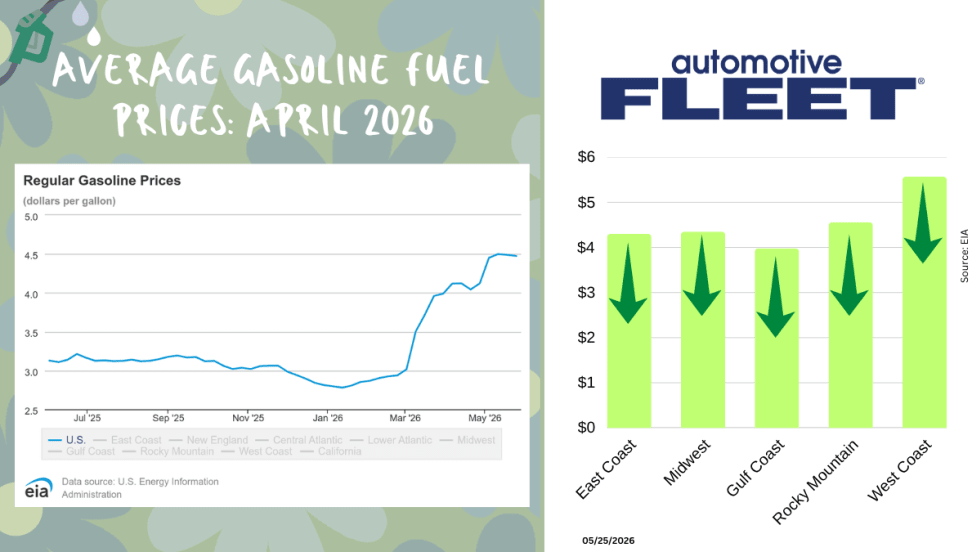
May Fuel Update: All Regions Experience Declines
Gas prices are finally easing in much of the country, but experts warn global tensions could quickly reverse the trend as the national average remains well above last month’s levels.
Read More →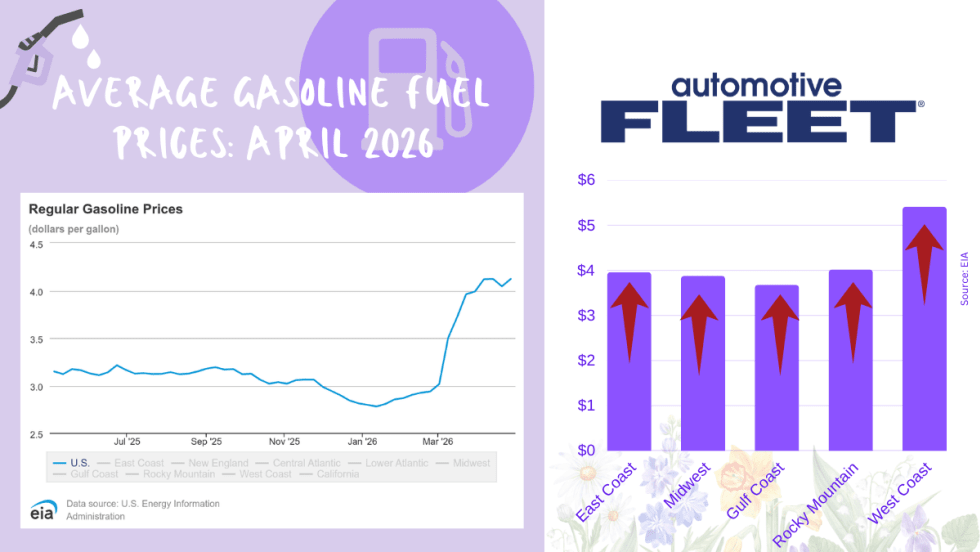
April Fuel Update: Prices Climb Above $4 as Spring Surge Accelerates
National average jumps to $4.04 per gallon, up sharply from last year, with West Coast prices topping $5 and further increases expected amid rising oil tensions.
Read More →
Tips from Fleet Managers on Saving Fuel Costs
Fleet leaders share practical strategies to reduce fuel spend through smarter policy, routing, and driver guidance.
Read More →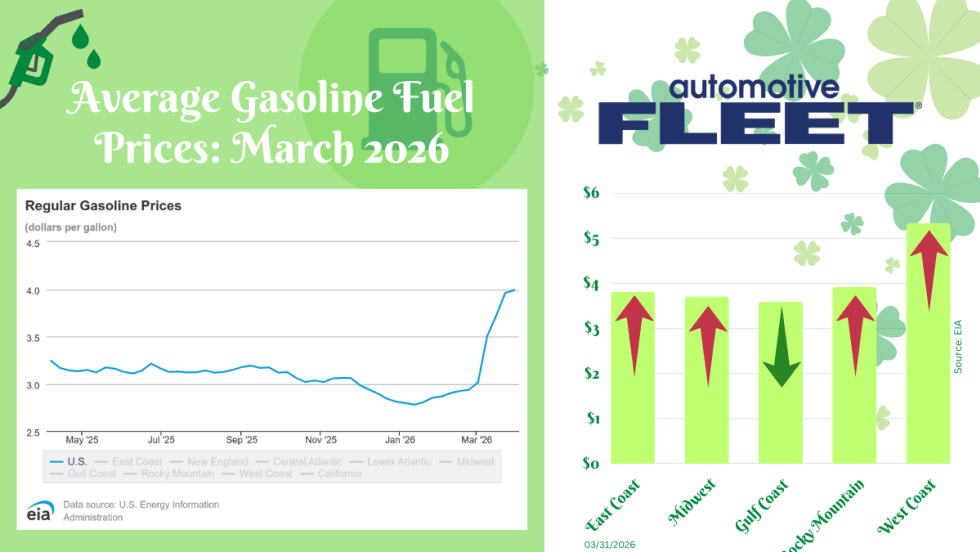
March Fuel Update: Prices Settle With a $4 Average
Fuel prices significantly slowed this week, but a $4 national average is still expected.
Read More →
Bob Adamsky on Fuel Volatility: “Don’t Panic — Have a Plan”
With oil prices rising again, AWP Safety’s fleet manager shares how to respond to rising fuel costs and how the right strategy can turn fuel spikes into cost-saving opportunities.
Read More →
Oil Market Turbulence Is Complicating Fleet Cost Planning
Rapid swings in crude oil prices driven by the conflict in the Middle East could create longer-term cost pressures for fleets, affecting fuel prices, supply chains, and vehicle strategy, says NTEA’s Andrew Wrobel.
Read More →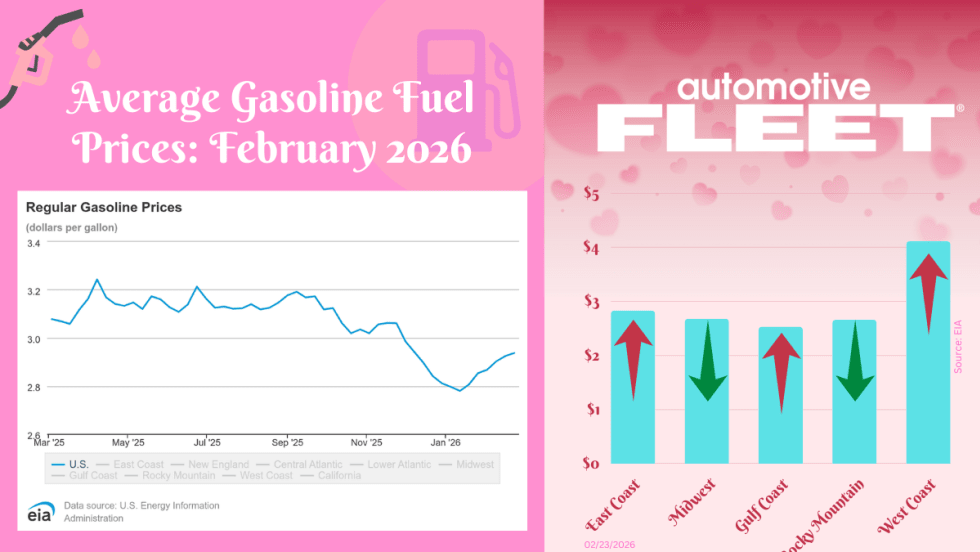
February Fuel Update: Prices Inch Higher for Third Week in a Row
The final February fuel update reveals prices continuing to inch higher for the third week in a row.
Read More →