





Workforce Trends Study Highlights How Younger Workers View Fleet Safety Technology
Survey Reveals New Driver-Backed Ways to Prevent Distracted Driving
According to the Samsara report, 90% of commercial drivers surveyed say they’re more likely to stay with an employer that takes steps to prevent distracted driving.
April 8, 2025
The risks of distracted driving hit close to home for commercial drivers surveyed. Within the last year, 79% of drivers have experienced a “close call” or near-miss because of distracted driving.
Photo: Rick Han via Pexels / Automotive Fleet
4 min to read
Samsara announced the release of its State of Connected Operations Report, “Behind the Wheel: Distracted Driving in Physical Operations.” The report draws on the expertise of more than 1,500 commercial drivers, with nearly 15,000 years of combined driving experience, to identify the cause of distracted driving and the practical solutions drivers need.
The risks of distracted driving hit close to home for commercial drivers surveyed. Within the last year, 79% of drivers have experienced a “close call” or near-miss because of distracted driving.
Further, 93% of drivers have personally experienced the adverse effects of this risky behavior such as vehicle damage (37%), personal injury (32%), fines (30%), and license suspension or revocation (30%).
Widespread Distracted Driving: Texting and Social Media Are Key Drivers
Staying focused on the road remains a challenge, as 76% of drivers report often being distracted by their mobile devices. This finding is consistent across age levels and years of experience as a commercial driver.
Reading and sending messages (32%), making calls (29%), and scrolling social media (29%) are among the most common distractions identified.
However, it’s not all personal mobile use, as 74% use their phones or other technology for work-related tasks while driving. Drivers report the top three ways employers can help them reduce work-related mobile use on the road include improved communication systems to limit work-related calls and messages (44%), better in-cab routing and navigation (43%), and implementing policies that prioritize safety over speed (42%).
These findings show the realities drivers face and reinforce their need for supportive technology and strong safety measures — keeping them connected for work while reducing distractions.
Keys to Driver Retention: A Safer and Supportive Workplace
Drivers want to feel safe and valued. The report found that 90% of drivers are likelier to stay with companies that proactively address distracted driving through preventative strategies.
Notably, global organizations in Canada and the United States are at the forefront of these efforts, where 97% of drivers receive targeted coaching and training. Additionally, 82% of drivers indicate that positive reinforcement, such as recognition and incentives, deter distracted driving more effectively than punitive measures.
The impact of implementing comprehensive training is evident, with 95% of drivers reporting improved driving habits following such programs. Digital platforms have emerged as the preferred training method, favored by 64% of drivers, underscoring the industry’s shift towards accessible, technology-driven education.
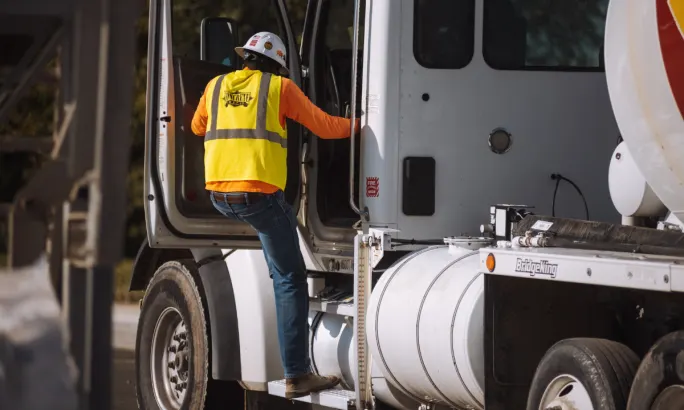
The survey respondents are “CDL Operators,” defined as anyone with an active CDL or regional equivalent who operates a commercial vehicle as part of their employment.
Photo: Samsara
The Future of Distracted Driving Prevention: Top Technology Drivers Want
Drivers recognize the potential of advanced technology to enhance safety. Leading the way, 54% of drivers identify accurate, AI-powered detection and alerts as the most desired technology to combat distracted driving.
The value of visual feedback is also clear, with 93% of drivers acknowledging that reviewing dash camera footage of their driving has increased their awareness of distracted behaviors.
Drivers also emphasize the effectiveness of regulatory changes in improving safe driving. For instance, 49% of drivers would support policies requiring in-vehicle safety features such as in-cab alerts, demonstrating a strong demand for technological interventions that support safe driving practices.
“Our experience with customers consistently demonstrates the transformative impact of AI dash cams and comprehensive safety programs,” said Evan Welbourne, head of AI and data at Samsara.
“By combining advanced technology with positive recognition and proactive coaching, organizations can significantly reduce distracted driving incidents and cultivate a safer, more engaged driver workforce for the long term. These tools provide invaluable insights, enabling targeted training and fostering a culture of safety that benefits both drivers and the broader community,” Welbourne said.
Methodology
This survey was conducted by an independent research firm, Wakefield Research, between February 18 and February 28, 2025. 1,550 CDL operators were surveyed across seven countries: the United States, Mexico, the United Kingdom, Ireland, France, Germany, and Canada.
This survey consisted of 20 questions and was conducted online, in either English or translated into a local language across markets. Global results have been aggregated across all responses to provide an average.
The respondents are “CDL Operators,” defined as anyone with an active CDL or regional equivalent who operates a commercial vehicle as part of their employment.
More Safety

What’s Next for Fleet? Safety, AI & Industry Recognition | AF News Recap
Could your company's culture be encouraging distracted driving? This week, we're exploring how workplace expectations affect driver safety, what AI, EVs, and autonomous vehicles could mean for the future of fleet management, and how fleet professionals can strengthen their award nominations.
Read More →
Does Your Fleet's Culture Encourage Distracted Driving?
What happens when the people responsible for enforcing safety rules are the ones setting the wrong example? The answer may reveal why some of the biggest risks to fleet drivers have little to do with what's written in the employee handbook.
Read More →
Sponsored•October 1, 2026
Fleet Manager’s Ultimate Playbook: Navigating the New Standard in OEM Connectivity
Rising operating costs, driver safety concerns, and unplanned downtime are putting unprecedented pressure on modern fleets. Discover how fleet managers use embedded OEM connectivity and real-time vehicle data to cut TCO, prevent downtime, and protect drivers without aftermarket telematics hardware.
Read More →
From Driver Well-Being to EV Charging | AF News Recap
Mental health belongs in the fleet safety conversation. This week, we’re looking at five ways fleets can support employee well-being before a crisis, plus Holman’s expansion in Mexico, new one-day Fleet Forward passes, and why EV charging demand is outpacing infrastructure growth.
Read More →
Nexar-Nauto Merger Aims to Give Fleets Better Safety Intelligence Through Larger Driving Dataset
Stefan Heck tells Automotive Fleet that combining more than 10 billion miles of driving history with Nexar's AI models will give fleets deeper insights into driver risk and roadway conditions than either company could provide independently.
Read More →
Don't Wait for a Crisis: 5 Ways to Build Mental Health Into Your Fleet Safety Program
For Suicide Prevention Month, fleet and safety leaders have an opportunity to put mental health where it belongs: at the center of workplace safety.
Read More →
How Camera Data Can Strengthen a Fleet’s Insurance Renewal
Insights from a commercial insurance carrier and a broker show how fleets can turn video telematic data, driver coaching, and improved claims results into a stronger case at insurance renewal.
Read More →
The Safest Fleets Aren’t the Ones with the Most Technology
You’ve made the telematics investment. Here’s how to capture the other half of its value and build the safest fleet on the road.
Read More →
Sponsored•August 7, 2026
Hidden in Plain Sight: Fleet Compliance Risks
Fleet compliance isn't just about having policies — it's about consistently enforcing them. This practical guide reveals six hidden compliance risks common in public sector and shared fleet operations and outlines proven strategies to improve visibility, accountability, and audit readiness
Read More →
NETS Sets 2026 Fleet Safety Benchmark Conference for Indianapolis
The Sept. 15–17 program will feature fleet benchmarking data, case studies, emerging technologies, and implementation strategies while running alongside the NSC Safety Congress & Expo.
Read More →