In-Cab Cameras: Ways to Accelerate Driver Acceptance and Improve Safety
A TSR survey revealed that over a quarter of fleet drivers recall having avoided a crash due to in-cab alerts. Still, barriers to adoption remain. How can fleet managers accelerate acceptance of in-vehicle camera technology?
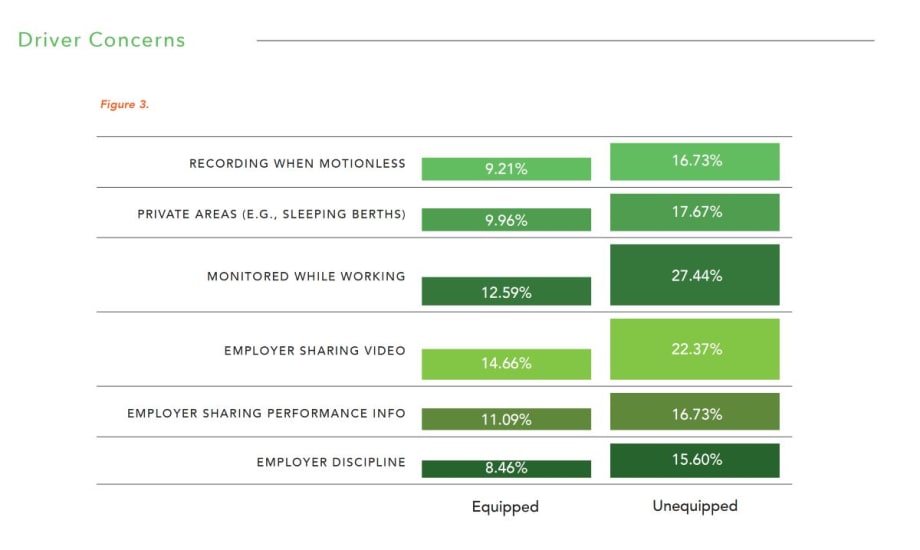
Some 27% of drivers whose vehicles are not equipped with in-cab cameras cited “being monitored while working” as their top objection to the technology as compared with just 12% of drivers whose vehicles are already equipped with in-cab cameras.
Image: Together for Safer Roads
6 min to read
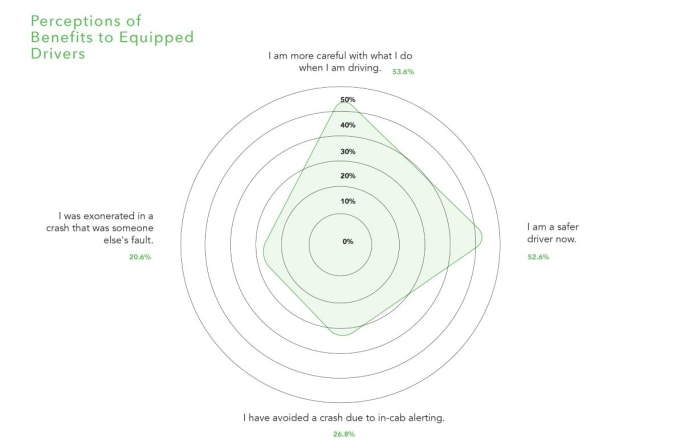
Some 52% of fleet drivers view themselves as safer and 53% say they are more careful behind the wheel following in-cab camera adoption, according to a survey of more than 500 professional drivers conducted by Together for Safer Roads (TSR). Moreover, over a quarter of those surveyed recall having avoided a crash due to in-cab alerts and more than one in five drivers have been exonerated based on in-cab footage.
Ad Loading...
At first glance, those findings suggest that professional drivers readily welcome in-vehicle safety technology. However, the reality is far more complex.
Ad Loading...
TSR set out to understand what makes some drivers reluctant to adopt in-cab camera technology and identify what can be done to positively influence perceptions. The survey examines differences in professional drivers’ attitudes toward technology including driver-facing dash cameras — which are embraced by some but unwelcome by others.
For example, compared to drivers who use telematics and in-cab camera technology, unequipped drivers report low levels of comfort and negative perceptions associated with the technologies.
Being monitored while working ranks among the top reasons unequipped drivers object to in-cab cameras, with nearly 28% citing this as a concern. Other top concerns include their employer sharing video, with 22% noting this as an issue as well as being recorded while motionless (16%) and the recording of private areas (17%).
Now compare those findings to the perceptions expressed by drivers whose vehicles are already equipped with in-cab cameras. Less than 1% of equipped respondents indicated discomfort with in-cab cameras, while a whopping 80% indicated at least some level of comfort and over half said they are fully comfortable with in-cab camera technology.
Clearly, for fleet operators working with drivers unfamiliar with in-cab cameras, building trust should be a top priority.
Ad Loading...
Once accustomed to in-cab cameras, professional drivers appear to appreciate the benefits of the technology with 52% of those surveyed seeing themselves as a safer driver and 26% crediting in-cab alerting for helping them avoid a collision.
Image: Together for Safer Roads
How In-Cab Technology Improves Driver Safety
Before exploring ways to accelerate acceptance of in-vehicle technology with drivers, let’s examine why in-cab technology is important.
For starters, commercial fleet crashes are more frequent than collisions among the general public. The average U.S. driver travels approximately 12,000 miles annually and has a one in 15 chance of being involved in a crash. But fleet drivers travel 25,000+ miles per year, which means their exposure is even greater.
Moreover, commercial collisions can be deadly. Roadway fatalities are on the rise across the U.S., with a staggering increase of 18.4% in the first half of 2021.
Fleet operators are charged with building a culture of safety and that includes strategies that target unsafe behaviors behind the wheel. Unfortunately, far too many collisions overall are due to distracted driving — with this risky behavior claiming 3,142 lives in 2019 alone, according to the National Highway Traffic Safety Administration.
Noteworthy, distracted driving is the number one cause of preventable fleet crashes, followed closely by driver fatigue, and aggressive driving. To reduce and mitigate these behaviors behind the wheel, fleet managers have a number of options including trainings, ride-alongs for coaching, and vehicle safety features.
Ad Loading...
Today, fleet operators also have GPS-based telematics and in-cab driver assistance technology as an option. These features are often paired with in-cab dash cameras. This technology gives managers an opportunity to respond to and correct previously hard-to-detect behaviors such as cell phone usage or drowsy driving.
In-cab camera and driver assist technology proactively monitor behavior and provide audible alerts whenever a predefined event is triggered. These alerts give drivers instantaneous feedback on their behaviors and allow them to recognize and correct it.
Management also gets access with instant notifications, alerts, and data available on a portal or dashboard. This means fleet operators can identify trends in driver behavior on an individual and organizational level. This data can be used to coach and correct risky behaviors and provides video evidence helpful to the coaching process because it shows all circumstances leading up to the event.
The bottom line: The use of in-cab cameras has been linked to several organization-level safety outcomes such as reduced crashes, less speeding, and fewer harsh acceleration and braking events. And now, through the TSR survey, we know that many individual drivers — not just the leadership of the organization — see the value of the technology as well.
Trust in Technology Increases with Experience
As noted earlier, drivers accustomed to in-cab cameras see themselves as safer drivers — and they credit the technology for helping them improve their safety skills while behind the wheel.
Ad Loading...
But this process doesn't happen overnight. It appears from the survey results that the more a driver experiences the technology, the more they identify as focused, safe drivers. The results suggest that exposure to the type of feedback obtained via in-cab camera technology positively influences the degree to which drivers self-identify as more risk-averse.
All of which brings us back to the driver who is uninitiated when it comes to in-cab cameras, and possibly even defensive about adopting the technology.
In fact, the TSR survey found that driver-facing cameras are the most unacceptable form of technology among unequipped drivers with an average unacceptability rating of 12.6% compared to 5.7% average unacceptability rating for all other technologies.
The challenge for fleet operators is to win over these drivers and get them to accept in-cab cameras as another tool in their quest to be as safe a driver as possible.
The survey indicates that these unequipped drivers will likely follow suit with those who already use in-cab technology. Once they experience the technology — and the feedback obtained from in-cab cameras — it is simply a matter of time before they begin to learn from it, change behaviors, and see themselves as safer drivers.
Ad Loading...
However, fleet operators must the lead the charge of getting unequipped drivers on board for in-cab technology.
The Road to Driver Adoption
Fleet operators who want to accelerate adoption of in-cab cameras must involve their drivers in the process and should implement several safety management and leadership practices.
According to the survey, the most impactful management or leadership practices to drive adoption were treating drivers with dignity and respect — which was cited by 72% of respondents. That was followed by utilizing video to reward safe driving (71%) and communicating clear language around when and how video will be used (67%).
Before implementing in-cab technology, fleet operators should discuss how the technology will be used to meet organizational safety goals and meet the target of zero injuries and fatalities. Communicating benefits, building trust, and explaining how the technology works are all critical. TSR also notes that showcasing real-world exoneration video footage is the most powerful way to persuade skeptical drivers to support dashcams.
Another interesting finding is that drivers value the opinions of their co-workers. When learning about in-cab cameras, 17% report other drivers as the most trustworthy source of information. Fleet operators can leverage these informal safety champions to train and communicate with other drivers. Peer-to-peer initiatives can be a successful part of your strategy on the road to adoption.
Ad Loading...
The TSR survey results underscore that when managers engage drivers prior to in-cab camera installation, organizations attain higher levels of driver buy-in and compliance. The results indicate that a little planning in managing the change can go a long way in realizing a shorter journey to in-cab camera adoption and acceptance.
Rising operating costs, driver safety concerns, and unplanned downtime are putting unprecedented pressure on modern fleets. Discover how fleet managers use embedded OEM connectivity and real-time vehicle data to cut TCO, prevent downtime, and protect drivers without aftermarket telematics hardware.
Mental health belongs in the fleet safety conversation. This week, we’re looking at five ways fleets can support employee well-being before a crisis, plus Holman’s expansion in Mexico, new one-day Fleet Forward passes, and why EV charging demand is outpacing infrastructure growth.
Stefan Heck tells Automotive Fleet that combining more than 10 billion miles of driving history with Nexar's AI models will give fleets deeper insights into driver risk and roadway conditions than either company could provide independently.
Insights from a commercial insurance carrier and a broker show how fleets can turn video telematic data, driver coaching, and improved claims results into a stronger case at insurance renewal.
Fleet compliance isn't just about having policies — it's about consistently enforcing them. This practical guide reveals six hidden compliance risks common in public sector and shared fleet operations and outlines proven strategies to improve visibility, accountability, and audit readiness
The Sept. 15–17 program will feature fleet benchmarking data, case studies, emerging technologies, and implementation strategies while running alongside the NSC Safety Congress & Expo.