




Shell Program Offers Fuel-Efficiency Advice
HOUSTON --- Shell has released a new program, "FuelStretch," aimed at helping consumers save money and get the most out of their car choice, the company announced.
HOUSTON --- Shell has released a new program, "FuelStretch," aimed at helping consumers save money and get the most out of their car choice, the company announced. This program is geared for consumers, but its fuel-saving advice provides some timely cost-cutting reminders for fleet managers as well. FuelStretch offers consumers money-saving driving tips, a credit card offering gasoline rebates, and fuels formulated to help keep engines clean. A husband-and-wife driving team is putting the program's vehicle maintenance and driving tips to the test as the couple travel around the world to set a Guinness World Record for fuel efficiency. John and Helen Taylor have traveled through 14 European countries, five Asian countries and Australia thus far and have successfully logged approximately 12,300 miles on only 15 tanks of gasoline. As the Taylors end their Australian leg, they are averaging approximately 56 miles per gallon. "Shell wants to help drivers make the most out of every purchase, which is why we recommend they incorporate FuelStretch driving techniques into their daily routine," says Dan Little, Shell U.S. Fuels Marketing Manager. "We hope the Taylors' upcoming visit to the U.S. demonstrates that whether you're attempting to set a Guinness World Record or just running errands around town, incorporating Shell FuelStretch principles is a simple way to be more fuel efficient." The fuel-saving tips include: 1. Drive smoothly, avoiding heavy acceleration or braking. Speeding, rapid acceleration, and braking can lower your gasoline mileage by 5 percent at lower speeds around town, and by 33 percent at higher highway speeds. 2. Replace dirty or clogged air filters. Replacing a dirty or clogged air filter with a clean one can improve gasoline mileage by as much as 10 percent. Your car's air filter can protect your engine from impurities. 3. Keep your engine well tuned and repair any problems immediately. If your car has failed an emissions test or is noticeably out of tune, repairing the problem could improve your gasoline mileage by 4 percent on average. 4. Make sure your tires are at the correct pressure and not over or under inflated. Proper air pressure cuts down on fuel used while driving. Keeping tires at the correct pressure can improve your gasoline mileage by about 3.3 percent. 5. Minimize vehicle drag. Keep your trunk and back seat clear of unnecessary items that only add weight. Removing excess weight can improve your gasoline mileage. 6. Always use the recommended grade of oil in your engine. Following your manufacturer's motor oil recommendation can improve gasoline mileage 1-2 percent. Look for motor oil that says "Energy Conserving" on the API performance symbol, to ensure it contains friction-reducing additives. 7. Use cruise control on major roads and in free-flowing traffic. Maintaining a constant speed can improve gasoline mileage. 8. Avoid idling. When you idle, you get 0 miles per gallon. 9. Avoid higher speeds. Gasoline mileage usually decreases when driving at speeds over 60 mph. 10. Plan your outings to avoid separate trips. Combine your errands into one outing to avoid short separate trips. This helps avoid unnecessary cold starts and keeps your car's engine running warm and more efficiently.
More Fuel
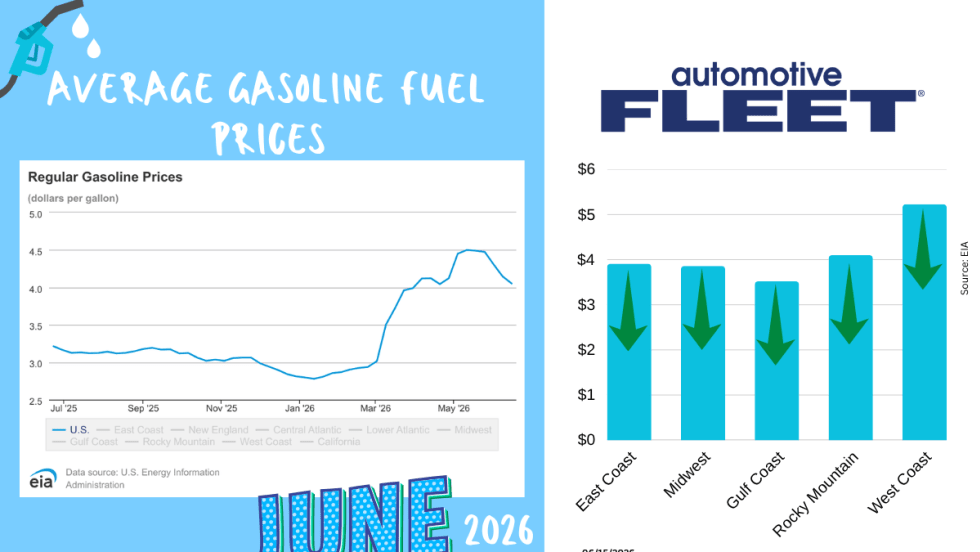
June Fuel Update: Prices Fall Below $4
Drivers are finally getting some relief at the pump. The national average gas price has dropped below $4 a gallon for the first time in months, with prices falling in 47 states as oil markets react to developments in U.S.-Iran negotiations.
Read More →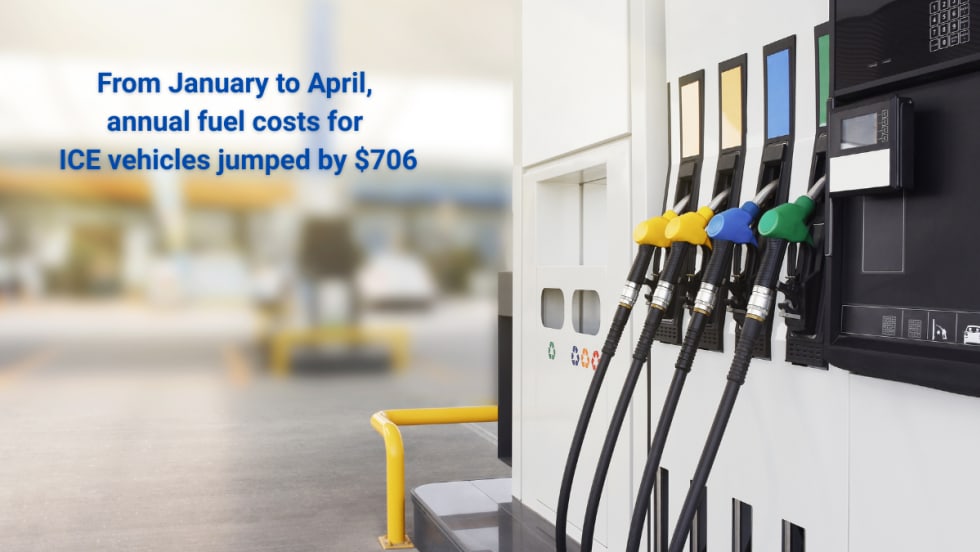
Study: How 2026's Gas Price Hikes Affect Different Vehicle Types
New data from iSeeCars reveals how rising fuel costs have affected different vehicle segments as gasoline prices climbed nearly 46% over the past four months.
Read More →
Are You Tracking Your Fleet's True Total Cost of Ownership?
Bobit Business Media surveyed 190 fleet professionals and found that while most fleets are tracking costs, fragmented systems and data gaps are keeping true TCO visibility out of reach. With rising pressure to control spend in an increasingly volatile environment, the gap between what fleets think they know and what the data actually shows is wider than you might expect. See how your peers are managing costs today and where the industry still has room to improve.
Read More →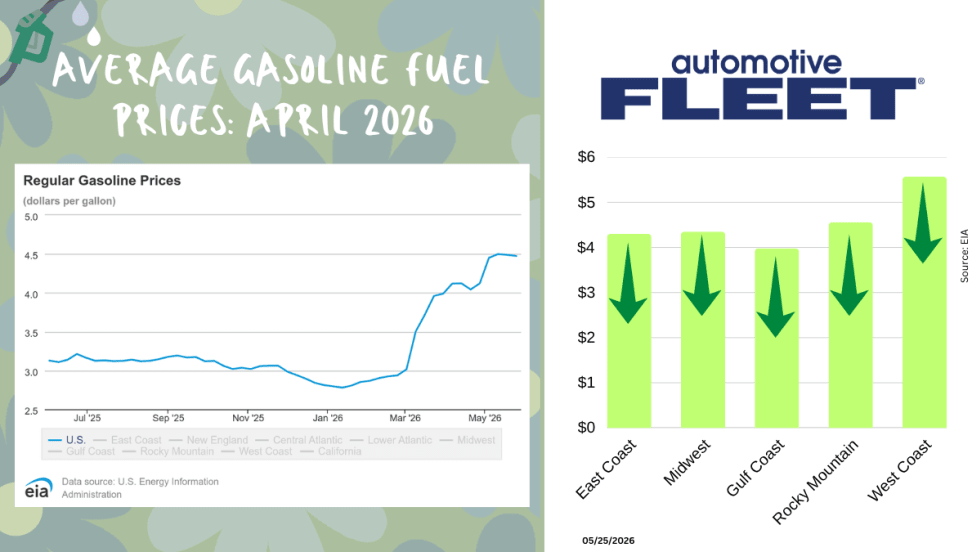
May Fuel Update: All Regions Experience Declines
Gas prices are finally easing in much of the country, but experts warn global tensions could quickly reverse the trend as the national average remains well above last month’s levels.
Read More →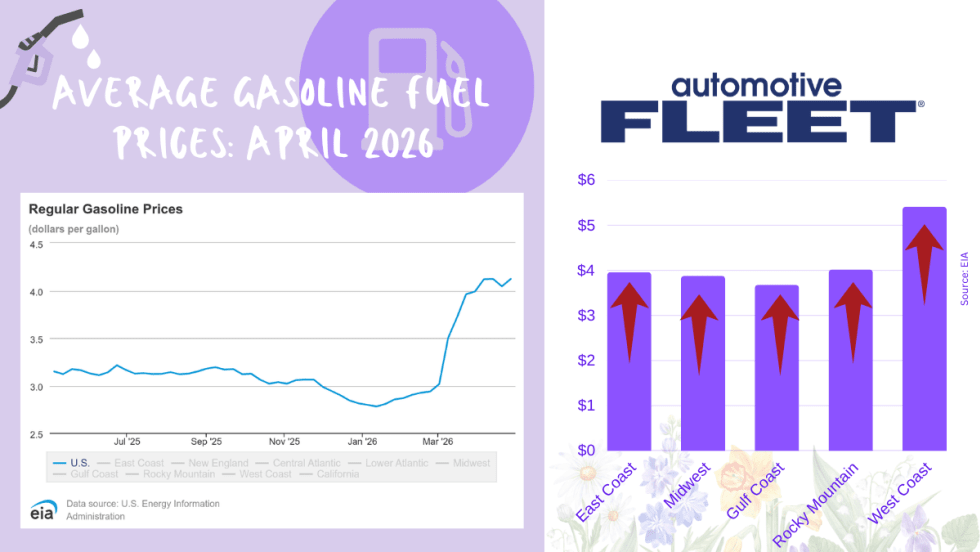
April Fuel Update: Prices Climb Above $4 as Spring Surge Accelerates
National average jumps to $4.04 per gallon, up sharply from last year, with West Coast prices topping $5 and further increases expected amid rising oil tensions.
Read More →
Tips from Fleet Managers on Saving Fuel Costs
Fleet leaders share practical strategies to reduce fuel spend through smarter policy, routing, and driver guidance.
Read More →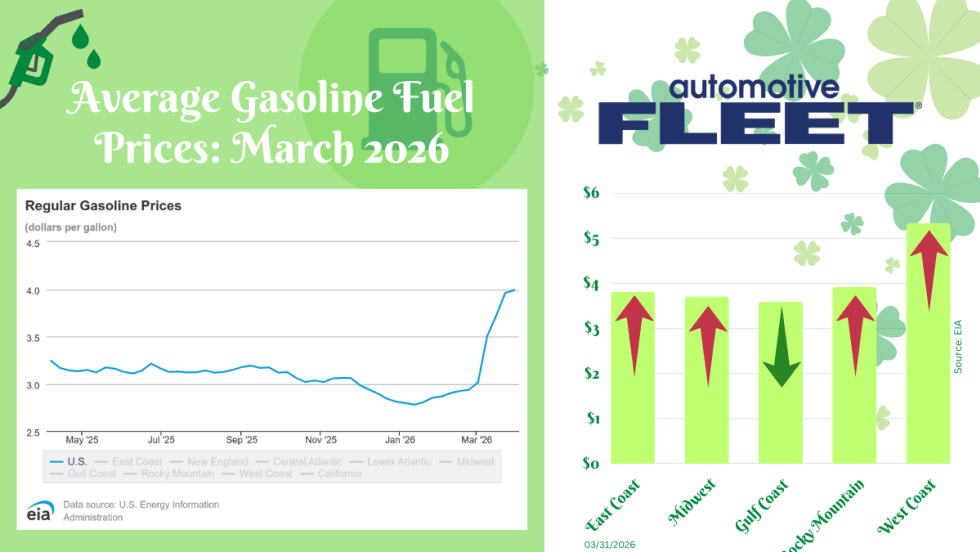
March Fuel Update: Prices Settle With a $4 Average
Fuel prices significantly slowed this week, but a $4 national average is still expected.
Read More →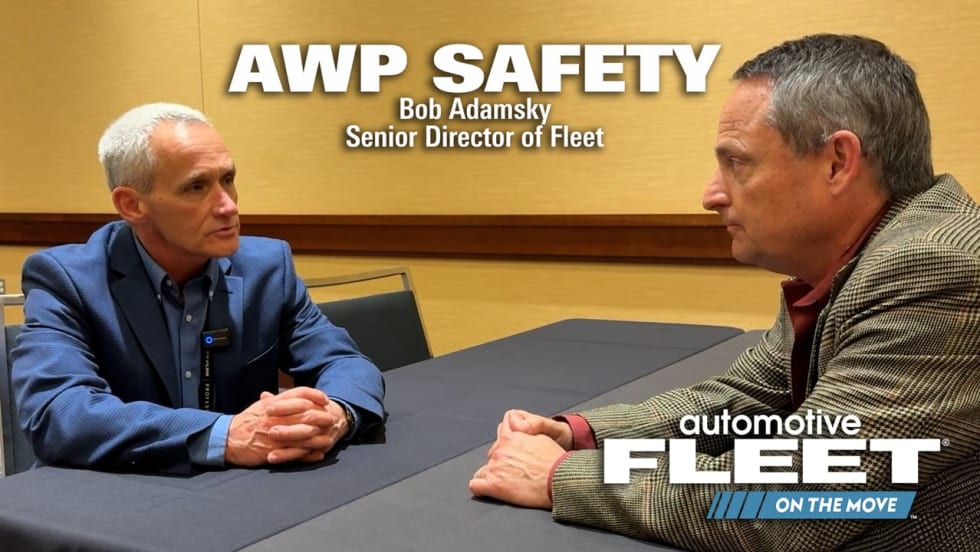
Bob Adamsky on Fuel Volatility: “Don’t Panic — Have a Plan”
With oil prices rising again, AWP Safety’s fleet manager shares how to respond to rising fuel costs and how the right strategy can turn fuel spikes into cost-saving opportunities.
Read More →
Oil Market Turbulence Is Complicating Fleet Cost Planning
Rapid swings in crude oil prices driven by the conflict in the Middle East could create longer-term cost pressures for fleets, affecting fuel prices, supply chains, and vehicle strategy, says NTEA’s Andrew Wrobel.
Read More →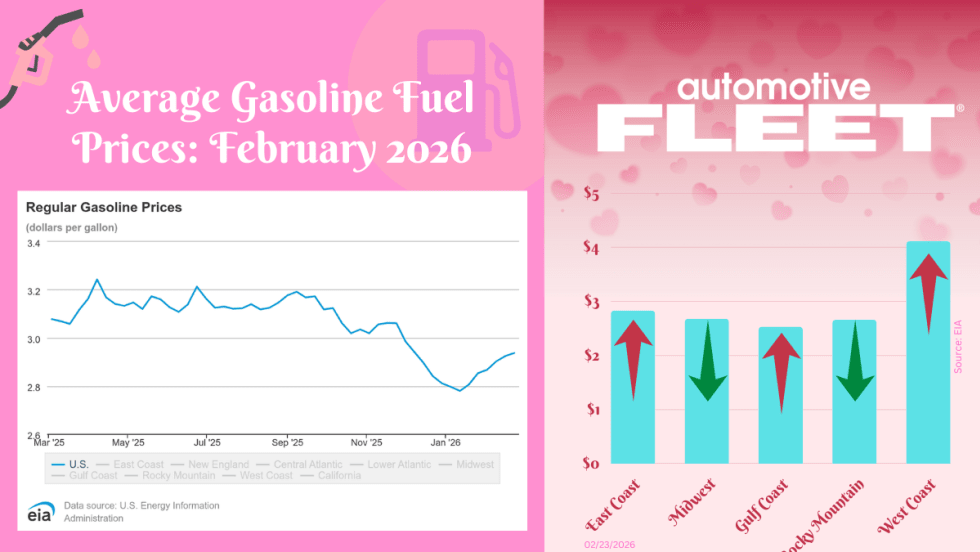
February Fuel Update: Prices Inch Higher for Third Week in a Row
The final February fuel update reveals prices continuing to inch higher for the third week in a row.
Read More →