




Mercedes-Benz M-Class Achieves Top Safety Pick
The Mercedes-Benz M-Class has succeeded in passing what is now the stricter crash test carried out by the American Insurance Institute for Highway Safety (IIHS), picking up the "Top Safety Pick+" (TSP+) award in the process.
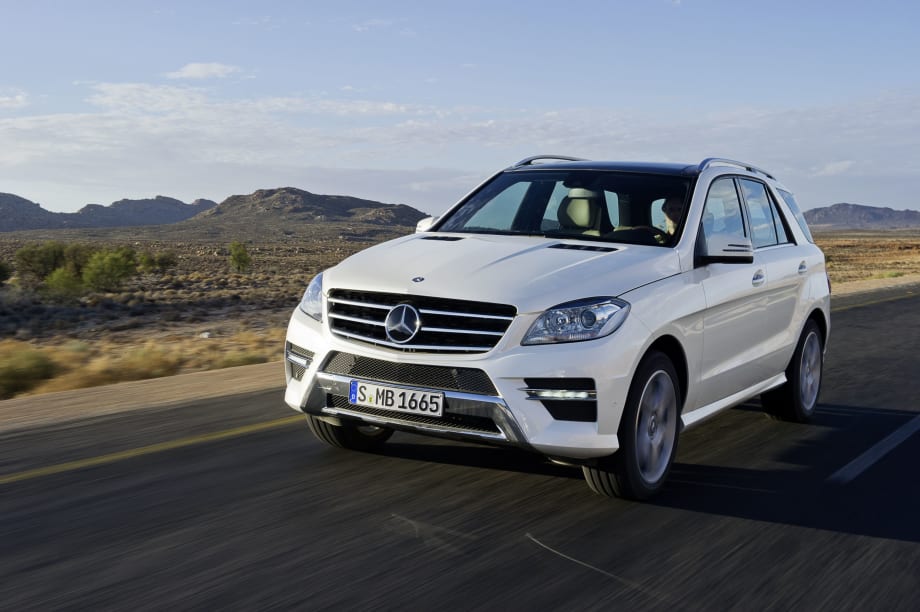
The Mercedes-Benz M-Class has been named an IIHS TSP+.
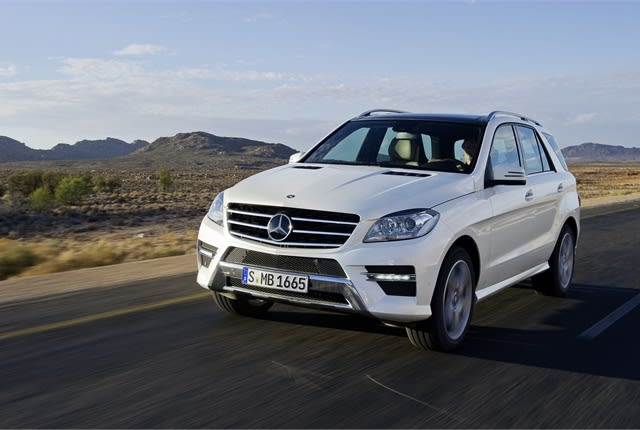
The Mercedes-Benz M-Class has been named an IIHS TSP+.
The Mercedes-Benz M-Class has succeeded in passing what is now the stricter crash test carried out by the American Insurance Institute for Highway Safety (IIHS), picking up the "Top Safety Pick+" (TSP+) award in the process.
The premium SUV already received five stars in the U.S. NCAP and Euro NCAP tests in 2012. As a result of this latest award, the M-Class has again achieved the best marks and defended its leading position in three of the world's most important and most demanding safety ratings.
Overall, as part of the M-Class development, Mercedes-Benz tested no less than 36 completely different load cases under real test conditions. This included comprehensive simulations as part of the digital prototype phase.
A new element of the rating applied by the IIHS – an organization supported by various vehicle insurance companies – is the so-called "small-overlap test."
As part of this, a front-impact test is carried out at 64 km/h with a face contact ratio of 25 percent. This is designed to simulate a front impact in which the driver tries to swerve to the side but does not quite manage to avoid the vehicle coming in the opposite direction.
Model-year 2014 vehicles must pass this test to receive the "Top Safety Pick" award. Out of the total of five crash tests carried out by the IIHS (frontal 40 percent, frontal 25 percent, side impact, whiplash and roof crush), only the small-overlap test may be assessed with a rating of ACCEPTABLE, while all other tests must be performed with a best mark of GOOD in order to achieve the new TSP+ award – something which the M-Class has now succeeded in doing.
The NCAP (New Car Assessment Programme) ratings, on the other hand, are based on another face contact ratio in the case of the front impact: for the U.S. NCAP for example, in the front impact the vehicle is driven into a fixed barrier at a speed of 56 km/h with a full face contact ratio.
In contrast, the front impact of the Euro NCAP is carried out against a deformable barrier at a speed of 64 km/h and with a face contact ratio of 40 percent (offset crash test).
In addition, different side impact tests and tests on child and pedestrian safety are included as part of the ratings, and the standard of equipment with assistance systems is also increasingly being incorporated into the assessment.
For more information, visit www.Fleet.mbusa.com.
Related Content:
IIHS Takes Top Safety Picks to a Higher Level
The Insurance Institute of Highway Safety (IIHS) has raised the bar on frontal crash protection with a fifth safety test. Vehicles that perform well in all five categories can now earn a higher level of recognition: Top Safety Pick+.
More Safety
The Safest Fleets Aren’t the Ones with the Most Technology
You’ve made the telematics investment. Here’s how to capture the other half of its value and build the safest fleet on the road.
Read More →
Hidden in Plain Sight: Fleet Compliance Risks
Fleet compliance isn't just about having policies — it's about consistently enforcing them. This practical guide reveals six hidden compliance risks common in public sector and shared fleet operations and outlines proven strategies to improve visibility, accountability, and audit readiness
Read More →
NETS Sets 2026 Fleet Safety Benchmark Conference for Indianapolis
The Sept. 15–17 program will feature fleet benchmarking data, case studies, emerging technologies, and implementation strategies while running alongside the NSC Safety Congress & Expo.
Read More →
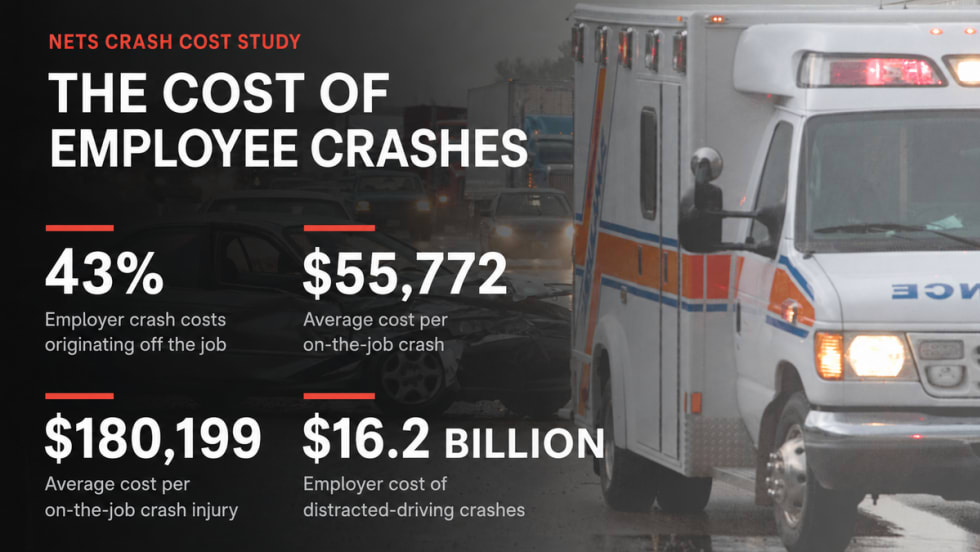
Off-the-Job Crashes Account for 43% of Employers’ $61.7 Billion Crash Burden
NETS quantifies costs dispersed across fleet, risk, HR, and other departments while providing new per-crash benchmarks for employers.
Read More →
Ram Recalls More Than 1.27 Million 1500 Pickups for Seat Belt Anchor Issue
The recall affects certain 2019-2026 Ram 1500 pickups that may have improperly attached second-row seat belt buckle anchors.
Read More →
How Better Visibility Cut Speeding Violations by 48%
Fleet leaders don't need more data, they need clearer visibility into what the data is saying. This case study explores how one utility replaced speeding-event counts with a single metric — miles driven in violation — to strengthen safety and significantly reduce speeding violations.
Read More →
Operation Safe Driver Week: Why the Industry's Oldest Safety Campaign Still Matters to Fleets
A look at how a 2007 enforcement initiative became one of the most consequential weeks on the fleet safety calendar, and what it means for your drivers in 2026.
Read More →
Nexar-Nauto Merger Aims to Give Fleets Better Safety Intelligence Through Larger Driving Dataset
Stefan Heck tells Automotive Fleet that combining more than 10 billion miles of driving history with Nexar's AI models will give fleets deeper insights into driver risk and roadway conditions than either company could provide independently.
Read More →
From Silos to Solutions: Relationship Management for Safer Fleets
From telematics adoption and driver accountability to policy consistency and risk mitigation, this episode breaks down what it really takes to build a safer fleet culture without slowing business down.
Read More →
IIHS Launches First Commercial Vehicle Safety Evaluations
The Insurance Institute for Highway Safety has begun evaluating heavy-duty pickups and cargo vans for driver protection. Which models earned top marks?
Read More →