





Read On: August 5 Webinar Highlights How to Approach Drivers and Fuel Management
Labor Day Fuel Update: Lowest National Average in Five Years
Labor Day gas prices hit their lowest point in five years, rounding out a record-low summer for fuel.
September 1, 2025
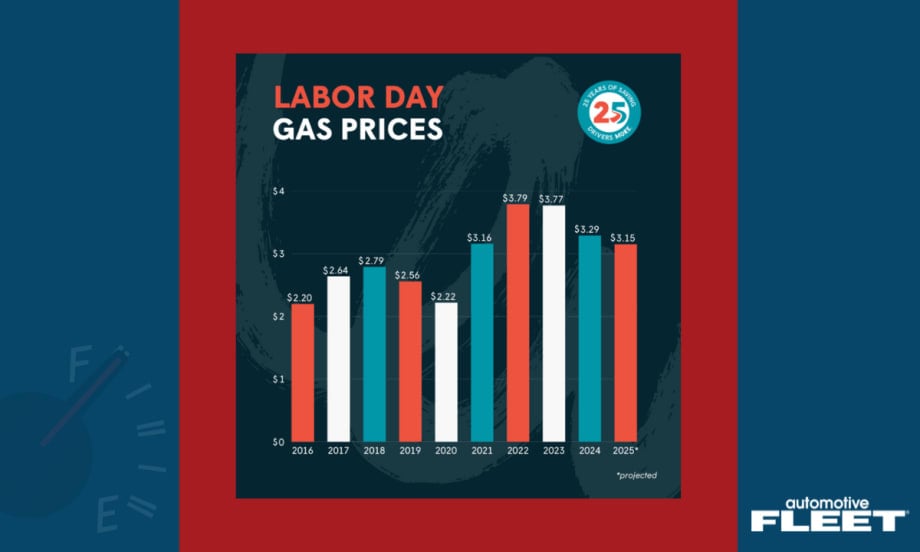
Gas prices hit an all-time low this holiday weekend for the first time in five years, with a 14-cent national decrease since last year.
Source: GasBuddy / Automotive Fleet
7 min to read
This holiday weekend signals the end of summer, and travelers will be happy to know they aren't breaking the bank at the pumps. At $3.15 per gallon, GasBuddy's Labor Day forecast indicates prices are about 14 cents lower than last year, marking the lowest level since 2020.
Despite an affordable holiday weekend, gas prices for half the country have increased due to refinery outages. The Midwest and West Coast saw a substantial increase in prices last week of about 7 cents each. The increases won't last, however, as the upcoming months promise winter prices during the transition to colder seasons.
The following are five years of Labor Day gas prices, on average:
2020: $2.22/gal
2021: $3.16/gal
2022: $3.79/gal
2023 $3.77/gal
2024: $3.29/gal
2025: $3.15/gal (projected)
"Labor Day marks the unofficial end of summer, and when it comes to gas prices, it's been the cheapest summer to hit the road since the pandemic, a trend that will likely continue with the potential for the national average to fall below $3 per gallon this fall," said Patrick De Haan, head of petroleum analysis at GasBuddy.
"We've seen a remarkably affordable summer to hit the road with incomes up and gas prices down, but there are some challenges that remain: hurricane season and uncertainty over trade, tariffs and Russia's war on Ukraine. However, I remain optimistic that as cooler weather invades, gas prices too will seasonally cool off."
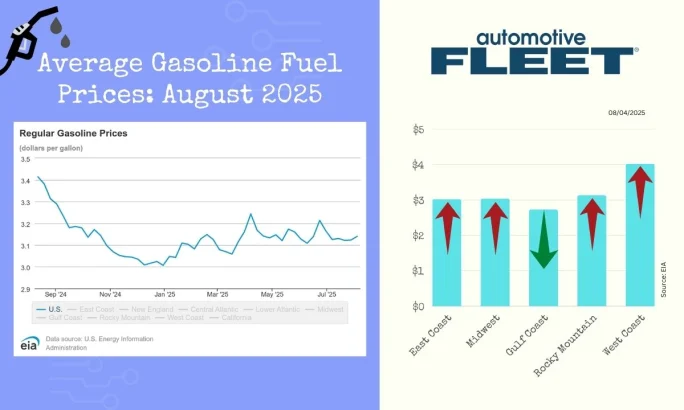
All regions besides the Gulf Coast saw an increase in prices.
Photo: EIA/Automotive Fleet
U.S Regional Gasoline Prices as of August 4, 2025
National gas prices rise for the second straight week. The current national cost of gas stands at $3.14, according to U.S. Energy Information Administration (EIA) data.
According to GasBuddy data compiled from more than 12 million individual price reports covering over 150,000 gas stations across the country, the national average is up 1.3 cents from a month ago and 32.8 cents per gallon lower than a year ago.
“It was another relatively tame week at the pump, with the national average inching up for the second straight week as oil prices briefly touched the $70 per barrel mark before sliding late in the week on news that OPEC+ will raise oil production again in September,” said Patrick De Haan, head of petroleum analysis at GasBuddy.
“While price cycling led gas prices in some states to see double-digit increases or decreases, most saw only modest fluctuations. With OPEC+ now fully restoring production to 2023 levels — and fresh economic concerns arising from a weak jobs report and renewed tariff threats — oil prices may continue to face headwinds, potentially paving the way for a decline in gas prices in the weeks ahead.”
Here’s a look at prices by region according to EIA data, as of August 4:
East Coast: $3.02
Midwest: $3.04
Gulf Coast: $2.73
Rocky Mountain: $3.13
West Coast: $4.02
All regions besides the Gulf Coast saw an increase in gas prices.
Here's a look at the top 10 cheapest states to buy gas, according to AAA data:
Rank | State | Regular |
|---|---|---|
1 | Mississippi | $2.71 |
2 | Oklahoma | $2.73 |
3 | Texas | $2.76 |
4 | Louisiana | $2.76 |
5 | Arkansas | $2.78 |
6 | Alabama | $2.79 |
7 | Tennessee | $2.79 |
8 | South Carolina | $2.83 |
9 | Kansas | $2.86 |
10 | Missouri | $2.86 |
Mississippi remains the top spot for the lower gas prices per gallon, with Oklahoma second.
U.S Regional Gasoline Prices as of August 11, 2025
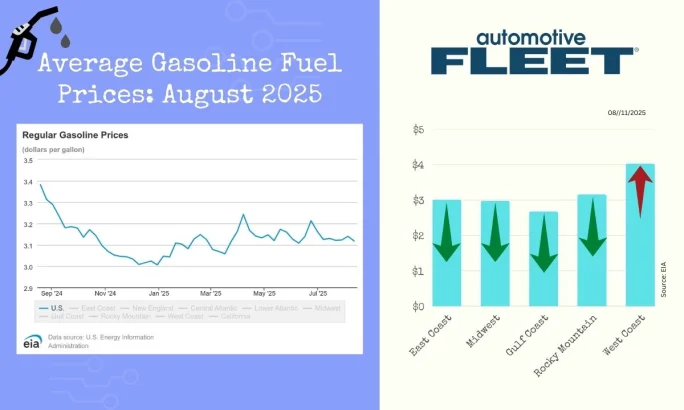
All regions besides the West Coast saw a decline in fuel prices.
Photo: EIA/Automotive Fleet
National gas prices fall for the first time in three weeks. The current national cost of gas stands at $3.12, according to U.S. Energy Information Administration (EIA) data.
According to GasBuddy data compiled from more than 12 million individual price reports covering over 150,000 gas stations across the country, the national average is down 2.7 cents from a week ago and 32.3 cents per gallon lower than a year ago.
Patrick De Haan, head of petroleum analysis at GasBuddy, reported on the decline. “After rising for two straight weeks, the national average price of gasoline saw a slight decline in the last week as oil prices fell below $64 per barrel, paving the way for prices to ease in most states,”
“Price-cycling markets again saw the largest weekly swings, with Florida and Michigan cycling upward, while Indiana and Ohio experienced sharp declines, but may be due for jumps this week,” Haan continued. “As we approach the peak of hurricane season, forecasts are showing favorable conditions for tropical development, so we’ll be watching closely for any potential impact on supply and prices as Labor Day nears.”
Here’s a look at prices by region according to EIA data, as of July 28:
East Coast: $3.01
Midwest: $2.98
Gulf Coast: $2.68
Rocky Mountain: $3.16
West Coast: $4.03
All regions besides the West Coast saw a decrease in gas prices.
Here's a look at the top 10 cheapest states to buy gas, according to AAA data:
Rank | State | Regular |
|---|---|---|
1 | Mississippi | $2.69 |
2 | Oklahoma | $2.72 |
3 | Texas | $2.75 |
4 | Louisiana | $2.76 |
5 | Tennessee | $2.77 |
6 | Arkansas | $2.78 |
7 | Alabama | $2.78 |
8 | South Carolina | $2.81 |
9 | Missouri | $2.83 |
10 | Kansas | $2.85 |
Mississippi remains in the top spot for cheapest gas, with Oklahoma at a close second.
U.S Regional Gasoline Prices as of August 18, 2025
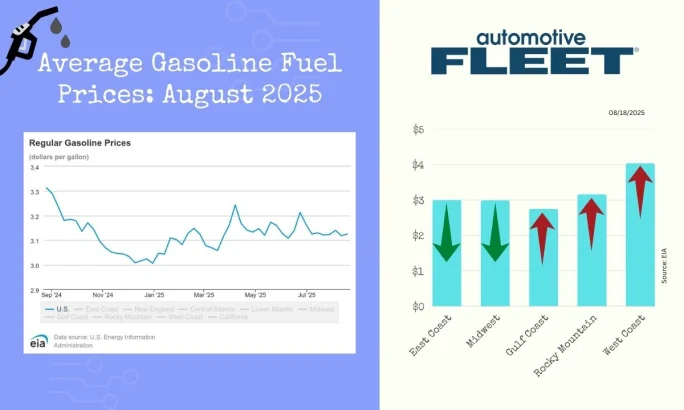
The East Coast and Midwest saw a slight decline in prices, while the remaining regions saw a slight incline.
Photo: EIA/Automotive Fleet
National gas prices have remained unchanged since last week. The current national cost of gas stands at $3.08 per gallon, according to U.S. Energy Information Administration (EIA) data.
According to GasBuddy data compiled from more than 12 million individual price reports covering over 150,000 gas stations across the country, the national average is down 4.6 cents from a week ago and 27.9 cents lower than a year ago.
“The national average is nearly unchanged from a week ago, with gasoline prices continuing to hover in the same territory where they’ve spent much of 2025 so far — in the low-$3-per-gallon range — as oil prices remain anchored in the $60s,” said Patrick De Haan, head of petroleum analysis at GasBuddy. “Price cycling markets once again led the biggest weekly price changes, with Ohio and Florida seeing a cycle and higher prices last week, while Michigan posted the largest drop and could be due for another jump in the cycle sometime this week. For the majority of motorists in non-cycling states, gas prices will likely remain near current levels as we head toward Labor Day. However, it’s worth watching developments around a potential peace deal between Russia and Ukraine. If such an agreement materializes, it could send oil prices lower on expectations that sanctions against Russia might be eased, effectively boosting global oil supply.”
Here’s a look at prices by region according to EIA data, as of August 18:
East Coast: $3.00
Midwest: $2.99
Gulf Coast: $2.75
Rocky Mountain: $3.16
West Coast: $4.04
The East Coast and Midwest saw a slight decline, while the remaining regions saw a small incline in prices.
Here's a look at the top 10 cheapest states to buy gas, according to AAA data:
Rank | State | Regular |
|---|---|---|
1 | Oklahoma | $2.67 |
2 | Mississippi | $2.68 |
3 | Louisiana | $2.73 |
4 | Texas | $2.76 |
5 | Alabama | $2.76 |
6 | Arkansas | $2.76 |
7 | Tennessee | $2.79 |
8 | South Carolina | $2.79 |
9 | Missouri | $2.82 |
10 | Kentucky | $2.83 |
Oklahoma replaces Mississippi this week as the top cheapest spot for gas.
U.S Regional Gasoline Prices as of August 25, 2025
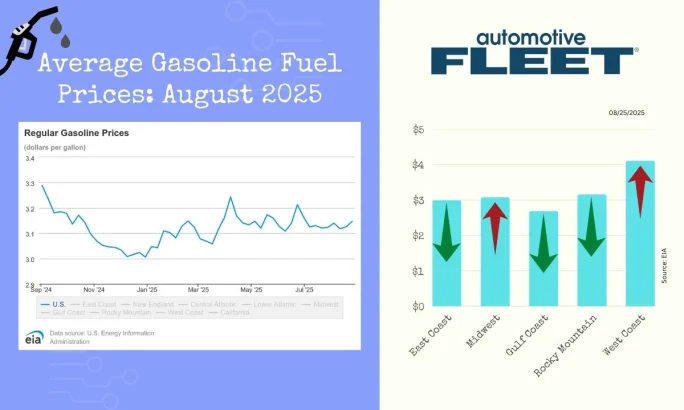
The Midwest and the West Coast saw an increase in prices, while every other region saw a slight decline.
Photo: EIA/Automotive Fleet
National gas prices have hit an all-time low, marking the cheapest summer in the past five years. They are expected to remain low throughout Labor Day weekend.
That being said, prices have increased for the first time in three weeks.
The current national cost of gas stands at $3.12 per gallon, according to U.S. Energy Information Administration (EIA) data.
According to GasBuddy data compiled from more than 12 million individual price reports covering over 150,000 gas stations across the country, the national average is down 2.1 cents from a month ago and 18.3 cents lower than a year ago.
“The national average saw a modest increase over the last week after storms temporarily knocked the Midwest’s largest refinery offline in Indiana, triggering sharp jumps in gas prices across Ohio, Wisconsin, and Michigan,” said Patrick De Haan, head of petroleum analysis at GasBuddy.
“We could soon see prices cycle higher in Illinois and Indiana as well, although there’s been some late-week relief in wholesale prices now that the refinery is restarting. Meanwhile, Florida saw the nation’s largest weekly decline, but a rebound due to price cycling is likely on the horizon. All of this is playing out while oil prices remain relatively stable in the low $60s. With no major hurricanes threatening the U.S. at the moment, the biggest wildcard remains any shifts in Russia’s war on Ukraine. For now, expect only moderate gas price fluctuations, with the potential for lower prices arriving later this fall.”
Here’s a look at prices by region according to EIA data, as of August 25:
East Coast: $2.99
Midwest: $3.08
Gulf Coast: $2.69
Rocky Mountain: $3.16
West Coast: $4.11
The Midwest and West Coast saw a substantial increase in prices.
Here's a look at the top 10 cheapest states to buy gas, according to AAA data:
Rank | State | Regular |
|---|---|---|
1 | Mississippi | $2.69 |
2 | Oklahoma | $2.70 |
3 | Louisiana | $2.72 |
4 | Texas | $2.75 |
5 | Alabama | $2.77 |
6 | Arkansas | $2.78 |
7 | Tennessee | $2.79 |
8 | South Carolina | $2.83 |
9 | Missouri | $2.84 |
10 | Kansas | $2.84 |
Mississippi returns as the cheapest state to buy gas, with Oklahoma following closely after.
More Fuel
Fuel Prices Surge in September | September Fuel Update
September brought major fuel price swings, including diesel crossing $6 a gallon. Here’s how gas and diesel prices changed throughout the month, and where they stood heading into October.
Read More →
Turning Fleet Payment Data into Executive Insights
Ramel Lindsay of U.S. Bank Voyager discusses how fleets can transform payment and transaction data into actionable intelligence to reduce costs, improve oversight, and support executive decision-making.
Read More →
Why the IRS Raised Its Mileage Rate in the Middle of 2026
Fuel-price volatility drove the rare increase to 76 cents per mile, the fifth midyear adjustment since 2000.
Read More →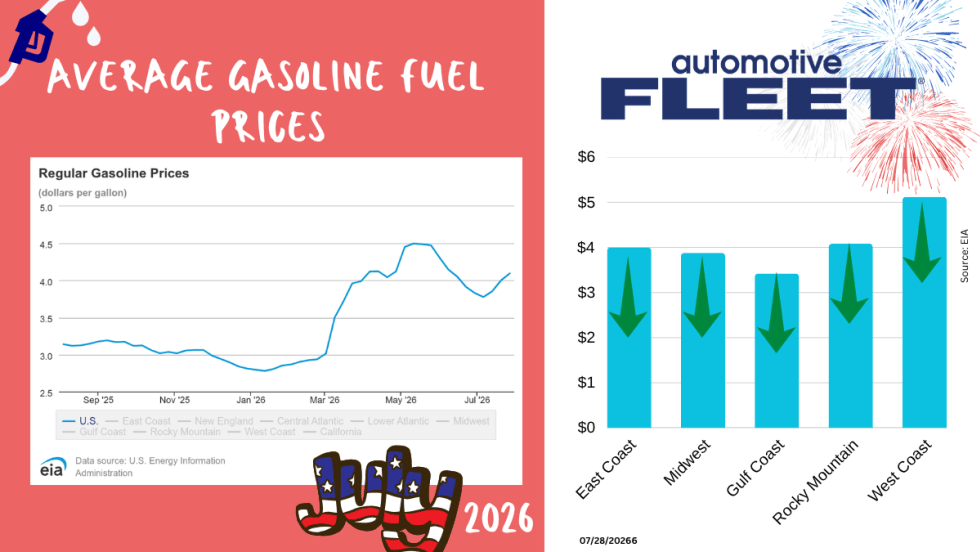
July Fuel Update: Prices Keep Rising in Light of More Conflict
Gas prices continue to rise as more and more conflicts do, too.
Read More →
Bob Adamsky on Fuel Volatility: "Don't Panic, Have a Plan."
When it comes to up and down fuel prices, Adamsky has a message for fleets: “Don’t panic.”
Read More →
How Fleets Can Gain Control of Non-Fuel Spend
Fuel often gets the spotlight, but non-fuel expenses can have a major impact on fleet costs. Ramel Lindsay of U.S. Bank Voyager discusses how fleets can gain better visibility and control over these often-overlooked expenditures.
Read More →
Fuel is Just the Start: How Middle East Tensions are Driving Up Fleet Maintenance Costs
The Middle East conflict is doing more than pushing up fuel prices. It’s also raising the cost of key maintenance products your fleet depends on, from motor oil to tires to windshield wipers. Here’s what you need to know about this budget-busting situation.
Read More →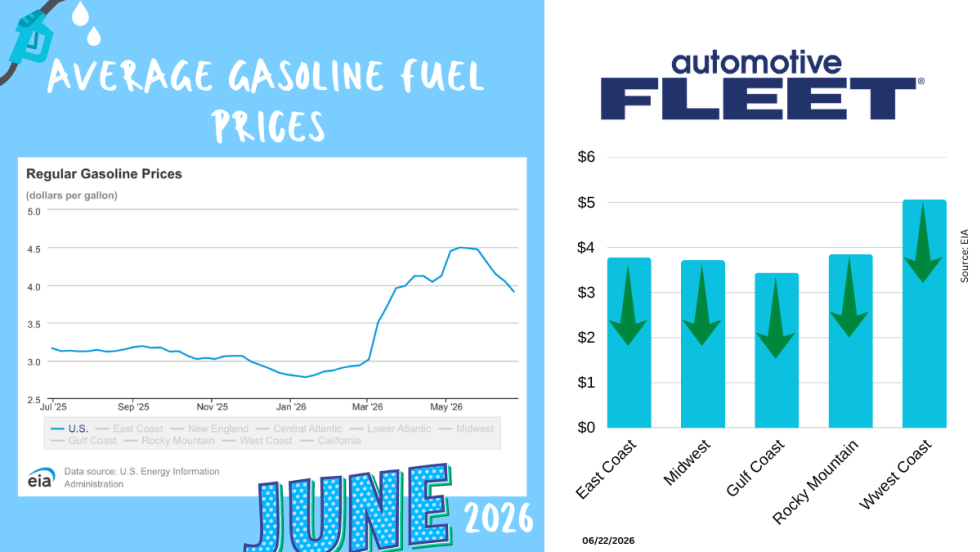
June Fuel Update: Prices Fall Below $4
Drivers are finally getting some relief at the pump. The national average gas price has dropped below $4 a gallon for the first time in months, with prices falling in 47 states as oil markets react to developments in U.S.-Iran negotiations.
Read More →
Study: How 2026's Gas Price Hikes Affect Different Vehicle Types
New data from iSeeCars reveals how rising fuel costs have affected different vehicle segments as gasoline prices climbed nearly 46% over the past four months.
Read More →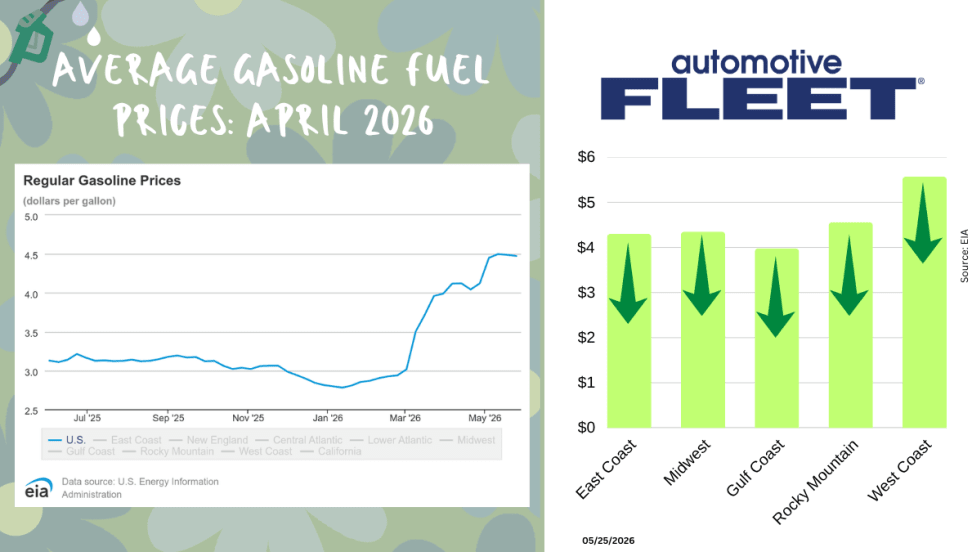
May Fuel Update: All Regions Experience Declines
Gas prices are finally easing in much of the country, but experts warn global tensions could quickly reverse the trend as the national average remains well above last month’s levels.
Read More →