





Learn More: Getting Drivers to Care About Fuel Economy
June 2025 Fuel Update: Prices Fall Ahead of the Holiday Weekend
The 4th of July holidays see's a dip in gas prices.
July 2, 2025
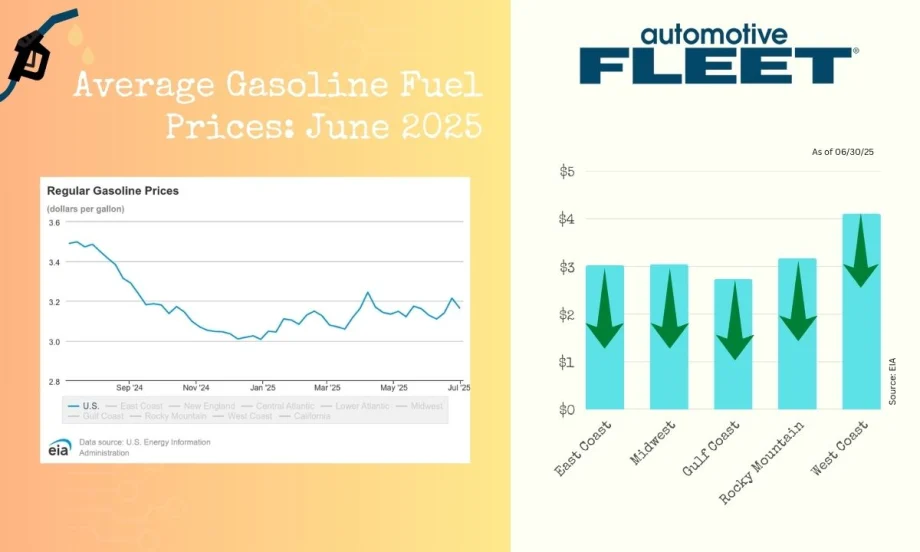
All regions saw a decline in gas prices from last week.
Photo: EIA/Automotive Fleet
6 min to read
For the first time in three weeks, national gas prices have fallen. The current national cost of gas stands at $3.16, according to U.S. Energy Information Administration (EIA) data. Prices year-over-year are down by 32 cents.
According to GasBuddy data compiled from more than 12 million individual price reports covering over 150,000 gas stations across the country, the national average is up 1.1cents from a month ago and 32.1 cents per gallon lower than a year ago.
Patrick De Haan, head of petroleum analysis at GasBuddy, said he expects gas prices to continue to fall. He noted that “The national average price of gasoline has resumed its decline, with falling prices driven by easing tensions in the Middle East—just weeks after those same tensions had pushed prices higher. For motorists planning to hit the road for Independence Day, gas prices are expected to continue falling nearly coast to coast in the lead-up to July 4. Relief could expand as the holiday weekend approaches, with the national average on track to hit its lowest July 4 level since 2021 at $3.15 per gallon, we project. As long as tensions in the Middle East remain contained and the U.S. avoids a major hurricane, we could see the national average fall below $3 per gallon later this summer.”
Here’s a look at prices by region according to EIA data, as of June 9:
East Coast: $3.03
Midwest: $3.05
Gulf Coast: $2.74
Rocky Mountain: $3.18
West Coast: $4.11
The national average has seen a decline since the easing of Middle East tensions dropping 5 cents from a week ago. All regions saw a decline in gas price.
Here’s a look at the top 10 cheapest states to buy gas, according to AAA data:
Rank | State | Regular |
|---|---|---|
1 | Mississippi | $2.71 |
2 | Texas | $2.74 |
3 | Oklahoma | $2.75 |
4 | Tennessee | $2.77 |
5 | Louisiana | $2.79 |
6 | Alabama | $2.79 |
7 | Arkansas | $2.79 |
8 | South Carolina | $2.83 |
9 | Missouri | $2.85 |
10 | Kentucky | $2.86 |
Mississippi remains the top spot for the lowest gas prices per gallon, with Texas second.
U.S. Regional Gasoline Prices as of June 17, 2025
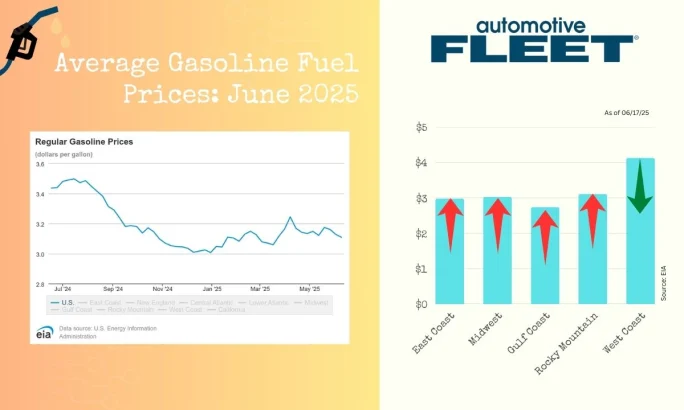
The West Coast region saw the only decrease over the week of 2 cents.
Photo: EIA/Automotive Fleet
Gas prices rose for the first time since May this week. The national cost of gas currently stands at $3.14, according to U.S. Energy Information Administration (EIA) data. Prices year-over-year are down by 30 cents.
According to GasBuddy data compiled from more than 12 million individual price reports covering over 150,000 gas stations across the country, the national average is up 1.1cents from a week ago and 32.7 cents per gallon lower than a year ago.
Patrick De Haan, head of petroleum analysis at GasBuddy, warns that further price hikes are to be expected, “With Israel and Iran trading attacks, oil prices have surged to multi-month highs — setting the stage for additional price hikes at gas pumps across the country. As long as tensions in the Middle East continue to escalate, the risk of further impacts on oil prices remains high. For now, I expect gas prices could rise by 10 to 20 cents, while diesel could climb 15 to 25 cents in the coming days. Motorists should prepare for what will likely be modest price increases — for now — but the situation has the potential to worsen at any moment.”
Here’s a look at prices by region according to EIA data, as of June 16:
East Coast: $2.98
Midwest: $3.03
Gulf Coast: $2.74
Rocky Mountain: $3.11
West Coast: $4.13
The national average has hovered between $3.11 and $3.17, with the West Coast being the only region to see a decrease, with a 2-cent decline.
Here’s a look at the top 10 cheapest states to buy gas, according to AAA data:
Rank | State | Regular |
|---|---|---|
1 | Mississippi | $2.67 |
2 | Louisiana | $2.76 |
3 | Texas | $2.76 |
4 | Alabama | $2.78 |
5 | Tennessee | $2.78 |
6 | Oklahoma | $2.79 |
7 | Arkansas | $2.80 |
8 | Missouri | $2.84 |
9 | Kentucky | $2.86 |
10 | North Carolina | $2.86 |
Mississippi remains the top spot for the lowest gas prices per gallon, with Louisiana second.
U.S. Regional Gasoline Prices as of June 10, 2025
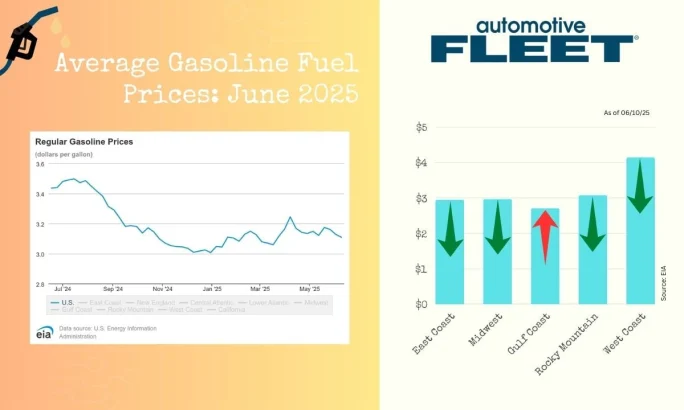
The Gulf Coast region saw the only increase over the week of 1 cent.
Photo: EIA/Automotive Fleet
In the previous week, gas prices dipped again. The national cost of gas currently stands at $3.11, according to U.S. Energy Information Administration (EIA) data. Prices year-over-year are down by 32 cents.
According to GasBuddy data compiled from more than 12 million individual price reports covering over 150,000 gas stations across the country, the national average is down 5.2 cents from a month ago and 32.8 cents per gallon lower than a year ago.
Patrick De Haan, head of petroleum analysis at GasBuddy, noted that the “Average gas prices declined in nearly all states over the last week as refineries ramped up output and gasoline supplies surged.” He added that, “While a few states experienced price cycling — a pattern where prices drop sharply and then spike every couple of weeks — the overall gentle downward trend is typical as summer progresses. If oil prices continue to rise gradually, it could eventually impact gas prices, but for now, we likely won’t see any major shifts at the pump in most areas this week.”
Here’s a look at prices by region according to EIA data, as of June 9:
East Coast: $2.95
Midwest: $2.97
Gulf Coast: $2.71
Rocky Mountain: $3.08
West Coast: $4.15
The national average has hovered between $3.11 and $3.17, with the West Coast and the Rocky Mountains seeing the steepest decline of about 5 cents and the Gulf Coast seeing an increase of 1 cent.
Here’s a look at the top 10 cheapest states to buy gas, according to AAA data:
Rank | State | Regular |
|---|---|---|
1 | Mississippi | $2.63 |
2 | Tennessee | $2.69 |
3 | Oklahoma | $2.70 |
4 | Louisiana | $2.71 |
5 | Alabama | $2.72 |
6 | Arkansas | $2.75 |
7 | Texas | $2.75 |
8 | Kentucky | $2.80 |
9 | North Carolina | $2.80 |
10 | South Carolina | $2.80 |
Mississippi remains the top spot for the lowest gas prices per gallon, with Louisiana replaced by Tennessee.
U.S. Regional Gasoline Prices as of June 2, 2025
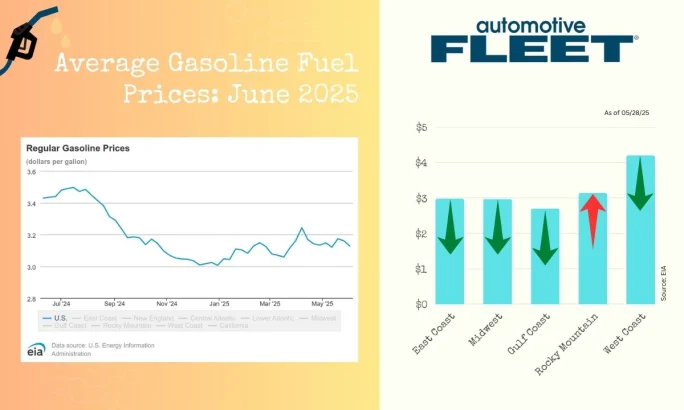
The Rocky Mountain region saw the only increase over the week of 2 cents.
Photo: EIA/Automotive Fleet
In the previous week, gas prices dipped slightly. The national cost of gas currently stands at $3.13, according to U.S. Energy Information Administration (EIA) data. Prices year-over-year are down by 39 cents.
According to GasBuddy data compiled from more than 12 million individual price reports covering over 150,000 gas stations across the country, the national average price of gasoline is down 3.8 cents from last week and 41.0 cents from a year ago.
Patrick De Haan, head of petroleum analysis at GasBuddy, is optimistic that increased refinery output could lower prices further. He noted that, “The national average price of gasoline has continued its gentle descent over the last week, with the most notable declines seen in the Great Lakes region, where a minor refinery issue was resolved, sending wholesale gas prices lower.” He added that prices in California are seeing a decline as well, “a trend that should soon extend across much of the West Coast as additional gasoline shipments from Asia help offset recent refinery disruptions.”
De Haan also noted that unexpected outages could still cause short-term price bumps.
Here’s a look at prices by region according to EIA data, as of June 2:
East Coast: $2.98
Midwest: $2.97
Gulf Coast: $2.70
Rocky Mountain: $3.14
West Coast: $4.21
The national average has hovered between $3.12 and $3.17, with the West Coast seeing the steepest decline of about 5 cents and the Rocky Mountains seeing an increase of 2 cents.
Here’s a look at the top 10 cheapest states to buy gas, according to AAA data:
Rank | State | Regular |
|---|---|---|
1 | Mississippi | $2.65 |
2 | Louisiana | $2.71 |
3 | Alabama | $2.73 |
4 | Tennessee | $2.73 |
5 | Texas | $2.75 |
6 | Oklahoma | $2.76 |
7 | Arkansas | $2.77 |
8 | South Carolina | $2.78 |
9 | Kentucky | $2.83 |
10 | Missouri | $2.84 |
Mississippi and Louisiana continue holding the top two spots for the lowest gas price per gallon.
More Fuel
Fuel Prices Surge in September | September Fuel Update
September brought major fuel price swings, including diesel crossing $6 a gallon. Here’s how gas and diesel prices changed throughout the month, and where they stood heading into October.
Read More →
Turning Fleet Payment Data into Executive Insights
Ramel Lindsay of U.S. Bank Voyager discusses how fleets can transform payment and transaction data into actionable intelligence to reduce costs, improve oversight, and support executive decision-making.
Read More →
Why the IRS Raised Its Mileage Rate in the Middle of 2026
Fuel-price volatility drove the rare increase to 76 cents per mile, the fifth midyear adjustment since 2000.
Read More →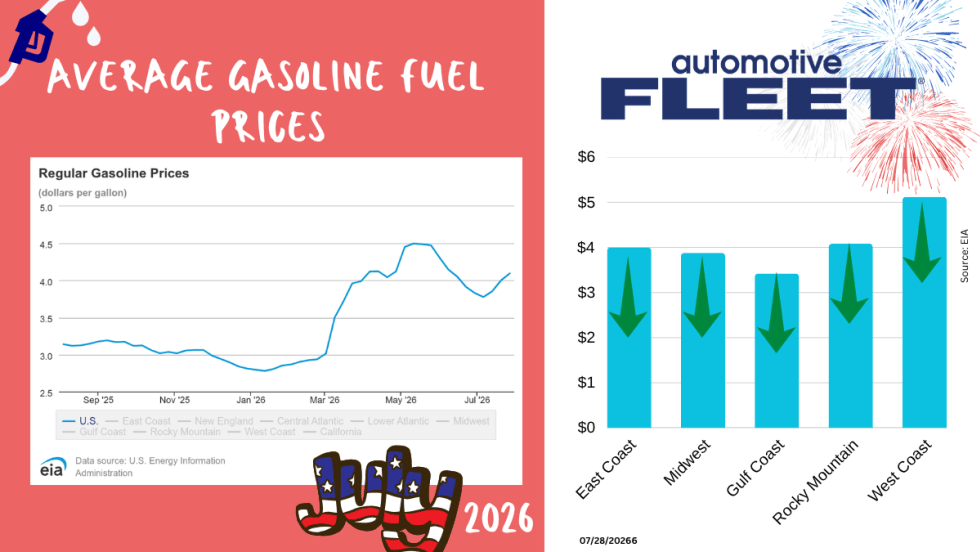
July Fuel Update: Prices Keep Rising in Light of More Conflict
Gas prices continue to rise as more and more conflicts do, too.
Read More →
Bob Adamsky on Fuel Volatility: "Don't Panic, Have a Plan."
When it comes to up and down fuel prices, Adamsky has a message for fleets: “Don’t panic.”
Read More →
How Fleets Can Gain Control of Non-Fuel Spend
Fuel often gets the spotlight, but non-fuel expenses can have a major impact on fleet costs. Ramel Lindsay of U.S. Bank Voyager discusses how fleets can gain better visibility and control over these often-overlooked expenditures.
Read More →
Fuel is Just the Start: How Middle East Tensions are Driving Up Fleet Maintenance Costs
The Middle East conflict is doing more than pushing up fuel prices. It’s also raising the cost of key maintenance products your fleet depends on, from motor oil to tires to windshield wipers. Here’s what you need to know about this budget-busting situation.
Read More →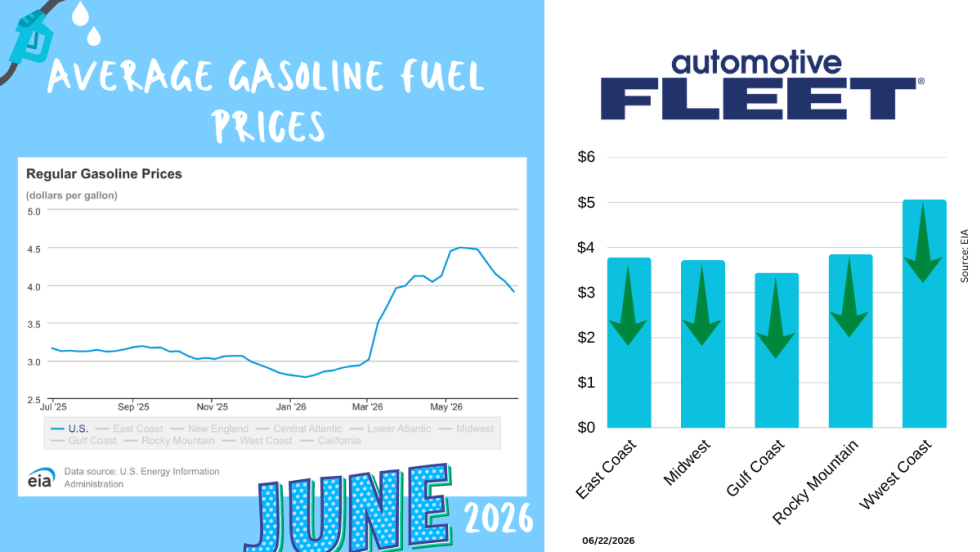
June Fuel Update: Prices Fall Below $4
Drivers are finally getting some relief at the pump. The national average gas price has dropped below $4 a gallon for the first time in months, with prices falling in 47 states as oil markets react to developments in U.S.-Iran negotiations.
Read More →
Study: How 2026's Gas Price Hikes Affect Different Vehicle Types
New data from iSeeCars reveals how rising fuel costs have affected different vehicle segments as gasoline prices climbed nearly 46% over the past four months.
Read More →
May Fuel Update: All Regions Experience Declines
Gas prices are finally easing in much of the country, but experts warn global tensions could quickly reverse the trend as the national average remains well above last month’s levels.
Read More →