




Hydrogen Conference Highlights Fuel Cell, Storage Advances
LONG BEACH, Calif. --- The National Hydrogen Association's conference this week highlighted progress in hydrogen fuel cell and internal combustion vehicles.
LONG BEACH, Calif. --- The National Hydrogen Association's conference this week highlighted progress in hydrogen fuel cell and internal combustion vehicles, but also explored the many challenges that remain -- such as building a widespread refueling network and increasing on-board hydrogen storage for greater driving range. This latter challenge is being addressed by a hydrogen vehicle from Energy Conversion Devices Inc. , which has now started fleet testing at the South Coast Air Quality Management District (AQMD) in Diamond Bar, Calif. A project of Ovonic Hydrogen Systems LLC, the advanced vehicle is a high-profile test bed designed to prove that hydrogen hybrids can be practical in daily life. The high-tech vehicle also serves to showcase Ovonic solid metal hydrogen storage technology. Based on a production gasoline-electric hybrid model, it is part of a five year, $7 million multi-vehicle hydrogen hybrid demonstration at AQMD. Additional ECD Ovonics hydrogen hybrids are expected to join the fleet in the coming months, and one is already in service at ECD Ovonics' headquarters in Rochester Hill, Mich. "The ECD Ovonics hydrogen hybrid will help demonstrate this emerging technology and address current storage and range limitations," said Chung Liu, D.Env., deputy executive officer of technology advancement for the South Coast AQMD. "This technology will help us expand our region's hydrogen infrastructure and serve as a stepping stone to longer-term future technologies including fuel cell vehicles." ECD Ovonics' hydrogen hybrid has been equipped with hydrogen storage tanks using the company's proprietary solid metal hydride technology, which enables hydrogen to bond at the atomic level with a powdered metal alloy inside the tanks. This technology allows storing hydrogen at much lower pressures than the 5,000 to 10,000 psi storage tanks typically used in other hydrogen vehicle applications, the company said. The result is the ability to carry a greater volume of hydrogen on-board to provide increased driving range -- in this case just under 200 miles. "That's substantially greater range than most hydrogen vehicles today, and an important milestone toward making hydrogen vehicles a practical alternative for the highway," said Robert Stempel, chairman and CEO of ECD Ovonics. "Our goal is to apply the diverse technologies based on ECD Ovonics' proprietary work to make advanced hybrid, hydrogen, and fuel cell vehicles competitive in the marketplace." ECD Ovonics' hydrogen hybrid has been turbocharged to compensate for hydrogen's lower energy density and enhance overall performance and drivability. Refueling during fleet testing is taking place at a hydrogen station at the South Coast AQMD headquarters, which has been specially modified to refuel the vehicle at a low 1,500 psi.
More Fuel
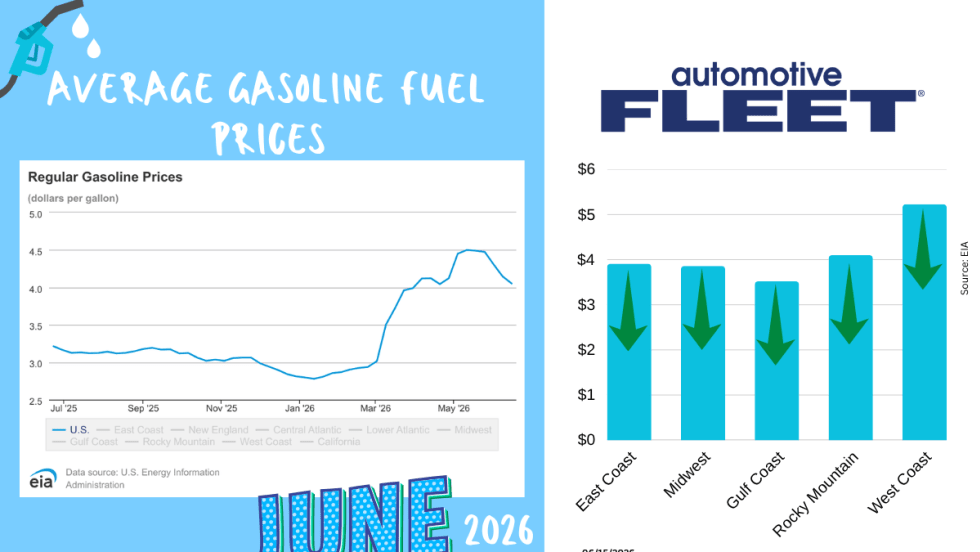
June Fuel Update: Prices Fall Below $4
Drivers are finally getting some relief at the pump. The national average gas price has dropped below $4 a gallon for the first time in months, with prices falling in 47 states as oil markets react to developments in U.S.-Iran negotiations.
Read More →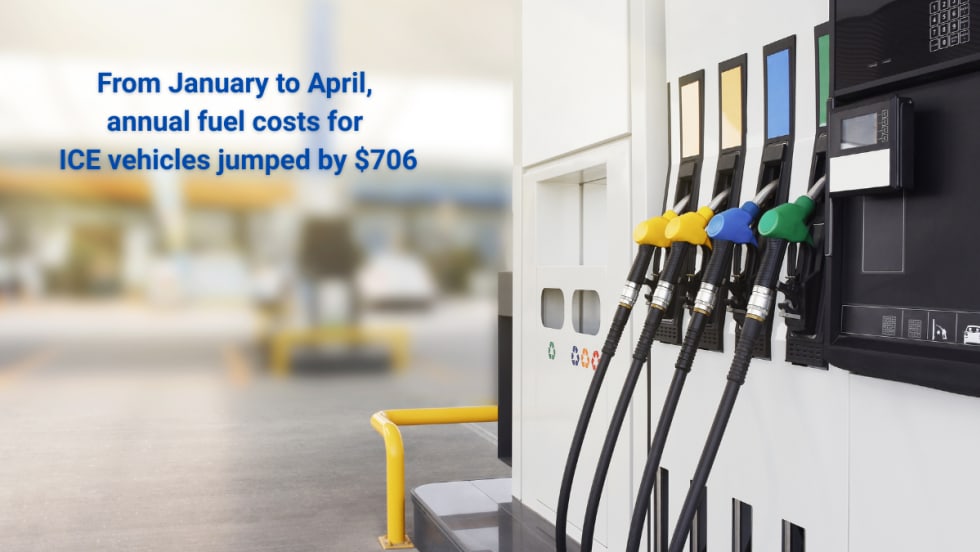
Study: How 2026's Gas Price Hikes Affect Different Vehicle Types
New data from iSeeCars reveals how rising fuel costs have affected different vehicle segments as gasoline prices climbed nearly 46% over the past four months.
Read More →
Are You Tracking Your Fleet's True Total Cost of Ownership?
Bobit Business Media surveyed 190 fleet professionals and found that while most fleets are tracking costs, fragmented systems and data gaps are keeping true TCO visibility out of reach. With rising pressure to control spend in an increasingly volatile environment, the gap between what fleets think they know and what the data actually shows is wider than you might expect. See how your peers are managing costs today and where the industry still has room to improve.
Read More →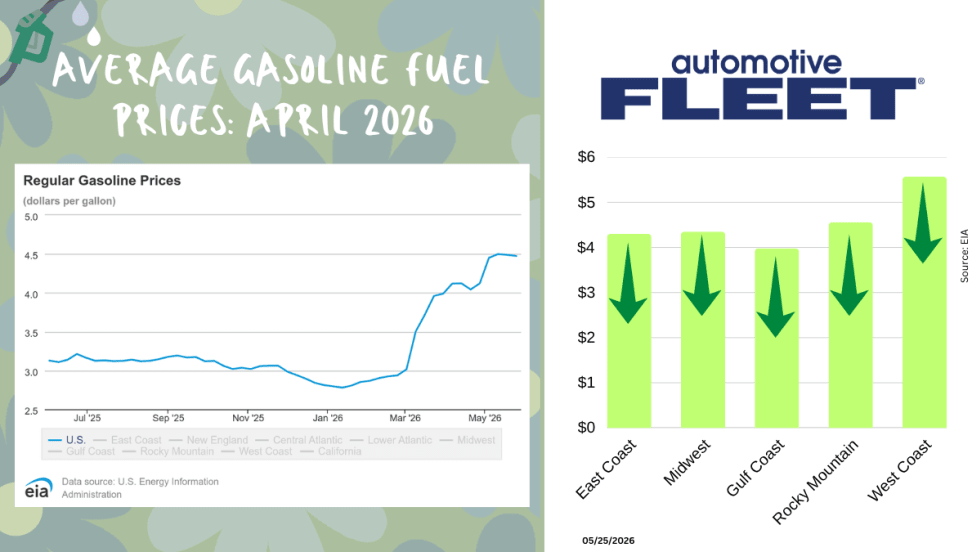
May Fuel Update: All Regions Experience Declines
Gas prices are finally easing in much of the country, but experts warn global tensions could quickly reverse the trend as the national average remains well above last month’s levels.
Read More →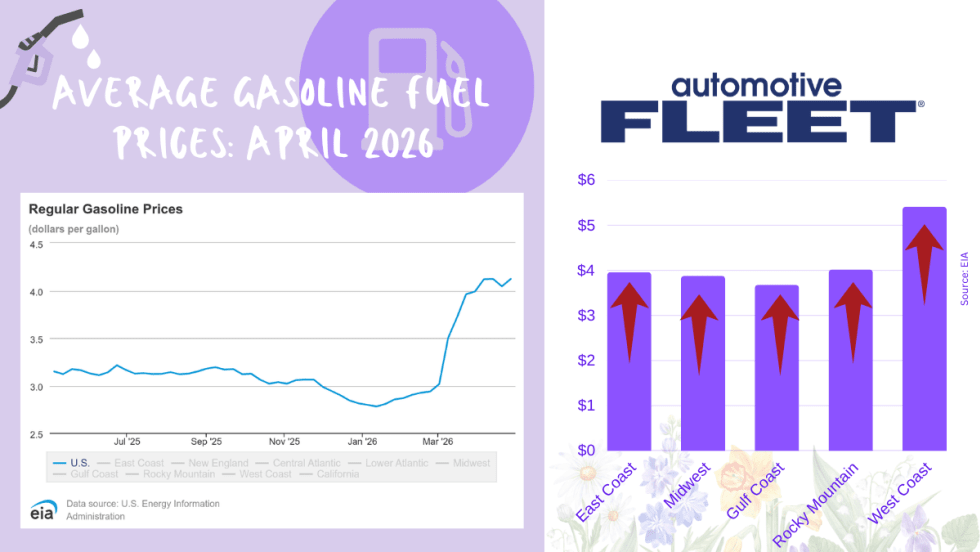
April Fuel Update: Prices Climb Above $4 as Spring Surge Accelerates
National average jumps to $4.04 per gallon, up sharply from last year, with West Coast prices topping $5 and further increases expected amid rising oil tensions.
Read More →
Tips from Fleet Managers on Saving Fuel Costs
Fleet leaders share practical strategies to reduce fuel spend through smarter policy, routing, and driver guidance.
Read More →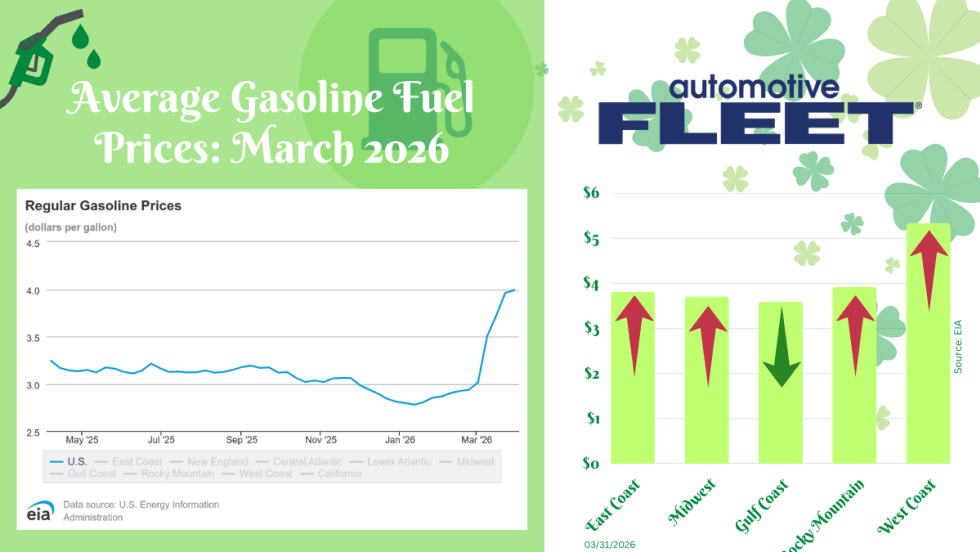
March Fuel Update: Prices Settle With a $4 Average
Fuel prices significantly slowed this week, but a $4 national average is still expected.
Read More →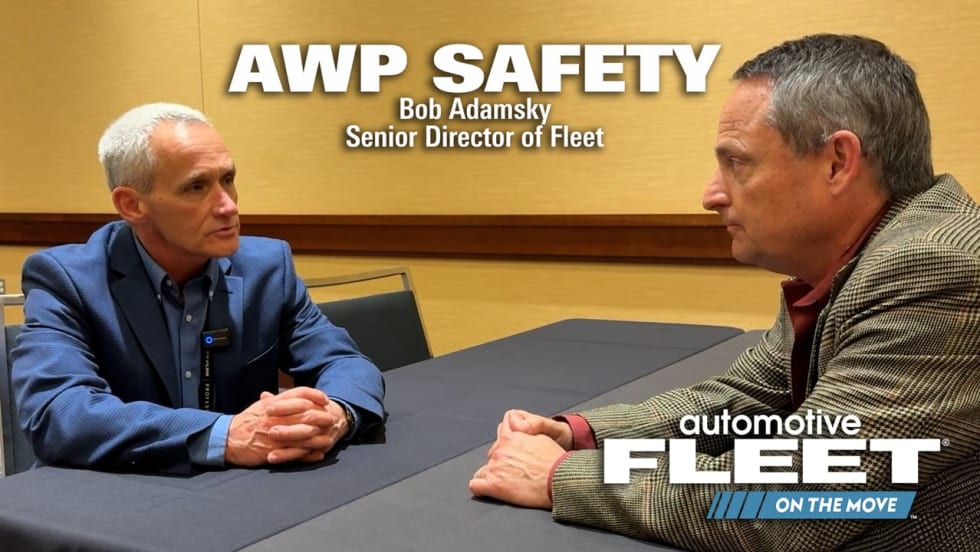
Bob Adamsky on Fuel Volatility: “Don’t Panic — Have a Plan”
With oil prices rising again, AWP Safety’s fleet manager shares how to respond to rising fuel costs and how the right strategy can turn fuel spikes into cost-saving opportunities.
Read More →
Oil Market Turbulence Is Complicating Fleet Cost Planning
Rapid swings in crude oil prices driven by the conflict in the Middle East could create longer-term cost pressures for fleets, affecting fuel prices, supply chains, and vehicle strategy, says NTEA’s Andrew Wrobel.
Read More →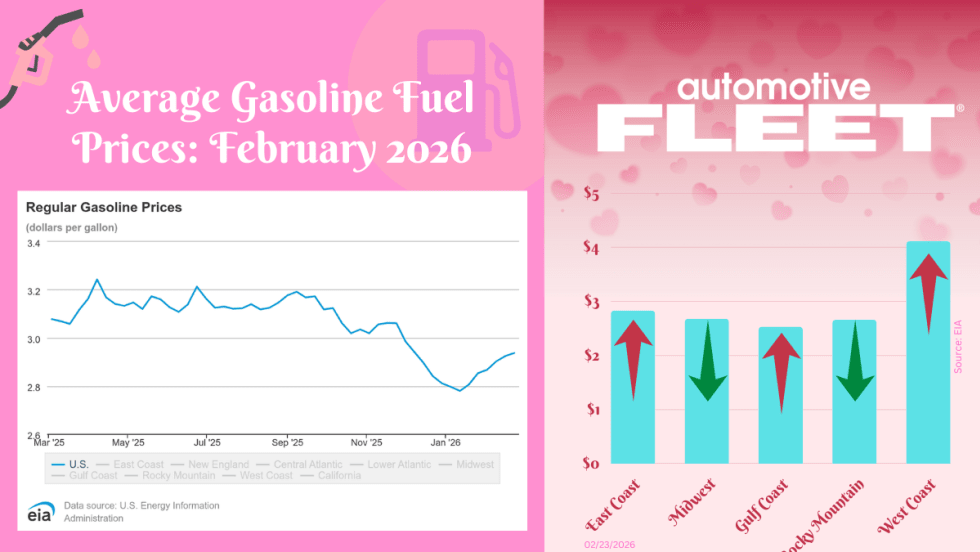
February Fuel Update: Prices Inch Higher for Third Week in a Row
The final February fuel update reveals prices continuing to inch higher for the third week in a row.
Read More →