




Global Drivers Express Concern About Autonomous Vehicles
Building on an earlier study on public opinion regarding self-driving vehicles in the U.S., Great Britain and Australia, UMTRI expanded its survey to include more than 1,700 respondents in India, China and Japan.
Despite safety concerns about equipment failure, a majority of drivers on three continents have high expectations for autonomous vehicles.
“Recent advances in autonomous vehicle technology have helped bring self-driving vehicles to the forefront of public interest,” said Brandon Schoettle of the University of Michigan Transportation Research Institute (UMTRI). “Self-driving vehicles are commonly envisioned to be the ultimate, full embodiment of connected-vehicle technology, an area that is currently the focus of several large research projects and government support.”
Building on an earlier study on public opinion regarding self-driving vehicles in the U.S., Great Britain and Australia, Schoettle and UMTRI colleague Michael Sivak expanded their survey to include more than 1,700 respondents in India, China and Japan.
They found that about 87 percent of respondents in China and 84 percent in India have positive views regarding autonomous and self-driving vehicles, compared to 62 percent in Australia, 56 percent in the U.S., 52 percent in the U.K. and 43 percent in Japan. Half of the Japanese respondents were neutral, while the U.S. registered the highest percentage of negative views (16 percent) among the six countries.
According to the study, more than 80 percent of respondents in China, India, and Japan believe that self-driving vehicles would reduce both the number and severity of crashes, compared to roughly 70 percent in the U.S., U.K., and Australia.
The Chinese and Indian respondents were also more optimistic that autonomous technology would lead to less traffic congestion (72 percent of respondents in both countries agree) and shorter travel times (74 percent in India, 68 percent in China). On the other hand, 56 percent of Japanese respondents and less than 50 percent in the U.S., U.K. and Australia believe it would ease congestion. Likewise, less than 50 percent of respondents in those countries agree that it would shorten travel times.
Although more respondents in China and India expressed favorable views regarding the benefits of self-driving cars, the two countries differ when it comes to concerns about riding in a completely autonomous vehicle. About 79 percent of Indians said they would be very or moderately concerned, compared to 49 percent of Chinese. Among the other countries, the results were 67 percent for the U.S., 57 percent for both Australia and the U.K., and 52 percent for Japan.
More Global Fleet
Holman Takes Full Ownership of ARIZA in Mexico
Holman is bringing its Mexican fleet management operation fully under its own brand after more than 30 years as a joint venture. The change gives multinational fleet customers a single Holman operation across the U.S., Canada, and Mexico.
Read More →
Proven Ways to Reduce Work Truck Downtime
The age-old problem of downtime will always be a reality, but with new strategies at hand, fleets have more ways to keep trucks on the road longer.
Read More →
The Top 300 Commercial Fleets
The Top 300 Commercial Fleets: See the List
Read More →

Cameras, Safety and Insurance: From Reactive Claims to Real-Time Prevention (Part 2 of 2)
Part Two: Commercial auto remains one of the most challenging and costly lines of coverage for fleet operators and insurers alike. Continue learning more about how to effectively address these issues from Onur Aksan, Enterprise Business Development Executive, Geotab
Read More →
Cameras, Safety and Insurance: From Reactive Claims to Real-time Prevention
Commercial auto remains one of the most challenging and costly lines of coverage for fleet operators and insurers alike. Learn more about how to effectively address these issues from Onur Aksan, Enterprise Business Development Executive, Geotab.
Read More →
Fleet Costs Are Rising: Here’s How Leaders Are Responding
Fleet leaders are under pressure to reduce costs, adapt to economic uncertainty, and make smarter decisions. See how peers across North America are responding with real data, proven strategies, and forward-looking insights. Download the 2026 Market Pulse Report to benchmark your strategy and uncover where you can gain an edge.
Read More →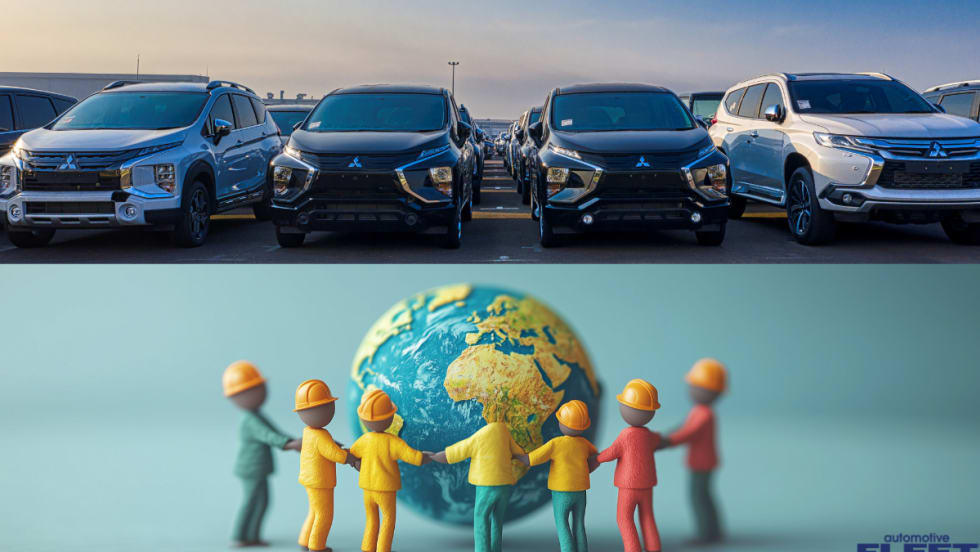
Enterprise Fleet Management Surpasses 900,000 Vehicles in U.S. & Canada
Enterprise Mobility connects with mobility solutions around the globe
Read More →
Automotive Fleet's Guide to Fleet Electrification
Unlock the secrets to a successful transition to electric fleets with Automotive Fleet's comprehensive Fleet Electrification Guide!
Read More →
Sumitomo Rubber Industries to Acquire Viaduct
Viaduct will join Sumitomo as an independent subsidiary. Partnership strengthens global reach and accelerates AI-driven innovation for fleets and manufacturing.
Read More →