





Check Out:NHTSA Recall Search Tool
General Motors Recalls Nearly 600,000 Vehicles for Potential Engine Failure
Due to potential manufacturing defects, some 2021-2024 vehicles may experience engine failure.
May 5, 2025
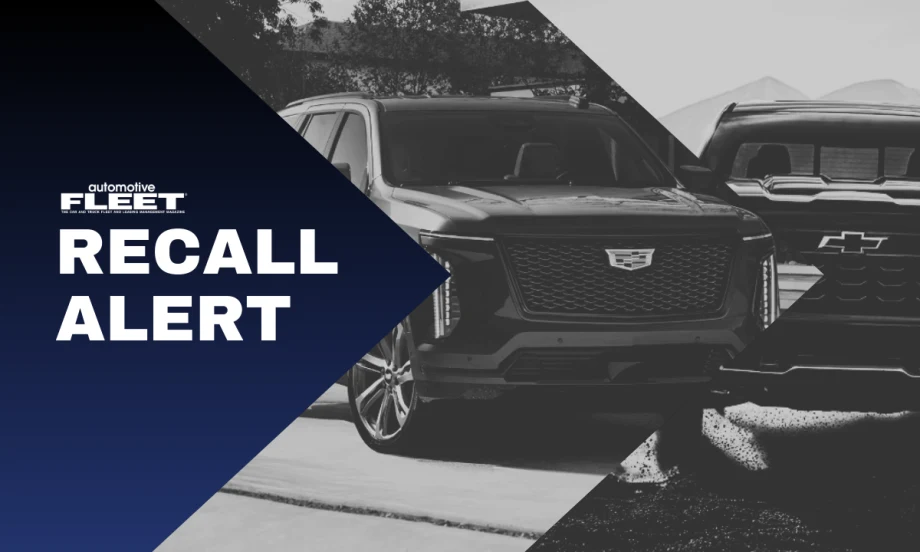
A recall caused by a potential manufacturing defects and engine failure includes certain Cadillac, Chevrolet, and GMC models.
Photo: General Motors / Automotive Fleet
2 min to read
General Motors (GM) recently issued a recall for certain 2021-2024 Cadillac, Chevrolet, and GMC vehicles.
The recall, estimating 597,571 units, calls attention to GM vehicles equipped with a 6.2L V8 gas engine. The connecting rod and/or crankshaft engine components may have manufacturing defects that can lead to engine damage and engine failure.
Specific vehicle impacts include:
2021-2024 Cadillac Escalade: 79,747
2021-2024 Cadillac Escalade ESV: 46,280
2021-2024 Chevrolet Silverado 1500: 107,244
2021-2024 Chevrolet Suburban: 22,162
2021-2024 Chevrolet Tahoe: 44,802
2021-2024 GMC Sierra 1500: 153,630
2021-2024 GMC Yukon: 82,832
2021-2024 GMC Yukon XL: 60,933
Reason for the Recall
In January 2025, GM opened a product investigation following notification from the National Highway Traffic Safety Administration (NHTSA) of its investigation into alleged engine failures in GM vehicles equipped with the L87 V8 engine.
GM’s updated field data analysis identified a build period from March 1, 2021, to May 31, 2024, with an increased rate of potentially related engine failure claims. Supplier manufacturing and quality issues were identified at intermittent periods within the suspect build period, including rod-bearing damage from sediment on connecting rods and crankshaft-oil galleries and out-of-specify crankshaft dimensions and surface finish.
If the engine fails during vehicle operation, the vehicle will lose propulsion, increasing the risk of a crash and potential engine damage. GM’s investigation identified 28,102 field complaints or incidents in the US potentially related to the failure of the L87 engine due to crankshaft, connecting rod, or engine bearing failure, of which 14,332 involved allegations of loss of propulsion.
Drivers may be alerted to the condition before failure from:
Knocking, banging, or other unusual engine noises,
Illumination of the check engine light
Engine performance issues, including hesitation, high RPMs, abnormal shifting, reduced propulsion, or a no-start condition
Remedy and Vehicle Inspection
Dealers will inspect the engine and, as necessary, repair or replace the engine. For vehicles that pass inspection, dealers will add higher viscosity oil, install a new oil fill cap, replace the oil filter, and update the owner’s manual.
Repairs will be performed free of charge. Owner notification letters are expected to be mailed on June 9, 2025.
More Safety

Sponsored•October 1, 2026
Fleet Manager’s Ultimate Playbook: Navigating the New Standard in OEM Connectivity
Rising operating costs, driver safety concerns, and unplanned downtime are putting unprecedented pressure on modern fleets. Discover how fleet managers use embedded OEM connectivity and real-time vehicle data to cut TCO, prevent downtime, and protect drivers without aftermarket telematics hardware.
Read More →
From Driver Well-Being to EV Charging | AF News Recap
Mental health belongs in the fleet safety conversation. This week, we’re looking at five ways fleets can support employee well-being before a crisis, plus Holman’s expansion in Mexico, new one-day Fleet Forward passes, and why EV charging demand is outpacing infrastructure growth.
Read More →
Nexar-Nauto Merger Aims to Give Fleets Better Safety Intelligence Through Larger Driving Dataset
Stefan Heck tells Automotive Fleet that combining more than 10 billion miles of driving history with Nexar's AI models will give fleets deeper insights into driver risk and roadway conditions than either company could provide independently.
Read More →
Don't Wait for a Crisis: 5 Ways to Build Mental Health Into Your Fleet Safety Program
For Suicide Prevention Month, fleet and safety leaders have an opportunity to put mental health where it belongs: at the center of workplace safety.
Read More →
How Camera Data Can Strengthen a Fleet’s Insurance Renewal
Insights from a commercial insurance carrier and a broker show how fleets can turn video telematic data, driver coaching, and improved claims results into a stronger case at insurance renewal.
Read More →
The Safest Fleets Aren’t the Ones with the Most Technology
You’ve made the telematics investment. Here’s how to capture the other half of its value and build the safest fleet on the road.
Read More →
Sponsored•August 7, 2026
Hidden in Plain Sight: Fleet Compliance Risks
Fleet compliance isn't just about having policies — it's about consistently enforcing them. This practical guide reveals six hidden compliance risks common in public sector and shared fleet operations and outlines proven strategies to improve visibility, accountability, and audit readiness
Read More →
NETS Sets 2026 Fleet Safety Benchmark Conference for Indianapolis
The Sept. 15–17 program will feature fleet benchmarking data, case studies, emerging technologies, and implementation strategies while running alongside the NSC Safety Congress & Expo.
Read More →
Off-the-Job Crashes Account for 43% of Employers’ $61.7 Billion Crash Burden
NETS quantifies costs dispersed across fleet, risk, HR, and other departments while providing new per-crash benchmarks for employers.
Read More →
Ram Recalls More Than 1.27 Million 1500 Pickups for Seat Belt Anchor Issue
The recall affects certain 2019-2026 Ram 1500 pickups that may have improperly attached second-row seat belt buckle anchors.
Read More →