





Miss This? How AI Enhances Buying, Selling, and Trading Vehicles
Distracted Driving in the Age of Smart Tech – Part 1
A two-part conversation with Stefan Heck on how AI is transforming the fight against distracted driving. As fleets adopt smarter tools, the focus shifts from reacting to preventing risk. In Part 1, we look at where AI is making an impact for fleets today.
April 1, 2026
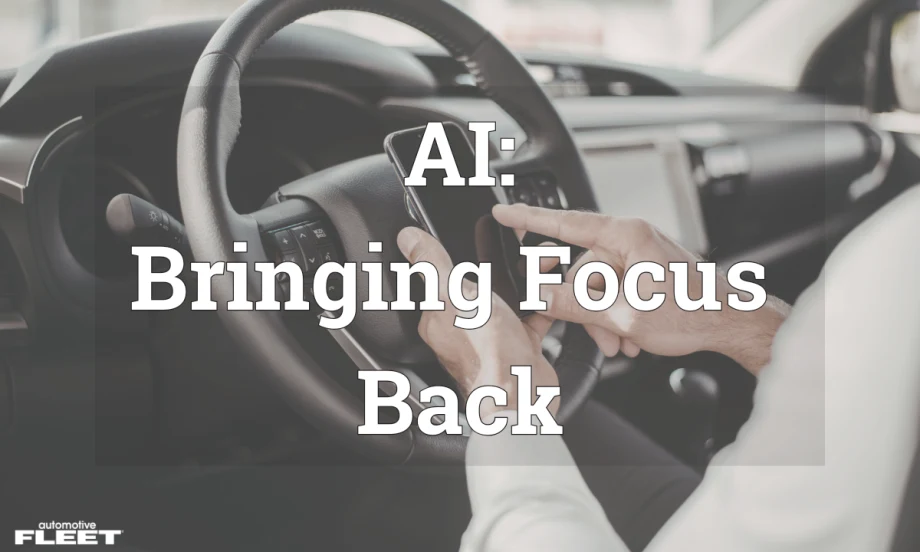
AI technology helps fleets detect and prevent distracted driving in real time.
Credit: Automotive Fleet
5 min to read
As we see more and more vehicles with state-of-the-art technology, we continue to see more and more distracted driving incidents. With 70% of collision-related losses caused by distracted driving, underscoring the need for more effective safety strategies.
In 2023, 3,275 people were killed in motor vehicle crashes involving distracted drivers, according to the National Highway and Traffic Safety Administration (NHTSA).
Can increased AI adoption be the key? We spoke with Stefan Heck, CEO of Nauto, to get an in-depth view of how AI is impacting the fleet industry and helping commercial fleets mitigate distracted-driving risks and lower insurance premiums.
This interview has been edited for length and clarity.
Q: How are leading commercial fleets quantifying the ROI of AI-powered driver monitoring systems in 2026?
Heck: In 2026, leading fleets quantify ROI by measuring:
driver behavior change
collision frequency reduction before and after AI system deployment, and
collision loss reduction - i.e., damage repair and claims liability.
Moving from reactive recording to predictive risk prevention enables AI to drive these savings much faster and more substantially. Metrics like Nauto’s VERA predictive risk score show that every 10-point improvement in driver score correlates with a roughly 20% reduction in collision frequency.
Financially, this translates into meaningful insurance savings, often in the range of 10 to 15% up front, along with reduced downtime and a 5-80% reduction in claims costs, which over time lowers insurance rates further.
Operationally, AI-driven “coaching by exception” allows in-cab systems to resolve most risky behaviors in real time, reducing manual review and administrative workload by up to 75% while accelerating driver exoneration from months to minutes
Q: What operational metrics (e.g., collision rates, insurance costs, downtime) are improving most significantly with AI adoption?
Heck: The most significant improvements from AI adoption are seen in driver-behavior risk rates, collision frequency, and severity.
Insurance-related costs tend to lag, as insurance companies typically offer smaller upfront credits or discounts (5-15%) but adjust rates after claims reductions are proven. It often takes one to two years for major claims to settle (this is called “loss development), which drives this lag.
Operational downtime can change quickly with every avoided collision, but can improve even further over time as routing and deployment are adjusted. Predictive AI reduces high-risk situations before they escalate, leading to meaningful declines in preventable collisions and especially high-severity incidents.
For self-insured fleets (typically those with more than 1000 vehicles), this directly impacts insurance outcomes, with fewer claims, lower reserves required, and improved underwriting profiles over time.
At the same time, fleets experience less vehicle downtime and disruption, as fewer incidents mean fewer repairs, less administrative overhead, and more consistent fleet utilization.
Increasingly, fleets also track leading indicators such as reductions in distracted driving and tailgating, which provide early signals of long-term safety and cost improvements.
Q: What specific distracted driving behaviors can AI now detect in real time that traditional telematics still misses?
Heck: Modern AI can detect a wide range of distracted driving behaviors in real time that traditional telematics cannot capture, because it analyzes visual and behavioral context rather than just vehicle movement.
This includes handheld phone use, such as texting or dialing, as well as more subtle behaviors like looking down at a device, eating, smoking, interacting with in-cab systems, drowsiness, or extended gaze away from the road.
AI can also identify cognitive distraction by tracking gaze patterns, head pose, and attention over time, distinguishing between a quick glance and sustained inattention.
In contrast, traditional telematics is limited to indirect signals like harsh braking, speeding, or lane changes, which only indicate that something has already gone wrong, not what caused it.
Q: How easily do AI safety platforms integrate with existing fleet management, telematics, and camera systems?
Heck: AI safety platforms today are designed to integrate very easily with existing fleet systems. They can connect seamlessly to telematics, cameras, and fleet management platforms via standard APIs, enabling fleets to leverage existing infrastructure without major changes. This enables rapid deployment and minimizes operational disruption.
Importantly, AI systems can both enhance existing tools by adding a layer of contextual intelligence on top of existing data, giving fleets a more complete and actionable view of risk without requiring a full system overhaul. An integrated AI system like Nauto can also replace existing telematics, ELD, and asset management systems, making it easier to do everything in a single platform.
Q: How are fleets balancing driver privacy concerns with the need for continuous monitoring?
Heck: Fleets are balancing driver privacy and safety by moving away from continuous video recording toward real-time AI systems that only capture high-risk events.
Instead of recording everything, modern platforms process data in real time and capture only surface-level information when a meaningful risk is detected. This significantly reduces the amount of data stored while still enabling effective safety interventions.
Drivers can sign, pick their nose, sleep at a rest stop, and be assured no one is watching. Just make sure your chosen system doesn’t have a “drop-in” feature that lets the supervisor secretly watch.
Q: At what point does AI move from a “nice-to-have” to a baseline requirement for competitive fleet operations?
Heck: AI is already moving from a “nice-to-have” to a baseline requirement for competitive fleet operations. As safety performance, cost efficiency, and customer expectations are increasingly tied to measurable outcomes, we see more segments of the fleet industry implementing AI safety technology.
As most fleets get AI safety systems, not having one becomes a serious disadvantage and liability, since in any crash, the other person will have much more data for their lawyers.
Fleets that cannot demonstrate consistent reductions in collisions, improved driver behavior, and data-driven safety performance are starting to fall behind in performance, costs, and driver retention.
Q: Are fleets using AI safety data as a differentiator when bidding for contracts or working with enterprise clients?
Heck: Yes, increasingly, fleets are using AI-driven safety performance as a key differentiator when bidding for contracts, especially with large enterprise clients. Demonstrating measurable reductions in collisions, improved driver behavior, and strong safety metrics enables fleets to position themselves as lower-risk, more reliable partners.
In many cases, AI-generated insights and safety scores are becoming part of the value proposition, helping fleets win business, negotiate better terms, and strengthen relationships with customers who prioritize safety, compliance, and operational excellence.
Many large enterprises also increasingly have procurement standards that require suppliers to have safety systems, effectively setting a minimum bar to bid.
Subscribe to Our Newsletter
More Safety

Sponsored•October 1, 2026
Fleet Manager’s Ultimate Playbook: Navigating the New Standard in OEM Connectivity
Rising operating costs, driver safety concerns, and unplanned downtime are putting unprecedented pressure on modern fleets. Discover how fleet managers use embedded OEM connectivity and real-time vehicle data to cut TCO, prevent downtime, and protect drivers without aftermarket telematics hardware.
Read More →
From Driver Well-Being to EV Charging | AF News Recap
Mental health belongs in the fleet safety conversation. This week, we’re looking at five ways fleets can support employee well-being before a crisis, plus Holman’s expansion in Mexico, new one-day Fleet Forward passes, and why EV charging demand is outpacing infrastructure growth.
Read More →
Nexar-Nauto Merger Aims to Give Fleets Better Safety Intelligence Through Larger Driving Dataset
Stefan Heck tells Automotive Fleet that combining more than 10 billion miles of driving history with Nexar's AI models will give fleets deeper insights into driver risk and roadway conditions than either company could provide independently.
Read More →
Don't Wait for a Crisis: 5 Ways to Build Mental Health Into Your Fleet Safety Program
For Suicide Prevention Month, fleet and safety leaders have an opportunity to put mental health where it belongs: at the center of workplace safety.
Read More →
How Camera Data Can Strengthen a Fleet’s Insurance Renewal
Insights from a commercial insurance carrier and a broker show how fleets can turn video telematic data, driver coaching, and improved claims results into a stronger case at insurance renewal.
Read More →
The Safest Fleets Aren’t the Ones with the Most Technology
You’ve made the telematics investment. Here’s how to capture the other half of its value and build the safest fleet on the road.
Read More →
Sponsored•August 7, 2026
Hidden in Plain Sight: Fleet Compliance Risks
Fleet compliance isn't just about having policies — it's about consistently enforcing them. This practical guide reveals six hidden compliance risks common in public sector and shared fleet operations and outlines proven strategies to improve visibility, accountability, and audit readiness
Read More →
NETS Sets 2026 Fleet Safety Benchmark Conference for Indianapolis
The Sept. 15–17 program will feature fleet benchmarking data, case studies, emerging technologies, and implementation strategies while running alongside the NSC Safety Congress & Expo.
Read More →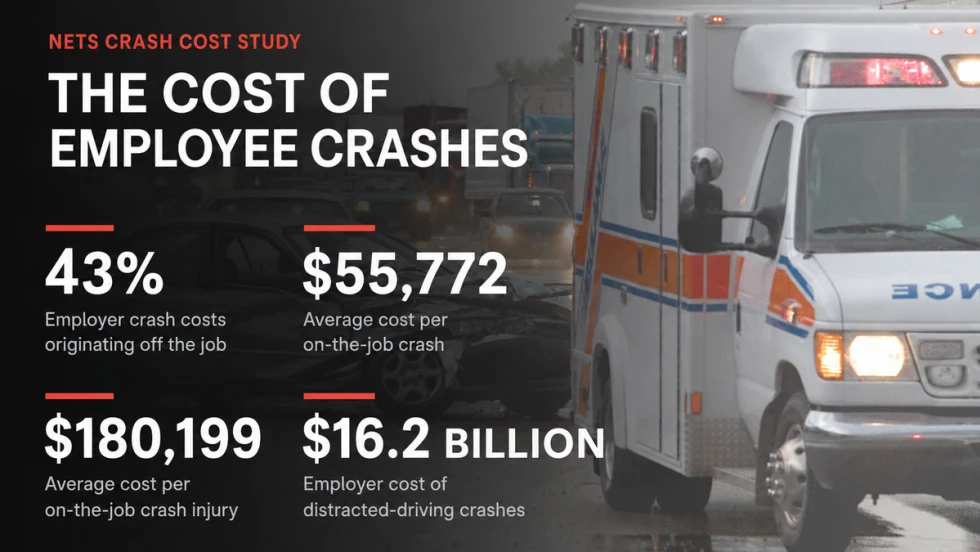
Off-the-Job Crashes Account for 43% of Employers’ $61.7 Billion Crash Burden
NETS quantifies costs dispersed across fleet, risk, HR, and other departments while providing new per-crash benchmarks for employers.
Read More →
Ram Recalls More Than 1.27 Million 1500 Pickups for Seat Belt Anchor Issue
The recall affects certain 2019-2026 Ram 1500 pickups that may have improperly attached second-row seat belt buckle anchors.
Read More →