





Keep Reading: New Tech Is Revolutionizing Fleet Safety — But at the Price of Awareness?
Survey Reveals 7 in 10 Company Drivers Fear Injury, Death, or Lawsuits
Nationwide’s survey shows 53% of drivers regularly take work-related calls while driving, whereas 1 in 4 respond to work texts or emails on the road, prompting hands-free safety policies and training.
April 29, 2025

Staffing shortages likely contribute to drivers’ challenges, leading to heavier workloads and heightened safety concerns, as 4 in 10 drivers say their company is struggling to hire or retain qualified drivers.
Photo: Tima Miroshnichenko via Pexels
4 min to read
As more employees return to the office and traffic volumes rise across the U.S., today’s company drivers face increasingly hazardous roadways.
New research from Nationwide shows that most company drivers routinely dodge distracted motorists on their work routes. Still, many also confess to risky behaviors themselves behind the wheel that could lead to dangerous and costly accidents.
Still, that self-awareness doesn’t quiet their fears. About 70% of company drivers say they worry about being killed or hurt in a collision or being held liable for the damages.
State of the Roadways
89% of company drivers rate their driving as good or excellent, but less than 60% say the same of other drivers on the road.
At least 1 in 5 company drivers (21%) admit to being frequently distracted while driving for work — the most common distractions being GPS systems, cell phone use (calls, texts, social media), eating or drinking, and adjusting their radio or music.
But it’s not just them: compared to a year ago, company drivers think other motorists are using their phones more behind the wheel (69%) and driving faster (66%) and more aggressive (70%) today.
Employees may also feel work pressures: 53% regularly take work phone calls, and roughly a quarter are reading/responding to work texts (28%) or emails (24%) while driving. Another 40% are frequently taking personal phone calls behind the company wheel.
Staffing Shortages and Safety Effects
Staffing shortages likely contribute to drivers’ challenges, leading to heavier workloads and heightened safety concerns, as 4 in 10 drivers say their company is struggling to hire or retain qualified drivers.
This year’s data revealed a 10-point jump across the board in drivers who say staffing shortages have increased their workload (72%), required them to work longer hours (71%), made it harder to meet deadlines (57%), decreased the quality of training (54%) and reduced the focus on safety and compliance (49%).
48% also report that their employer has reduced hiring criteria due to talent shortages.
Most concerning, 41% of drivers say the staffing shortages have negatively impacted their driving.
Increased Use of Dashcams and Hands-Free Policies
Many employers are adopting proactive measures to minimize dangerous behaviors and phone distractions among fleet drivers, but there are still opportunities to enhance safety initiatives further.
Implementing dashcam requirements and hands-free driving policies have grown significantly in the past 12 months, but enforcement of those policies vary.
84% of company drivers have a dashcam installed in their work vehicle. This 29-point year-over-year increase signals a growing commitment to improve driver behavior, reduce liability, and improve fleet safety.
Nearly two-thirds (65%) say their employer requires a dashcam (+27 points), while a quarter say they’re just encouraged, and 10% don’t feel pressured to use one.
44% of company drivers report that their employer enforces a hands-free driving policy and monitors their cell phone usage while driving – a 10-point increase from last year.
24% have a hands-free policy but don’t monitor cell phone usage
22% do not allow cell phone use at all while driving
10% don’t have any form of policy or monitoring in place
71% also report their employer uses continuous motor vehicle record monitoring, such as SambaSafety.
“The sharp rise in dashcam usage and hands-free policies sends a clear message: employers are serious about tackling distractions and protecting their drivers,” said Mark McGhiey, risk management and client services leader at Nationwide.
“With at least 1 in 5 drivers admitting to frequent distractions behind the wheel, and the industry’s belief that this number may be even higher, it’s clear that policy alone isn’t enough — consistent driver engagement and training is crucial to turning these efforts into safer roads for everyone,” McGhiey said.
Training Can Help Ease Concerns
With collision concerns at the forefront of their minds, 69% of company drivers fear a crash will affect their employer’s reputation or future job prospects. About 1 in 5 (19%) also say their employer has faced legal action due to a driving-related incident.
While 87% feel their management prioritizes driver safety, 8 in 10 also wish for more training to help prevent accidents.
Most employers offer training around critical driving safety topics, but at least 3 in 10 do not:
Driving in adverse weather – 69%
Distracted driving – 67%
Preventing accidents and collisions – 67%
Proper following distance – 65%
Drowsy and fatigued driving – 61%
“In today’s challenging driving environment, it’s essential to have a comprehensive fleet safety program that ensures qualified and attentive drivers,” said McGhiey. “Enforcing hands-free policies and mobile phone monitoring, along with leveraging technologies like fleet telematics, can significantly reduce risky and dangerous driving habits. And when drivers see their employers taking proactive steps to reduce accidents through technology, policies, and training, they may feel more protected — and more likely to stay.”
More Safety

Sponsored•October 1, 2026
Fleet Manager’s Ultimate Playbook: Navigating the New Standard in OEM Connectivity
Rising operating costs, driver safety concerns, and unplanned downtime are putting unprecedented pressure on modern fleets. Discover how fleet managers use embedded OEM connectivity and real-time vehicle data to cut TCO, prevent downtime, and protect drivers without aftermarket telematics hardware.
Read More →
From Driver Well-Being to EV Charging | AF News Recap
Mental health belongs in the fleet safety conversation. This week, we’re looking at five ways fleets can support employee well-being before a crisis, plus Holman’s expansion in Mexico, new one-day Fleet Forward passes, and why EV charging demand is outpacing infrastructure growth.
Read More →
Nexar-Nauto Merger Aims to Give Fleets Better Safety Intelligence Through Larger Driving Dataset
Stefan Heck tells Automotive Fleet that combining more than 10 billion miles of driving history with Nexar's AI models will give fleets deeper insights into driver risk and roadway conditions than either company could provide independently.
Read More →
Don't Wait for a Crisis: 5 Ways to Build Mental Health Into Your Fleet Safety Program
For Suicide Prevention Month, fleet and safety leaders have an opportunity to put mental health where it belongs: at the center of workplace safety.
Read More →
How Camera Data Can Strengthen a Fleet’s Insurance Renewal
Insights from a commercial insurance carrier and a broker show how fleets can turn video telematic data, driver coaching, and improved claims results into a stronger case at insurance renewal.
Read More →
The Safest Fleets Aren’t the Ones with the Most Technology
You’ve made the telematics investment. Here’s how to capture the other half of its value and build the safest fleet on the road.
Read More →
Sponsored•August 7, 2026
Hidden in Plain Sight: Fleet Compliance Risks
Fleet compliance isn't just about having policies — it's about consistently enforcing them. This practical guide reveals six hidden compliance risks common in public sector and shared fleet operations and outlines proven strategies to improve visibility, accountability, and audit readiness
Read More →
NETS Sets 2026 Fleet Safety Benchmark Conference for Indianapolis
The Sept. 15–17 program will feature fleet benchmarking data, case studies, emerging technologies, and implementation strategies while running alongside the NSC Safety Congress & Expo.
Read More →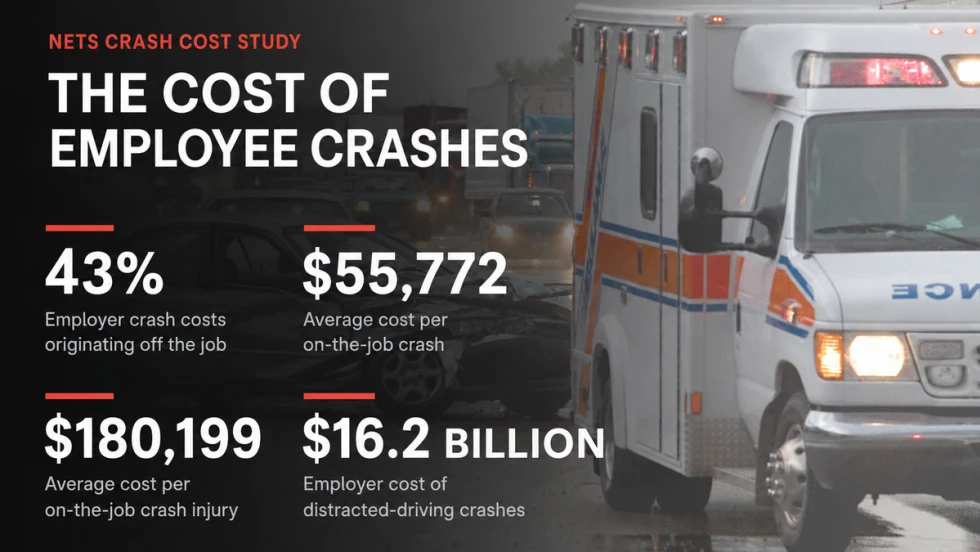
Off-the-Job Crashes Account for 43% of Employers’ $61.7 Billion Crash Burden
NETS quantifies costs dispersed across fleet, risk, HR, and other departments while providing new per-crash benchmarks for employers.
Read More →
Ram Recalls More Than 1.27 Million 1500 Pickups for Seat Belt Anchor Issue
The recall affects certain 2019-2026 Ram 1500 pickups that may have improperly attached second-row seat belt buckle anchors.
Read More →