




Former Chrysler Canada President Dies at 86
Maurice (Moe) Closs, the Chrysler Canada president who presided over the 1983 launch of the Dodge Caravan minivan at the Windsor Assembly Plant, died September 17 at the age of 86.
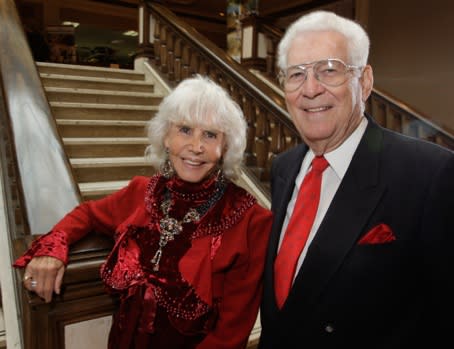
Miki and Moe Closs are shown at the 2008 Negev Dinner.
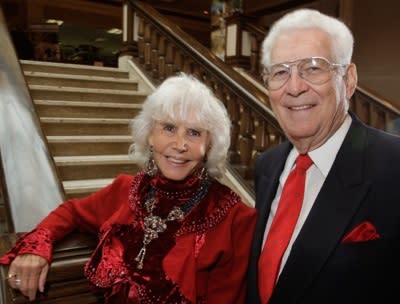
Miki and Moe Closs are shown at the 2008 Negev Dinner.
Maurice (Moe) Closs, the Chrysler Canada president who presided over the 1983 launch of the Dodge Caravan minivan at the Windsor Assembly Plant, died September 17 at the age of 86.
Closs’s legacy continues to shape the automaker, said Reid Bigland, current president and CEO of Chrysler Canada.
“As president and CEO of Chrysler Canada from 1980 to 1989, Moe Closs was at the helm of the organization during times of significant change,” Bigland said in a statement. “He presided over the introduction of the 1984 Dodge Caravan, which continues to rank as the fifth best-selling vehicle in Canada, after more than 30 years. In 1987, he also led the acquisition of the former American Motors plant, which is today known as the Chrysler Canada Brampton Assembly Plant, home of the Chrysler 300, Dodge Charger and Dodge Challenger sedans. He was a great leader for the company and we extend our heartfelt condolences to his wife and family on their loss.”
Closs took over Chrysler’s Canadian operations just as the automaker was on the brink of financial collapse. “He came in at absolutely the lowest ebb of the company,” recalled Walt McCall, a former Windsor Star reporter who joined the automaker as manager of public relations. “The company was on its corporate keister.”
Handpicked by then Chrysler Corp. CEO Lee Iacocca, Closs steered the struggling company’s turnaround on North of the U.S. border. “At the time of the financial crisis, Chrysler Corp. had only US$2.5 million in cash and was spending $250 million a week,” Closs said in a speech delivered to the Windsor Rotary Club Dec. 4, 1989 – weeks before his retirement.
A U.S. government loan of $1.5 billion as well as the successful launch of the Caravan helped Chrysler stage one of the industry’s most successful turnarounds. The Canadian government approved a $500-million loan guarantee, but the automaker never made use of it.
To bring the minivan on stream, Chrysler spent $700 million, including $400 million to convert and retool the plant, which had assembled sedans. At the time, it was the largest expenditure ever for Chrysler in Canada.
“That was a huge day, Nov. 2, 1983 — the official rollout of the Dodge Caravan and Plymouth Voyageur,” McCall recalled. “Iacocca was there. For Moe, it was one of the brightest days of his entire career.”
Closs had said a collective effort saved the carmaker: “Chrysler was saved because a lot of people – our employees, dealers, banks, union and yes, various levels of government – pulled together to save a great company and an estimated 600,000 jobs in the U.S. and 40,000 in Canada.”
By the time he retired, Chrysler had $3 billion in the bank and led the North American market in minivans, turbo-charged vehicles, and convertibles, said Closs. He said the outlook for the Windsor Assembly Plant was bright and, with more than 1.6 million built to date, there were plans for an extensive redesign, including new panels, new interior, and optional four-wheel drive.
“He was absolutely the right guy at the right time,” McCall said. “We needed a strong, dynamic personality, and boy, he was certainly that.”
Ken Lewenza, who was a young executive member of CAW Local 444, which represented hourly workers at the minivan plant, described Closs as a “natural” when it came to marketing Chrysler Canada.
“What I remember was his flamboyance, his energy and natural ability to be the spokesperson not just for Chrysler, but for the Canadian auto industry,” Lewenza said. “He was front and center on the political and regulatory issues negatively affecting the industry.”
In fact, Closs lashed out at governments for offering subsidies to Japanese and South Korean auto companies to build plants in North America – a policy he feared would lead to overcapacity. “Something’s got to give,” Closs said. “There’s bound to be a shakeout. Some plants will have to close. Jobs will be lost.”
Born in Toronto, Closs attended General Motors Institute and Wayne State University, Queen’s University, and the University of Western Ontario.
He joined the parts division of Chrysler Canada in 1959 and the following year was appointed director of parts marketing. In 1974, Closs became vice-president marketing for the company and joined Chrysler Canada’s board of directors.
In 1979 he was made staff executive for U.S. Automotive Sales and Marketing at Chrysler Corp. He was named Chrysler Canada president and CEO on July 8, 1980 and a vice-president of Chrysler Corp., in 1981.
He retired from Chrysler on Dec. 31, 1989, after more than 46 years in the automotive industry. During retirement, he and his wife, Miki, made the Windsor area their permanent home. In his later years, Closs was afflicted by Alzheimer’s disease, said Hal Sullivan, a former CBC journalist and longtime friend.
In his farewell speech to the Rotary Club, Closs could not resist one last sales pitch, urging his audience to visit a Chrysler dealership: “Go ahead and kick the tires, open and slam the doors and smell the interior, and for God’s sake, buy it. You’ve got to pay for Moe’s pension!”
More Global Fleet

Holman Takes Full Ownership of ARIZA in Mexico
Holman is bringing its Mexican fleet management operation fully under its own brand after more than 30 years as a joint venture. The change gives multinational fleet customers a single Holman operation across the U.S., Canada, and Mexico.
Read More →
Proven Ways to Reduce Work Truck Downtime
The age-old problem of downtime will always be a reality, but with new strategies at hand, fleets have more ways to keep trucks on the road longer.
Read More →
The Top 300 Commercial Fleets
The Top 300 Commercial Fleets: See the List
Read More →


Cameras, Safety and Insurance: From Reactive Claims to Real-Time Prevention (Part 2 of 2)
Part Two: Commercial auto remains one of the most challenging and costly lines of coverage for fleet operators and insurers alike. Continue learning more about how to effectively address these issues from Onur Aksan, Enterprise Business Development Executive, Geotab
Read More →
Cameras, Safety and Insurance: From Reactive Claims to Real-time Prevention
Commercial auto remains one of the most challenging and costly lines of coverage for fleet operators and insurers alike. Learn more about how to effectively address these issues from Onur Aksan, Enterprise Business Development Executive, Geotab.
Read More →
Fleet Costs Are Rising: Here’s How Leaders Are Responding
Fleet leaders are under pressure to reduce costs, adapt to economic uncertainty, and make smarter decisions. See how peers across North America are responding with real data, proven strategies, and forward-looking insights. Download the 2026 Market Pulse Report to benchmark your strategy and uncover where you can gain an edge.
Read More →
Enterprise Fleet Management Surpasses 900,000 Vehicles in U.S. & Canada
Enterprise Mobility connects with mobility solutions around the globe
Read More →
Automotive Fleet's Guide to Fleet Electrification
Unlock the secrets to a successful transition to electric fleets with Automotive Fleet's comprehensive Fleet Electrification Guide!
Read More →
Sumitomo Rubber Industries to Acquire Viaduct
Viaduct will join Sumitomo as an independent subsidiary. Partnership strengthens global reach and accelerates AI-driven innovation for fleets and manufacturing.
Read More →