




Energy Department to Help Fund Plug-In Hybrid Projects
ANN ARBOR, Mich. --- The U.S. Department of Energy (DOE) announced last week plans to invest nearly $20 million in plug-in hybrid vehicle (PHEV) research.
ANN ARBOR, Mich. --- The U.S. Department of Energy (DOE) announced last week plans to invest nearly $20 million in plug-in hybrid vehicle (PHEV) research. Five projects have been selected for negotiation of awards under DOE's collaboration with the United States Advanced Battery Consortium (USABC). At stake is $17.2 million in DOE funding for PHEV battery development projects. The DOE will provide nearly $2 million to the University of Michigan to spearhead a study exploring the future of PHEVs. "These projects will help provide the perspective and expertise necessary to get plug-in hybrid electric vehicles out of the laboratory and into the showroom, a key part of the president's plan to reduce our reliance on oil by increasing the use of clean energy technologies," Assistant Secretary for Electricity Delivery and Energy Reliability Kevin M. Kolevar said. The five projects selected for negotiation of awards address critical barriers to the commercialization of PHEVs, specifically battery cost and battery life. Combined with cost-share from the United States Advanced Battery Consortium (USABC), these projects will allow up to $38 million in battery research and development. DOE funding is subject to negotiation of final contract terms and Congressional appropriations. Projects are expected to begin this year and continue through 2009. Funding will come from DOE's Office of Energy Efficiency & Renewable Energy (fiscal years ’07-’09). USABC will negotiate final contract terms with five lithium ion battery developers. Companies selected for negotiation of awards include: ** 3M of St. Paul, Minn. --- selected for an award of up to $1.14 million from DOE (total DOE/industry cost share: $ 2.28 million) over two years to screen nickel/manganese/cobalt (NMC) cathode materials through building and testing of small-sized cells. ** A123Systems of Watertown, Mass. --- selected for an award of up to $6.25 million from DOE (total DOE/industry cost share: $12.5 million) over three years for a project to develop batteries based on nanophase iron-phosphate chemistry for 10- and 40-mile range PHEVs. ** Compact Power Inc. of Troy, Mich. --- selected for an award of up to $4.45 million from DOE (total DOE/industry cost share: $12.7 million) over three years to develop batteries for 10-mile range PHEVs using high energy and high power manganese-spinel. ** EnerDel Inc. of Indianapolis, Ind. --- selected for an award of up to $1.25 million from DOE (total DOE/industry cost share: $2.5 million) over two years to develop cells for 10- and 40-mile range PHEVs using nano-phase lithium titanate coupled with a high voltage nickel-manganese cathode material. ** Johnson Controls – Saft Advanced Power Solutions of Milwaukee, Wis. --- selected for an award of up to $4.1 million from DOE (total DOE/industry cost-share: $8.2 million) over two years to develop batteries using a nickelate/layered chemistry for 10- and 40-mile range PHEVs. The University of Michigan's Michigan Memorial Phoenix Energy Institute (MMPEI) will receive nearly $2 million from DOE to coordinate efforts among DOE and its Pacific Northwest National Laboratory, General Motors, Ford Motor Company, and DTE Energy to conduct a two-year study on PHEVs. Specifically, the study will: -- Evaluate how PHEVs would share the power grid with the nation's other energy needs; -- Monitor the American public's evolving view of PHEVs and provide the first national-level empirical data on how driving behavior differs with these vehicles compared to conventional gasoline, diesel, and hybrid vehicles; -- Assess a possible reduction of greenhouse gas emissions with the increased use of PHEVs; -- Identify how automakers could optimize PHEV design to increase performance while also reducing cost. U-M researchers and auto industry partners will build a simulation model to test different PHEV design concepts. Research for this study will take place over the next two years, and a preliminary report is expected to be released in January of 2008, at the Detroit Auto Show. DOE's Office of Electricity Delivery & Energy Reliability and Office of Energy Efficiency & Renewable Energy (EERE) will fund this study (fiscal years 2007 and 2008, subject to appropriations from Congress). USABC is a consortium of the United States Council for Automotive Research (USCAR), the umbrella organization for collaborative research among the Chrysler LLC, Ford Motor Company and General Motors Corp. USABC's mission is to develop electrochemical energy storage technologies that support commercialization of fuel cell, hybrid and electric vehicles.
More Fuel

Bob Adamsky on Fuel Volatility: "Don't Panic, Have a Plan."
When it comes to up and down fuel prices, Adamsky has a message for fleets: “Don’t panic.”
Read More →
How Fleets Can Gain Control of Non-Fuel Spend
Fuel often gets the spotlight, but non-fuel expenses can have a major impact on fleet costs. Ramel Lindsay of U.S. Bank Voyager discusses how fleets can gain better visibility and control over these often-overlooked expenditures.
Read More →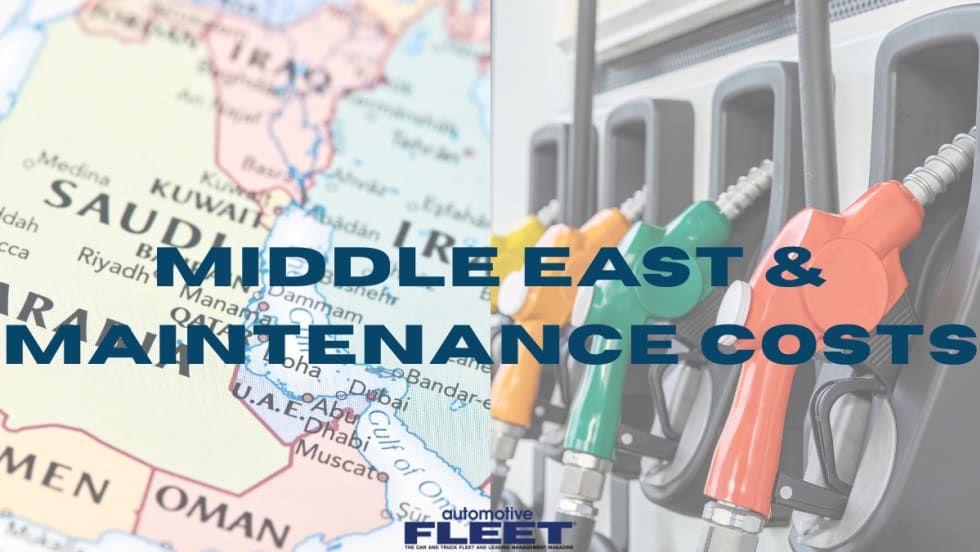
Fuel is Just the Start: How Middle East Tensions are Driving Up Fleet Maintenance Costs
The Middle East conflict is doing more than pushing up fuel prices. It’s also raising the cost of key maintenance products your fleet depends on, from motor oil to tires to windshield wipers. Here’s what you need to know about this budget-busting situation.
Read More →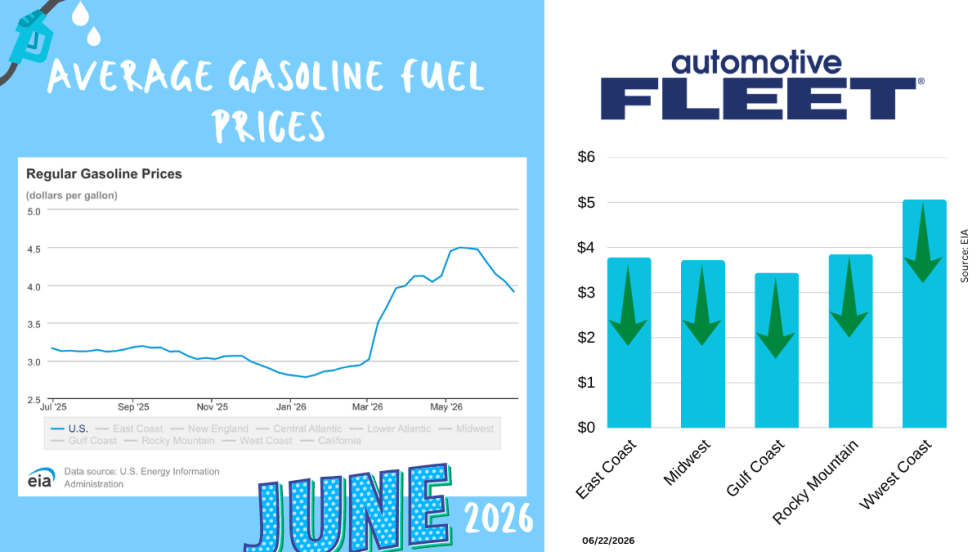
June Fuel Update: Prices Fall Below $4
Drivers are finally getting some relief at the pump. The national average gas price has dropped below $4 a gallon for the first time in months, with prices falling in 47 states as oil markets react to developments in U.S.-Iran negotiations.
Read More →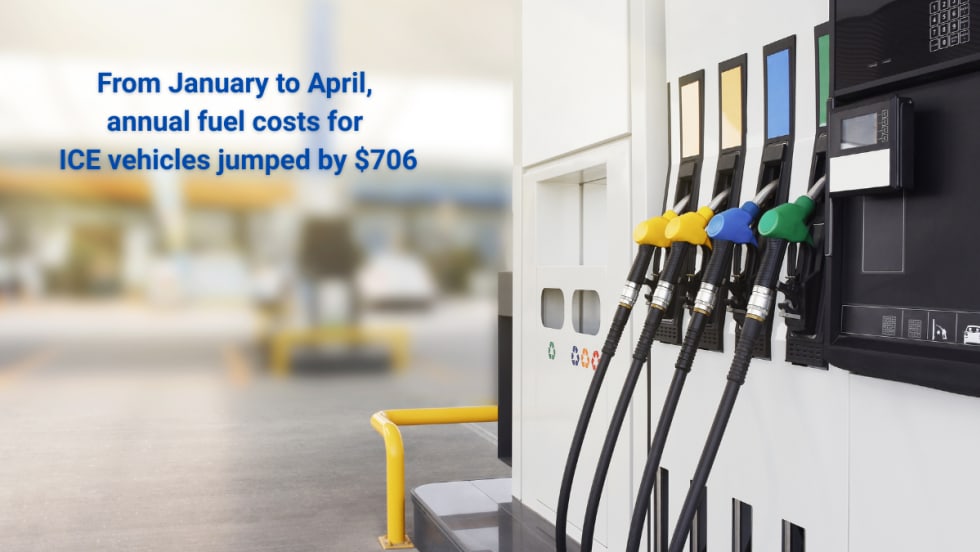
Study: How 2026's Gas Price Hikes Affect Different Vehicle Types
New data from iSeeCars reveals how rising fuel costs have affected different vehicle segments as gasoline prices climbed nearly 46% over the past four months.
Read More →
Are You Tracking Your Fleet's True Total Cost of Ownership?
Bobit Business Media surveyed 190 fleet professionals and found that while most fleets are tracking costs, fragmented systems and data gaps are keeping true TCO visibility out of reach. With rising pressure to control spend in an increasingly volatile environment, the gap between what fleets think they know and what the data actually shows is wider than you might expect. See how your peers are managing costs today and where the industry still has room to improve.
Read More →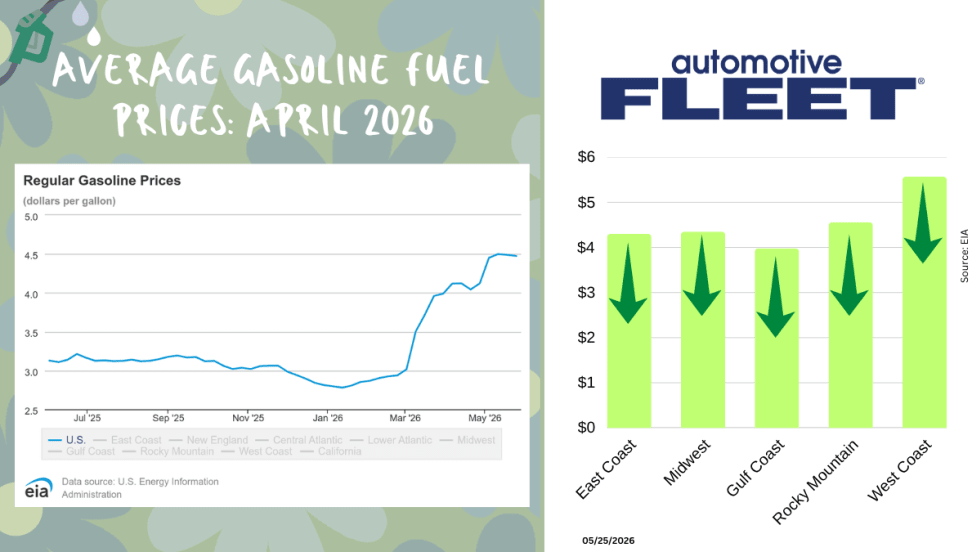
May Fuel Update: All Regions Experience Declines
Gas prices are finally easing in much of the country, but experts warn global tensions could quickly reverse the trend as the national average remains well above last month’s levels.
Read More →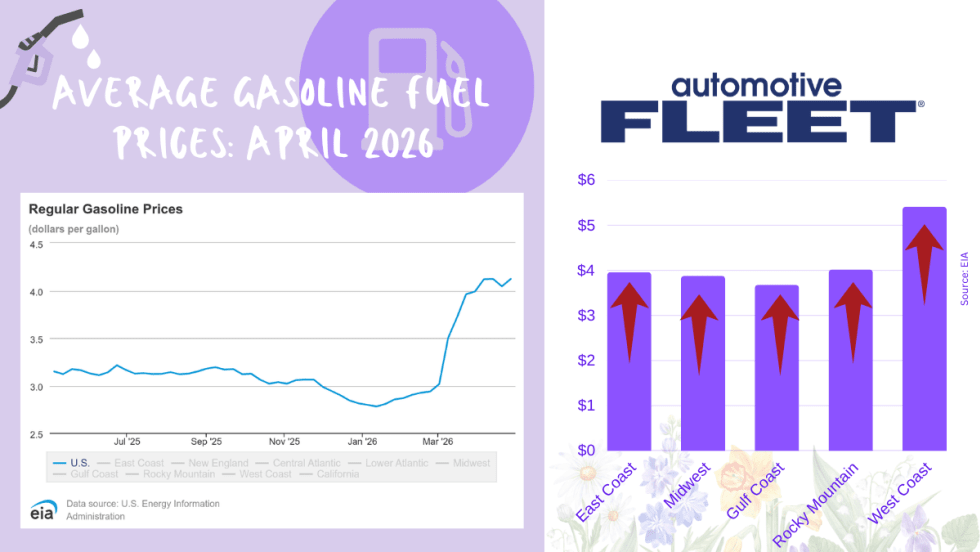
April Fuel Update: Prices Climb Above $4 as Spring Surge Accelerates
National average jumps to $4.04 per gallon, up sharply from last year, with West Coast prices topping $5 and further increases expected amid rising oil tensions.
Read More →
Tips from Fleet Managers on Saving Fuel Costs
Fleet leaders share practical strategies to reduce fuel spend through smarter policy, routing, and driver guidance.
Read More →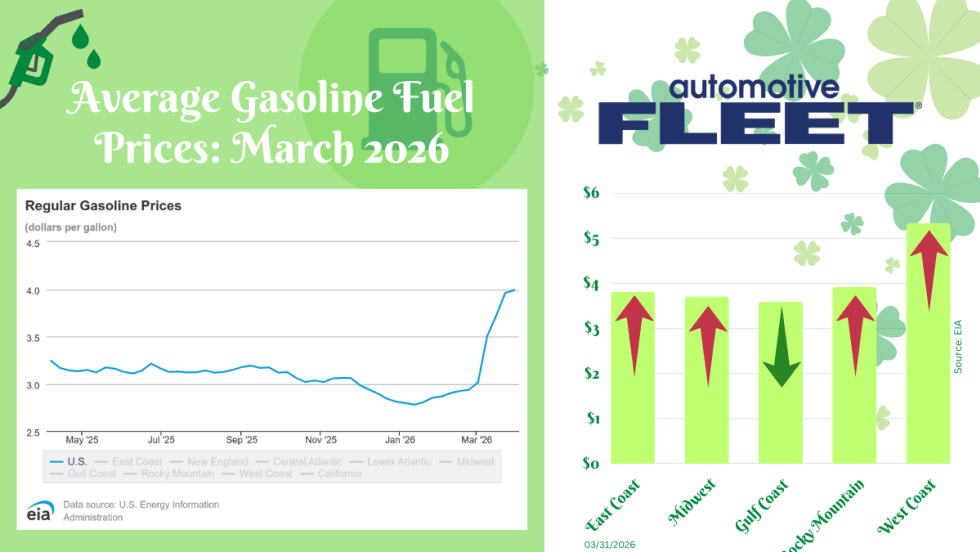
March Fuel Update: Prices Settle With a $4 Average
Fuel prices significantly slowed this week, but a $4 national average is still expected.
Read More →