




Drowsy Driving Persists as Fatal Crash Cause
A new report from the Governors Highway Safety Association highlights the costs of drowsy driving -- in lives and dollars -- and what steps states can take to better combat the problem.
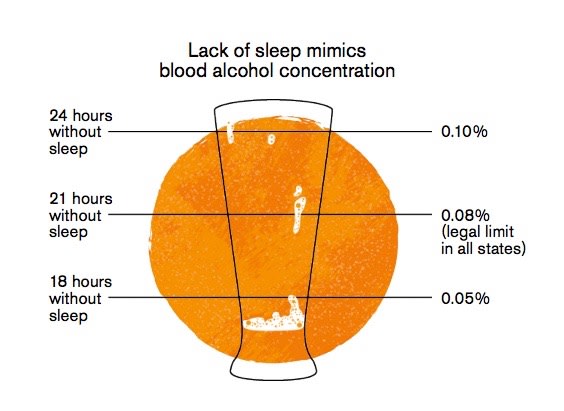
Infographic courtesy of GHSA.
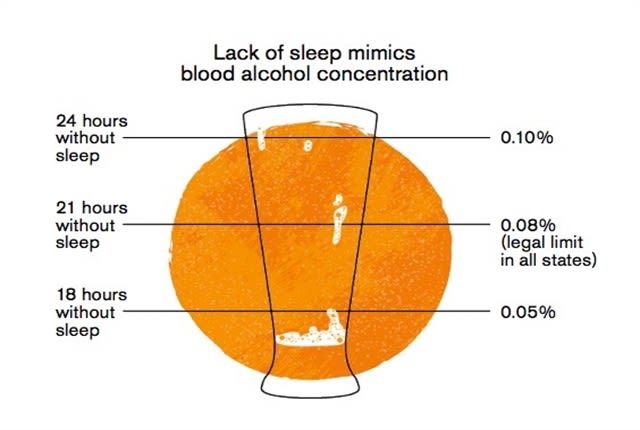
Infographic courtesy of GHSA.
Nearly 83.6 million sleep-deprived Americans drive every day — a dangerous trend that last year led to an estimated 5,000 lives lost in drowsy driving-related crashes, according to a new report from the Governors Highway Safety Association.
The extreme danger posed by tired drivers has prompted the National Highway Traffic Safety Administration (NHTSA) to expand its definition of impaired driving to include drowsy driving — along with drunk, drugged, and distracted driving. The report, funded through a grant from State Farm, includes a new NHTSA estimate that the annual societal cost of fatigue-related fatal and injury crashes is $109 billion, not including property damage.
The GHSA report, which comes on the heels of vehicle deaths rising 7.7% nationwide in 2015, examines the cause and effect of drowsy driving as well as how states and others can best address it.
While estimates of deaths caused by drowsy drivers range from 2% to 20% of all traffic fatalities, safety officials agree that the extent of the problem is not fully known. Data is incomplete, and there’s no definitive tool available to determine when a motorist is too tired to drive. Moreover, the report notes, the public generally lacks an understanding of the importance of sleep and how much is needed to drive safely.
The report calls for a cultural change in how drowsy driving is viewed by the public. The document cites a previous study showing that 33% of 18- to 34-year-olds and 19% of 35- to 54-year-olds believe that to get ahead in their careers, they need to survive on less sleep.
Too often, sacrificing sleep is seen as a sign of commitment, and many drivers mistakenly believe they can simply will themselves to stay awake behind the wheel when they’re fatigued.
“There are challenges associated with both measuring and combating drowsy driving,” said GHSA Executive Director Jonathan Adkins, who oversaw development of the report. “Law enforcement lack protocols and training to help officers recognize drowsy driving at roadside. And if a crash occurs, the drowsy driver may not report the cause due to concerns about monetary and other penalties.”
Drowsy drivers exhibit slower reaction times, impaired judgment, higher levels of risk taking, more frequent blinking and eye closure, deficits in cognitive performance, memory impairment, attention failure, and diminished visual awareness, according to the report. Groups at a higher risk for drowsy driving include college students, shift and night workers, tired police officers and emergency medical service providers, healthcare workers, commercial vehicle operators, and people with sleep disorders.
The report points out that drowsy driving crashes typically occur late at night, in the early morning hours, or in mid-afternoon. They are likely to cause serious injury or death and involve a single vehicle leaving the roadway. Additionally, drowsy driving crashes often occur on high-speed roadways, involve a driver traveling alone, and leave no evidence of last-moment braking to avert the collision.
The report discusses legislative, enforcement, education, and engineering countermeasures being employed as well as in-vehicle technologies that are available today or on the horizon.
“Drowsy driving is a serious safety issue on America’s roadways,” emphasized Chris Mullen, director of technology research at State Farm. “We encourage drivers to remember the role that rest plays in safe driving, and to prioritize getting enough sleep before getting behind the wheel.”
The report recommends that state highway safety offices partner with other sectors — including public health, business, academia, and nonprofits — to change cultural attitudes about drowsy driving.
“Just like drunk driving and seat belts, it’s going to take all of us to get the public to recognize the seriousness of drowsy driving,” said Pam Fischer, who authored the new report. She worked with a panel of experts on the subject.
The report, “Wake Up Call! Understanding Drowsy Driving and What States Can Do,” highlights the action some states are taking to address the problem:
In Iowa, the Governor's Traffic Safety Bureau joined with law enforcement, elected officials, community and business partners, and researchers to convene the nation’s first statewide drowsy driving summit. The summit covered research on the scope of the problem and strategies to address it, such as in-vehicle technology, stepped-up enforcement, weekly safety reminders on variable message signs, and public outreach.
In Utah, highway signs reminding motorists that “Drowsy Driving Causes Crashes” and encouraging “Drowsy Drivers [to] Pull Over if Necessary” are credited with reducing the incidence of these crashes by as much as 63%. Meanwhile, the Sleep Smart. Drive Smart Alliance, a public-private partnership, has been educating the public about the hazards of driving sleepy since 2005. Drowsy driving is addressed in the state’s teen driving program and at parent nights, and novice drivers must pass an online test that assesses their knowledge of drowsy driving.
New York State's safety, education, and health officials are partnering to educate teens about drowsy driving through the development of a standardized driver education curriculum, an interactive school-based initiative, later school start times, and a statewide coalition.
GHSA is a nonprofit association representing the highway safety offices of states, territories, the District of Columbia, and Puerto Rico.
More Safety
IIHS Crash Avoidance Tests Reveal Safety Gaps in Cargo Vans and Work Trucks
New crash-avoidance ratings from the Insurance Institute for Highway Safety reveal inconsistent performance among commercial vehicles, with several popular cargo vans and heavy-duty pickups struggling to avoid collisions with other vehicles and pedestrians.
Read More →
What’s Next for Fleet? Safety, AI & Industry Recognition | AF News Recap
Could your company's culture be encouraging distracted driving? This week, we're exploring how workplace expectations affect driver safety, what AI, EVs, and autonomous vehicles could mean for the future of fleet management, and how fleet professionals can strengthen their award nominations.
Read More →
Does Your Fleet's Culture Encourage Distracted Driving?
What happens when the people responsible for enforcing safety rules are the ones setting the wrong example? The answer may reveal why some of the biggest risks to fleet drivers have little to do with what's written in the employee handbook.
Read More →
Fleet Manager’s Ultimate Playbook: Navigating the New Standard in OEM Connectivity
Rising operating costs, driver safety concerns, and unplanned downtime are putting unprecedented pressure on modern fleets. Discover how fleet managers use embedded OEM connectivity and real-time vehicle data to cut TCO, prevent downtime, and protect drivers without aftermarket telematics hardware.
Read More →
From Driver Well-Being to EV Charging | AF News Recap
Mental health belongs in the fleet safety conversation. This week, we’re looking at five ways fleets can support employee well-being before a crisis, plus Holman’s expansion in Mexico, new one-day Fleet Forward passes, and why EV charging demand is outpacing infrastructure growth.
Read More →
Nexar-Nauto Merger Aims to Give Fleets Better Safety Intelligence Through Larger Driving Dataset
Stefan Heck tells Automotive Fleet that combining more than 10 billion miles of driving history with Nexar's AI models will give fleets deeper insights into driver risk and roadway conditions than either company could provide independently.
Read More →
Don't Wait for a Crisis: 5 Ways to Build Mental Health Into Your Fleet Safety Program
For Suicide Prevention Month, fleet and safety leaders have an opportunity to put mental health where it belongs: at the center of workplace safety.
Read More →
How Camera Data Can Strengthen a Fleet’s Insurance Renewal
Insights from a commercial insurance carrier and a broker show how fleets can turn video telematic data, driver coaching, and improved claims results into a stronger case at insurance renewal.
Read More →
The Safest Fleets Aren’t the Ones with the Most Technology
You’ve made the telematics investment. Here’s how to capture the other half of its value and build the safest fleet on the road.
Read More →
Hidden in Plain Sight: Fleet Compliance Risks
Fleet compliance isn't just about having policies — it's about consistently enforcing them. This practical guide reveals six hidden compliance risks common in public sector and shared fleet operations and outlines proven strategies to improve visibility, accountability, and audit readiness
Read More →