




Cummins Awarded Diesel Emissions Reduction Project by California South Coast AQMD
COLUMBUS, IN – Cummins Inc. will participate in a public-private partnership led by the California South Coast Air Quality Management District (SCAQMD) to demonstrate advanced diesel engine emissions control systems meeting the EPA 2010 on-highway standard.
COLUMBUS, IN – Cummins Inc. will participate in a public-private partnership led by the California South Coast Air Quality Management District (SCAQMD) to demonstrate advanced diesel engine emissions control systems meeting the EPA 2010 on-highway standard. Next-generation Cummins aftertreatment research and technology will be utilized on the ISL 9L engine to verify the emissions reduction capability of a combined system incorporating both a Diesel Particulate Filter and Nitrogen Oxides Adsorber. The project is focused on demonstrating very low emissions reduction for waste collection vehicles operating in urban areas. Cummins ISL has proven to be a successful engine in these applications by offering heavy-duty levels of performance from a compact, low-weight, 9L package. The engine technology employed must reduce particulate matter emissions to 0.01 gram per brake horsepower hour (g/bhp-hr) and nitrogen oxides to 0.2 g/bhp-hr. The program will require a durability evaluation to ensure the test engine final build meets the demanding duty cycle associated with a refuse collection vehicle. The SCAQMD focus is to have the cleanest engines commercially available as early as possible in order to meet clean air deadlines. To this end, SCAQMD sponsors research and demonstration of both diesel and alternative fuel engines such as the Cummins Westport ISL G natural gas engine to meet EPA 2010 standards. “We've already seen great strides made by natural gas engine manufacturers and announcements that these natural gas engines will meet very tough 2010 emissions standards by 2007,” said Dr. Barry Wallerstein, SCAQMD executive officer. “This collaborative research will give added assurances that diesel technologies will make similar strides. Multiple fuel technologies meeting the 2010 standards as early as possible will provide fleet operators a variety of choices to meet their needs and help advance the state of knowledge on advanced engine control technologies. Scheduled for release in 2007, ISL G shares the same platform as Cummins ISL diesel engine, offering the flexibility of mixed diesel and natural gas-powered fleets with a high degree of base engine commonality. Early introduction of these advanced engines will provide valuable information from fleet operators on performance to assure a smooth transition in 2010,” Wallerstein added. An interagency funding agreement between the SCAQMD, California Air Resources Board (CARB) and the U.S. Department of Energy (DOE) will contribute $1,450,000 toward the cost of the project. Cummins development and testing costs are anticipated to cost almost twice this amount over the two-year project schedule. This reflects the commitment of the company to public-private partnerships focused on achieving environmental progress.
More Fuel
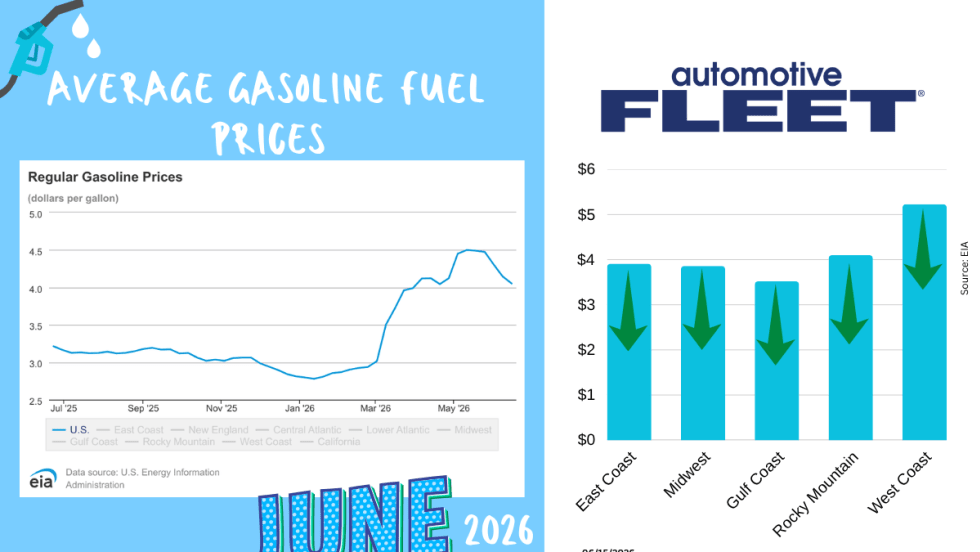
June Fuel Update: Prices Fall Below $4
Drivers are finally getting some relief at the pump. The national average gas price has dropped below $4 a gallon for the first time in months, with prices falling in 47 states as oil markets react to developments in U.S.-Iran negotiations.
Read More →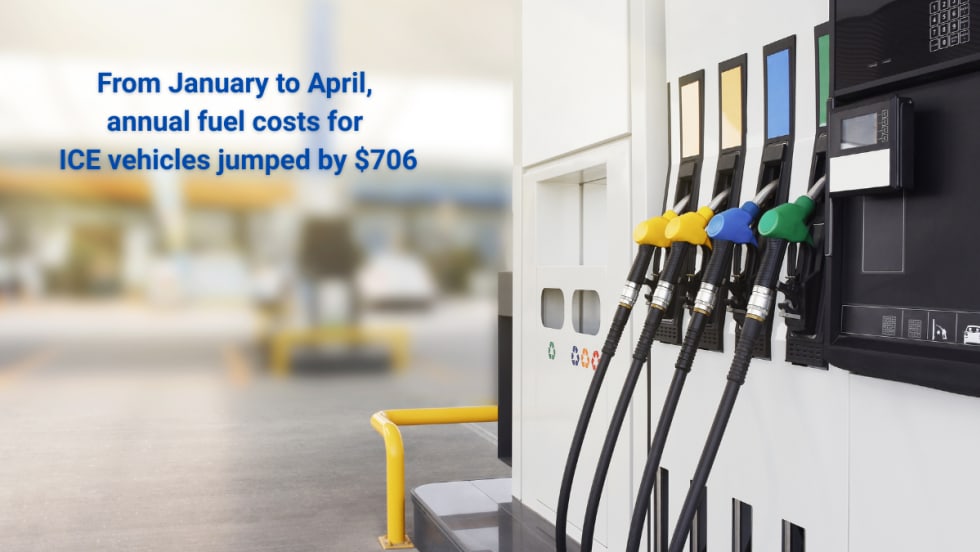
Study: How 2026's Gas Price Hikes Affect Different Vehicle Types
New data from iSeeCars reveals how rising fuel costs have affected different vehicle segments as gasoline prices climbed nearly 46% over the past four months.
Read More →
Are You Tracking Your Fleet's True Total Cost of Ownership?
Bobit Business Media surveyed 190 fleet professionals and found that while most fleets are tracking costs, fragmented systems and data gaps are keeping true TCO visibility out of reach. With rising pressure to control spend in an increasingly volatile environment, the gap between what fleets think they know and what the data actually shows is wider than you might expect. See how your peers are managing costs today and where the industry still has room to improve.
Read More →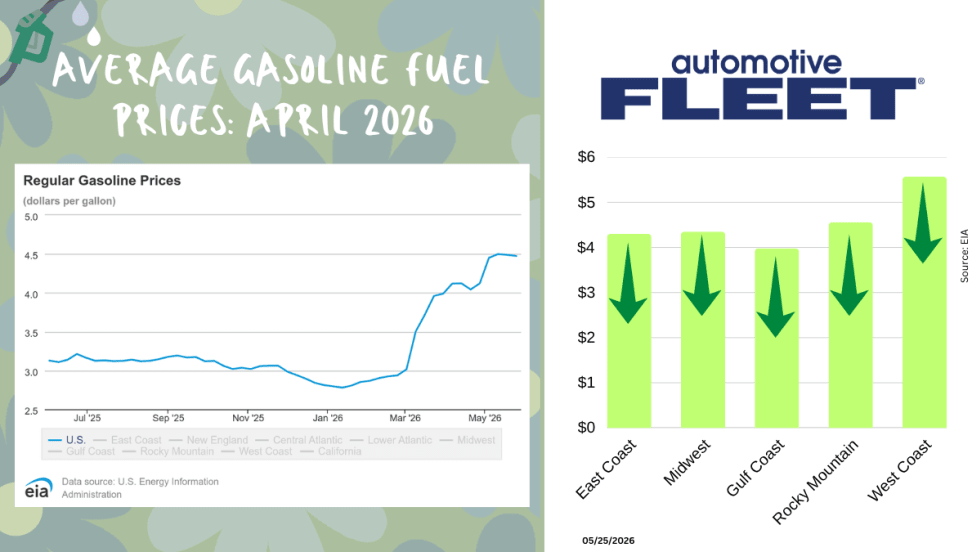
May Fuel Update: All Regions Experience Declines
Gas prices are finally easing in much of the country, but experts warn global tensions could quickly reverse the trend as the national average remains well above last month’s levels.
Read More →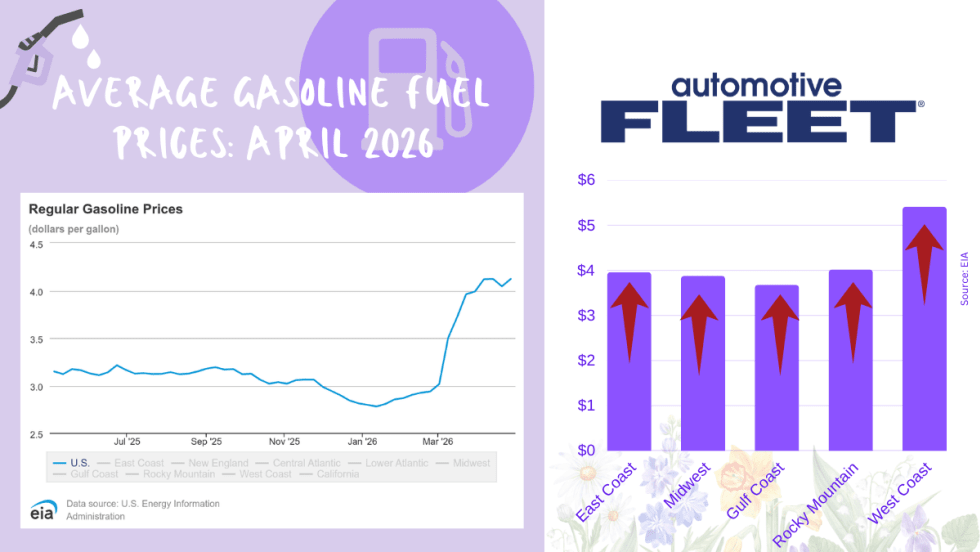
April Fuel Update: Prices Climb Above $4 as Spring Surge Accelerates
National average jumps to $4.04 per gallon, up sharply from last year, with West Coast prices topping $5 and further increases expected amid rising oil tensions.
Read More →
Tips from Fleet Managers on Saving Fuel Costs
Fleet leaders share practical strategies to reduce fuel spend through smarter policy, routing, and driver guidance.
Read More →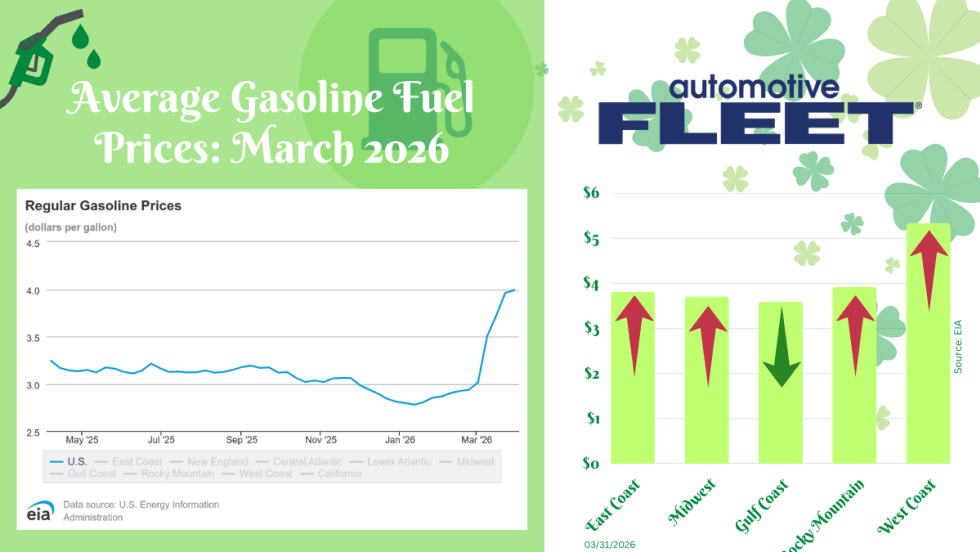
March Fuel Update: Prices Settle With a $4 Average
Fuel prices significantly slowed this week, but a $4 national average is still expected.
Read More →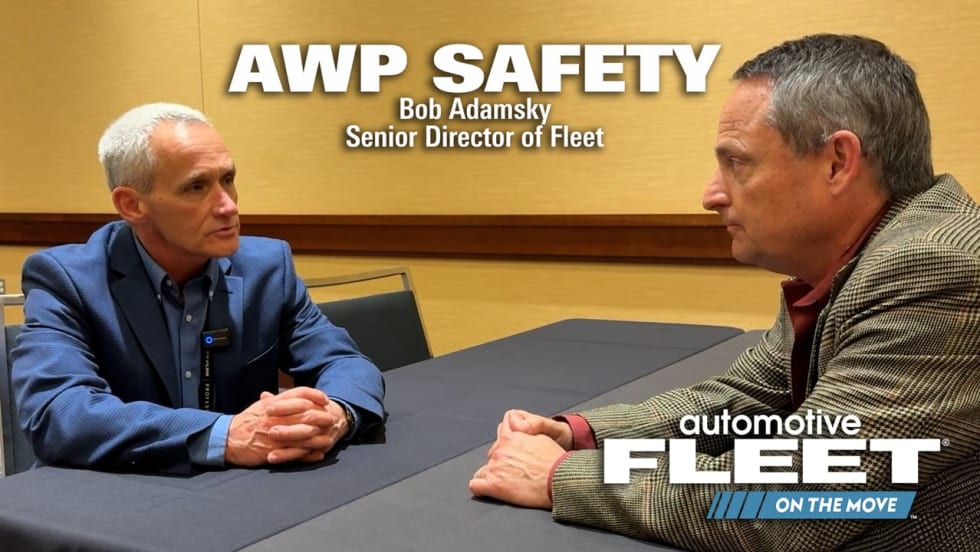
Bob Adamsky on Fuel Volatility: “Don’t Panic — Have a Plan”
With oil prices rising again, AWP Safety’s fleet manager shares how to respond to rising fuel costs and how the right strategy can turn fuel spikes into cost-saving opportunities.
Read More →
Oil Market Turbulence Is Complicating Fleet Cost Planning
Rapid swings in crude oil prices driven by the conflict in the Middle East could create longer-term cost pressures for fleets, affecting fuel prices, supply chains, and vehicle strategy, says NTEA’s Andrew Wrobel.
Read More →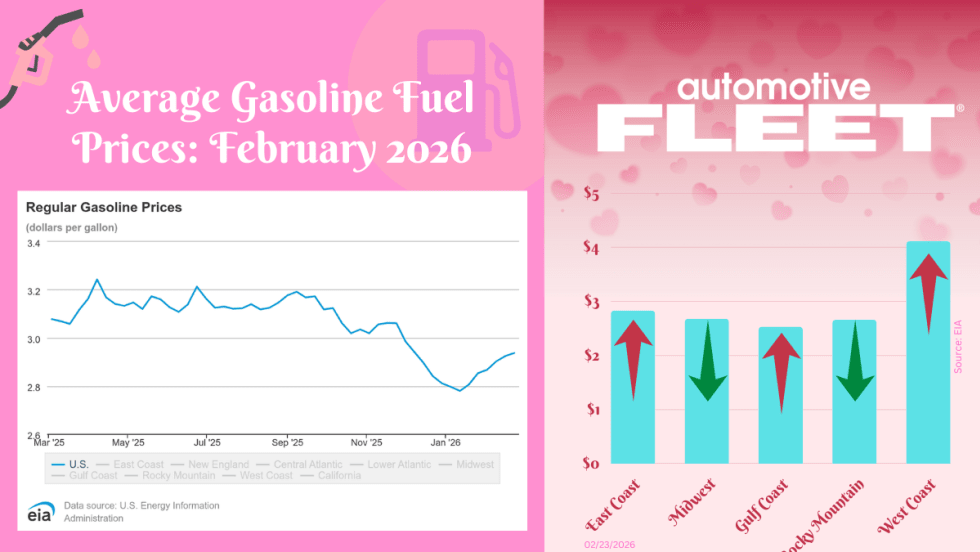
February Fuel Update: Prices Inch Higher for Third Week in a Row
The final February fuel update reveals prices continuing to inch higher for the third week in a row.
Read More →